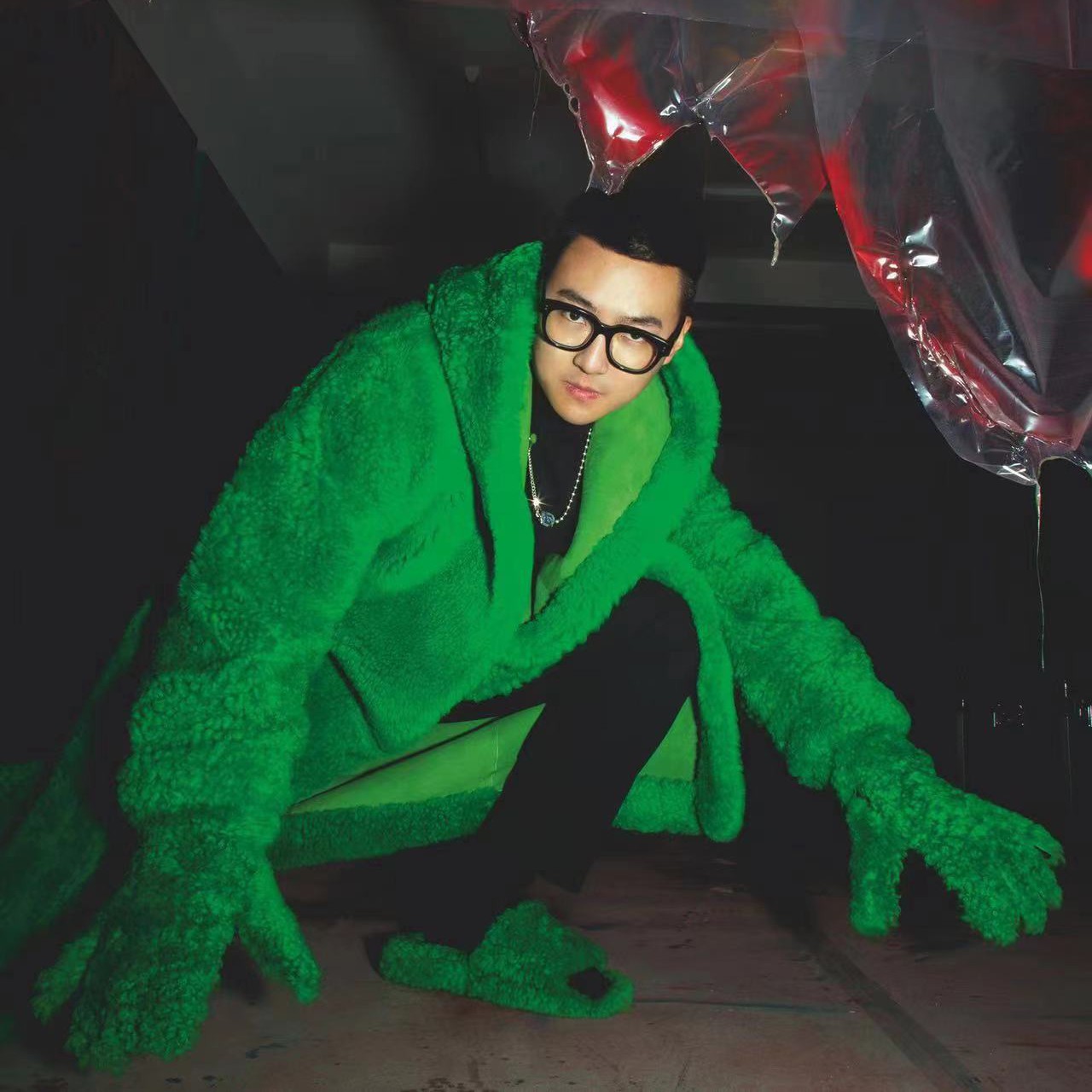
蒲英玮
简介Biography
蒲英玮(1989年出生),现工作和生活于北京。2013年毕业于四川美术学院,2018年毕业于里昂国立高等美术学院,获硕士学位并获评委会最高嘉奖。作为新一代政治性观念艺术的积极参与者,蒲英玮创造性地继承并发展了社会主义美术与中国早期前卫艺术的视觉与思想脉络,从革命的艺术与意识形态宣传两种异质同构的文化命题中汲取营养,形成了其独特的语言系统与历史视阈。其实践以“如何向自身与世界阐释当代中国的复杂性”为核心诉求,跨越绘画、写作、设计、策展、讲演等多种形态,艺术家也将这种在公共领域中所践行的多重身份理解为一次对艺术思潮的全面动员。
Pu Yingwei (b. 1989) lives and works in Beijing, China. As an active contributor to the new generation of political conceptual art in China, he critically engages with the socialist art genealogy. Pu Yingwei dedicates his work to articulating the changes in China's identity amid globalization and exploring the deeper impact of China’s modernization and development model on global patterns through cross-cultural narratives. His practice employs various media, including painting, video, design, writing, and lecturing. He has developed a "new internationalist" artistic language based on his perception of Eastern civilization. In recent years, Pu Yingwei has deepened his global engagement, traveling to Eastern Europe, Africa, Central Asia, Southeast Asia, the Americas, and the Caribbean, including regions like the Balkan Peninsula and Ukraine, which are currently in conflict. Pu received his BFA from Sichuan Fine Art Institute in 2013, DNSEP (MFA with Félicitation du jury) from École Nationale Supérieure des Beaux-Arts de Lyon in 2018. He has been the recipient of several awards, including the John Moores Painting Prize, the Golden Hibiscus Award for Photography, and the International Awards for Art Criticism Prize (IAAC) for his writings. Pu has been recognized in prestigious lists such as Forbes China Contemporary Young Artists of the Year, Gen. T Asian Emerging Pioneers list, China Art power 100, and the HuaYu Youth Award, among others. He also received the TAG New Contemporary Art Prize, the Jimei Arles Discovery Reward, Porsche “Young Chinese Artist of the Year” Award, and was named the first “FT Chinese Artist of the year” by Financial Times. Pu Yingwei's works have been exhibited at numerous prestigious venues and institutions both domestically and internationally, including the Staatliche Kunstsammlungen Dresden, the Walker Art Gallery (Liverpool), the 13th Shanghai Biennale, the Caen Film Festival, Nouvel Institut Franco-Chinois (Lyon), the National Art Museum of China, the Power Station of Art in Shanghai (Shanghai), the OCAT Museums, and the Taikang Space (Beijing). His works are widely collected by significant institutions and collections such as the KADIST, the Groupe Emerige (France), the White Rabbit Gallery (Australia), the Guangdong Museum of Art (Guangzhou), the He Art Museum (Shunde, China), the Start Museum (Shanghai), the Song Art Museum (Beijing), Sifang Art Museum (Nanjing, China), the Longlati Foundation (Shanghai), and the ASE Foundation (Shanghai). 1989 Born in Shanxi 2013 Sichuan Fine art Institute, Bachelor Degree 2018 École Nationale Supérieure des Beaux-Arts de Lyon, MFA with Félicitation du jury Currently lives and works in Beijing, China
代表作Selected Works
展览履历Exhibitions
- 2026FRIEZE SEOULCOEX · 蜂巢当代艺术中心
- 2026轻狂欢:蜂巢·生成 · 甬道蜂巢 | 北京 总部 · 蜂巢当代艺术中心
- 2025红色计算机蜂巢当代艺术中心
- 2022Red World When We Love 群展West Bund Art and Design
- 2022旷世情歌 群展西岸艺术与设计博览会
- 2021血字的研究:革命现实主义的再次起源 群展Mamoth
- 2020写真伦理:中非影集 群展集美·阿尔勒发现奖单元
- 2019蒲英玮,或 1989 年之后的虚构 群展器空间
- 2018双重帝国 群展新中法学院
- 2017蒲英玮与吉姆·汤普森建筑事务所 群展J: GALLERY
艺见洞察ArtMatters Insights
代表作与创作Selected Works & Style
蒲英玮(Pu Ying Wei,1989年出生)是新一代政治性观念艺术的积极参与者。根据艺术家档案资料,其创作特点和代表作如下:
### 代表作(依据结构化艺术家档案数据)
他的作品以系列化、跨媒介为特点,近年代表作包括:
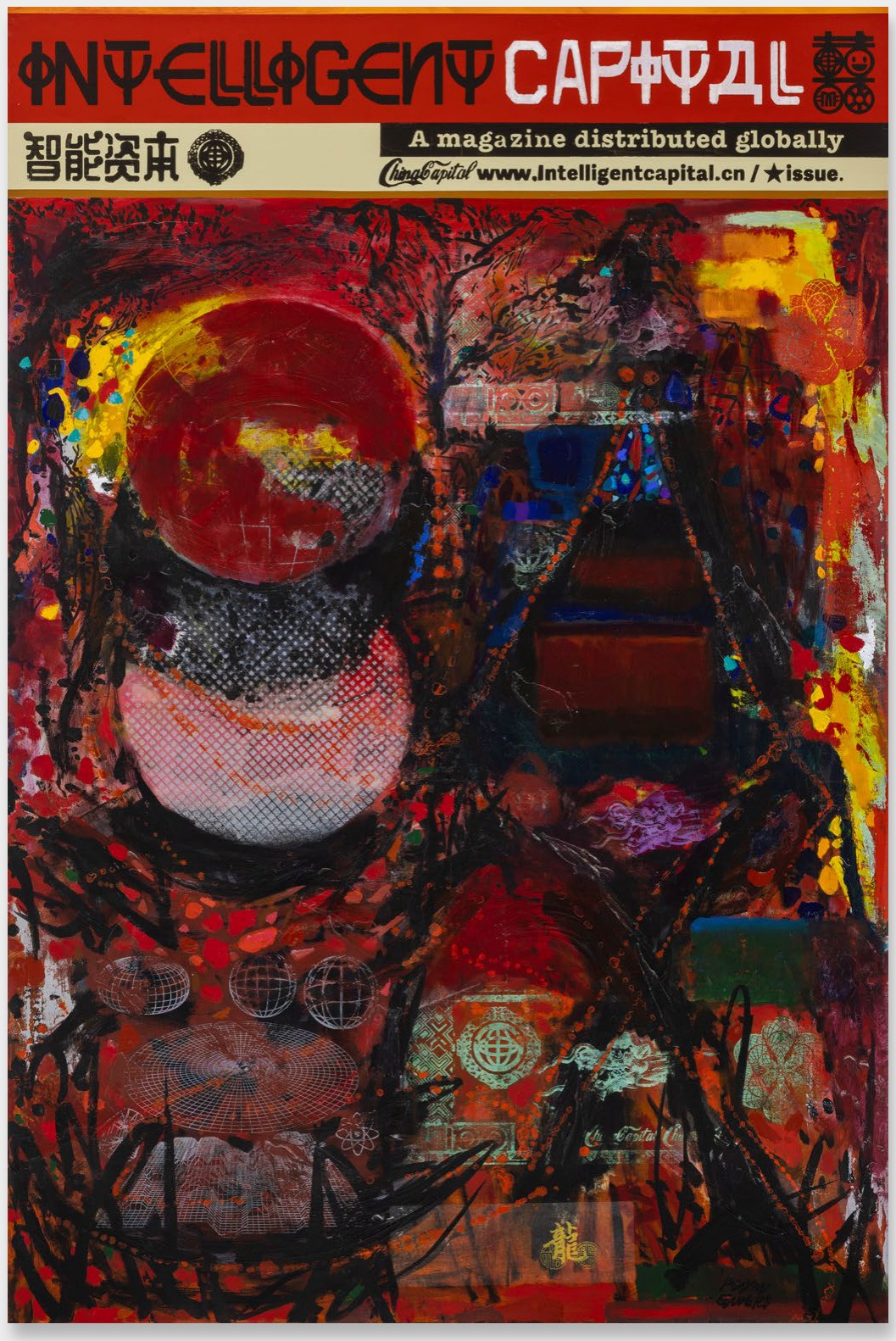
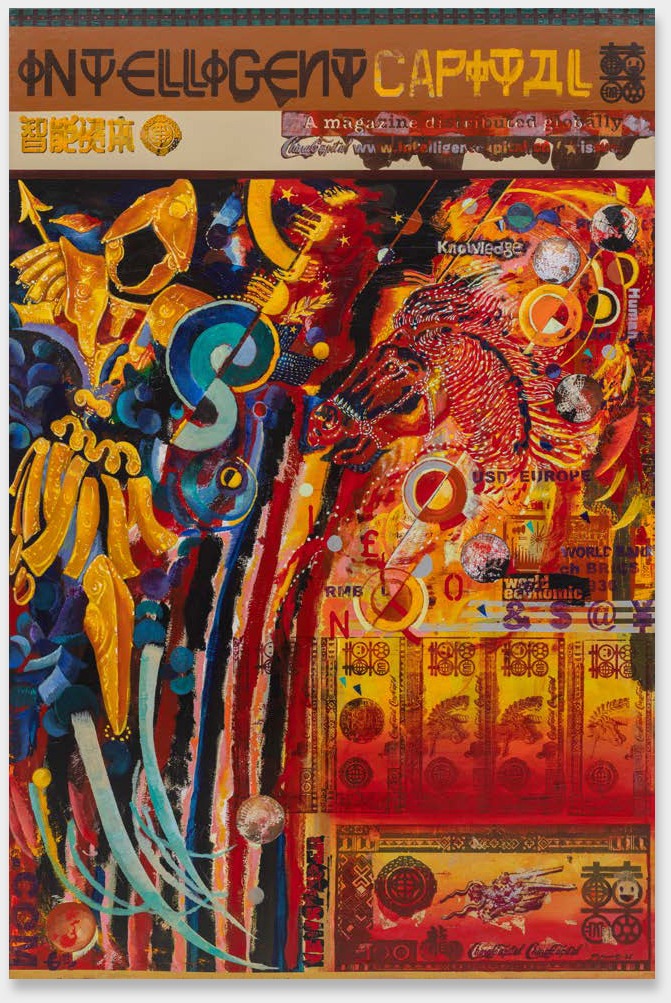
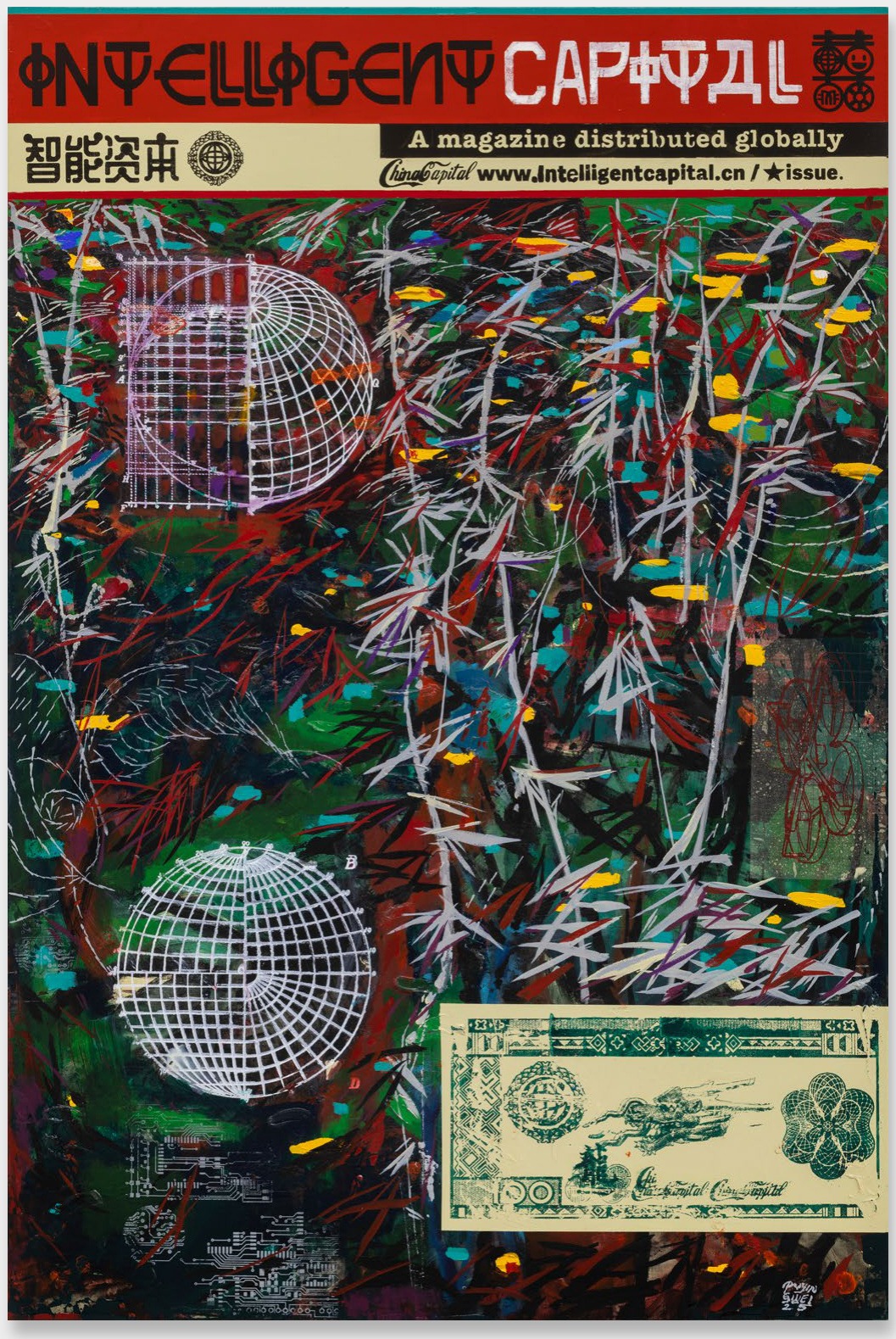
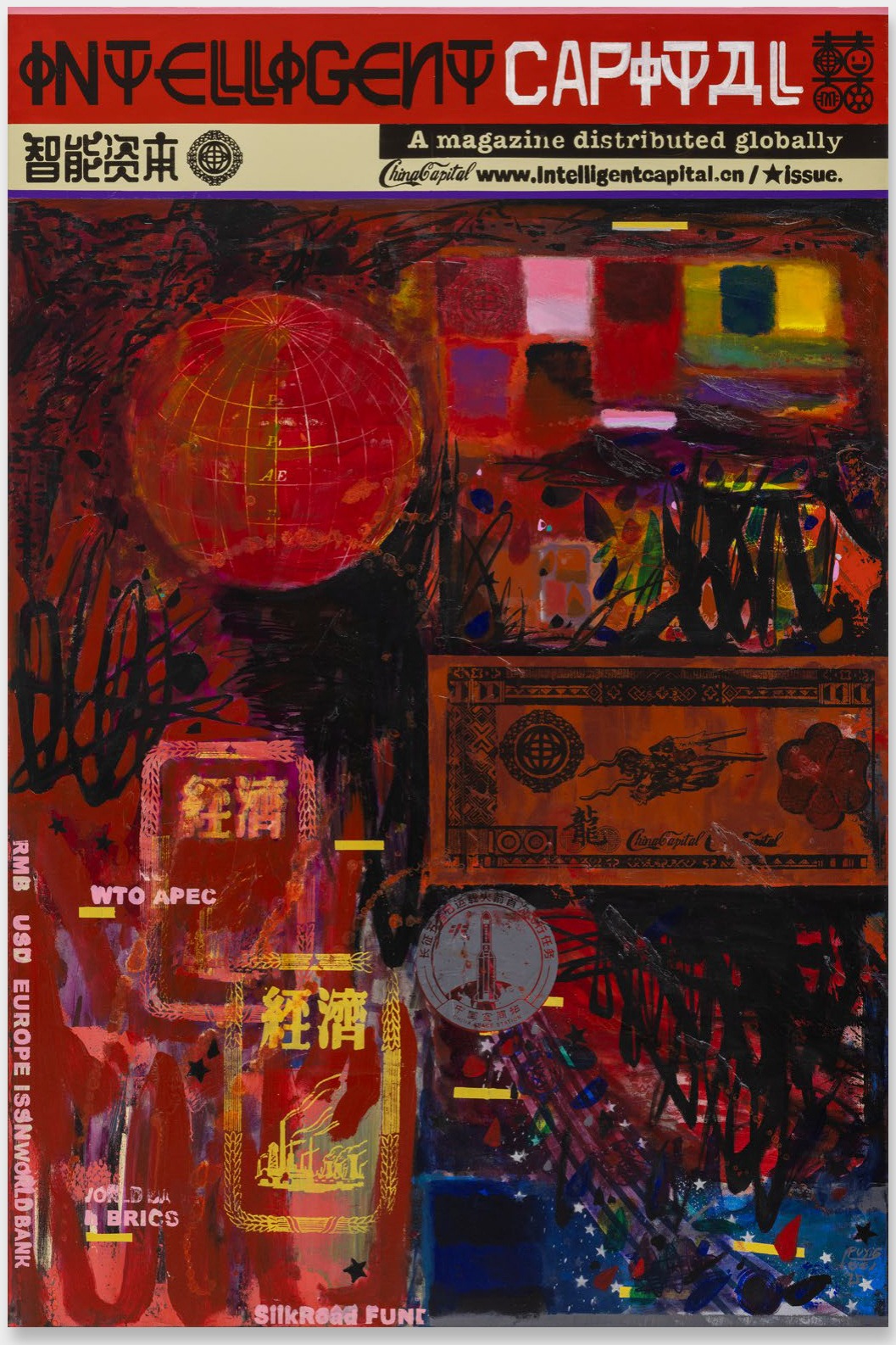
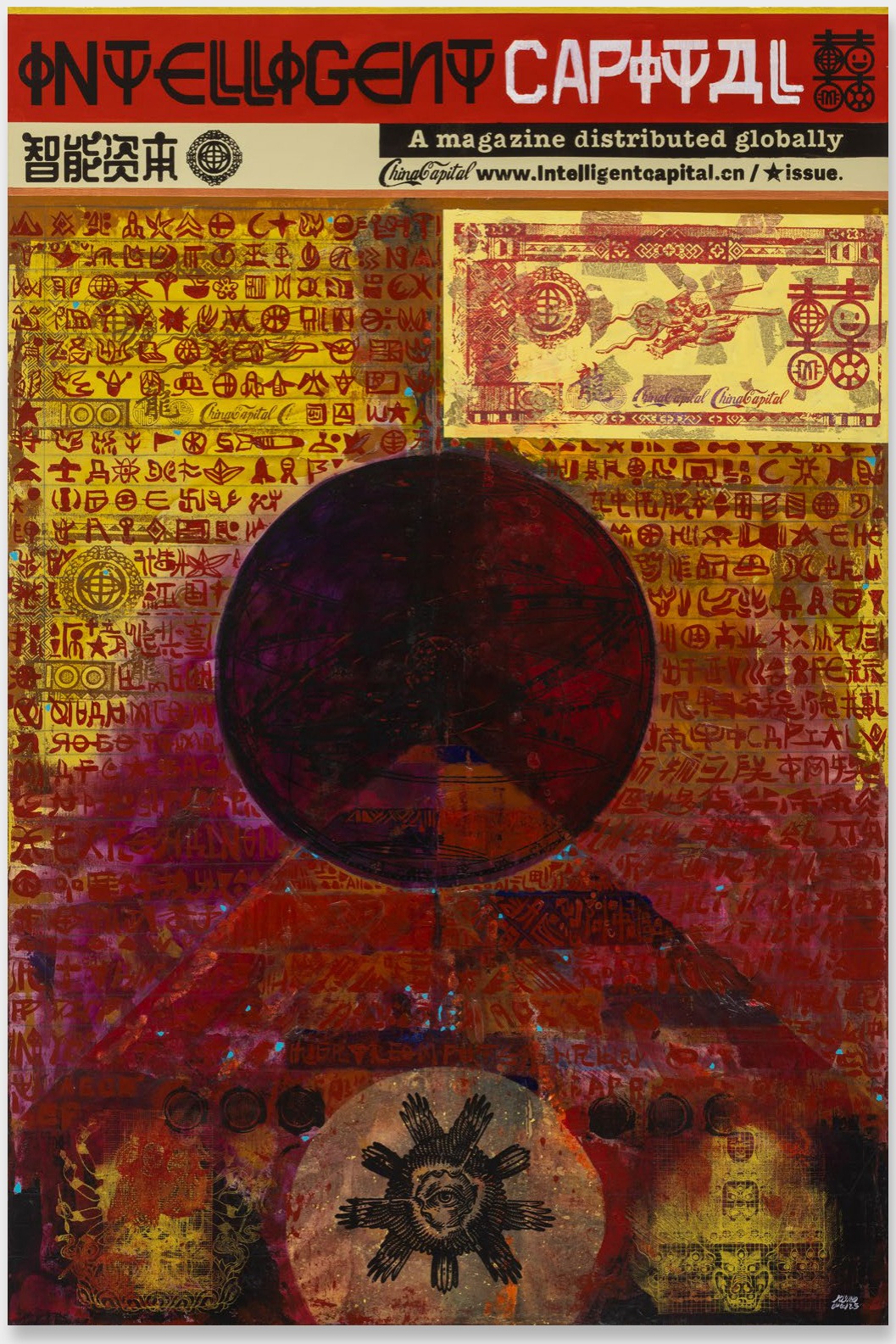
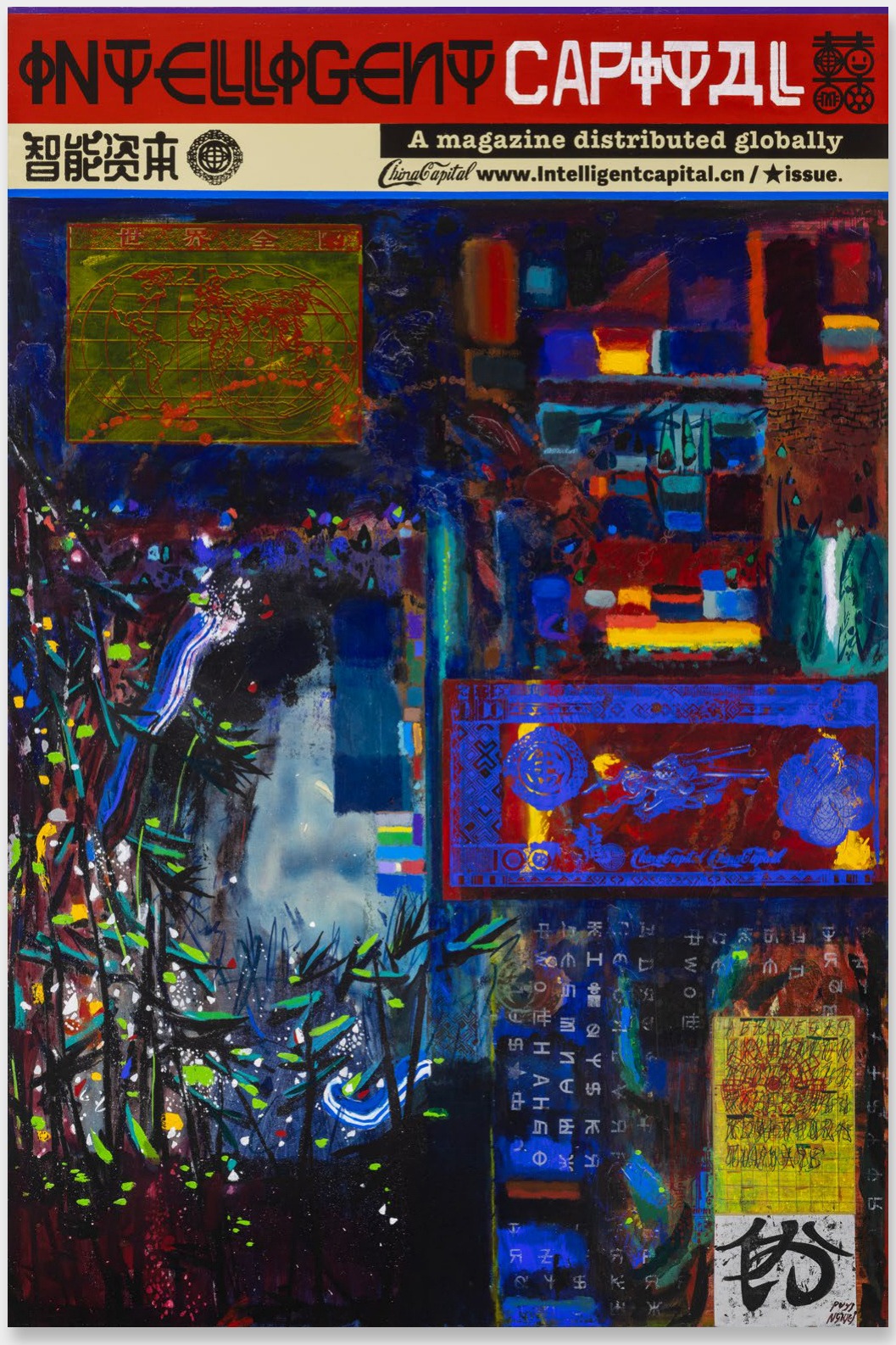
- **《智能资本(社会文化的趋势)》系列**(2025年):如《明红》《青红》《绯红》《金红》《紫红》及五联组合版本,媒介涉及布面油画、亚克力、矿物颜料、丝网印刷、宣纸、水墨、金箔等。
- **《红色计算机》**(2025年):布面油画、亚克力、丝网印刷、纸本拼贴、宣纸、水墨。
- **《逍遥骑士》**(2026年):布面油画、丙烯、桑皮纸、丝网印刷、金箔、石墨。
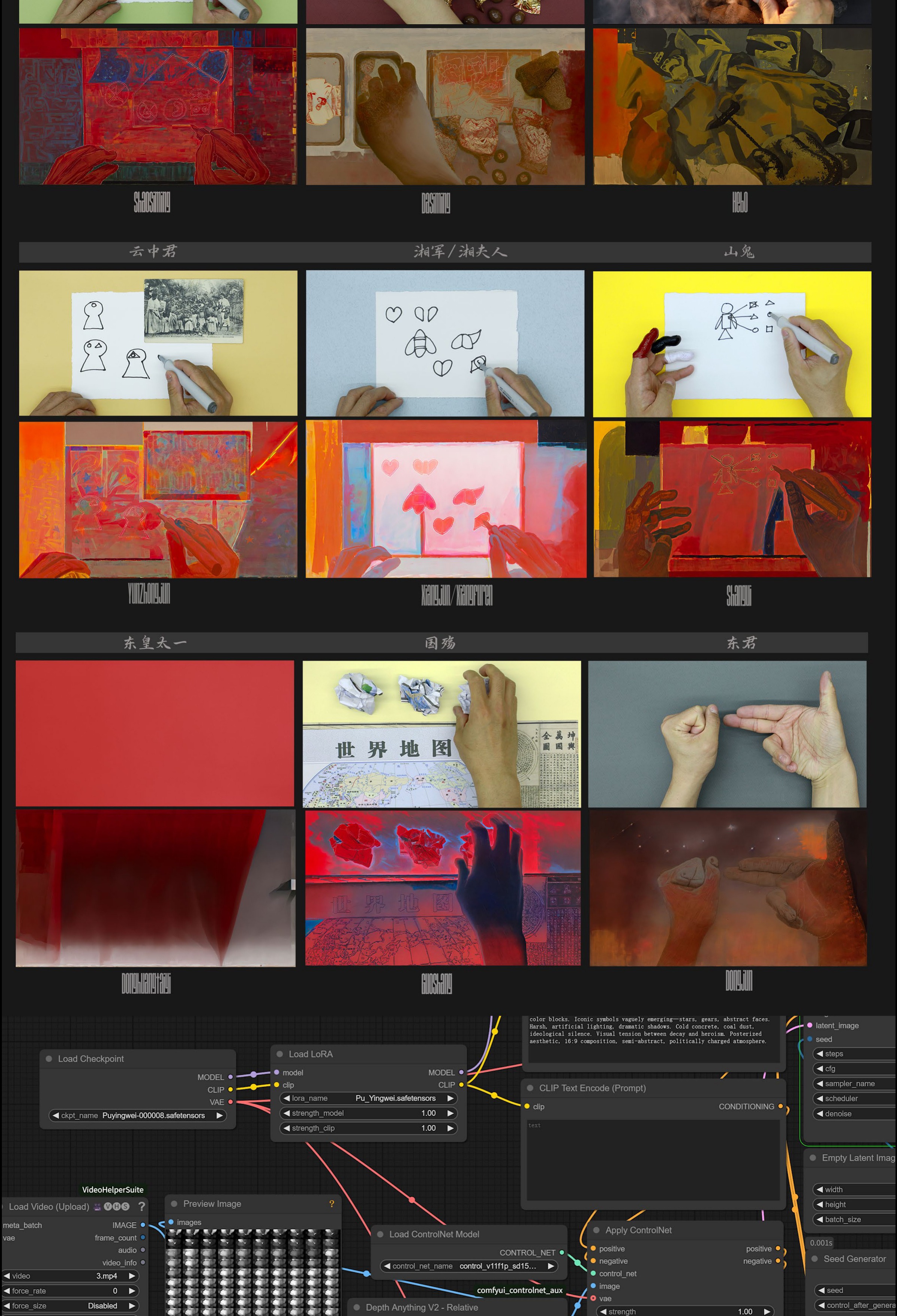
- **《东君》《国殇》《云中君》《山鬼》**(2023年):综合材料系列,以中国古典意象为题。
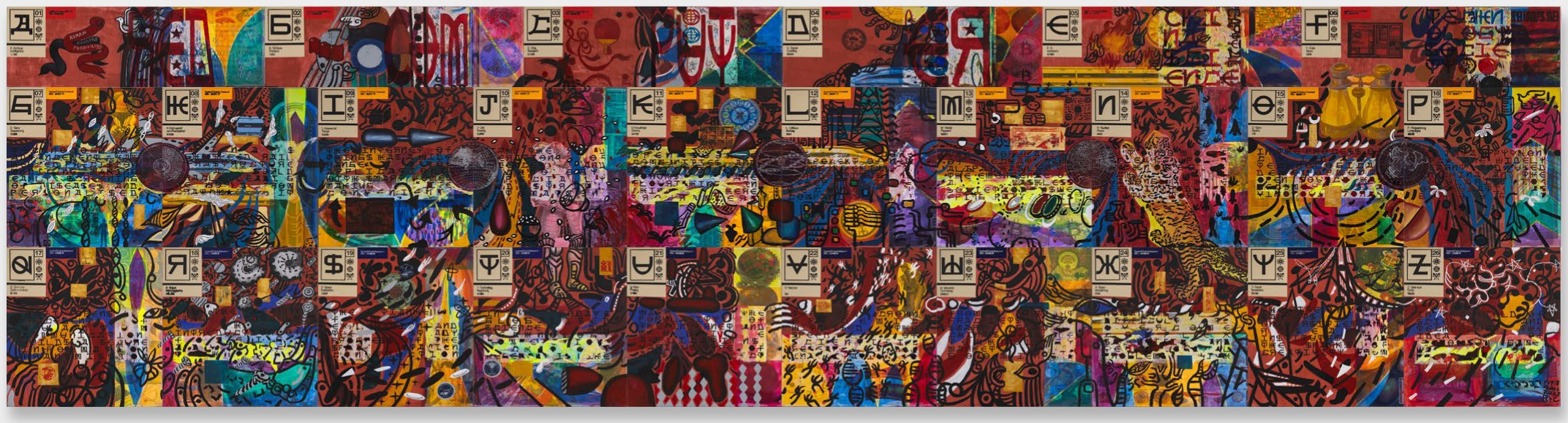
此外,在展览文献中,《时间,历史,我们(为何而战?)》系列(2020年)也是其近期重要作品,采用其发明的“革命现实主义字体”,混合英文、俄文、中文与符号系统。
### 创作特点
**(事实类,依据档案数据)**
- **创作类型/风格标签**:实验性、意象、观念艺术。
- **常用媒介**:影像、拼贴、摄影、综合材料、装置;也涉足写作、设计、策展、讲演等。
- **核心议题**:全球化、文化身份、政治、记忆与时间、社会评论、消费主义、身体、情感、城市景观等。
**(叙事类,依据展览文章与档案简介)**
蒲英玮在创作上**继承并发展了社会主义美术与中国早期前卫艺术的视觉与思想脉络**,从革命艺术与意识形态宣传两种异质同构的文化命题中汲取营养,形成了独特的语言系统与历史视阈。他的实践核心诉求是“如何向自身与世界阐释当代中国的复杂性”。
在具体手法上:
- 他常常将**多种文字(英文、俄文、中文)与符号系统**并置,创造一种混杂的“革命现实主义字体”,以处理宏大历史题材与当下政治议题。
- 作品横跨绘画、影像、装置、出版物等多种媒介,注重**社会性表达与普遍共情**,试图传递一种持续表达、持续批判的集体性潜能。
- 他也将个人形象与个人史作为媒介(如录像作品《访谈录》《学粤语歌》等),在身份、记忆、独生子女、性别等议题上展开叙事,把宏观政治历史降落在非虚构的个人史写作上。
概括而言,蒲英玮的创作特点可以总结为:**政治性观念艺术、跨媒介实践、社会主义美术脉络的当代转化,以及在全球与本土之间构建“新国际主义”语境的语言实验。**
Pu Yingwei (蒲英玮, b. 1989) is identified in the platform profile as a politically engaged conceptual artist whose practice spans painting, writing, design, curating, and lecturing.
**Representative works** in the profile include:
- *Red Computer* (红色计算机), 2025 — oil on canvas, acrylic, silkscreen, paper collage, ink on rice paper
- *Intelligent Capital (Socio-Cultural Trends)* series, 2025 — multiple color variations such as Bright Red, Blue-Red, Purple Red, Gold Red, and Crimson, using oil, acrylic, mineral pigments, silkscreen, rice paper, ink, and gold leaf
- *Easy Rider* (逍遥骑士), 2026 — oil on canvas, acrylic, mulberry paper, silkscreen, gold leaf, graphite
- Mixed-media works from 2023: *Dong Jun* (东君), *Guo Shang* (国殇), *Yun Zhong Jun* (云中君), and *Shan Gui* (山鬼)
**Creative style**:
According to his artist profile, Pu Yingwei is part of a new generation of politically oriented conceptual artists. He inherits and reworks visual and intellectual lineages from socialist art and the early Chinese avant-garde, drawing on revolutionary art and ideological propaganda as two heterogeneous yet structurally related cultural sources. This has produced a distinctive visual language and historical perspective. His central concern is “how to interpret the complexity of contemporary China to oneself and the world.”
His work is materially hybrid, combining oil, acrylic, silkscreen, collage, mineral pigments, ink on rice paper, gold leaf, mulberry paper, and graphite. Thematically, his profile lists globalization, urban landscape, emotion, politics, cultural identity, death, consumerism, social critique, memory and time, and the body.
The article context adds that Pu Yingwei has developed a custom “Empire Font” fusing Cyrillic, Latin, and Chinese letterforms, which he uses to evoke China’s socialist tradition, globalized order, and cultural heritage at once. His installations and paintings also draw on formats such as magazine covers and scattered banknote fields, using red, blue, and yellow as ideologically charged tones to reflect contemporary power relations and social atmospheres.
展览与收藏Exhibitions & Collections
根据平台结构化艺术档案,蒲英玮(Pu Yingwei,1989—)的展出与收藏机构信息如下:
**展出机构/参与项目**
- 德累斯顿国立美术馆
- 利物浦沃克美术馆
- 新中法学院
- 上海当代艺术博物馆
- 和美术馆
- OCAT馆群
- 泰康空间
- 第十三届上海双年展
- 卡昂电影节
**收藏机构**
- 卡蒂斯特艺术基金会
- 星美术馆
- 和美术馆
- 四方当代美术馆
- 广东省美术馆
- 松美术馆
- X美术馆
- Longlati基金会
- ASE基金会
- APS欣稚锋艺术机构
- 焯擎艺术基金会
- CC基金会
- 韩国阿拉里奥美术馆
以上为平台档案中明确列出的机构,部分表述保留“等国内外重要机构与藏家”的开放性收录。
Based on the structured artist profile available to me, Pu Yingwei’s listed exhibitions include:
- **FRIEZE SEOUL**, COEX, Seoul, 2026 (presented by Hive Center for Contemporary Art)
- **轻狂欢:蜂巢·生成 · 甬道**, Hive Center for Contemporary Art, Beijing headquarters, 2026
- **红色计算机**, Hive Center for Contemporary Art, Beijing, 2025
Regarding **institutional collections**, the profile available to me does not include specific information on which institutions collect his work. That part should therefore be recorded as “no information available” in the current database.