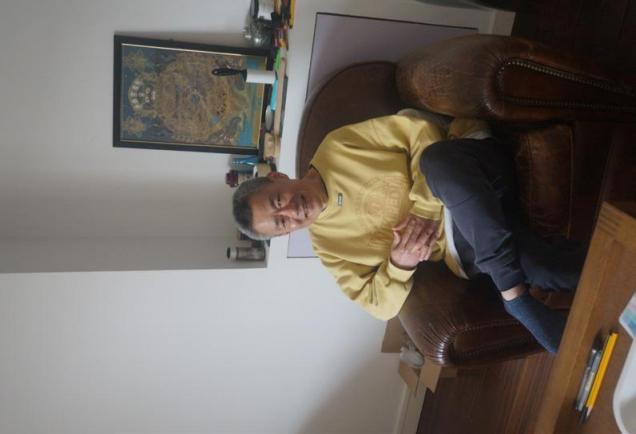
任小林
简介Biography
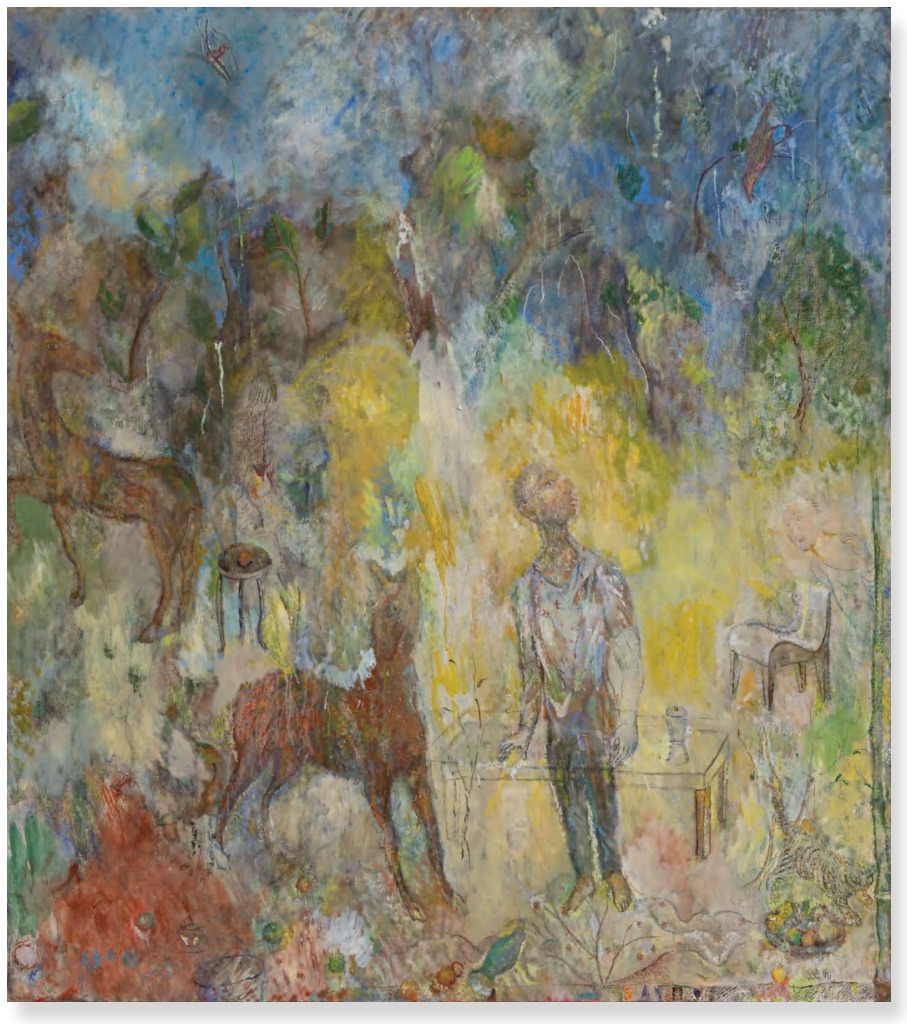
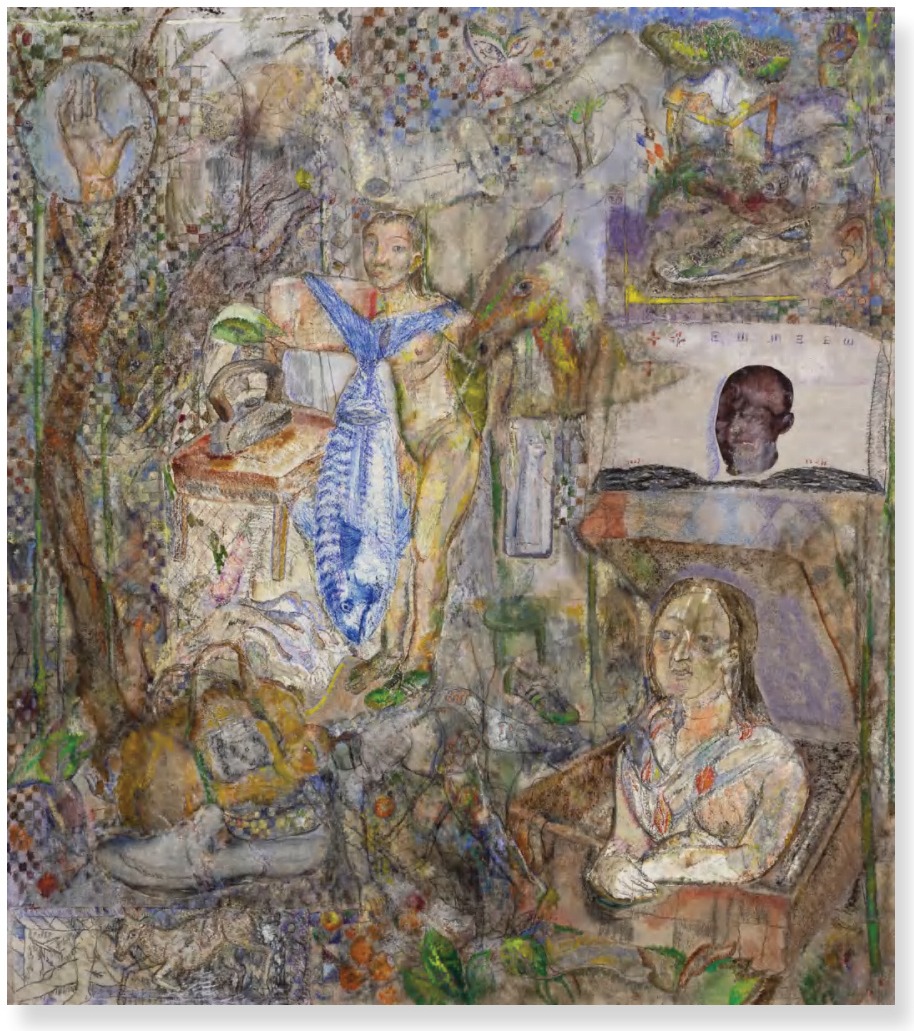
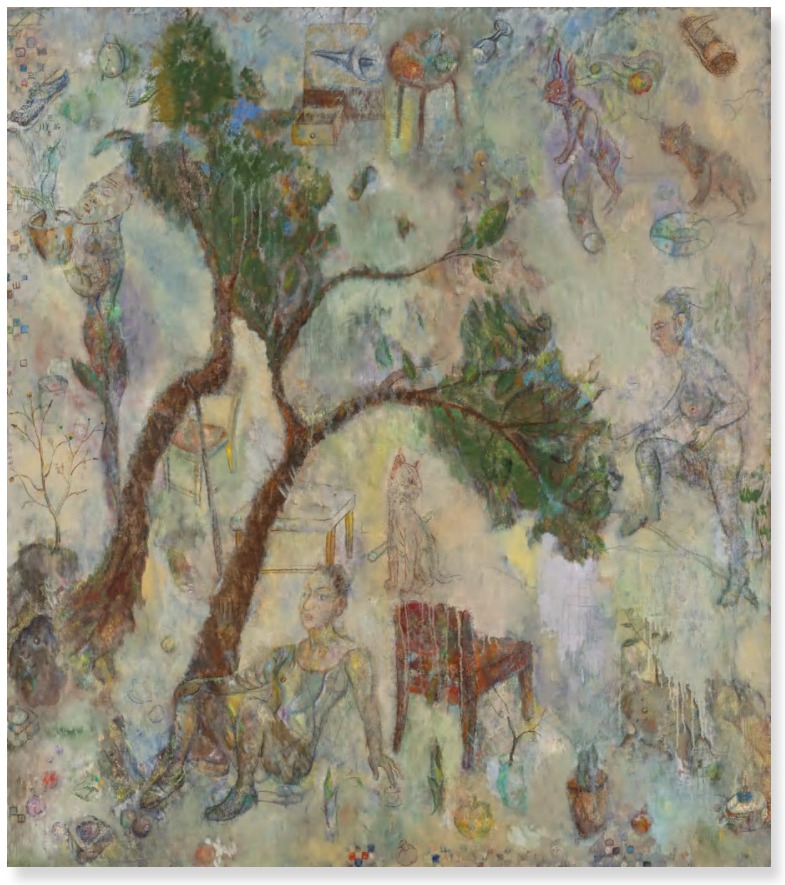
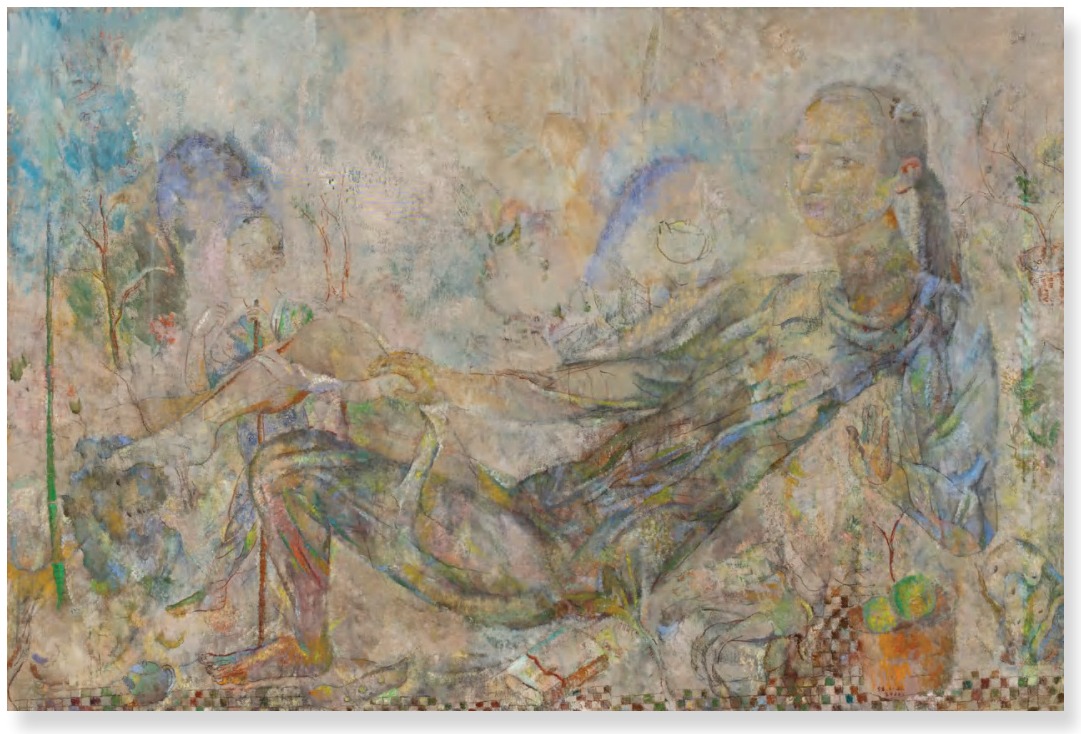
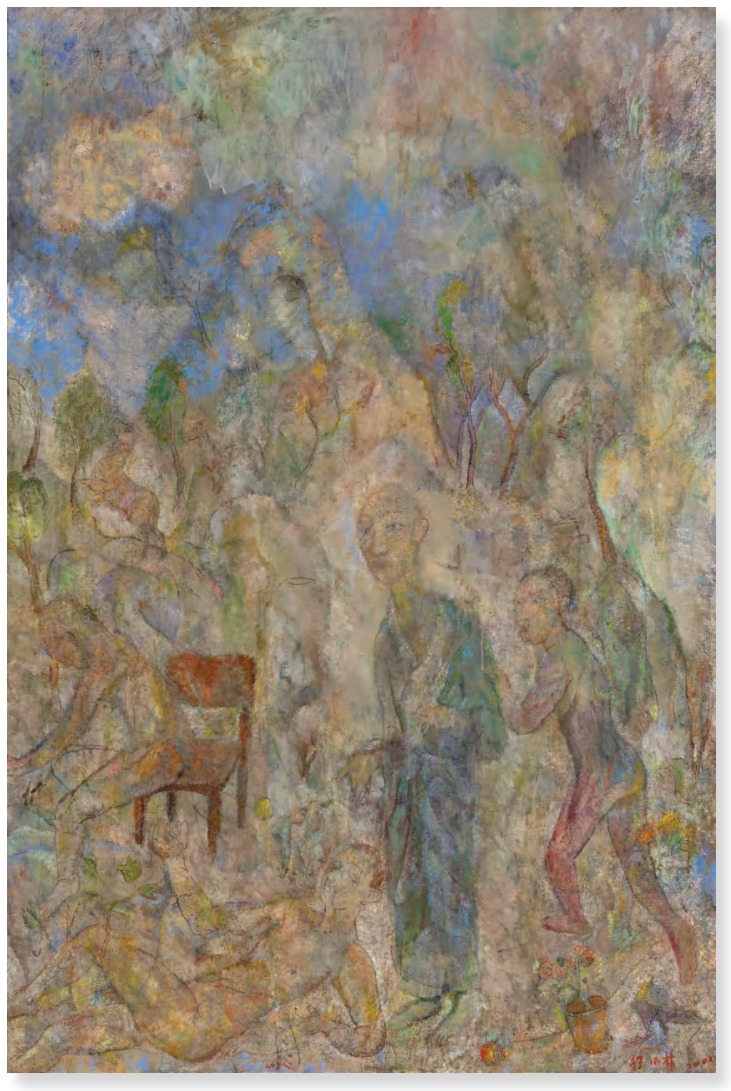
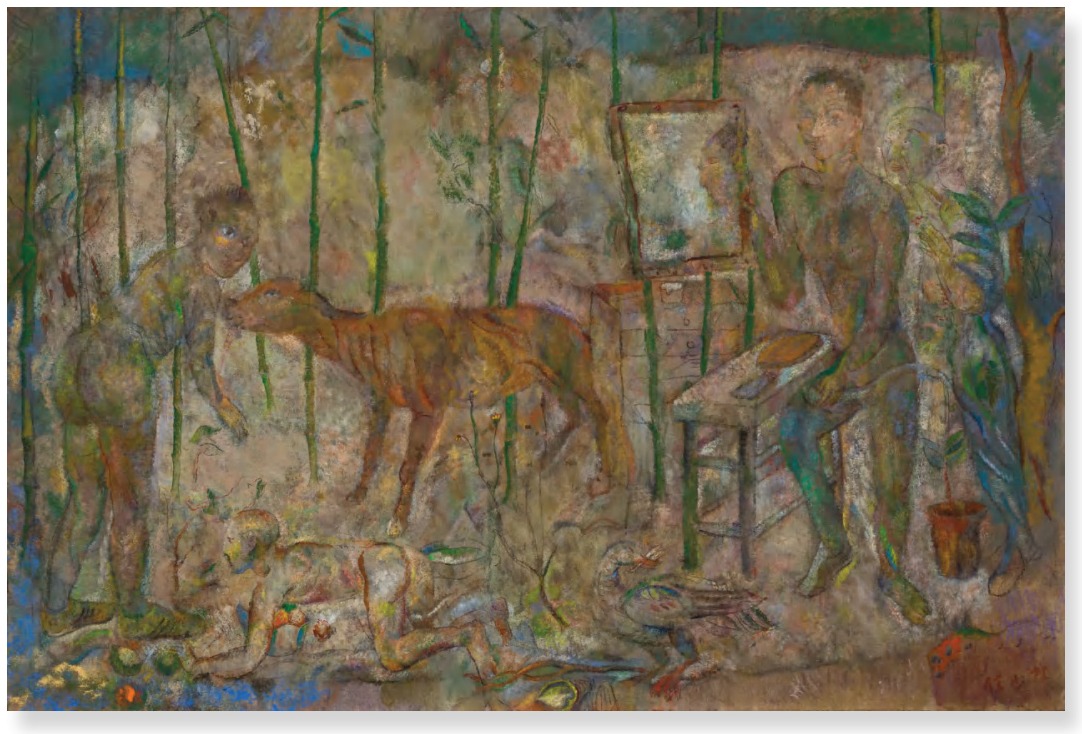
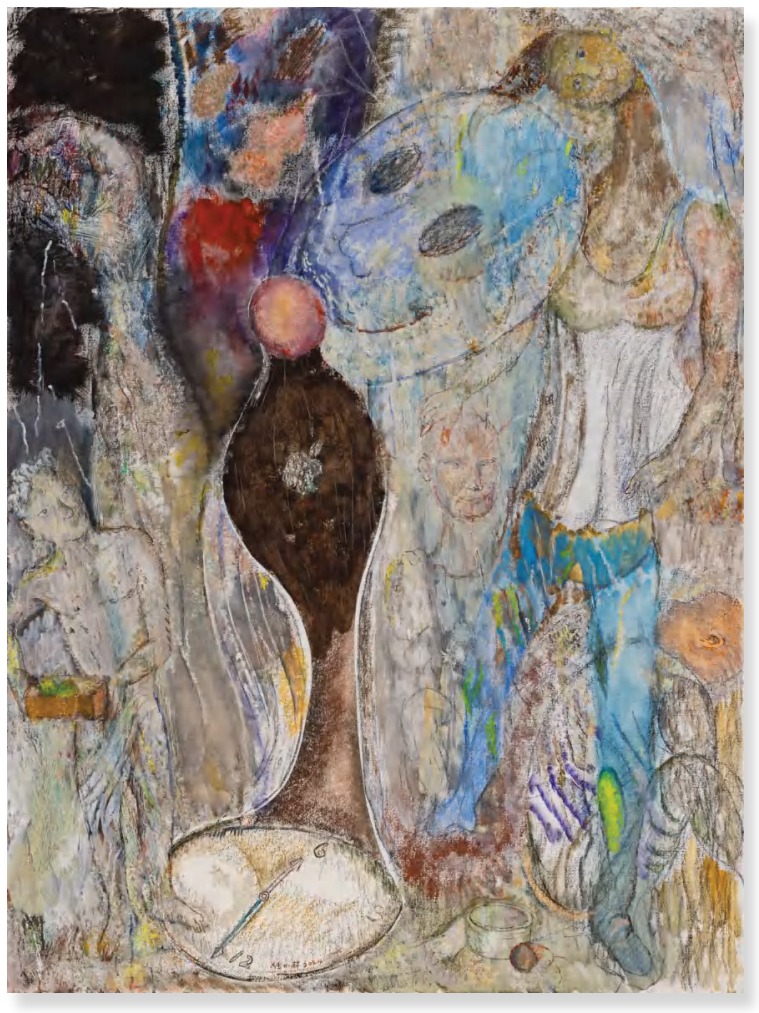
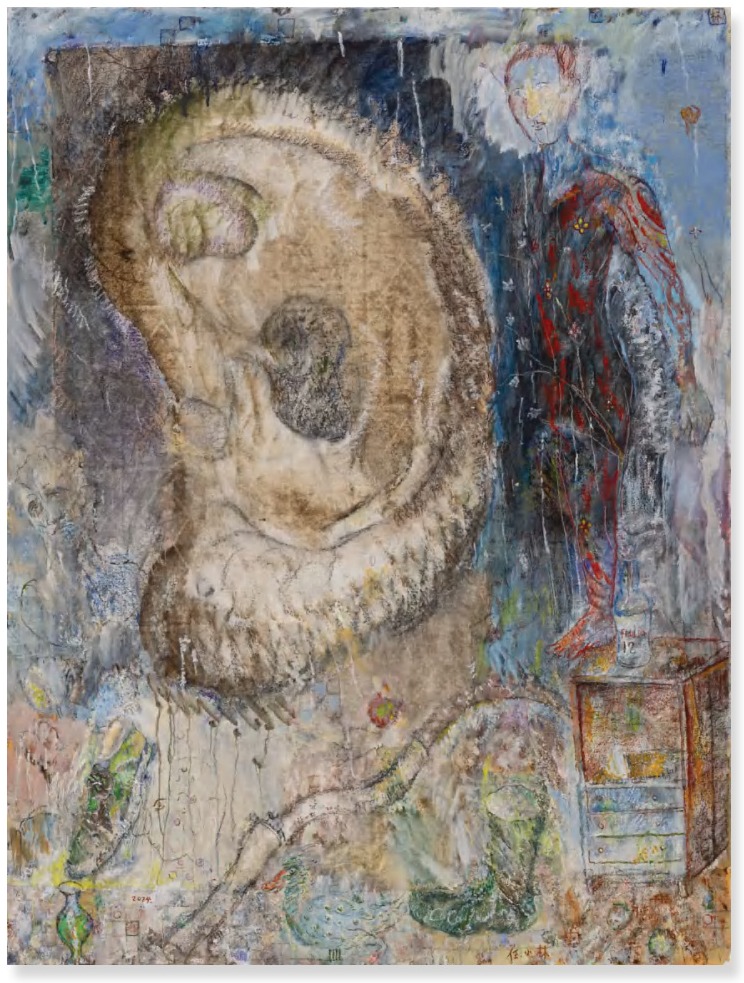
任小林,1964年出生于陕西省永寿县。其早年在贵州的生活经验不仅构成地理意义上的地方经验,更使他亲历了边缘文化、原始宗教与身体性图像。他对贵州乡土宗教的关注,孕育出作品中浓厚的野性气质,一种非理性的、带有神秘主义的视觉语法。其画面中常出现拟人化却失真的人形面孔、脱域的肢体、仪式化的群像配置,可视为对贵州民间图像语言的当代表达。他让绘画成为巫术的继承者,一种图像的通灵术,借助原始的野性来刺破现实的文明表象。
任小林深受中国传统艺术影响,尤其是墓室、敦煌壁画的结构性、象征性与宗教性,以及书法的线条与文人画的意趣。他将这些东方文化内化为构图法则与观看逻辑:线条不追求拟真,而追求气的流动与结构的生长,具有写意特质;构图非焦点透视,而是类似卷轴画的散点式布置,强调视觉时间感;色彩低沉、雅拙,带有水墨或矿物色般的沉积感,唤起古典的时间深度。
任小林意识到,正如北宋皇家经营的人造山水“艮岳”的人造性解构了自然与文化的古老二分,个体内在两极的博弈都是人生的必经阶段,真正的自我是要融入整个世界中的。其图像语言如同对艮岳的再演——一个既具体又遥远、既人造又超验的精神空间。2025年,他在蜂巢当代艺术中心举办个展“艮岳”。
Ren Xiaolin, born in 1964 in Yongshou County, Shaanxi Province. His early life experiences in Guizhou not only constituted a sense of place in the geographical sense, but also brought him into direct contact with marginal cultures, primitive religions, and corporeal imagery. His attention to the vernacular religions of Guizhou fostered a strong wildness in his works, an irrational visual grammar tinged with mysticism. His compositions frequently feature anthropomorphic yet distorted human faces, de-territorialized limbs, and ritualized group arrangements, which can be seen as a contemporary expression of Guizhou’s folk visual language. He turns painting into a successor of sorcery, a medium of image-based spiritualism, employing primordial wildness to pierce through the civilized surface of reality.
Ren Xiaolin is deeply influenced by traditional Chinese art, especially the structural, symbolic, and religious qualities of tomb and Dunhuang murals, as well as the lines of calligraphy and the sensibilities of literati painting. He internalizes these Eastern cultural elements as compositional principles and viewing logics: his lines do not pursue verisimilitude but rather the flow of qi and the growth of structure, imbued with the quality of xieyi (freehand brushwork); his compositions eschew focal perspective in favor of a scattered-point arrangement akin to that of handscroll paintings, emphasizing a sense of visual temporality; his colors are muted, elegantly archaic, carrying a sedimentary quality reminiscent of ink wash or mineral pigments, evoking a temporal depth that is classical.
Ren Xiaolin realizes that, just as the artificial mountainscape Genyue, built under imperial auspices during the Northern Song dynasty, deconstructed the age-old dichotomy between nature and culture, the contest between inner polarities is an inevitable phase of life, and the true self must dissolve into the entire world. His pictorial language thus becomes a reenactment of Genyue—a spiritual space that is at once concrete and remote, artificial and transcendent. In 2025, he will hold a solo exhibition titled "Genyue" at Hive Center for Contemporary Art.
代表作Selected Works
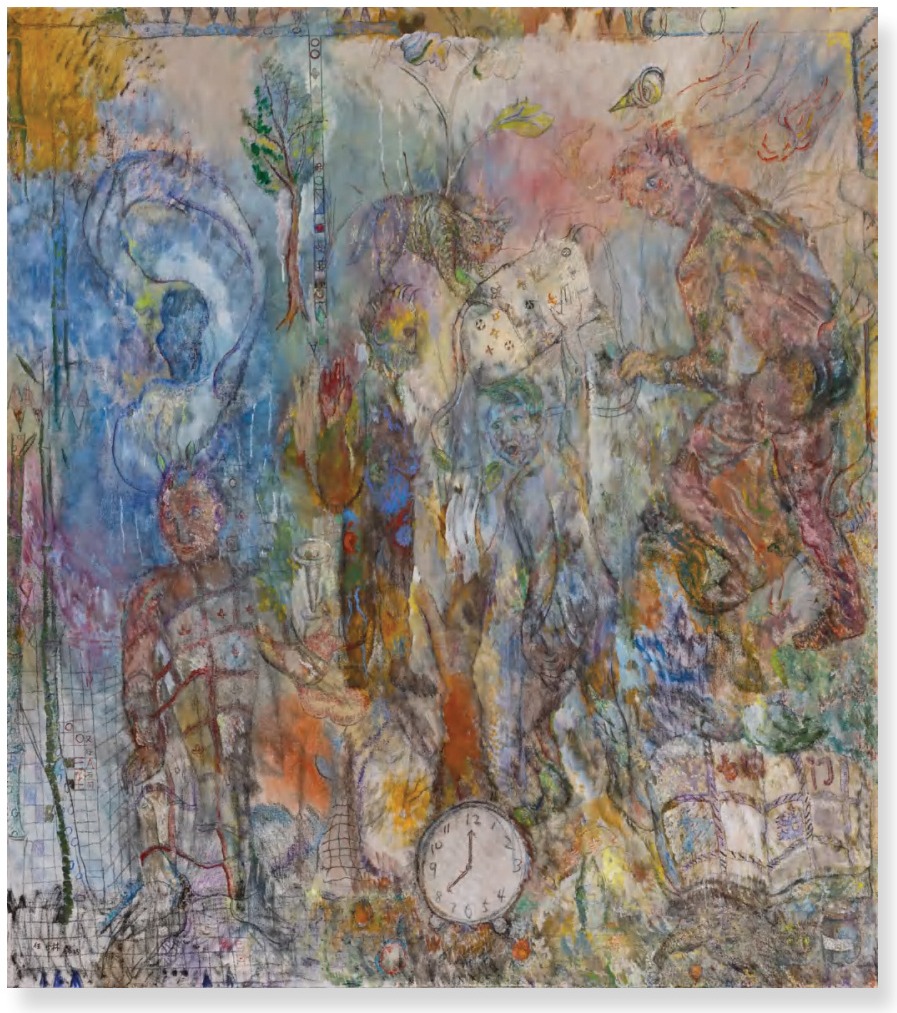
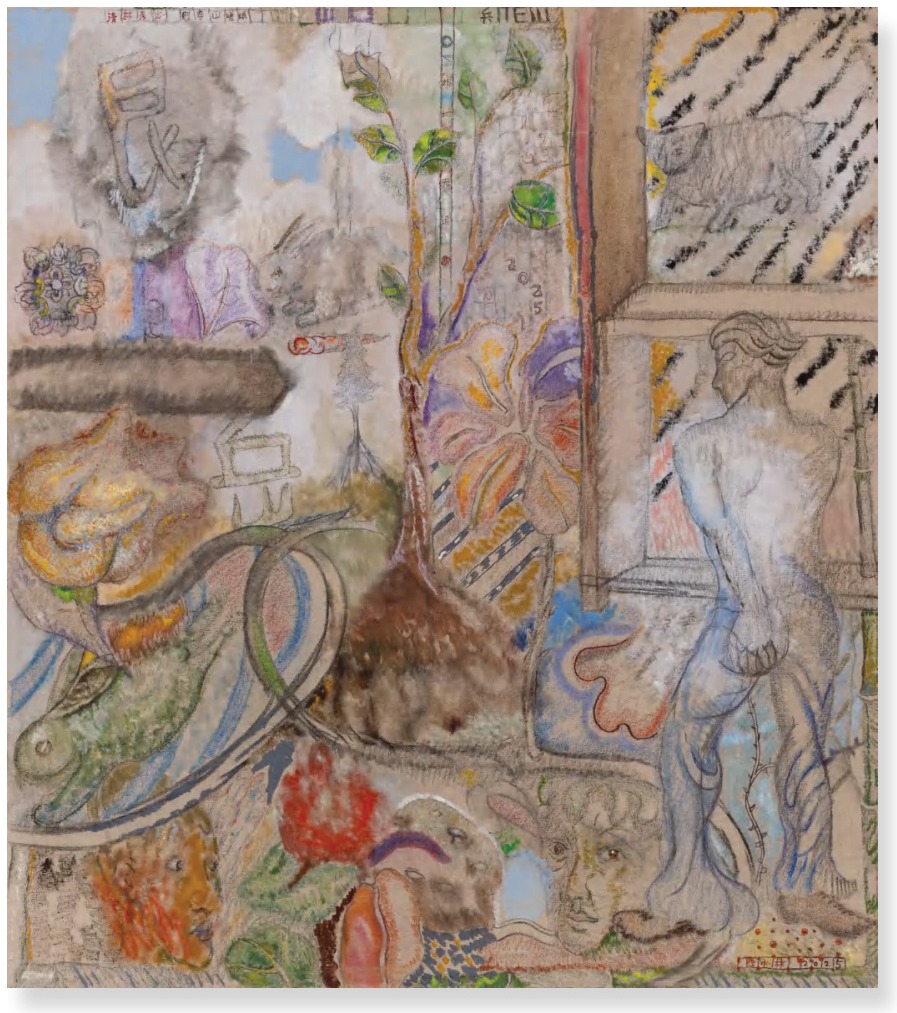
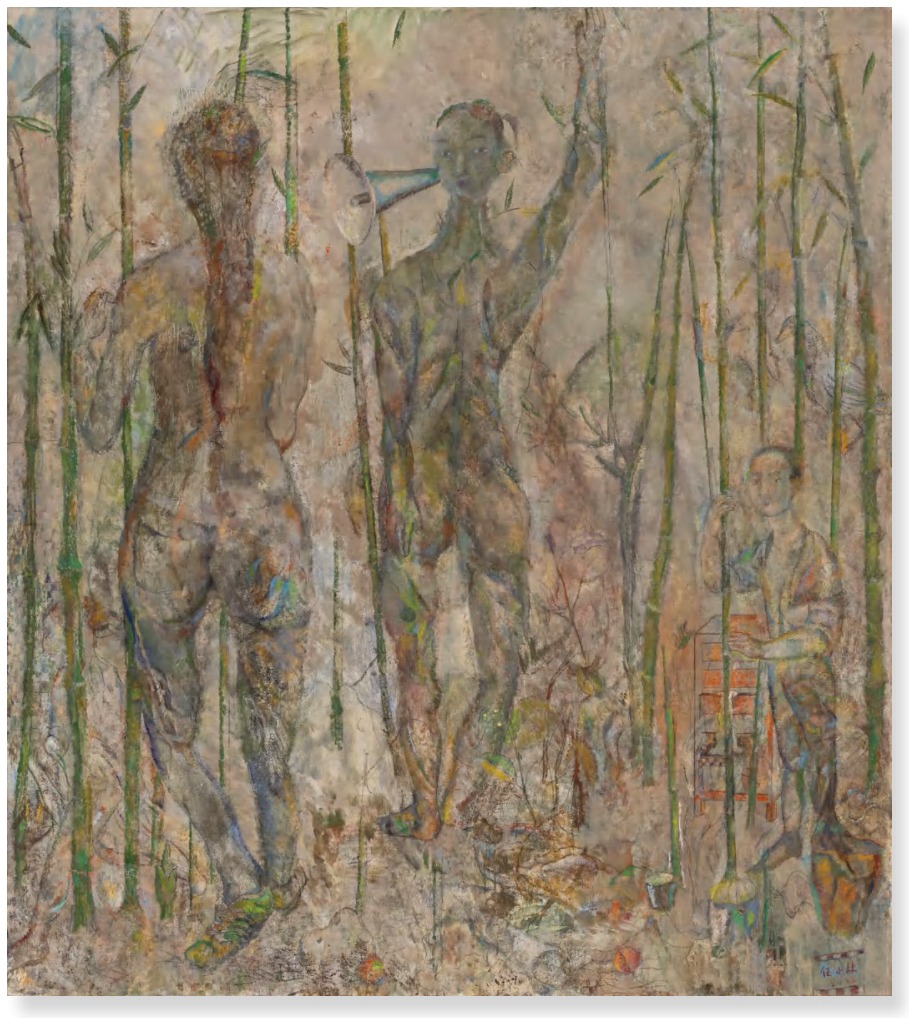
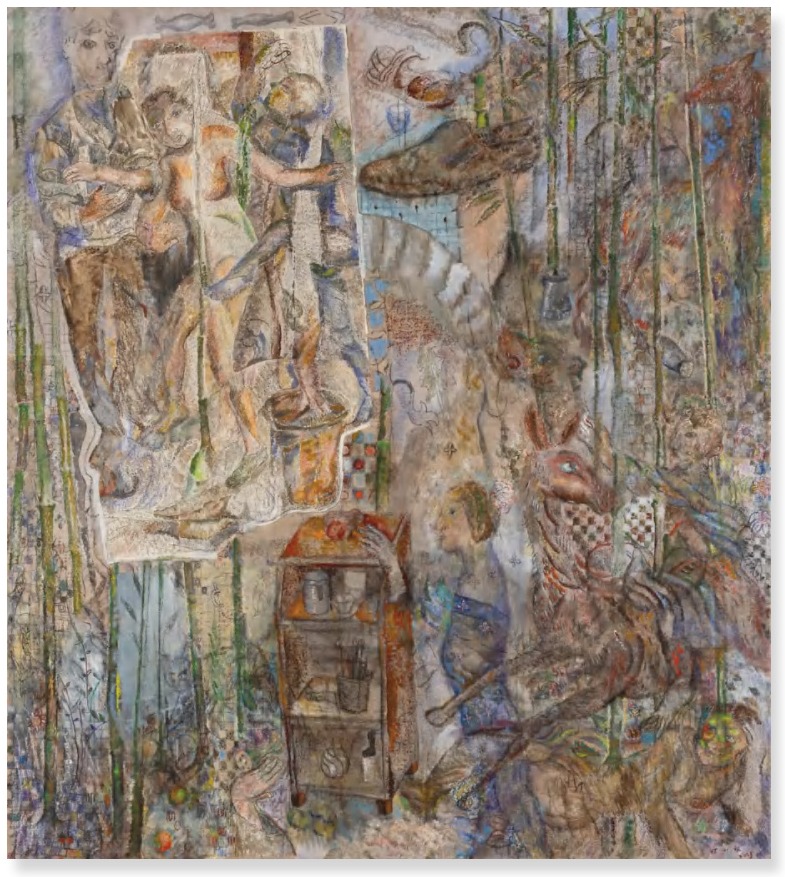
展览履历Exhibitions
- 2025艮岳蜂巢 | 北京 · 蜂巢当代艺术中心
艺见洞察ArtMatters Insights
代表作与创作Selected Works & Style
据平台艺术家档案,任小林(Ren Xiaolin,1963年生)的主要创作媒介为布面油画、纸上作品与综合材料,风格归入表现性具象、意象、浪漫主义与装饰性范畴。
**代表作**
其代表性作品包括《个体与永恒的对望》(2025)、《众神的游戏》(2025)、《生灵的法则》(2025)、《竹记》(2022)、《绿竹》(2022)、《狮子林》(2021)、《身处大地》(2021)等,多为布面油画或综合材料作品。
**创作特点**
任小林的作品带有强烈的野性气质与神秘主义色彩,常出现拟人化而失真的人形面孔、脱域的肢体和仪式化的群像配置。他的视觉语言深受贵州边缘文化、原始宗教及墓室、敦煌壁画的影响,同时吸收书法线条与文人画意趣,形成写意性线条、散点式构图和低沉雅拙的色彩特征。其题材集中于情感、梦境、记忆与时间、风景、生命等主题,整体呈现一种非理性、象征性且富有古典时间深度的绘画气质。
Ren Xiaolin (b. 1963/1964, Yongshou County, Shaanxi) is a Chinese contemporary painter whose practice combines expressionistic figuration, imagery, romanticism, and decorative qualities. He works primarily in oil on canvas, works on paper, and mixed media, and his recurring themes include emotion, dreams, memory and time, landscape, and life.
**Representative works**
From the archival record, key works include:
- *个体与永恒的对望* (2025), oil on canvas
- *失效的逻辑结构* (2024), mixed media on canvas
- *众神的游戏* (2025), oil on canvas
- *生灵的法则* (2025), oil on canvas
- *竹记* (2022), oil on canvas
- *狮子林* (2021), oil on canvas
- *武装的微笑* (2024), mixed media on canvas
- *看见不等于听见* (2025), mixed media on canvas
His solo exhibition *艮岳* was held at Hive Center for Contemporary Art, Beijing, in 2025.
**Creative style**
Ren Xiaolin’s visual language is shaped by his early experiences in Guizhou, where he encountered local religious customs and marginal, body-centered visual cultures. This background gives his painting a wild, non-rational, even mystical quality. He often paints anthropomorphic but distorted faces, dislocated body parts, and ritualistic group configurations, translating Guizhou folk imagery into a contemporary painterly grammar. In his view, painting can function like a form of image-based spiritual practice, using primitive wildness to pierce the surface of civilized reality.
At the same time, his work draws on Chinese traditional art, especially the structural, symbolic, and religious qualities of tomb murals and Dunhuang murals, as well as the linear energy of calligraphy and the spirit of literati painting. His lines do not aim at realistic description but at the flow of qi and structural growth. His compositions tend toward a scattered, scroll-like spatial logic rather than fixed-point perspective, and his palette is often muted, restrained, and mineral-like, evoking a sense of deep historical time.
Overall, Ren Xiaolin’s painting moves between the primitive and the refined, the mystical and the structural, producing an image-world that feels both intimate and remote, symbolic and emotionally charged.
展览与收藏Exhibitions & Collections
根据平台现有档案及文章上下文,任小林(Ren Xiaolin,1963—)的展出机构可整理如下:
**平台结构化档案记录的展览机构:**
- 蜂巢当代艺术中心(北京):2025年个展“艮岳”
**平台文章上下文补充的展出机构:**
- 蜂巢当代艺术中心(北京):2019年“模糊的末端”个展;2022年“形象的迷思”相关展览
- 今日美术馆(北京):2011年“陌影·异色”个展
- 何香凝美术馆(深圳):2008年“撒呓怔”个展
- 上海美术馆:2006年“警幻”个展
- 贵阳美术馆:2010年“陌影·异色”个展
- 国立台北艺术大学关渡美术馆:2012年“同代人的视觉修辞:断忆的穿越”个展
- 澳门仁慈堂婆仔屋:2011年“人迹·虚”个展
- ARTSIDE画廊(首尔):2008年“虚幻的色彩”个展
- Ray Hughes画廊(悉尼):2007年个展
- 山艺术-北京林正艺术空间:2013年“暧昧中的和谐”个展
- 艺术仓库(北京):2015年“经验”个展
- L.A画廊(法兰克福):2006年“风景”个展
- 北京国际艺苑美术馆:1993年、1998年个展
- 山美术馆(高雄):1998年个展
- 中央美院画廊:1993年个展
- 北京音乐厅画廊:1993年个展
此外,其作品还曾在以下机构群展中展出:中国美术馆(北京)、广东美术馆(广州)、湖北美术学院美术馆(武汉)、广州艺术博物院、成都现代美术馆、江苏省美术馆(南京)、银川当代美术馆、国立历史博物馆(台北)、蓝顶美术馆(成都)、苏州金鸡湖美术馆、印度尼西亚国家博物馆(雅加达)、吕贝克美术馆(德国)等。
**收藏机构:**
平台现有档案及文章上下文中均未提供任小林作品被哪些机构收藏的明确信息,因此暂无相关资料。
According to the artist profile in the platform archive, Ren Xiaolin’s listed exhibition record is:
- **2025**: Solo exhibition **“艮岳” (Genyue)** at **Hive Center for Contemporary Art, Beijing** (蜂巢当代艺术中心).
The available archive does **not** list any institutional collections of his work. Therefore, based on the structured data provided, no institution collection information can be confirmed.