大竹茂夫
简介Biography
大竹茂夫(Shigeo Otake),1955年出生于日本神户。1974年进入京都市立艺术大学美术系,1976年加入油画壁画班,师从山添耕治学习湿壁画与蛋彩画。1976至1978年,他赴欧洲尤其是意大利和西班牙游学两年,随后于1979年和1981年分别获得京都市立艺术大学学士与研究生学位。毕业后,他作为日本文化厅国内艺术家研修员,师从前田常作。自1982年起,大竹茂夫在东京、京都、神户等地多次举办个展与群展。2009年,他出演NHK纪录片《热枕时光:百忙之中有爱好/冬虫夏草篇》,以对冬虫夏草的热情给观众留下深刻印象。作为日本虫草菌同好会成员,他参与了2012年由石田大成社发行的《冬虫夏草的文化志》编撰,该书由奥沢康正主导,使用了大量大竹茂夫在京都实地采集的真菌照片。1988年起,他与早川书房合作,为美国儿童教育家桃莉·海顿的文学作品日译本绘制封面。2000年和2005年,他与作家天沼春树合作,由帕罗舍出版了绘本《爱丽丝之国》和《小红帽》。大竹茂夫的创作最初受自然界昆虫和海栖动物启发;1985年,他在工作室附近挖出一株蝉花虫草,由此深入虫草世界。此后近四十年,他在京都西部山区持续采集和研究虫草菌。其作品系列包括“移动真菌园”“菌生代”与“真菌塔罗牌”,分别描绘真菌与人类文明的融合、借鉴但丁《神曲》的未来世界,以及将纸牌角色与真菌特征贯通。1995年阪神淡路大地震摧毁了艺术家童年与成长的地景,也深刻影响了他绘画中的空间结构,废墟成为其创作的重要主题。2023年,蜂巢当代艺术中心在北京举办了大竹茂夫在中国的首次个展“大竹茂夫:芳集托皮亚”,展览名称由“fungi”与“utopia”合成,意为真菌之邦,展出了他自1980年代至今的绘画创作。2025年,蜂巢当代艺术中心又举办了其个展“脱壳”。
Shigeo Otake was born in Kobe, Japan, in 1955. In 1974, Shigeo Otake enrolled in the Department of Fine Arts at Kyoto City University of Arts and joined the oil and mural painting class in 1976, studying fresco and tempera painting under Koji Yamazoe. Having benefited from the trend created by the enthusiasm of his school for the early Italian Renaissance at that time, following his predecessors, Otake embarked on a two-year journey in Europe, especially in Italy and Spain, from 1976 to 1978. He later received his bachelor’s and graduate degrees from Kyoto University of Arts in 1979 and 1981, respectively, and after graduation, he worked as a domestic artist researcher for Japan’s Agency for Cultural Affairs under the mentorship of Jōsaku Maeda. Since 1982, Otake has had many solo and group exhibitions in Tokyo, Kyoto, and Kobe and has a devoted audience. In 2009, he appeared in the "Cordyceps" episode of Japanese network NHK’s documentary program "Time for Enthusiasm: hobbies in the busy time," leaving a great impression on the audience as a painter with a passion for Cordyceps. A member of the Japanese Society of Cordyceps, he participated in the editing and preparation of Cultural History of Vegetable Wasp & Plant Worms, published by Ishida Taiseisha in 2012. Mainly edited by Yasumasa Okuzawa, this book features numerous photos of the fungus collected by Otake on-site in Kyoto. Japan in the 1980s was once regarded as the epitome of publishing in Asia when a significant amount of European literature flooded into the Japanese market. In 1988, Shigeo Otake collaborated with the science fiction giant Hayakawa Publishing, and for more than a decade since, his paintings have been featured on the covers of several volumes of Japanese translations of the literary works of renowned American educator Torey L. Hayden. In 2000 and 2005, in collaboration with author Haruki Amanuma, he published children’s books Alicetopia and Little Red Riding Hood by Parol-sha, in which Otake illustrated the classical literary motifs of "Alice in Wonderland" and "Little Red Riding Hood". In Alicetopia , Otake painted a fascinating urban maze full of strange creatures. Throughout human history, people have been attracted to strange creatures hybrid with several kinds of species, such as the Pegasus in ancient Greek mythology, the Chimera (with the fore part of a lion, in the hinder a serpent, and in the midst a goat), the mermaid, and the Nue (with the head of a monkey, the limbs of a tiger, the body of a Japanese raccoon dog and the front half of a snake for a tail) in Japanese mythology. The inhabitants of Shigeo Otake’s world of paintings are intertwined with everyday life and concealed from reality. His practice was first inspired by insects and sea creatures. In 1985, he dug up a cicada Cordyceps in the yard of his studio; the immature sporocarp emerged from the body of the cicada larvae parasitized by mycelium, which drew the art
代表作Selected Works
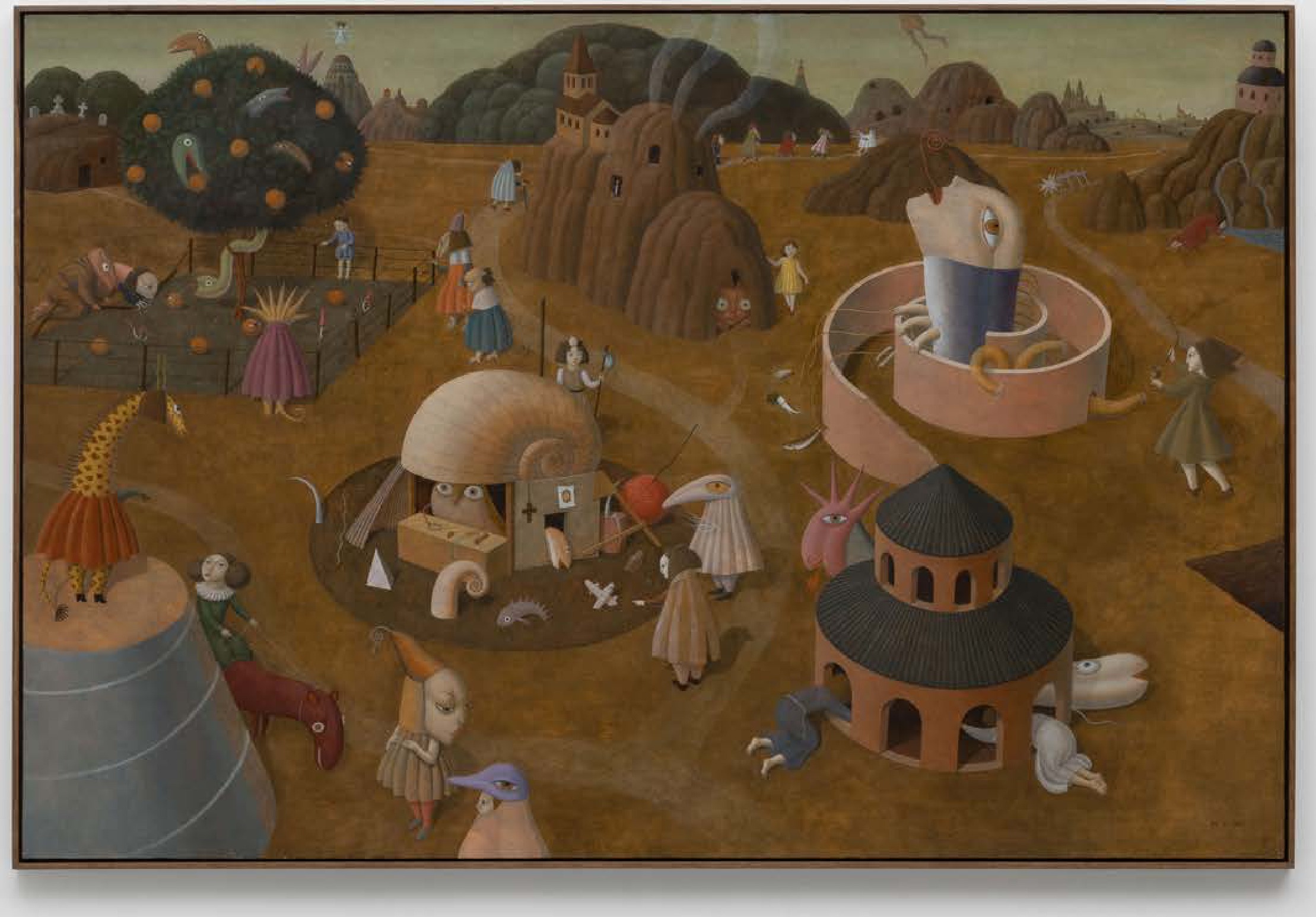

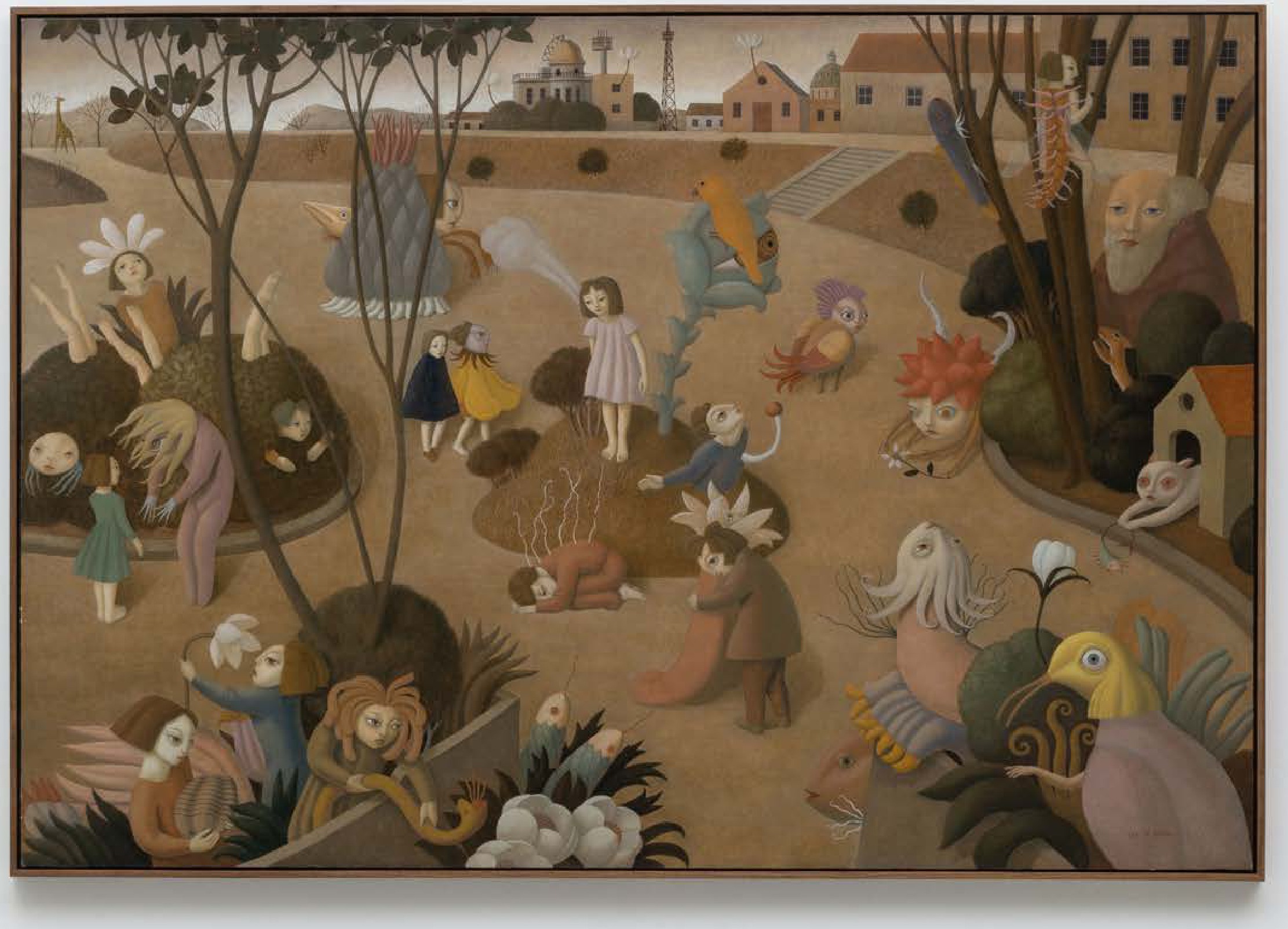
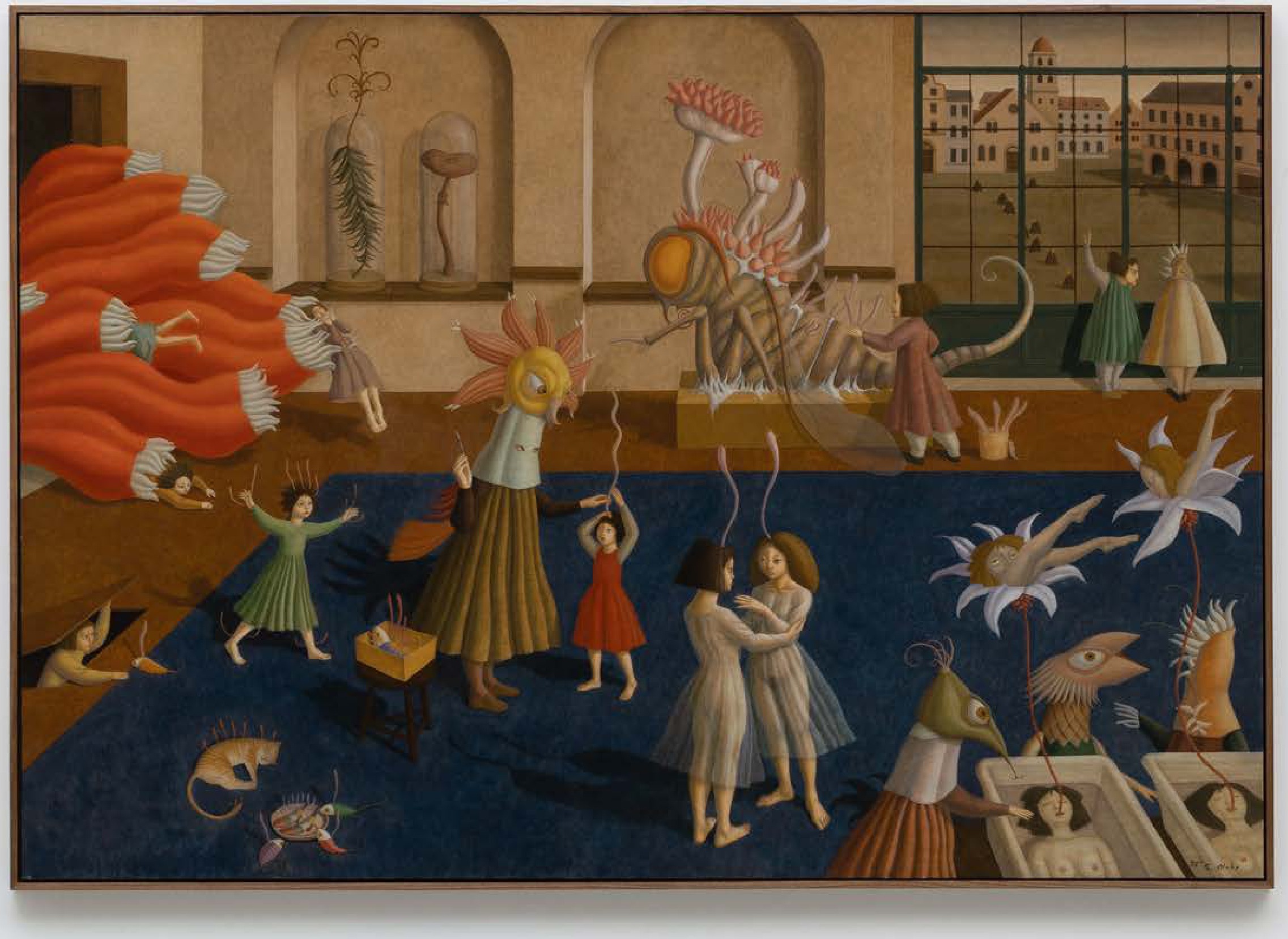
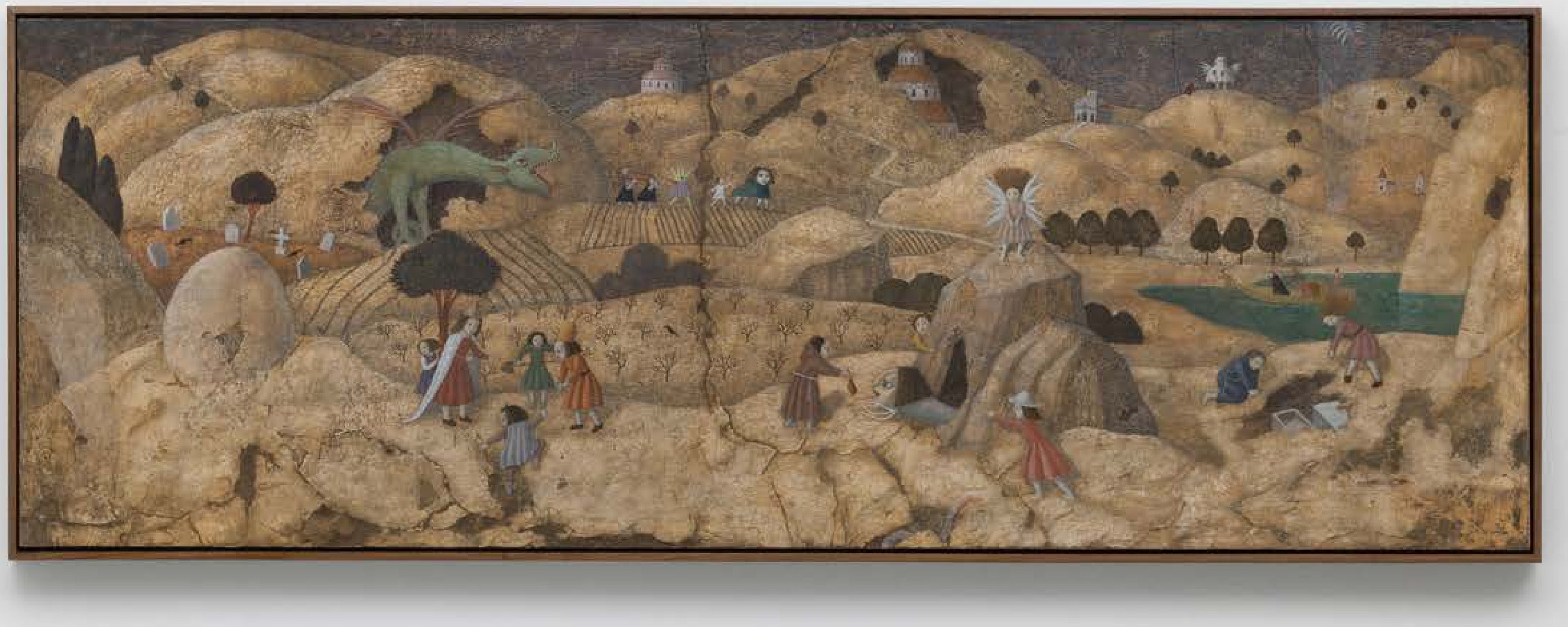


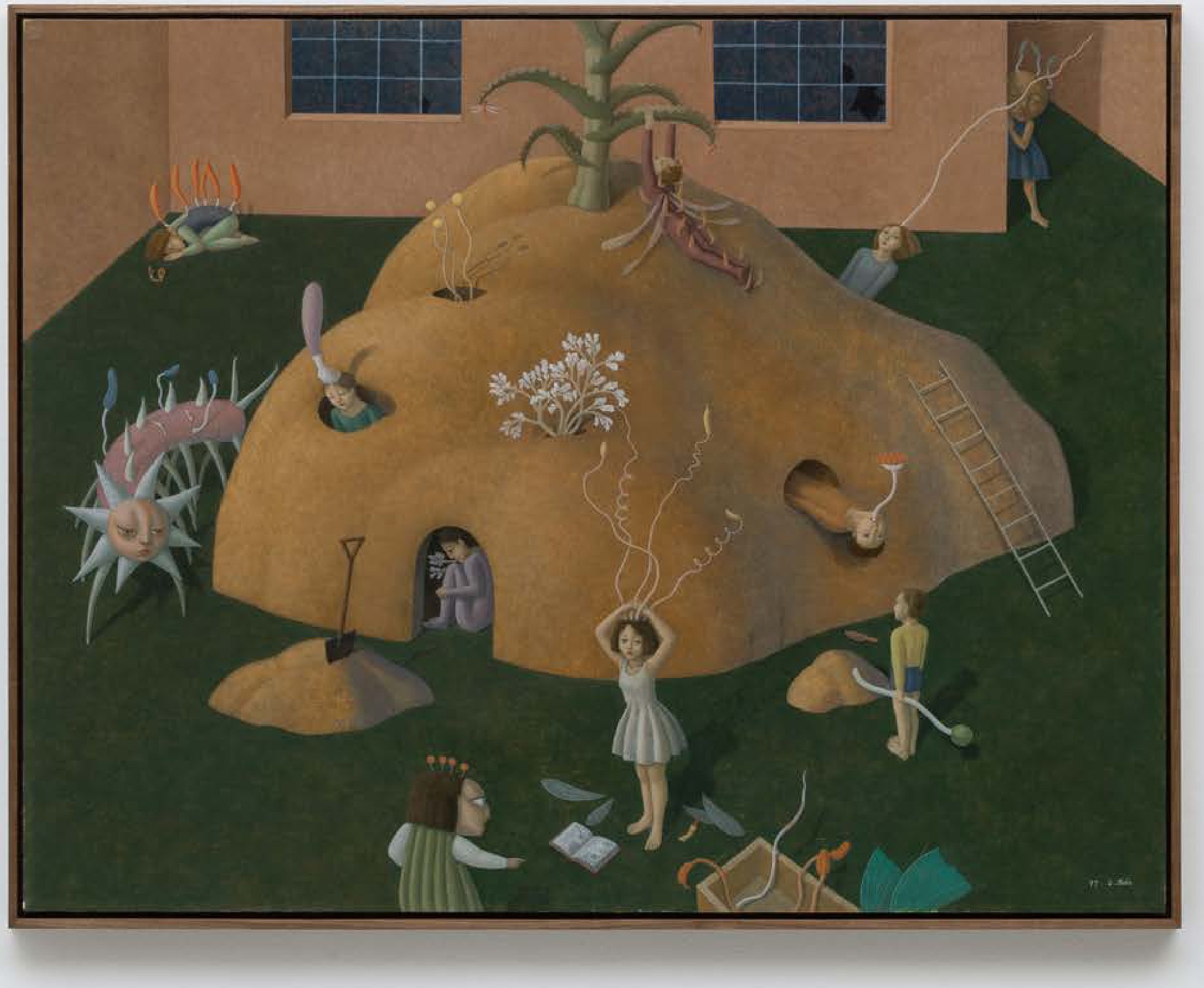
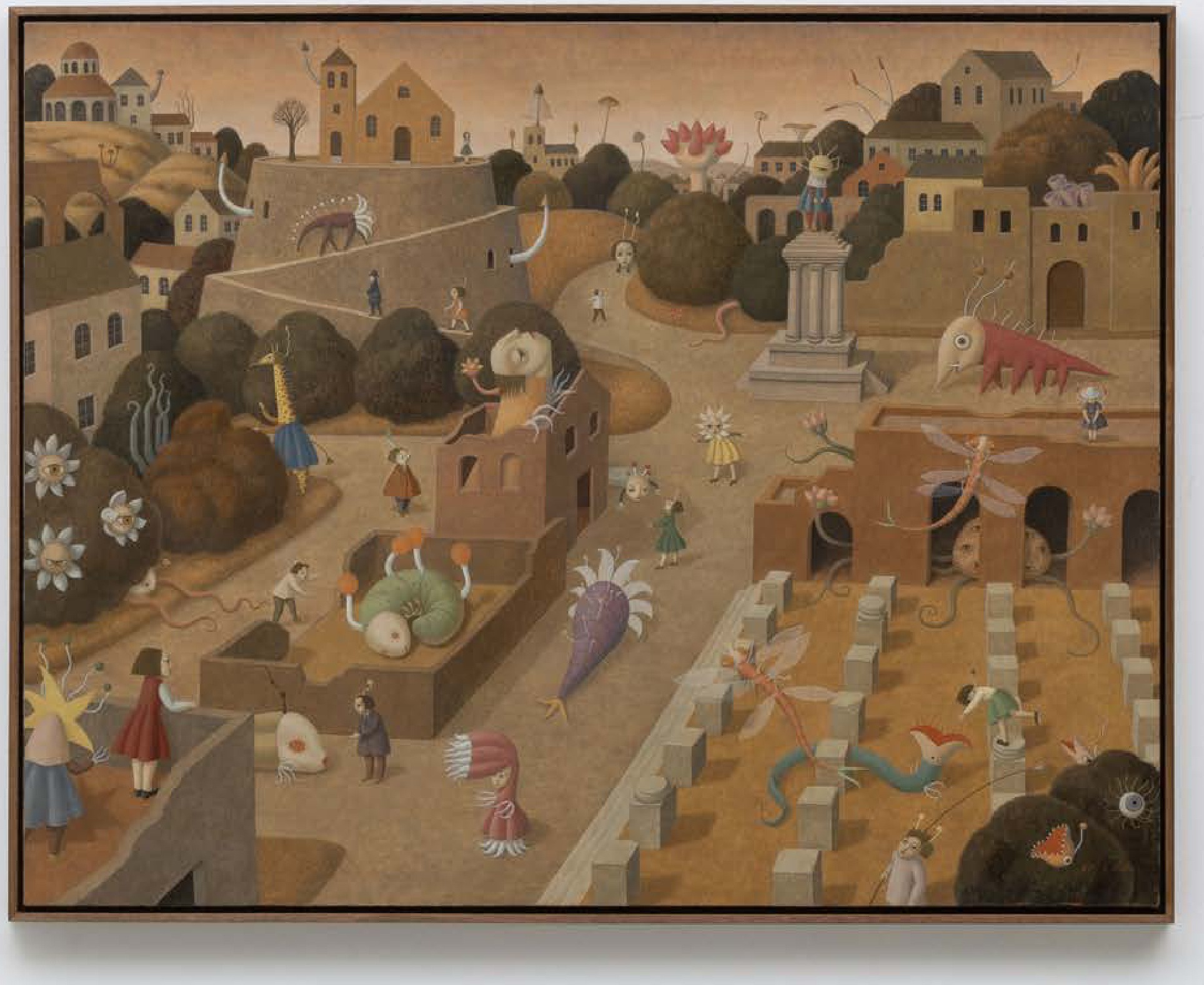


展览履历Exhibitions
- 2025脱壳蜂巢 | 上海 · 蜂巢当代艺术中心
- 2025脱壳蜂巢 | 上海 · 蜂巢当代艺术中心
- 2023芳集托皮亚蜂巢当代艺术中心|北京 · 蜂巢当代艺术中心
艺见洞察ArtMatters Insights
代表作与创作Selected Works & Style
**大竹茂夫(Shigeo Otake)的代表作与创作特点**
**一、代表作**
根据平台艺术家档案,大竹茂夫的重要作品包括:
- 《通往圣地亚哥-德孔波斯特拉之路》(1996,木板坦培拉油彩)
- 《真菌学家H的误判A》(1988,木板坦培拉油彩)
- 《冬虫夏草的化妆舞会》(1997,木板坦培拉油彩)
- 《人类纪念公园》(2008,木板坦培拉油彩)
- 《遗产》(1996,木板坦培拉油彩)
- 《此路不通》(1995,布面坦培拉油彩)
- 《公园的植物群》(2003,木板坦培拉油彩)
- 《安居之所》(1991,布面坦培拉油彩)
- 《废墟中的肺鱼》(1995,布面坦培拉油彩)
- 《菜园》(2006,木板坦培拉油彩)
- 《不要在我梦中胡闹》(2022,木板坦培拉油彩)
**二、创作特点**
1. **媒介与技法**
大竹茂夫主要运用**坦培拉(蛋彩)与油彩**,尤其擅长在木板或布面上作画。他早年师从山添耕治学习湿壁画与蛋彩画,并赴意大利、西班牙研习中世纪与文艺复兴时期的宗教壁画,因此作品中带有明显的古典绘画技法痕迹。
2. **题材与主题**
他的创作主题集中在**神话宗教、梦境、自然生态与生命**,尤其痴迷于**真菌、虫草、昆虫、海栖动物**等。1985年他在京都郊区发现一株蝉花虫草后,真菌世界成为他长期的核心母题。他常将被真菌感染的宿主幼虫(如蝉、蜘蛛等)转化为**人形或拟人化形象**,营造出奇异、共生的“异界居民”。
3. **风格与表现**
大竹茂夫的作品属于**具象艺术与象征主义**,画面细密繁茂,叙事性强。他融合了**欧洲中世纪—文艺复兴的宗教绘画图式**与**日本妖怪文化、民间神话**,形成一种既庄严又诡谲的视觉语言。他笔下的场景往往介于真实与虚幻之间,充满象征与隐喻,呈现出“真菌之邦”(芳集托皮亚)般的幻想世界。
4. **创作脉络**
其创作可大致分为几个阶段与系列:早期受欧洲古典绘画影响,后转向多物种、虫草变貌的探索,并发展出**“移动真菌园”“菌生代”“真菌塔罗牌”**等系列。他还借用但丁《神曲》的叙事方式,构建关于真菌感染、文明终结与后人类时代的隐喻性图景。
**Representative works**
Selected from the artist’s documented works, Shigeo Otake’s representative pieces include:
- *通往圣地亚哥-德孔波斯特拉之路 / The Road to Santiago de Compostela*, 1996, tempera and oil on panel
- *此路不通 / No Thoroughfare*, 1995, tempera and oil on canvas
- *公园的植物群 / Flora of the Park*, 2003, tempera and oil on panel
- *真菌学家 H 的误判 A / Mycologist H’s Misjudgment A*, 1988, tempera and oil on panel
- *遗产 / The Inheritance*, 1996, tempera and oil on panel
- *安居之所 / A Place of Dwelling*, 1991, tempera and oil on canvas
- *废墟中的肺鱼 / Lungfish in the Ruins*, 1995, tempera and oil on canvas
- *菜园 / Vegetable Garden*, 2006, tempera and oil on panel
- *冬虫夏草的化妆舞会 / Masquerade of the Cordyceps*, 1997, tempera and oil on panel
- *人类纪念公园 / Human Memorial Park*, 2008, tempera and oil on panel
- *不要在我梦中胡闹 / Don’t Fool Around in My Dream*, 2022, tempera and oil on panel
- *别在我的梦里闹腾 / Don’t Frolic in My Dream*, 2022, tempera and oil on panel
**Creative style**
Shigeo Otake works primarily in tempera and oil on panel or canvas, within a figurative and symbolist language. His imagery draws on mythology, religion, dreams, natural ecology, and the cycle of life.
His early inspiration came from insects and marine creatures. From 1985, after excavating a cicada cordyceps near his studio, he became deeply engaged with the world of cordyceps fungi. For nearly four decades, he has collected and studied cordyceps in the mountains west of Kyoto. This long research is reflected in major series such as *Moving Fungus Garden*, *Fungoic Era*, and *Fungal Tarot*: they respectively explore the fusion of fungi and human civilization, a future world modeled on Dante’s *Divine Comedy*, and tarot-card figures interwoven with fungal characteristics.
The 1995 Great Hanshin-Awaji Earthquake destroyed landscapes from his childhood and profoundly shaped the spatial structures in his paintings, making ruins a recurring theme. His meticulous tempera technique combines with dense, symbolic narratives to create a distinctive fungal utopia. In 2023, his first solo exhibition in China, *芳集托皮亚 / Fungitopia* at Hive Center for Contemporary Art in Beijing, presented works from the 1980s onward; in 2025, Hive Shanghai presented his solo exhibition *脱壳*.
展览与收藏Exhibitions & Collections
依据平台现有“结构化艺术家档案数据”:
**展出机构(可查)**
- 蜂巢当代艺术中心(北京):2023年举办大竹茂夫中国首次个展“大竹茂夫:芳集托皮亚”。
- 蜂巢当代艺术中心(上海):2025年举办大竹茂夫个展“脱壳”。
- 档案还提及他自1982年起在东京、京都、神户等地多次举办个展与群展,但未列出具体机构名称。
**收藏机构**
- 平台现有档案及文章上下文中,均未提供大竹茂夫被哪些机构收藏的明确记录,因此该部分暂无资料可查,不能确证具体收藏机构。
According to the available archival data, Shigeo Otake has exhibited at:
- **Hive Center for Contemporary Art, Beijing** — *芳集托皮亚* (Fangitopia), 2023
- **Hive Center for Contemporary Art, Shanghai** — *脱壳* (Molting), 2025
The provided archival data does not include a specific list of institutions that collect his work.