个展 - 坠星
展览信息
前言Introduction
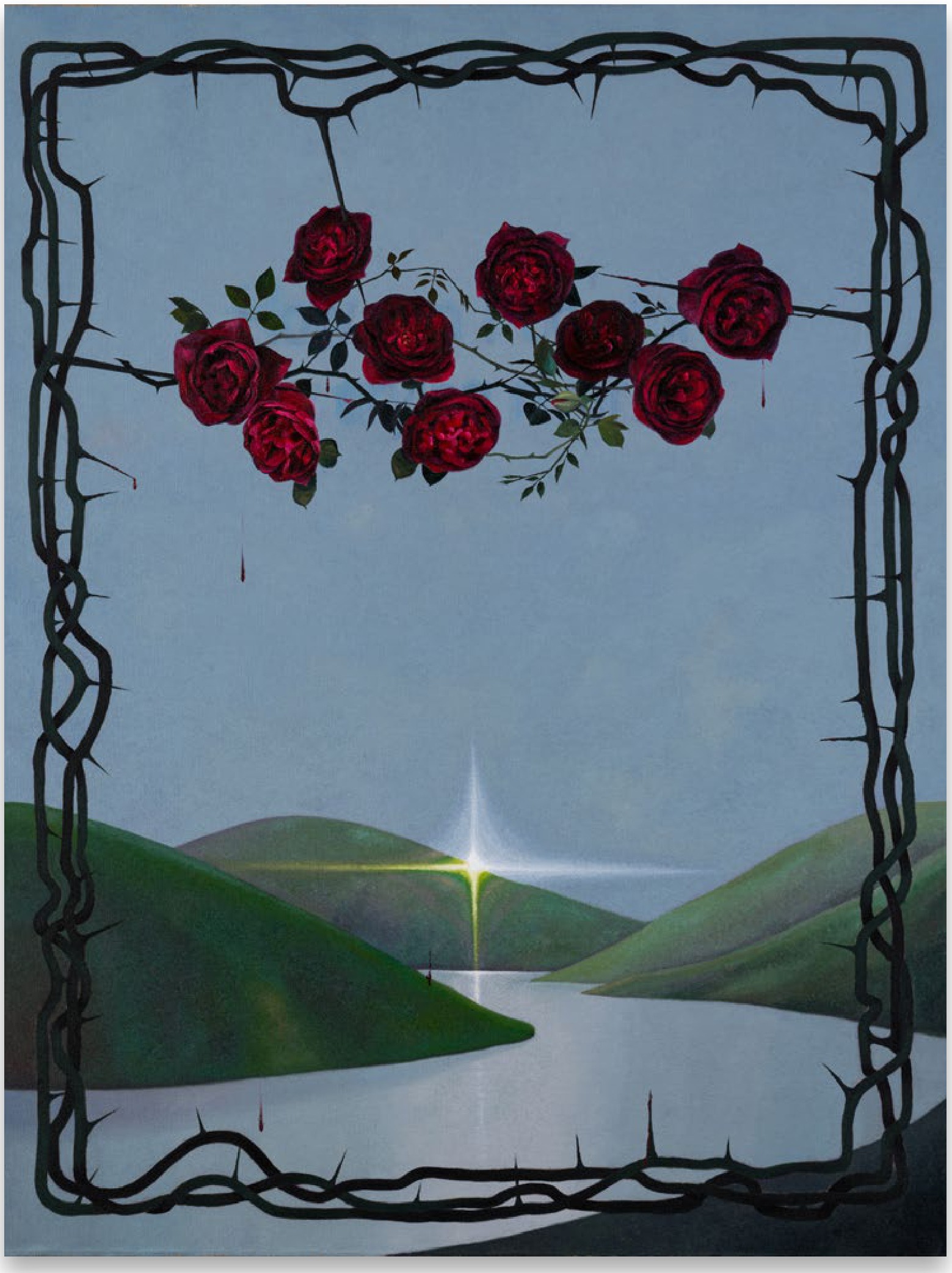
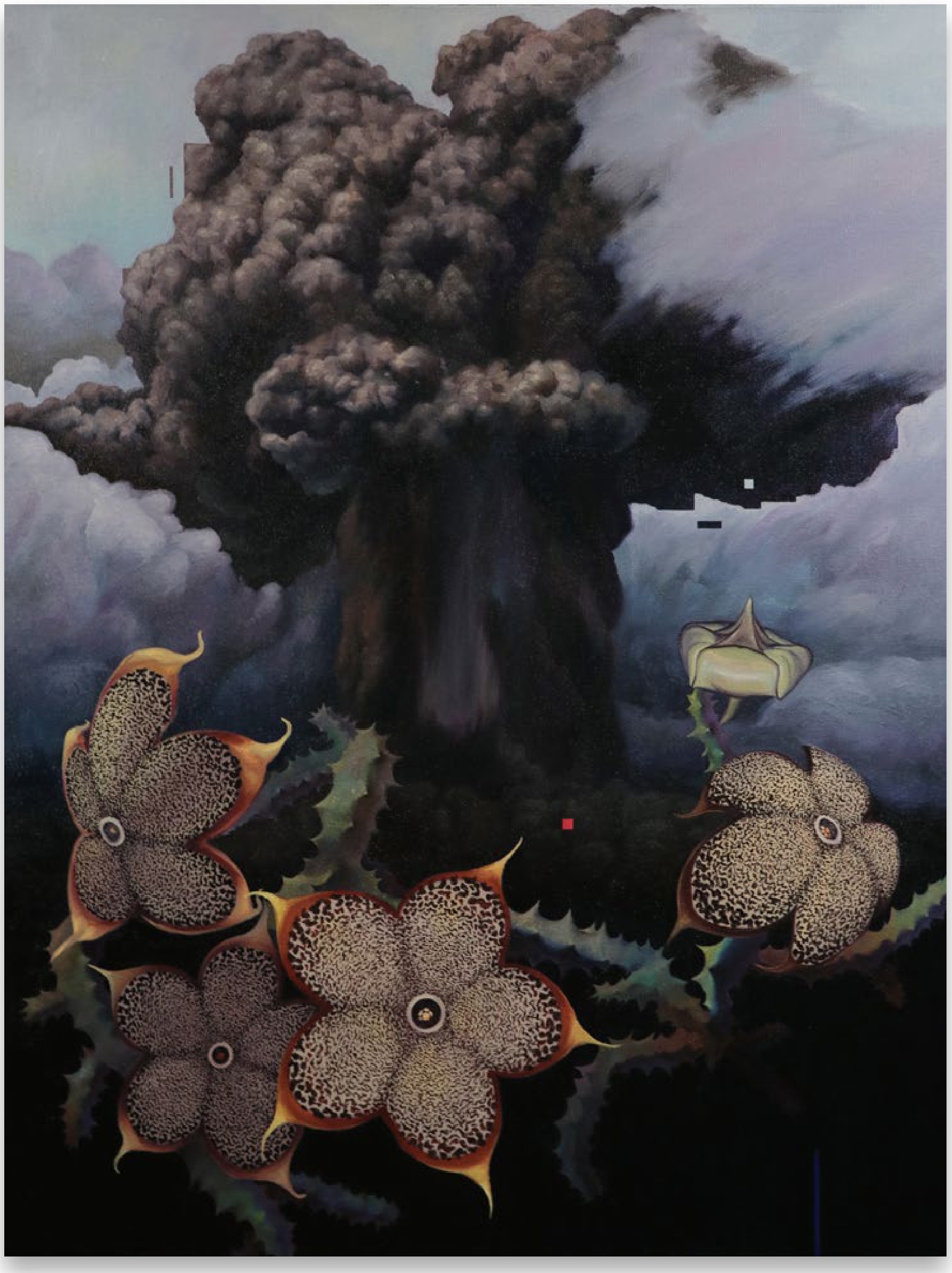
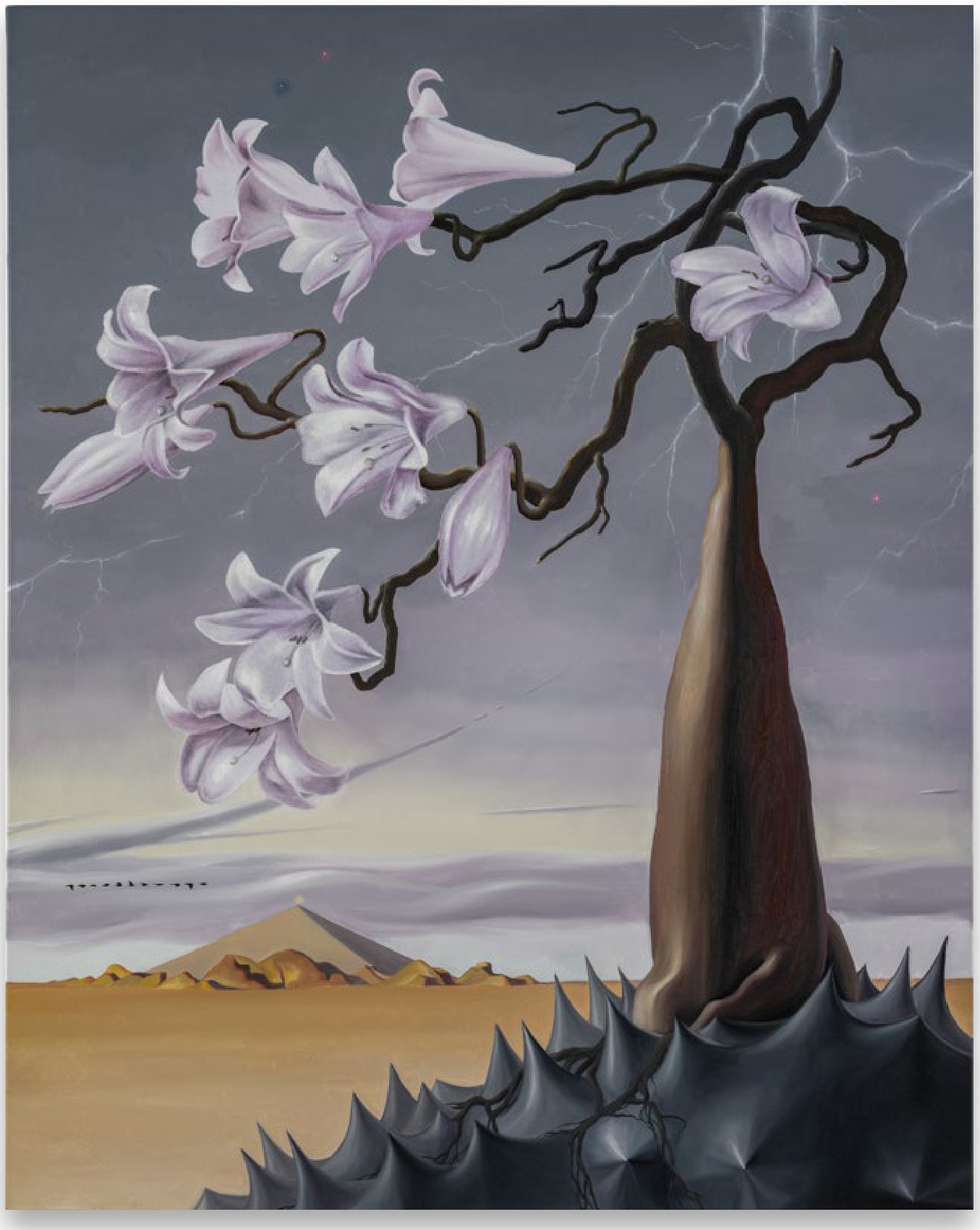
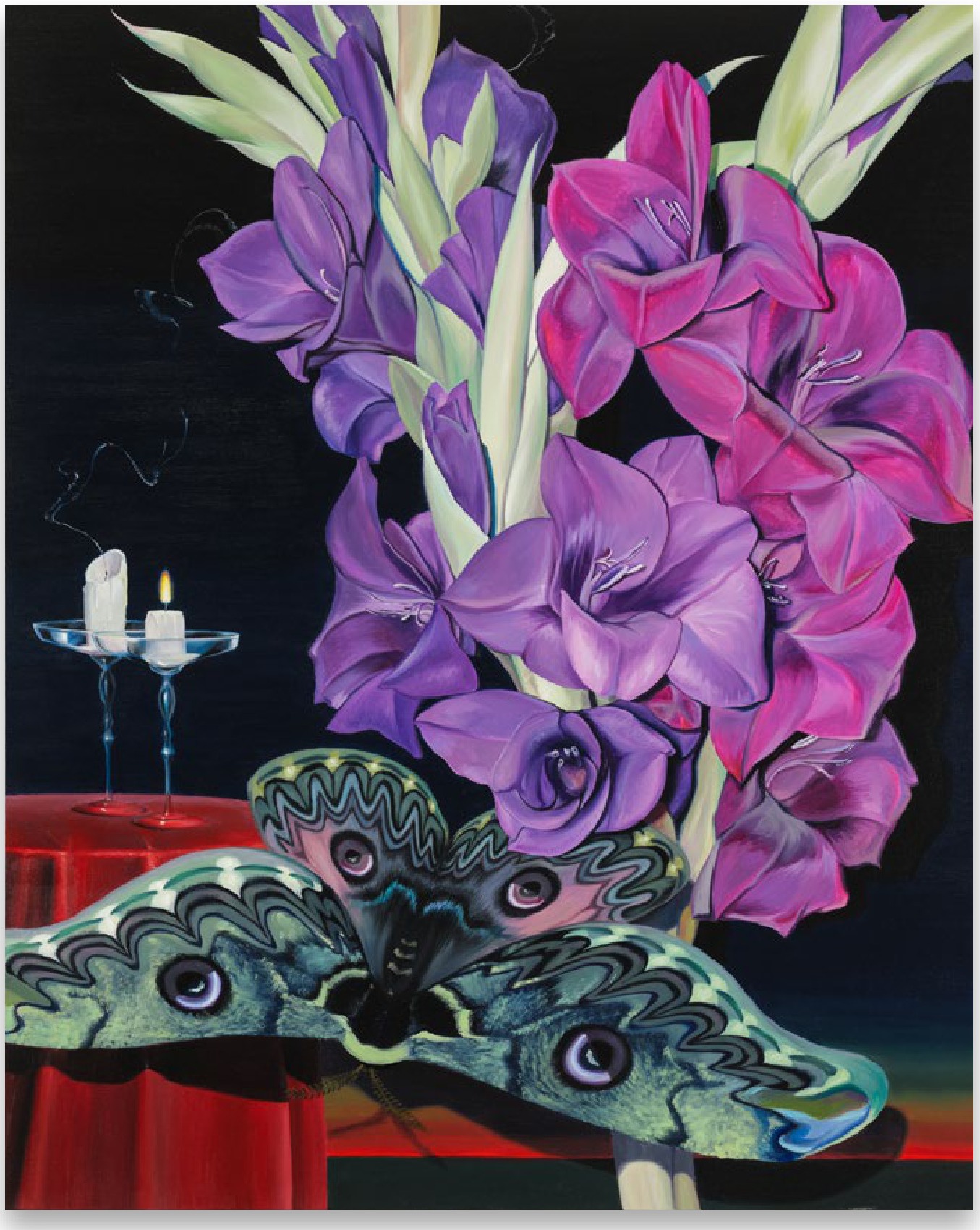
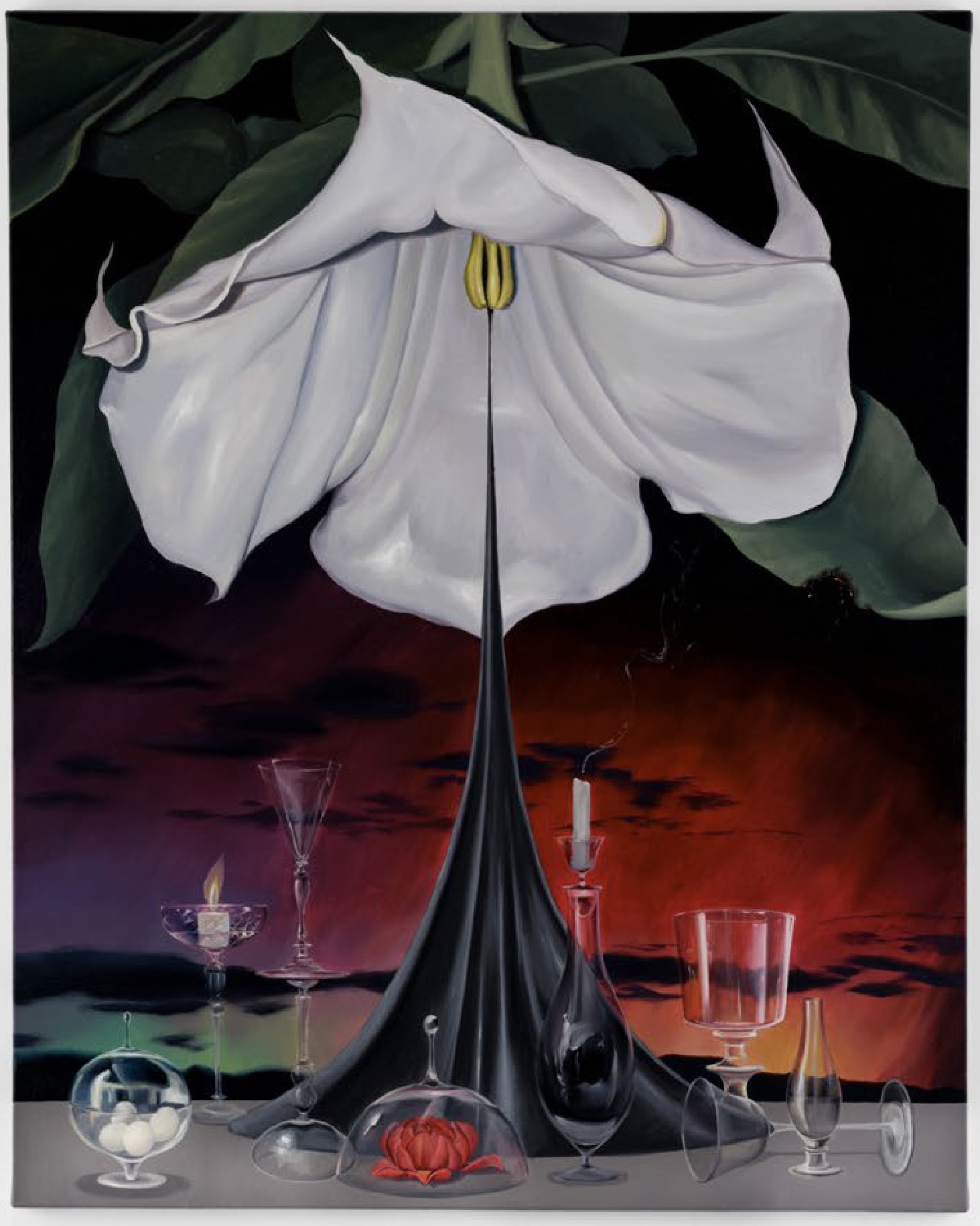
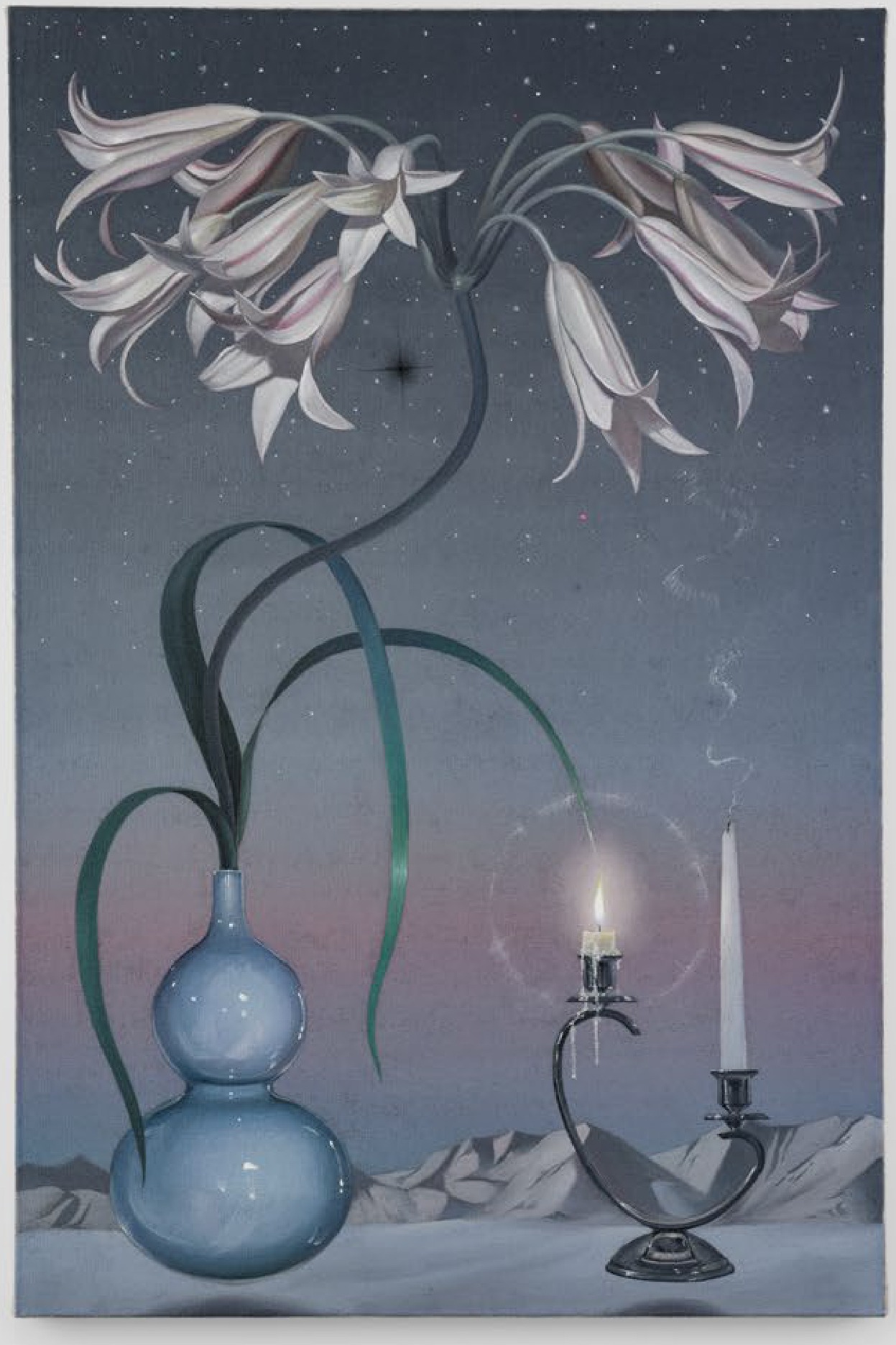
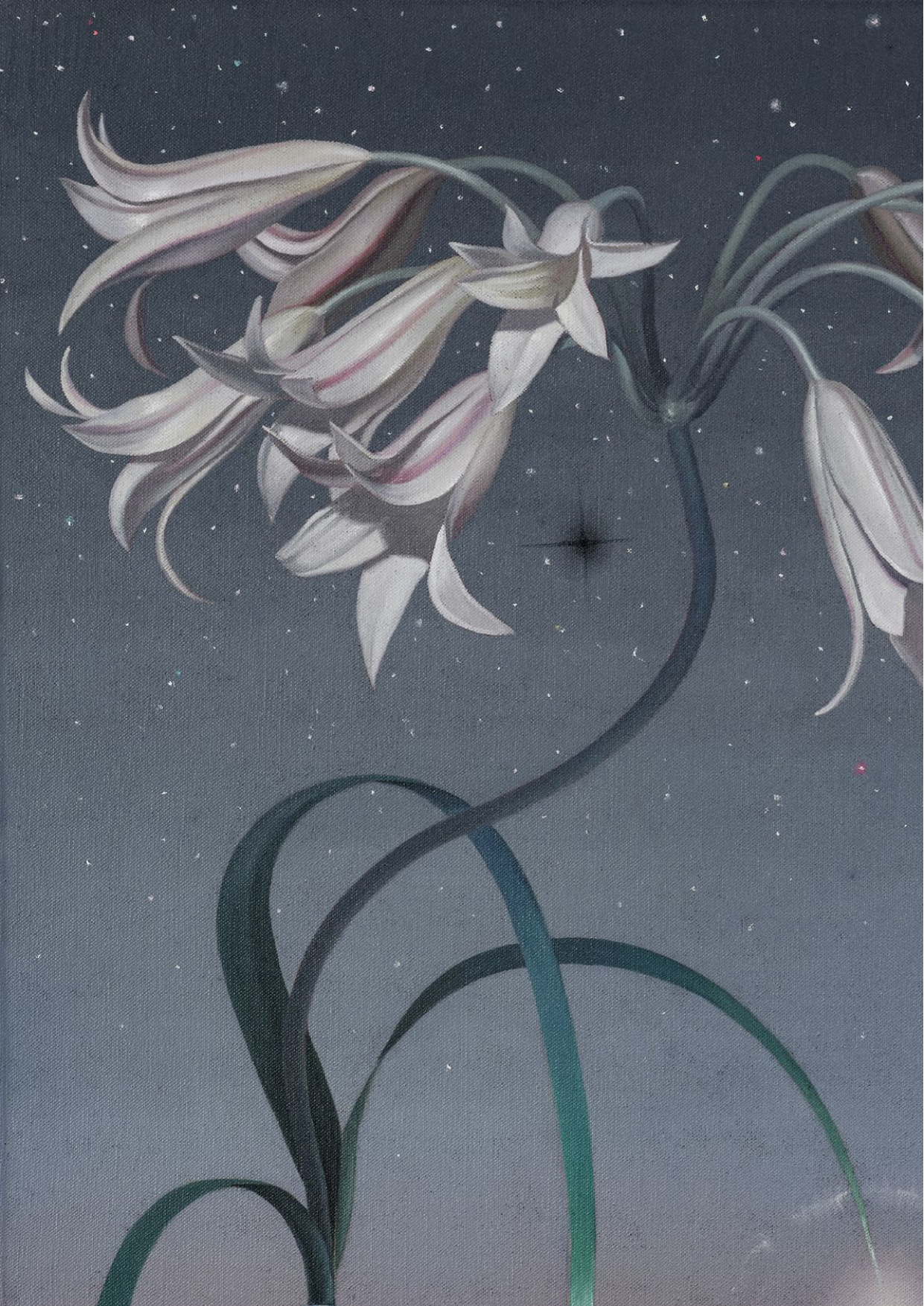
伯年艺术空间欣然宣布,将于2025 年1 月18 日至3 月2 日推出艺术家苑慧楠首个展“坠星”。由王垚力担任策展人,展览呈现苑慧楠最新创作的十余幅布面油画,本次展出作品以植物与静物作为创作主体,艺术家通过构建趋近于时间冻结的超现实画面,隐晦地表达自我在直面生命的终极归宿时,内心深处所产生的深刻触动。哲学的思辨和象征性的语言,帮助他使用绘画展现自由与困境共存的绝对瞬间。起初,苑慧楠的作品通过简单清晰的构图,就能让观者感受到空间中关于时间的长久与深远。以描绘自然中的花卉、飞蛾、气象、地貌为主要构成元素,超现实般的图景使其作品显得具象又充满神秘。用柔和的色彩烘托宁静且略带肃杀的氛围,让他的作品更好的承载生命本质的重量。植物是贯穿他创作至今的重要象征性符号。这一元素的反复出现,不仅是他表露内心情感的一种投射,植物也是作为见证他生命成长与转变的精神寄托。值得注意的是,在苑慧楠的新作品中,植物开始不再作为单一主体形象出现,他似乎有意识地弱化了原本植物在其作品中被赋有的“神性”——这种神性曾将他的花卉如耶稣受难般的架空在画面的正中心。如今,苑慧楠开始摸索如何让植物在作品中以更为多样的方式出现,例如《永恒爱河》中,虽然滴血的玫瑰仍被置于画面的高处,但带刺的枝蔓围绕在周围形成了带有某种装饰意味的“取景框”,而这种装饰性无疑为他的绘画加上了一抹来自世俗的色彩。蛋糕、咖啡、红酒,这些源于日常生活的元素也开始出现在他的作品中,像是完成了某种带有悲壮色彩的自我和解,苑慧楠仍然通过绘画延续着自我对生命意义的追寻,但他并非受困于虚无,而是通过感知现实去直面更为复杂而真实的人性。荣格在《红书》中尝试通过自己与内在无意识的对话,深入探讨光明与黑暗。在荣格的心理学体系中,“光明”通常象征着意识与理性,是清晰的自我意识,是人类能够理解和控制的部分。而“黑暗”则代表潜意识、无意识,是个人未被接纳的阴影,是被忽视,或被压抑的内心未知世界。如果在苑慧楠的画中,一种隐约浮现的痛苦时常可见,这或许就是荣格所讲述的“黑暗”
的体现。苑慧楠将《红书》视为人生书籍之一,其中最为重要的是,荣格特别强调,黑暗是个人成长和自我转化的必要组成部分,它是一种潜在的生命力量,只有直面黑暗,才能走向真正的自我。本次展览“坠星”,以流星坠落中闪烁的火焰划破黑暗,象征生命与时间看似短暂易逝,可我们终将在抵达终点前努力绽放属于生命的璀璨绚烂。
“我渴望自由,同时也因为不具有自由的能力而畏惧自由,因此我给自己建立了奉自己为神的信仰,用我给自己带来的爱和救赎来创造自由,让我不再囿于自身的渺小与脆弱。最后,坚定我的存在。”
——苑慧楠苑慧楠:坠星
BONIAN SPACE is pleased to announce the solo exhibition A Light of the Dark by artist YUAN Huinan, from January 18 to March 2, 2025. Curated by Wang Yaoli, the exhibition will feature over ten latest oil paintings by the artist. The works center on plants and still lifes, where the artist constructs surreal images that seem to freeze time, subtly expressing the profound emotional impact that emerges from confronting the ultimate destiny of life. Philosophical reflection and symbolic language helped Yuan use painting to depict the simultaneous existence of freedom and struggle in the absolute moment. At the beginning of his career, Yuan Huinan's work conveys the depth and expansiveness of time through simple and clear composition, allowing the viewer to feel the long and far-reaching passage of time within the space. With elements drawn from nature, such as flowers, moths, weather, and landscapes, the surreal imagery renders his works both figurative and mysteriously elusive. The use of soft colors evokes a tranquil yet slightly desolate atmosphere, allowing his works to carry the weight of the essence of life. Plants are an important symbolic element throughout his work. The recurring appearance of plants not only serves as a projection of his inner emotions but also as a spiritual anchor witnessing his growth and transformation. Notably, in Yuan's recent works, plants no longer appear as singular, central symbols. He seems consciously downplaying the "divine" of nature plants once held in his paintings, where his flowers were once positioned as if crucified in the center of the canvas like a Christ figure. Now, Yuan explores how to present plants more diversely in his works. For example, in The River of Eternal Love, while the blood-dripping rose remains positioned at the top of the canvas, the thorny branches form a decorative "frame" around it. This decorative element undeniably adds a touch of the mundane to his painting. Elements of everyday life, such as cake, coffee, and wine, have also started appearing in his works, seemingly completing a form of tragic self-reconciliation. Yuan Huinan continues his pursuit of life's meaning through painting, but rather than being trapped in nihilism, he confronts the more complex and real aspects of human nature through his perception of reality. In The Red Book, Carl Gustav Jung explores the interplay between light and darkness through a dialogue with his inner unconscious. In Jung's psychological framework, "light" typically symbolizes consciousness and reason, clear self-awareness, and the parts of human nature that can be understood and controlled. In contrast, "darkness" represents the unconscious, the shadow, the unaccepted or suppressed parts of the psyche—the neglected or repressed unknown worlds within. If an underlying sense of pain can often be found in Yuan's paintings, it may be a reflection of the "darkness" Jung describes. Yuan regards The Red Book as one of the pivotal texts in his life. Most importantly, Jung emphasizes that darkness is an essential part of personal growth and self-transformation. It is a latent life force, and only by facing the darkness can one reach true self-realization. The exhibition A Light of the Dark (the Chinese literal translation is Falling Star) symbolizes the fleeting nature of life and time through the flashing flames of a falling star, suggesting that while life may seem short and transient, we will strive to shine brilliantly before we reach the end.
"I long for freedom, yet I also fear freedom because I lack the ability to fully embrace it. Therefore, I have created a belief system in which I worship myself as a god, using the love and redemption I give myself to create freedom, so that I no longer remain confined by my own smallness and fragility. Ultimately, I affirm my existence."
— Yuan Huinan YUAN Huinan: A Light of the Dark
参展艺术家Artists
作品