展览信息
前言Introduction
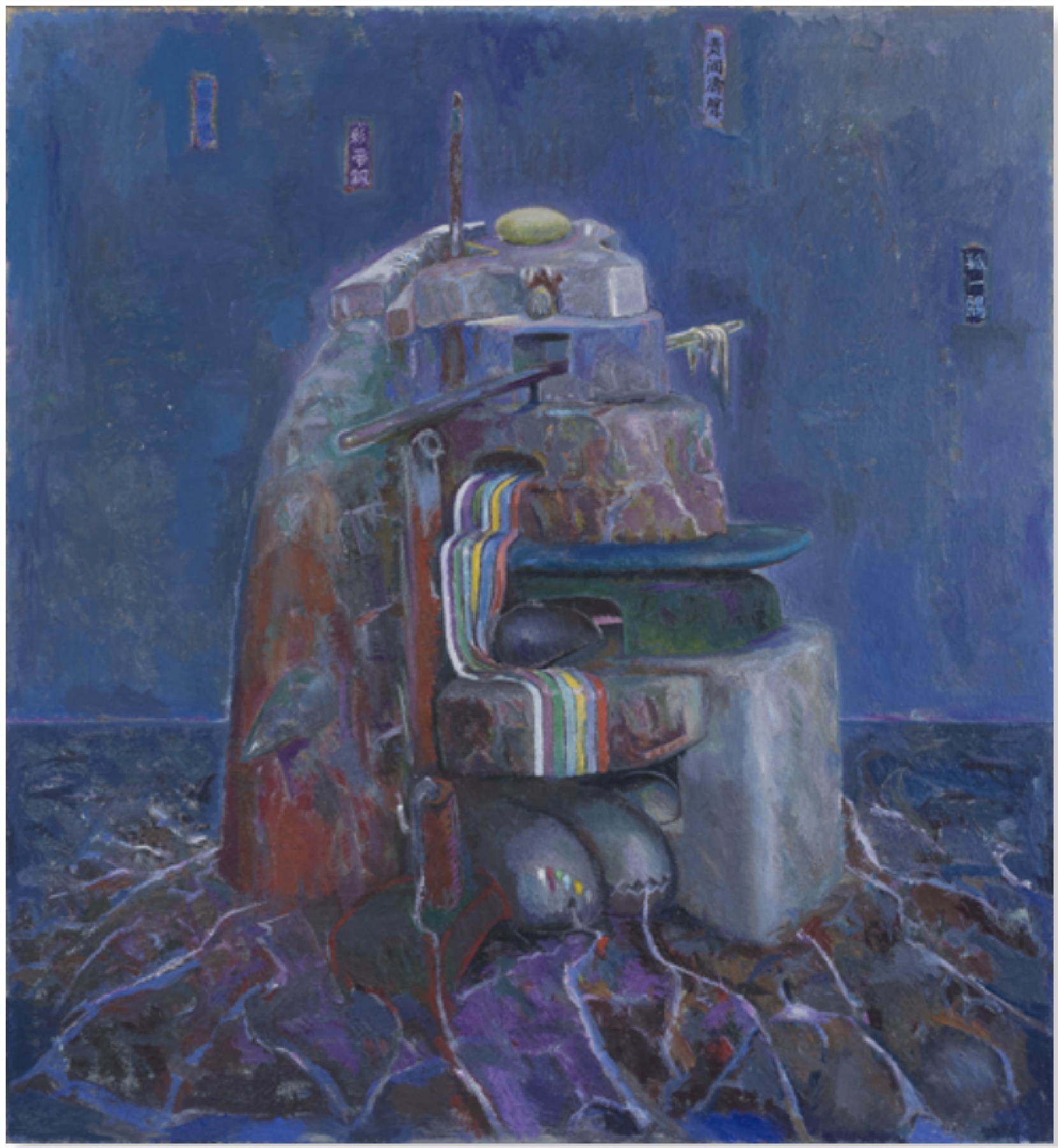
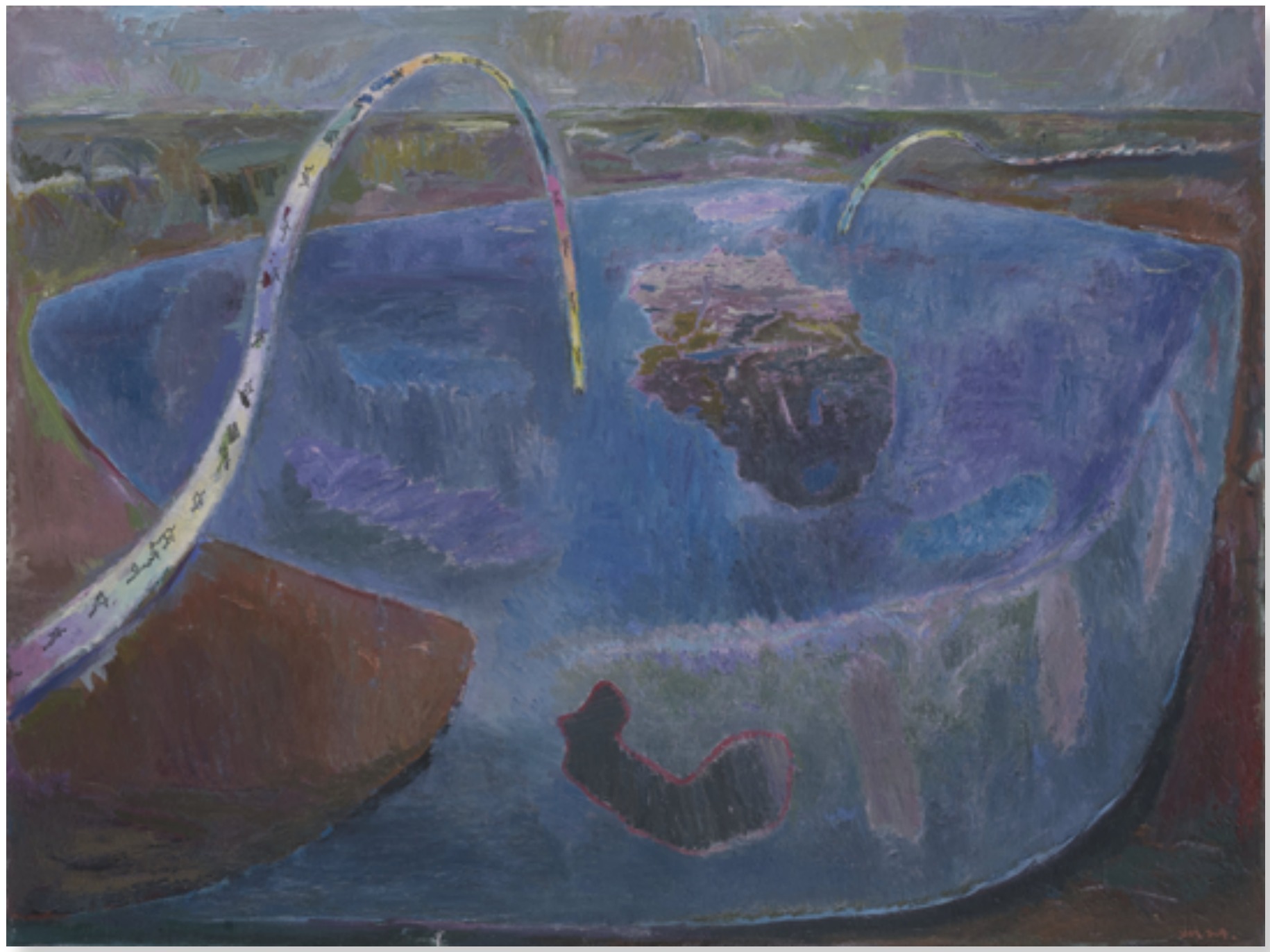
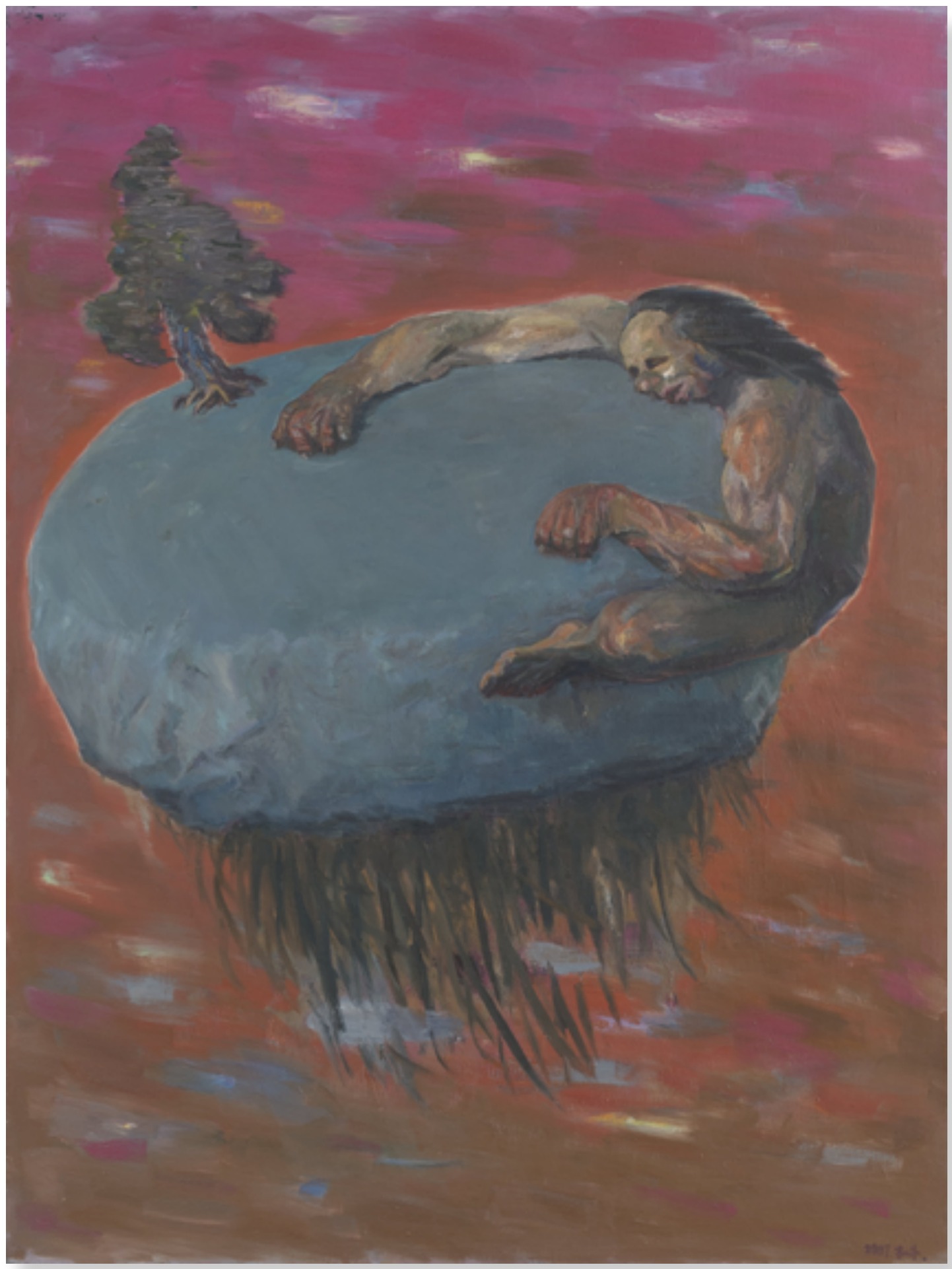
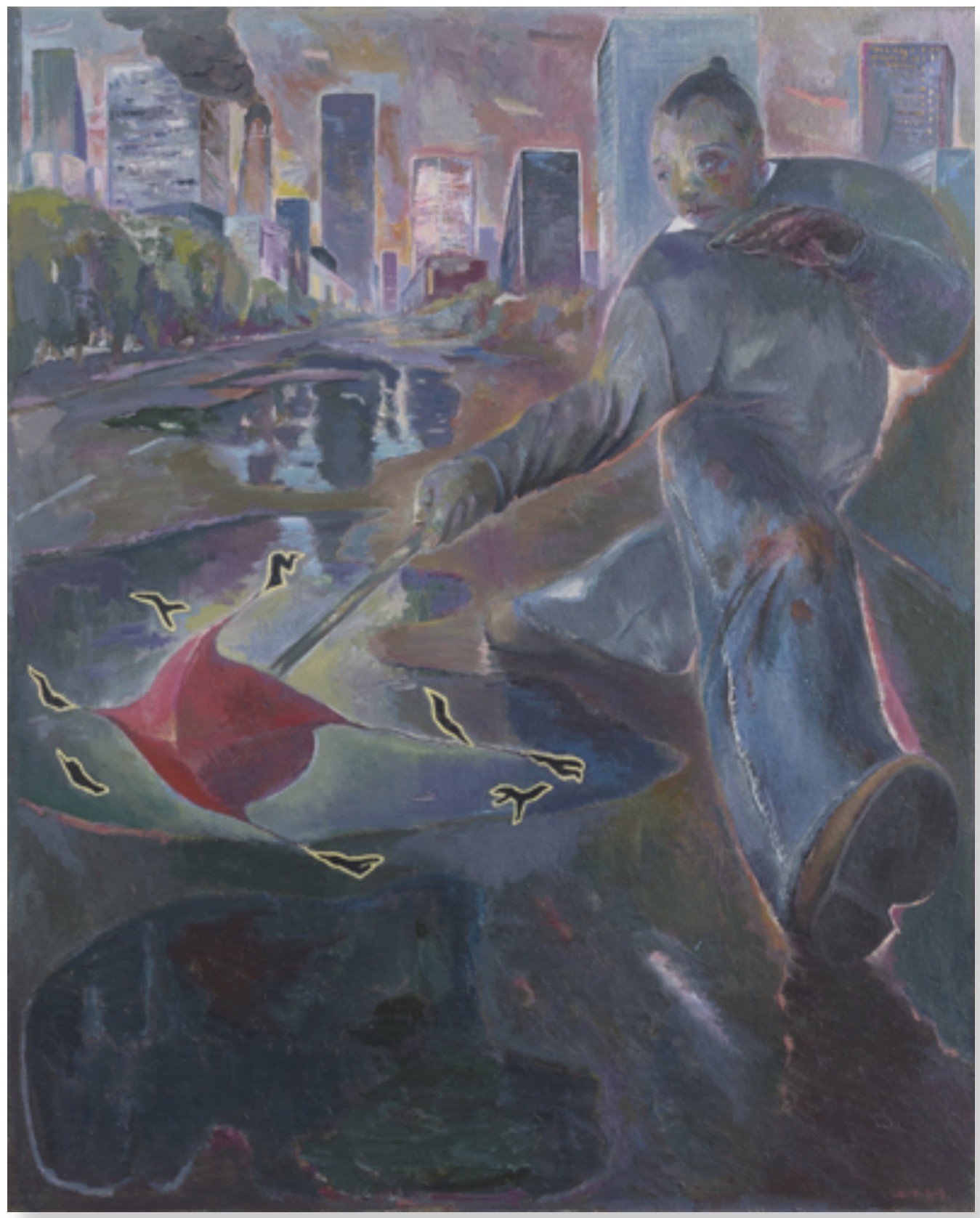
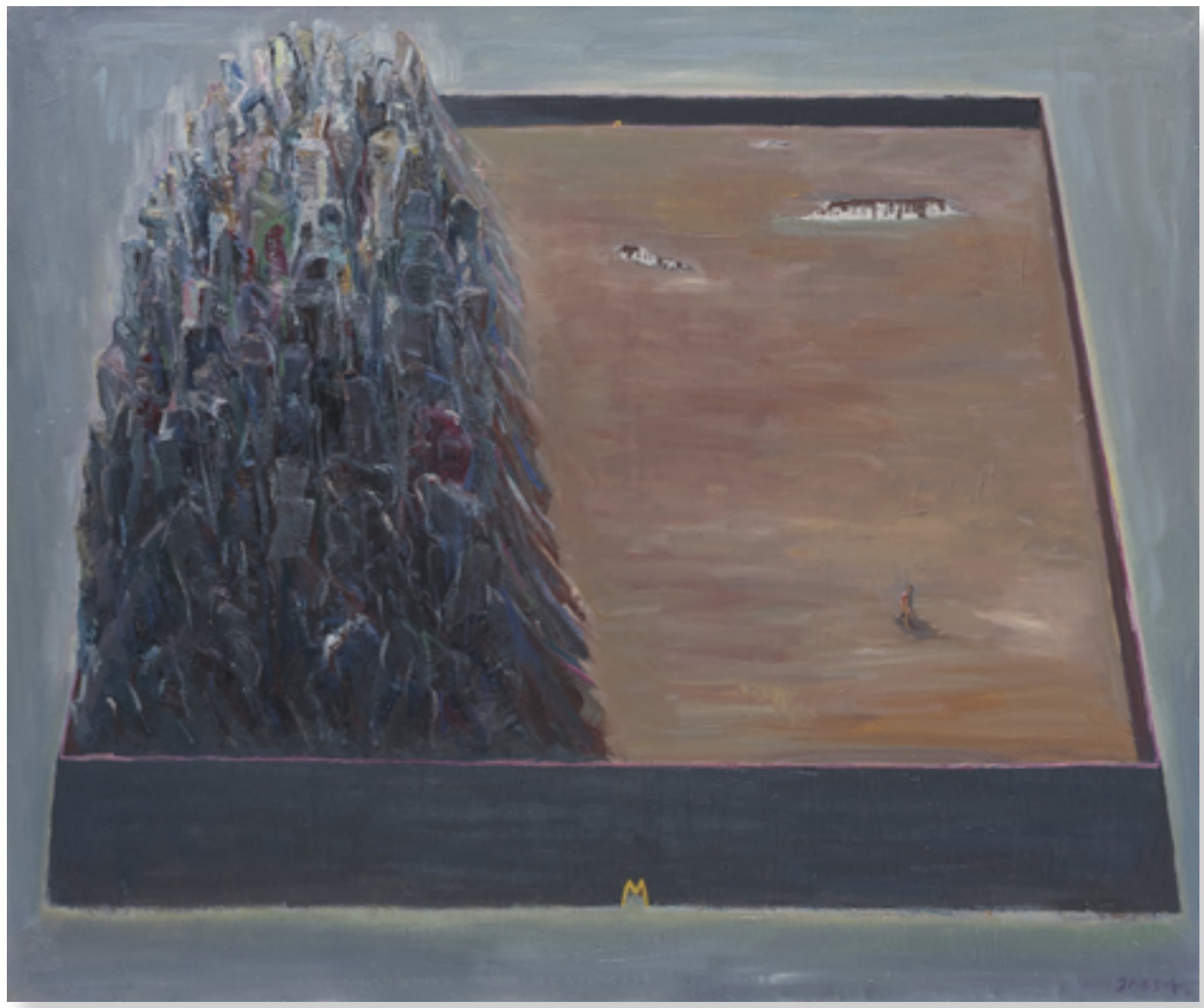
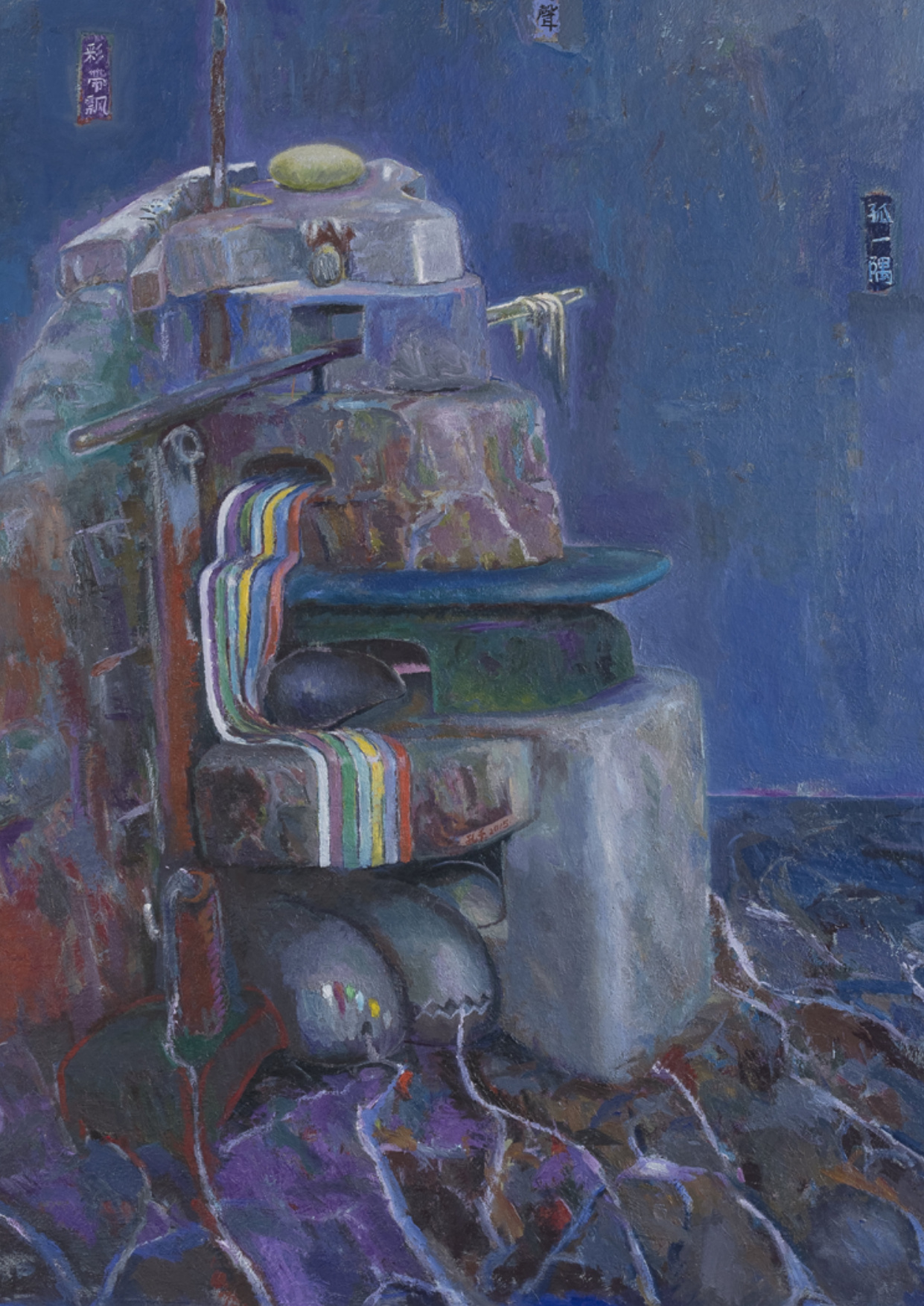
孔千:形骸内外策展人:于非纵观孔千近四十年的艺术生涯,他几乎对自身生命维度可企及的天地、世情与众生进行了百科全书式的记述与塑造。各路广泛驳杂的意象与题材在彼此的交汇中衍生出异常繁复、难以穷尽的多重景观。在追溯其创作源流的过程里,探索人与城市之间纠缠嵌套的复杂关系作为孔千的绘画母题逐渐浮现显形。孔千极具超越性与穿透力的整体观与他奇异多元的造型语言相生相成。面对瞬息万变的社会现实和循环往复的历史时空,孔千将他持续积累与反复检视的生命经验与之相连,共塑身体与空间,个体与世界,内部与外部的矛盾统一体。灵与壳孔千在绘画中对于身体的倚重有着近乎尼采般的狂热与偏执。这并非出于学院派造型训练的惯性与积习,而是源自于天然地将身体视为生命本质的内在体认。在此,身体绝不局限于人体的范畴,而是与广义的生灵相连。其中昆虫最令孔千入迷,占据了他90 年代以来大量的绘画篇幅。以《蜗牛、蝉、冰》为例,孔千皴涂出一隅被冰封与凝固的蜗牛与蝉,有如受困于无形的自然法则中动弹不得。正是这些稍纵即逝的生灵激发了孔千最初的生命意识和原始的绘画欲望。孔千用同样的目光注视着被时代浪潮裹挟的人群中既相似又迥异的面孔与身体。无论是《人形》系列中或俯卧或沉睡的无名人体,还是《人像》系列中乖张奇诡的神态表情,孔千无一不用充满力度和重量的线条悉心勾勒,让身体这一生命最原初的空间无比生动立体。这些素描与油画早已跳脱单纯的写生,它们根植于日复一日的现实观察,通过孔千独有的细腻与敏感,凝练出超越现实的生命的表里。残肢、断壁在身体之中,孔千尤为关注那些局部——手、脚亦或四肢被有意提取与聚焦。它们从身体中被分割、拆解,有些甚至裸露着肌肉与骨骼,却并未被客体化处理,而是仿佛被赋予独立生命般,或漂浮于天际,或行走于旷野。当身体的切片置身于空间之中被重新审视,它们亦成为了空间的延伸。《手》与《足》中的肢体被放大至占满画面的边际,荒诞的变形与失调的尺度,让原本熟悉的身体局部变得陌生:手成为了带有禁锢意味的牢笼,而脚则膨胀、裂变出山峦屏障般难以跨越的粗粝结构。异化的空间就这样从身体的断裂之处悄然开启。与之并行的是孔千未曾间断的对建筑与城市的描摹和刻画。生长于天津这座充斥着中西文化交锋痕迹的城市,孔千对城市空间有着近乎于本能的关切。80 年代早期于天津大学建筑分校的工作经历,以及随后进入天津美术学院任教带领学生在城市中写生的过程,都在无形中加深和激活着孔千对建筑与城市的切身感知。无论是近代战乱中天津古城墙被拆毁的历史,还是世纪之交的天津所经历的大规模拆迁与翻修的巨变,都让孔千获得了一座城市如同残破躯体般脆弱飘摇的肉身体验。城市正如一个群体的身体意志的化身,在被不断积聚、塑造的同时,亦反向影响、作用于寄居其间的每一个个体。甚至,这双重身体,双重空间的命运早已深度捆绑。就像《城》中那个形单影只的小小人体,在一个业已失衡的硕大城池中无处安身。而到了《飞翔的石头》中,赤裸之躯攀附于被连根拔起的如同孤岛的巨石,在难以预料与掌控的时代飓风中无所适从地飘零。复合之躯
“也许,整个世界就只剩下一片堆满垃圾的荒地,还有可汗的空中花园。是我们的眼睑把它们分开,但我们并不清楚究竟哪个在外面,哪个在里面”。
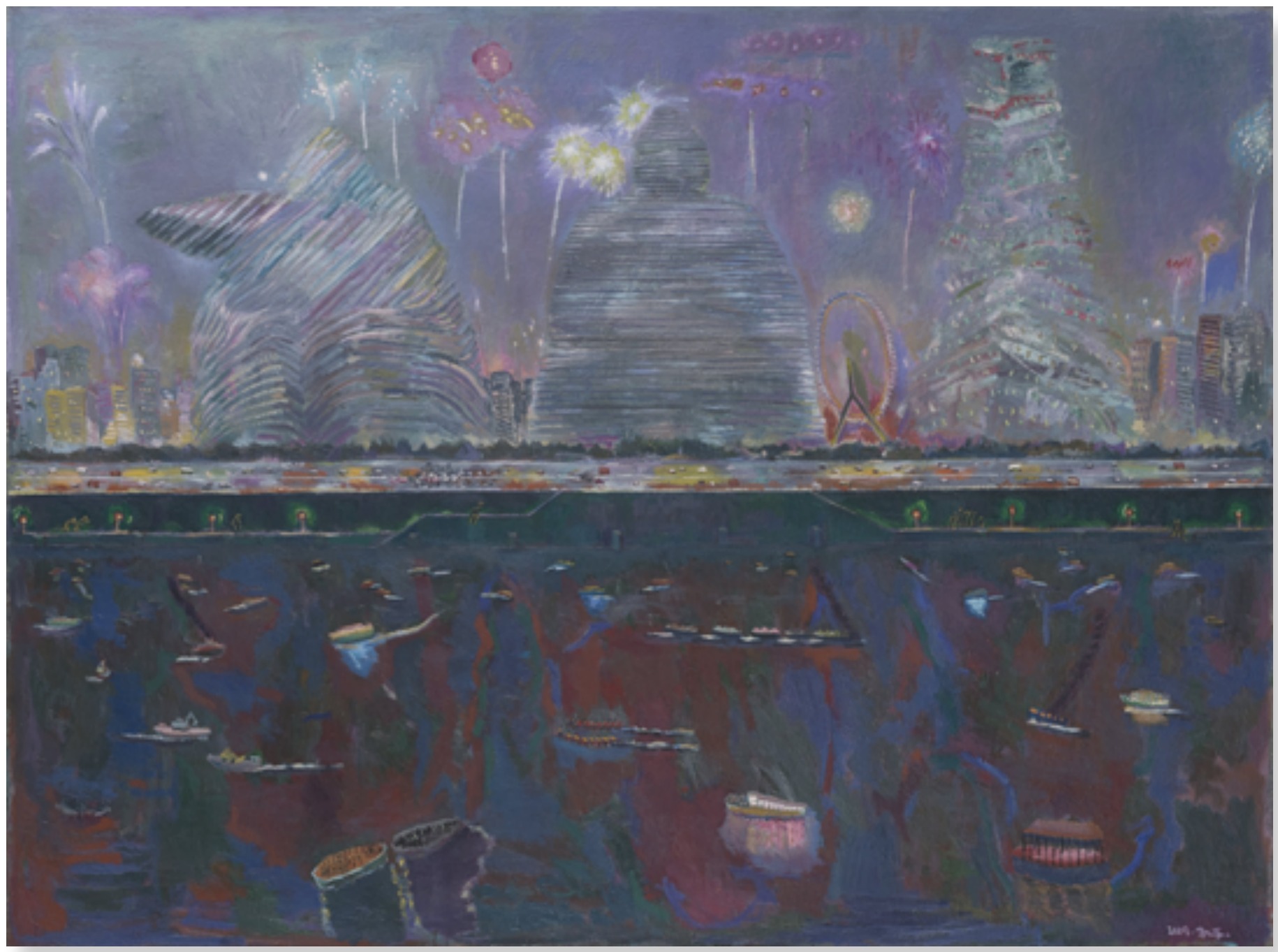
[ 伊塔洛·卡尔维诺,看不见的城市,译林出版社 2012] 卡尔维诺借马可·波罗之口述说着世界的真实与虚妄。而无法轻易看清的不止是城市,还有潜藏其间的欲望与权力,是它们让身体与空间一同变形。《白河唱晚》中的天津无疑是千禧年之后全面进入消费社会的中国的缩影,新时代的建筑在折射了光怪陆离的城市夜色中扭曲嬗变。身体的空间化与空间的身体化随着时间推移在孔千的画面中进一步双向渗透。我们显然已经难以辨认和定义《岛》中的另类空间:生物般的肌体与几何式的建筑接壤交织,在彼此入侵,相互咬合的过程里建立着微妙的秩序与平衡。至此,孔千在社会现实影响与个体生命觉知的双重作用下俨然塑造出时代症候的杂糅体。正如从福柯的“生命政治”(Biopolitics)到列斐伏尔的“空间生产”理论(The Production of Space)所揭示的,我们已然处于身体与空间的政治经济学,我们的身体与我们所处的空间无一不是历史与社会的产物。孔千正是把这一对身体与空间的深层认识,投射于绘画中日益复杂多重的形式与结构。当反抗与逃离不再能解决根本问题,那么不如在斡旋与协商中不断开辟和构建个体生命的自治空间。
Kong Qian: Caged, Uncaged Curator: Yu Fei Over nearly four decades, Kong Qian’s artistic career has taken on an encyclopedic scope, depicting and shaping the full range of worldly experiences, social conditions, and lifeforms accessible within his personal cosmology. His work brings together a vast and diverse array of imagery and themes, generating dense, inexhaustible visual landscapes through their intersection. Tracing the evolution of his practice, a central motif emerges: the entangled and nested relationship between human beings and the city. Kong’s holistic vision—marked by its depth and transcendence—intertwines with a singular and multifaceted visual language. In response to the ever-shifting realities of contemporary society and the cyclical nature of history, Kong draws upon accumulated life experiences—continually examined and re-examined—to construct a unified tension between body and space, self and world, interior and exterior. Being and Border Kong Qian’s fixation on the body in his painting borders on a Nietzschean fervor and obsession. This attachment does not stem from habitual academic training in form, but rather from an innate conviction that the body is the very essence of life. Here, the body is not confined to the human figure—it is intrinsically connected to all living beings. Among them, insects have captivated Kong Qian the most, occupying a significant portion of his paintings since the 1990s. In Snail, Cicada, Ice, for example, Kong depicts a scene where a snail and a cicada are seemingly frozen in place, immobilized by an invisible natural law. It is precisely these fleeting crea-
tures that first awakened Kong’s sense of vitality and sparked his primal urge to paint. Kong gazes upon human bodies and faces—both familiar and strange—swept along by the tides of their time with the same intensi-
ty. Whether in the Figure series, featuring anonymous figures lying face-down or asleep, or in the Portraits series, with their bizarre, exaggerated expressions, Kong draws each body with lines full of strength and weight, rendering the body—the most fundamental space of life—with vivid dimensionality. These drawings and oil paintings go far beyond mere studies from life. Rooted in daily observation, they are distilled through Kong Qian’s unique sensitivity into a vision of life that transcends surface reality—capturing both its interior and exterior. Severed Limbs, Shattered Walls Within the body, Kong Qian pays particular attention to its fragments—hands, feet, or limbs intentionally isolated and brought into focus. These parts are detached, dissected, and in some cases, exposed down to muscle and bone. Yet they are not objectified; rather, they appear to possess a life of their own—floating in the sky, or traversing desolate landscapes. Once these bodily frag-
ments are re-situated in space and re-examined, they themselves become extensions of that space. In Hand and Foot, the limbs are magnified to the very edges of the canvas. Their grotesque distortions and exaggerated scales render these once-familiar body parts uncanny: the hand transforms into a cage-like prison, while the foot expands and fractures into rough, mountainous struc-
tures—barriers that seem impossible to cross. From these ruptures of the body, an alienated spatial order quietly begins to unfold.
Their grotesque distortions and exaggerated scales render these once-familiar body parts uncanny: the hand transforms into a cage-like prison, while the foot expands and fractures into rough, mountainous structures—barriers that seem impossible to cross. From these ruptures of the body, an alienated spatial order quietly begins to unfold. In parallel, Kong Qian has never ceased his depiction of architecture and the city. Having grown up in Tianjin—a city steeped in the layered frictions between Chinese and Western culture—Kong holds an almost instinctive sensitivity toward urban space. His early work experience at the Tianjin University School of Architecture in the 1980s, and his later teaching at the Tianjin Academy of Fine Arts, where he led students in plein air sketching across the city, further deepened his direct engagement with the built environ-
ment. The demolition of Tianjin’s ancient city walls during wartime, and the vast urban redevelopment projects around the turn of the century, left Kong with a visceral understanding of the city as a vulnerable, fractured body. The city becomes the embodiment of a collective corporeal will—constantly shaped and reshaped—yet simultaneously exerting influence on every individual dwelling within it. The fates of these two bodies, these two spaces, have long been tightly intertwined. In City, a lone and diminutive figure struggles to find refuge in an immense, unbalanced urban sprawl. And in The Flying Stone, a naked body clings to a colossal boul-
der—uprooted and adrift like a solitary island—tossed about helplessly in the chaotic whirlwind of an era beyond comprehension or control. Composite Bodies
“Perhaps all that remains of the world is a wasteland piled high with refuse—and the Khan’s aerial garden. It is our eyelids that sep-
arate them, though we cannot tell which lies outside and which within,” [ Italo Calvino, Invisible Cities, Yilin Press, 2012]. Through the voice of Marco Polo, Italo Calvino speaks of a world suspended between illusion and reality. But it is not just the city that eludes clear perception—lurking within are hidden currents of desire and power, which together distort both the body and the space it inhabits. In Baihe River’s Evening, Tianjin becomes a microcosm of China’s plunge into consumerism in the post-millennium era. The city’s newly built structures, gleaming and surreal in the refracted glow of the urban night, undergo a constant process of distortion and transformation. In Kong Qian’s work, bodily spatialization and spatial embodiment increasingly infiltrate each other over time, forming a reciprocal, entangled dynamic. In Island, for instance, we can no longer clearly define the spatial logic at play: fleshy, biological forms meld with geometric architecture, establishing a precarious harmony through mutual invasion and interlocking. By now, Kong has shaped a hybridized figure of the times—one formed at the intersection of societal pressures and personal con-
sciousness. As Michel Foucault’s concept of “Biopolitics” and Henri Lefebvre’s theory of “The Production of Space” have revealed, both the body and the spaces we inhabit are deeply embedded within political, historical, and economic structures. Kong Qian takes this profound awareness of body and space and channels it into increasingly complex visual forms and compositional strategies. When resistance and escape are no longer viable responses, what remains is the persistent negotiation and reconfiguration of an autonomous space for individual life—within, and in spite of, the world it inhabits.
蜂巢当代艺术中心(Hive Center for Contemporary Art)正式成立于2013年。取名蜂巢,意喻人类聚集性生存方式及其思想繁杂性的存在状况,与当下中国的社会结构和当代艺术的现状尤为契合。作为中国最具影响力和规模最大的当代艺术机构之一,蜂巢总部位于北京市著名的798艺术区内,建筑面积达4000多平米,拥有五个国际化标准的展厅以及一个用于开幕活动的序厅。蜂巢当代艺术中心在参与中国当代艺术本土生产与建构的同时,致力于在全球范围内推广及交流中国当代艺术,推介优秀的国际艺术家和艺术项目,以期促进当代艺术市场的繁荣。代理合作的艺术家包括中外重要艺术家以及艺术界新星,试图构建中国最专业、最权威的当代艺术品收藏顾问机构之一。自成立至今,曾连续四年获得由各大媒体颁发的中国十大艺术机构、年度最佳画廊等称誉。蜂巢|北京
Hive | Beijing
蜂巢|上海
Hive | Shanghai
蜂巢·生成|上海空间
Hive Becoming | Shanghai Hive Center for Contemporary Art (Hive) was founded by XIA Jifeng and stated to operate as a gallery in 2013. Hive denotes the collective mode of living of human and the complicity of its thinking, which perfectly fits the social structure of China and status quo of Chinese contemporary art. Covering ap-
proximately 4000m2 and owning five international-standard exhibition halls, the headquarters of Hive locates in the renowned 798 Art Zone in Beijing. The represented artists encompasses established Chinese and international artists as well as emerging artists. By representing outstanding artists and providing high quality art consultant service, Hive has already become one of the most influential gal-
leries in China.
参展艺术家Artists
作品