展览信息
前言Introduction
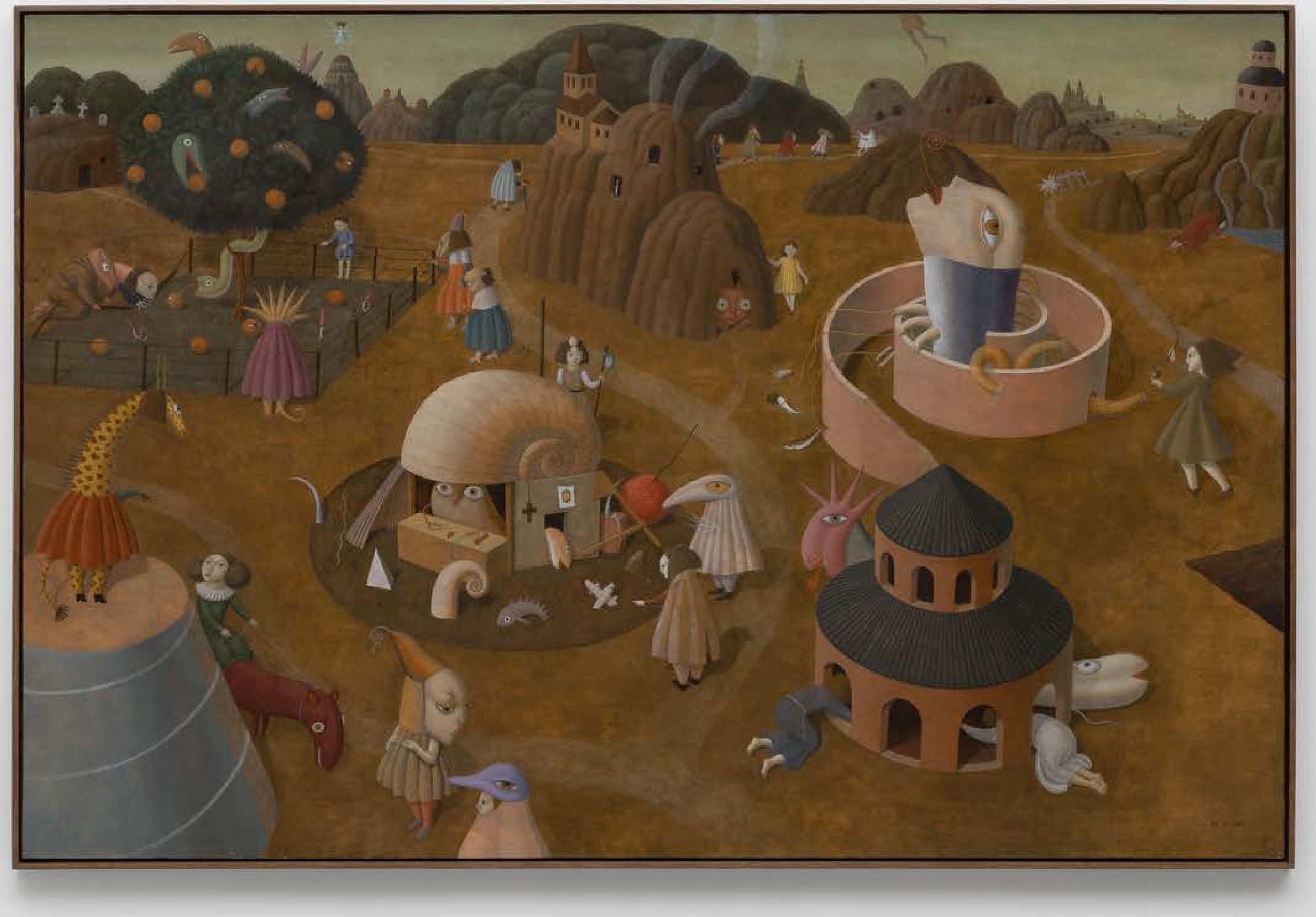
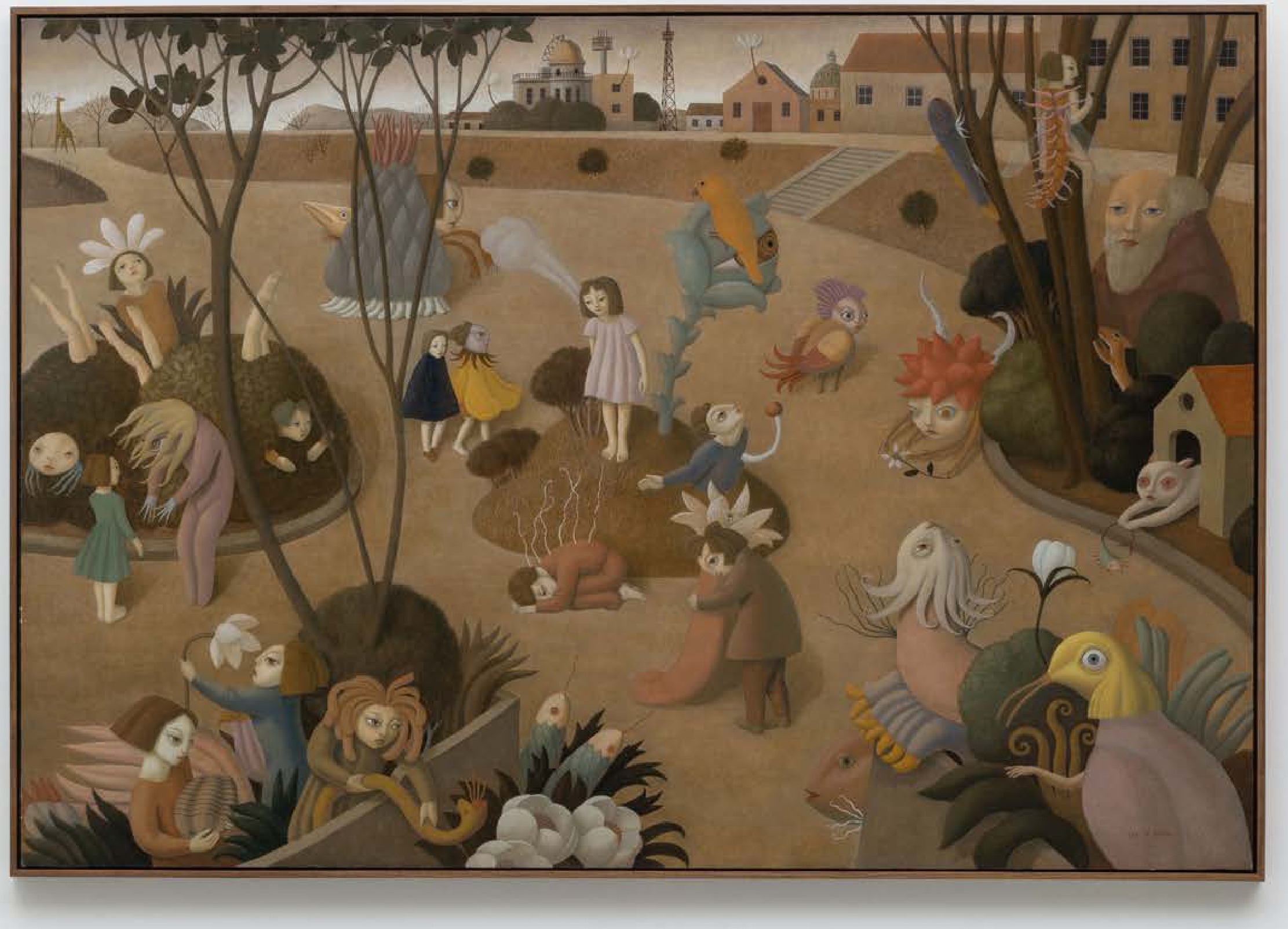
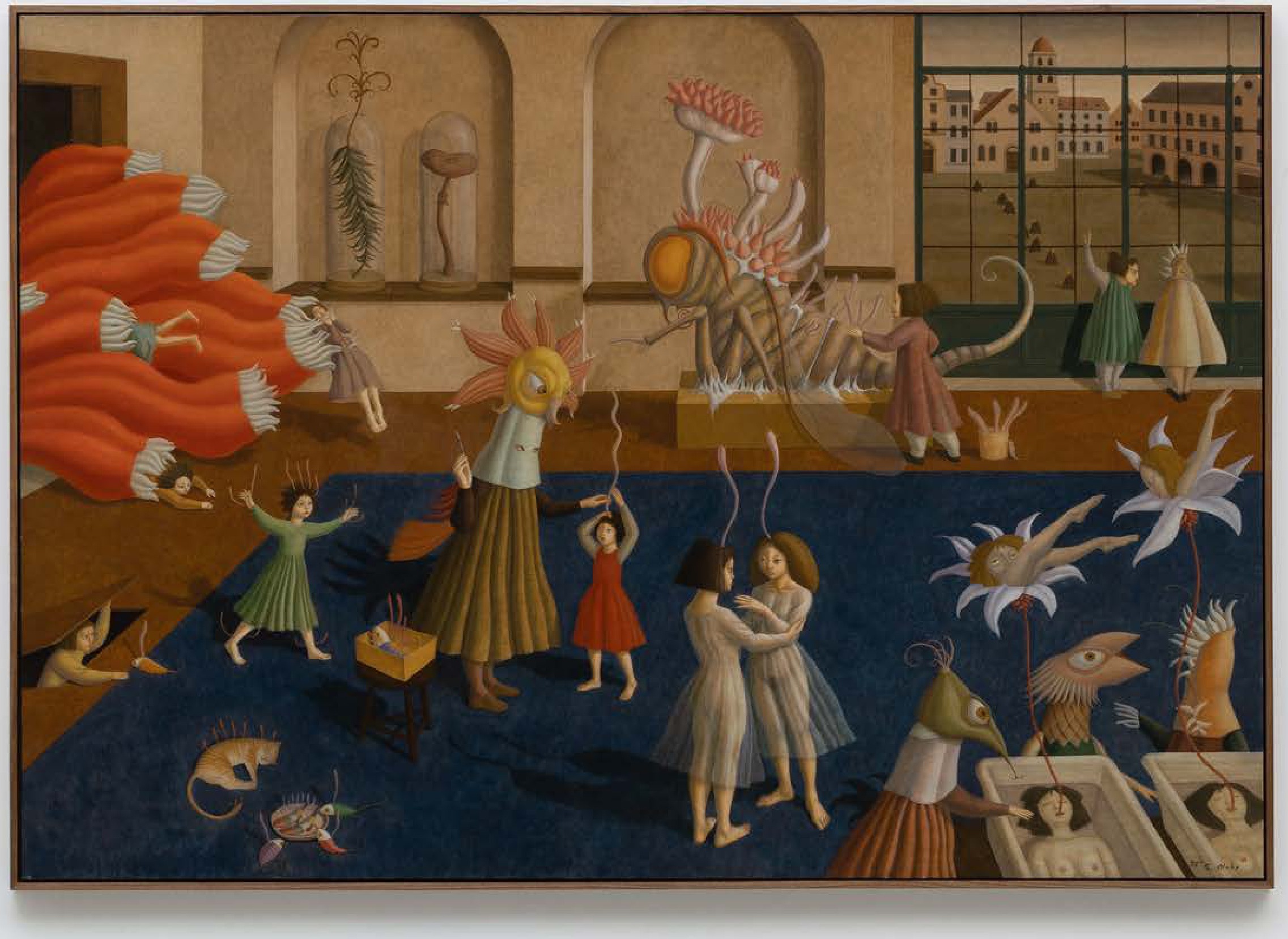
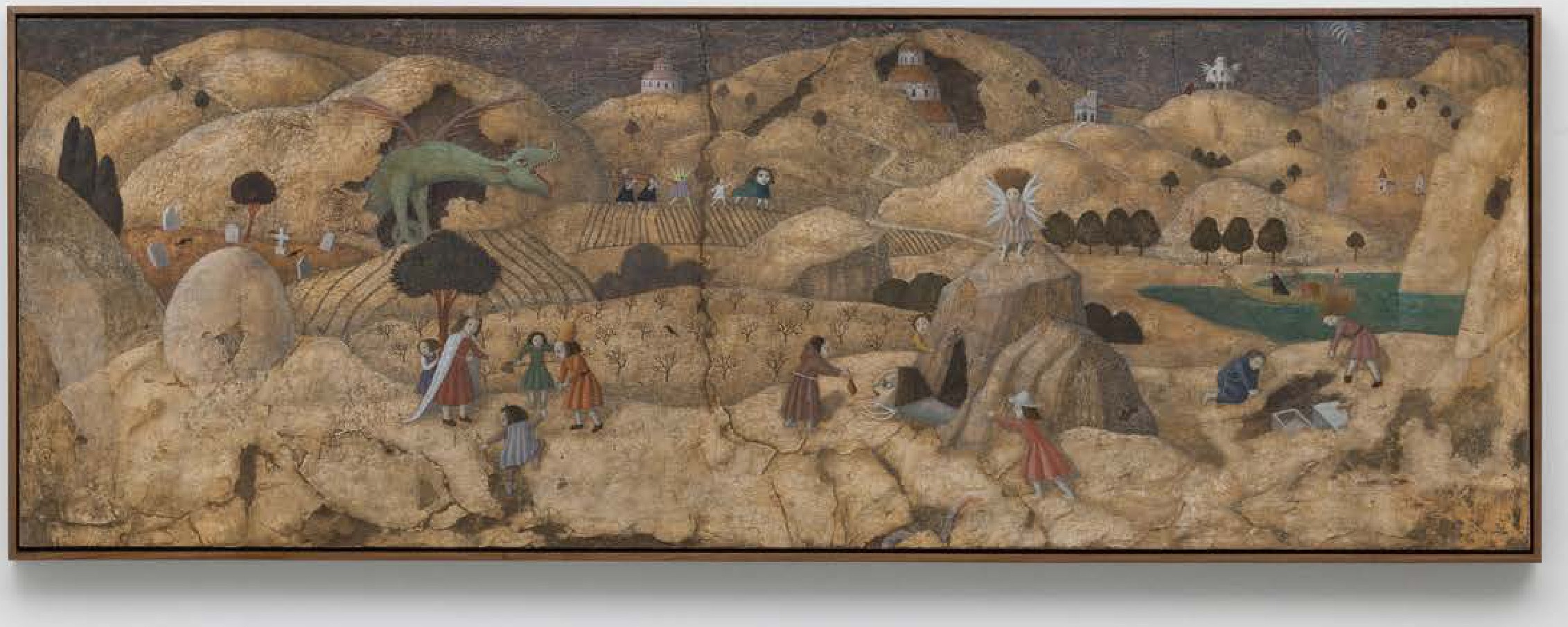
蜂巢当代艺术中心荣幸地宣布,将于2023 年3 月4 日在主展厅A 厅推出日本艺术家大竹茂夫在中国的首次个人展览“大竹茂夫:芳集托皮亚”。展览的名称出自“fungi”与“utopia”的这一合成词的拟声,意为真菌之邦。此次展览囊括了大竹茂夫自1980 年代至今的绘画创作,将以多重面向呈现艺术家魅感丛生的世界。展览由策展人赵小丹策划,将持续至4 月16 日。大竹茂夫,1955 年出生于日本神户,他是战后日本经济从复兴到高速发展,最终走向泡沫的亲历者。同时也是全球超现实主义在1960 年代发展至日本,与本土猎奇文化交染碰撞的实践者。大竹茂夫曾于
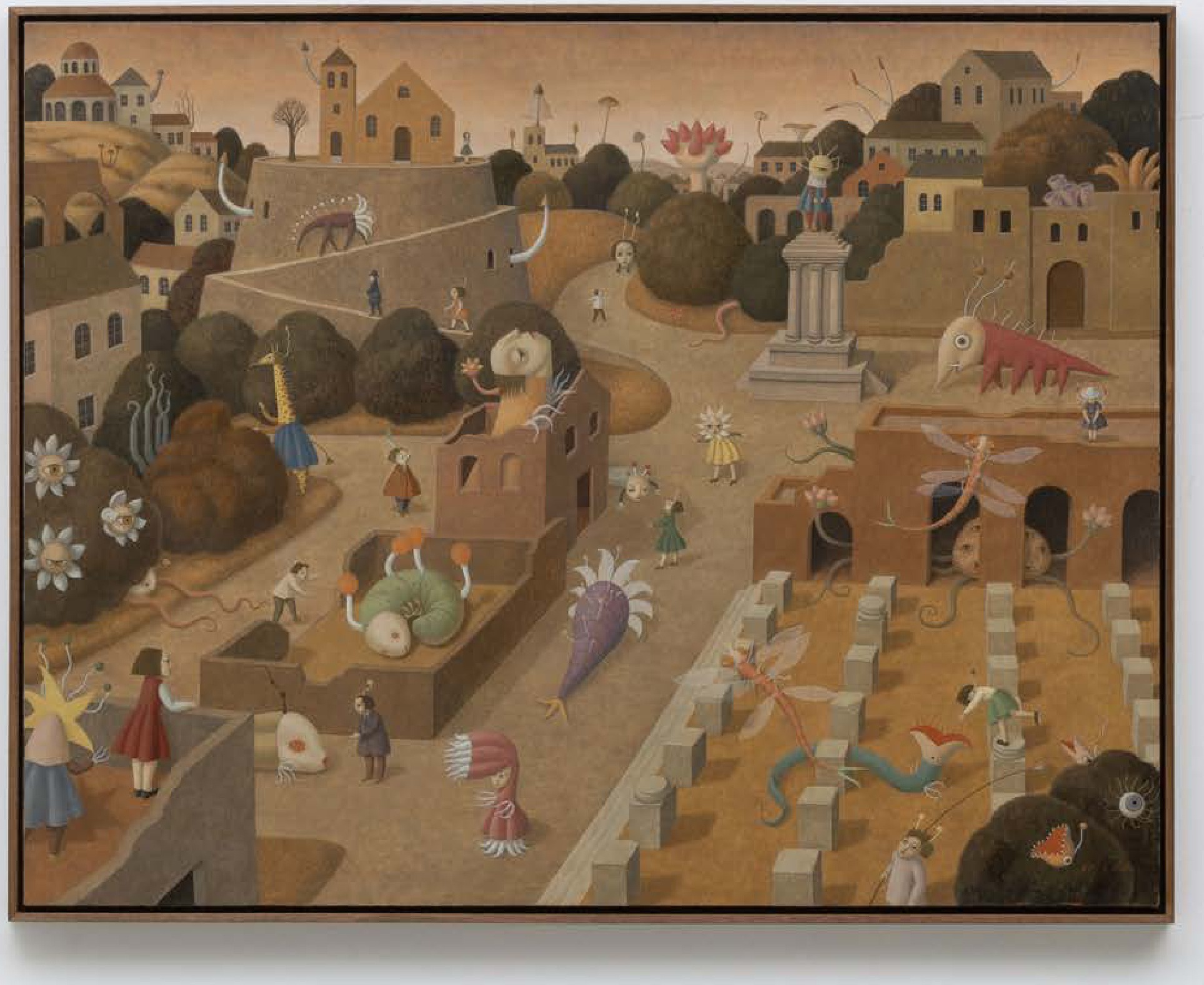
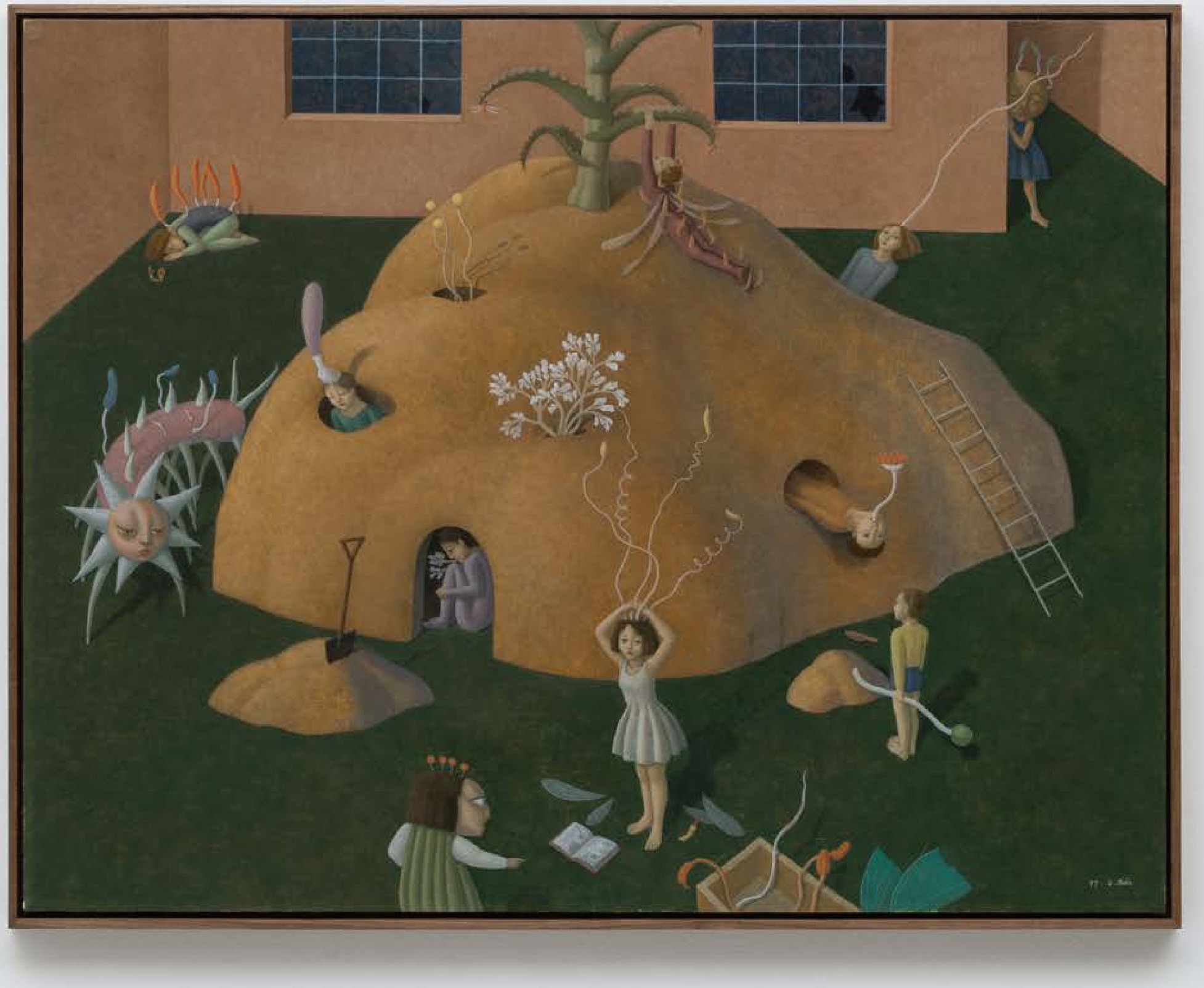
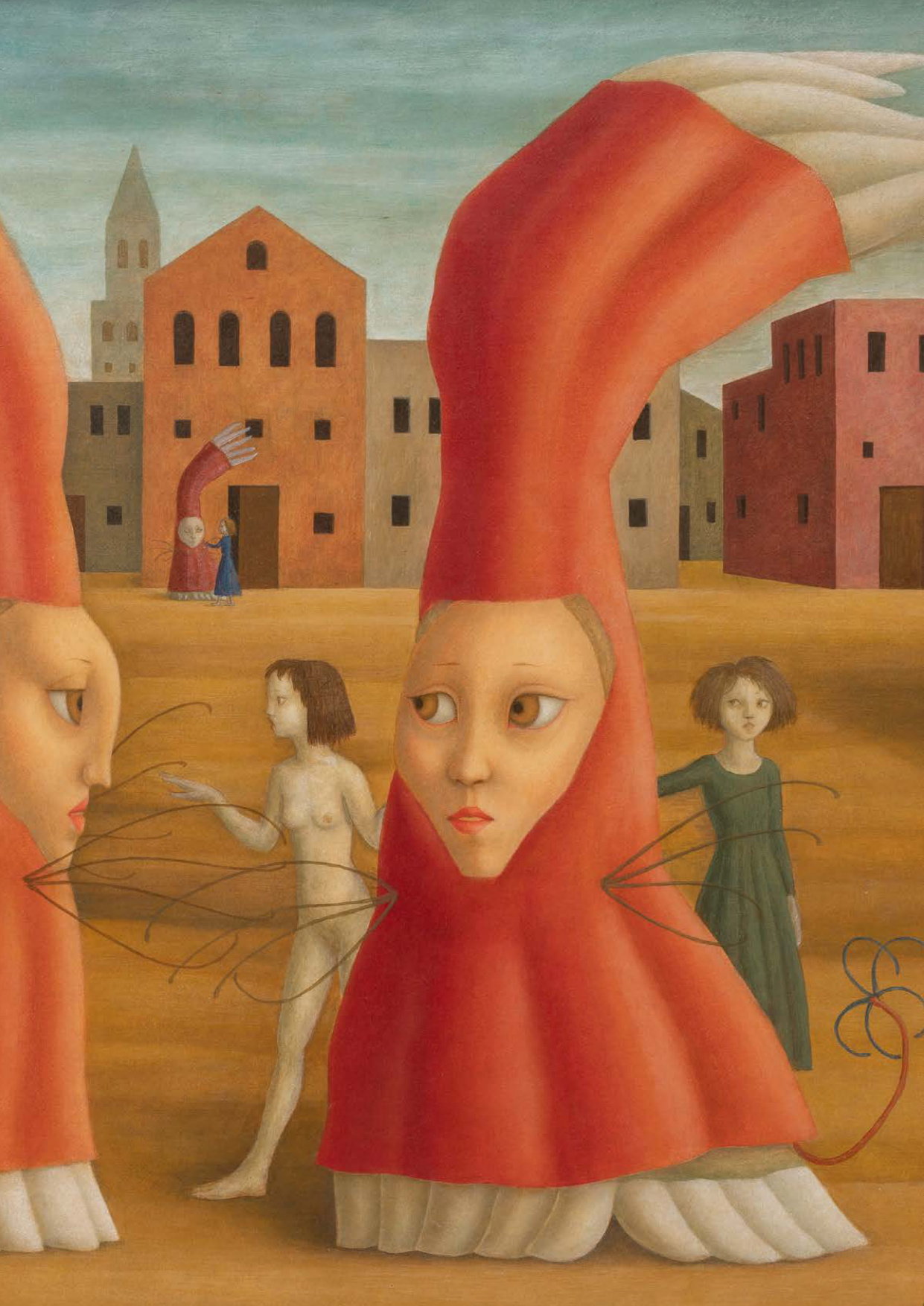
1970 年代末前往欧洲系统学习中世纪与文艺复兴时期的宗教壁画。此后由于他日深年久在日本京都的郊野之地,不断展开着对于多物种尤其是真菌的探索与发掘。自从1980 年代至今,相对于艺术界,他与日本的出版行业以及冬虫夏草研究群体有着更为密切的关联。也正是因此,尽管他经受了京都市立艺术大学正统的美学教育,与多物种世界的联结,使得他在久长的时间内游离于艺术史的分野地带。在某种程度,他的生活状态也是其绘画作品的侧写。大竹茂夫创作的是一个隐于现实异界,其绘画中形态各异的画中「居民」最初是受到古生物、昆虫以及海栖动物的启发。1985 年在居住地附近的神社发掘出的一株蝉花,将大竹茂夫从可食用真菌引入更为奇特的虫草世界。被真菌感染的蝉、蜘蛛等宿主幼虫覆盖了人形,在他的作品中轮番登场。此次展览将以大竹茂夫1977—78 年的“欧洲之行”展开叙述,将欧洲滋养供给的“思辨的丛林”与日本特殊环境下塑造的神话体系作为“情动之源流”,分别从风格样式、描绘方式与叙事承载多方面构筑了大竹茂夫创作的底层逻辑。对于多物种的探索与研究,激发着大竹茂夫踏入一个充满原始象征的旷野。真菌的“偶然”发掘在此前的研究基底上,顺理成章地诱导他成为丛林中的真菌猎人。“虫草之变貌”便是将被侵染的宿主幼体变为人形搬到画面上。及至“菌代的诞生”,大竹茂夫寓言式的文本与细密繁茂的画面交相呼应,中世纪与文艺复兴的宗教叙事,已然化作大竹茂夫绘画中的余响。大竹茂夫:芳集托皮亚
I 思辨的丛林/ The Jungle of Discernment
浏览大竹茂夫自1980 年代始二十年光景内的作品,从风格看,宛若走进了由保罗·乌切洛(Paolo Uccello)、乔托·迪·邦多纳(Giotto di Bondone)、桑德罗·波提切利(Sandro Botticelli)、乔治·德·基里科(Giorgio de Chirico)等人构成的视觉丛林。对于大竹而言,依附于神庙遗址、教堂圣所以及王权宫殿建筑的壁画、雕塑构筑起的人文主义高墙,凸显出了一致的思辨意识:对于叙事的兼具、技法的探索以及形而上的指向。中世纪和文艺复兴早期作品中对于象征意味的强化,造就了看似僵化的风格特征,恰恰可以成为捕捉日本妖怪文化的外在框架。西方风格提供了一种更高层级的隐喻和象征的表达,是大竹茂夫建构异界王国的谱系范本。
In viewing Shigeo Otake's work over a twenty-year period starting in the 1980s, stylistically, it is like entering a visual jungle made by Paolo Uccello, Giotto di Bondone, Sandro Botticelli, Giorgio de Chirico and others. For the artist, the high walls of humanism constructed by frescoes and sculptures attached to temple ruins, church sanctuaries, and royal palaces highlight a consistent sense of discernment: a balance of narrative, exploration of techniques, and focus on metaphysics. The intensification of symbolism in medieval and early Renaissance artworks created a seemingly rigid stylistic feature that could serve as an external framework for capturing the culture of Japanese monsters. Western styles provided a metaphorical and symbolic expression that serves as a genealogical paradigm for Otake's construction of the otherworldly kingdoms.
II 情动(affect)之源流/ The Origin of Affect
日本狭长的国土与丰茂山林塑造且保留了庞杂的神明体系。诸如草子物语中的竹中辉夜姬,民间神话中的桃中桃太郎、瓜中瓜子姬,沾染了人类灵气的锅碗瓢盆化作付丧神,百鬼夜行此类种种。大竹茂夫居住于由古墓公园与神社环绕的郊野之地,他所创造的正是一个与多物种互联,且隐于现实的异界。就像猎人熟悉他的山林,现实世界中具有特异功能的多物种居民,在他的作品中日增月盛、交染共生,不断激发着平面绘画的内在潜能。波谲云诡的日本神话与窸窣的丛林密语,构成了大竹茂夫绘画世界的情动源流。
Japan's long and narrow landscape and lush mountains and forests have shaped and preserved a comprehensive system of mystical figures. There is Princess Kaguya from The Tale of the Bamboo Cutter, Momotarō and Princess Gourd in folklore, the tools tainted with spirits transforming into tsukumogami, and Hyakki Yagyō. Shigeo Otake lives in the remote countryside surrounded by cemeteries and shrines, creating an otherworld that is interconnected with various species and reclusive from reality. Like a hunter is familiar with his mountains and forests, the multi-species inhabitants of the real world with supernatural capabilities grow, flourish, coexist and intertwine in his work, constantly sparkling the potential of painting on canvas. The whimsical Japanese mythology and the rustling whispers in the jungle form the origin of affect of Otake's world of painting.
III 虫草之变貌
The Changing Appearance of Cordyceps
虫草菌的孢子与发芽的子座就像丛林中的陷阱,等待着寄主的光临。当适宜的虫类路过地面或叶子背面时,这些真菌的孢子就会悄无声息地附着在昆虫的甲壳或表皮。随着时间推移,真菌形成的芽管便会刺破虫的外壳,侵染体腔、汲取能量、占据意识使之成为傀儡和空壳。真菌类别和宿主的千变万化,妖异鬼魅而又无穷无尽的形态,超越了以往覆盖着人类幻想的嵌合物种给大竹茂夫带来的刺激。在作品中,大竹茂夫将真菌的宿主转化为人形,保留了真菌子座冒发的形态,日深年久的虫草发掘与研究为大竹茂夫的绘画创作提供了经久不衰的滋养。
The spores and germinating ascospores of the Cordyceps are like traps in the jungle, waiting for the arrival of their hosts. When the right insects come across the ground or the back of a lead, the spores silently attach themselves to the insect's shell or epidermis. Over time, the fungus forms budding tubes that pierce the insect's shell, infesting the body, extracting energy, and taking over consciousness to make it its puppet and an empty shell. The myriad variations of fungal categories and hosts, the eerie and ghostly yet endless forms, are beyond the excitement previously brought to Shigeo Otake by the chimeras coated with human fantasy. In his work, Otake transforms the fungal hosts into human forms, preserving the shape of the fungal ascospores. The discovery and research of Cordyceps over the years have provided enduring nourishment for Otake's pairings.
IV 菌代的诞生/ The Birth of Fungi Generation
从「移动真菌生活史」(1988-1993)再到「菌生代」(2004-2005),串联的是关于真菌世界的完整叙事:巡回式的移动真菌园突然造访人类小镇,参观的人被孢子感染后长出了真菌,人类绞尽脑汁,但却对无限蔓延的感染无能为力。在文明的结尾,人们选择将仅存的意识聚集在一起,最终在多次尝试后与真菌相结合,从而诞生了“菌人类”。「菌生代」的深刻之处,在于大竹茂夫借用了但丁《神曲》之《地狱篇》的叙述方式,将对后人类时代的隐喻,包裹在真菌的生存与繁衍模式中。如果说但丁的地狱篇补足了圣经故事中对地下世界描述的缺失,那么大竹借由此展现出的连续庞杂繁密的视觉体验,则激发出了一种宗教式的张力。
From Mobile Fungi Life History (1988-1993) to Fungal Generation (2004-2005), a complete narrative of the fungal world is threaded together: a traveling mobile fungal garden suddenly visits a human town, and the people who visit it are infected with spores and grow fungus; humans struggle to find a cure, they are powerless against the infinite spread of infection. At the end of human civilization, people chose to gather their remaining consciousness together and finally combine with the fungus after many attempts, thus creating the “fungus human”. What is profound about Fungal Generation is Shigeo Otake's reference to the narrative method of Dante's Inferno, encapsulating the metaphor of the post-human era in the survival and reproduction patterns of the fungus. If Dante's Inferno complements the lack of descriptions of the underground world in the Bible, the continuous, complex, and intricate visual experience that Otake reveals through it evokes a spiritual tension.
塔罗/ Tarot
塔罗牌由78 张神秘纸牌组成,从零开始到二十一的人物牌被称作大阿卡纳牌,呈现的是人类的欲望、恐惧、智慧、活力、善意、恶意等等,是整个世界的微小景观。其余的五十六张牌,由权杖、宝剑、星币和圣杯四组花色构成,每组各有一到十号牌;四张王牌,分别是国王、王后、骑士和随从。这些不同的花色,代表着中世纪的社会阶层。如果说圣像画描述的是人与神圣之物的关联,那么塔罗牌表现的是人与世俗之物的关联,是一种建立在寓意与象征之上的图像“记忆法”。大竹茂夫的塔罗牌创作最初受到推理作家约翰·迪克森·卡尔(John Dickson Carr)的小说《宝剑八》
(The Eight of Swords)的影响,在该书中,塔罗牌作为道具贯穿了故事的始终。大竹茂夫无意于研究占卜,在京都西部愈发丰茂的真菌采集,促使他将真菌诡异多变的外在形态与内在属性,与塔罗牌的牌面信息一一对应关联,使之散发出更为诡谲的气息。塔罗牌不仅是大竹茂夫将菌物王国与人类思维互联的缝合术,更是观者进入不可思议真菌世界的智识之门。
A pack of Tarot consists of seventy-right occult cards. The first twenty-two cards are referred to as the Major Arcana, presenting humanity’s desires, fears, wisdom, vitality, goodwill, and malice as a micro-landscape of the world. The rest of the fifty-six cards are comprised of four suits of wands, swords, coins, and cups, with each suit’s cards numbered from one to ten, and four trump cards, the King, Queen, Knight, and Jack. These different suits represent the social classes of the Middle Ages. While the iconography depicts the association of humanity with the divine, the Tarot signifies the relationship of humanity with the mundane, a pictorial “mnemonic” based on allegory and symbolism. Shigeo Otake’s exploration of tarot cards was initially influenced by mystery writer John Dickson Carr’s novel, The Eight of Swords, in which the Tarot was used as a prop throughout the story. Otake had no intention of studying divination, but the increasingly prolific fungus gathering in the western part of Kyoto prompted him to correspond the eccentric and volatile exterior and the inner nature of fungi with the information on the tarot cards, rendering a more uncanny ambiance. The tarot cards are not only a suture for Otake to connect the fungal realm with the human mind but also a gateway of insight for the viewer to access the miraculous world of fungi.
参展艺术家Artists
作品