一看就是一整天
展览信息
前言Introduction
“我小时候在农村特别喜欢看玉米地,听玉米杆子在风里摇来摇去的声音,特别舒服。一个人安安静静的,一看就是一整天。”
“那后来呢?”
“后来毕业留在北京,那就没地方也没时间看了。城市生活太焦急、太疲惫了。”
“没想过回去吗?”
“回不去了。我没法适应那种文化环境了。农村也不是当年的农村了。”
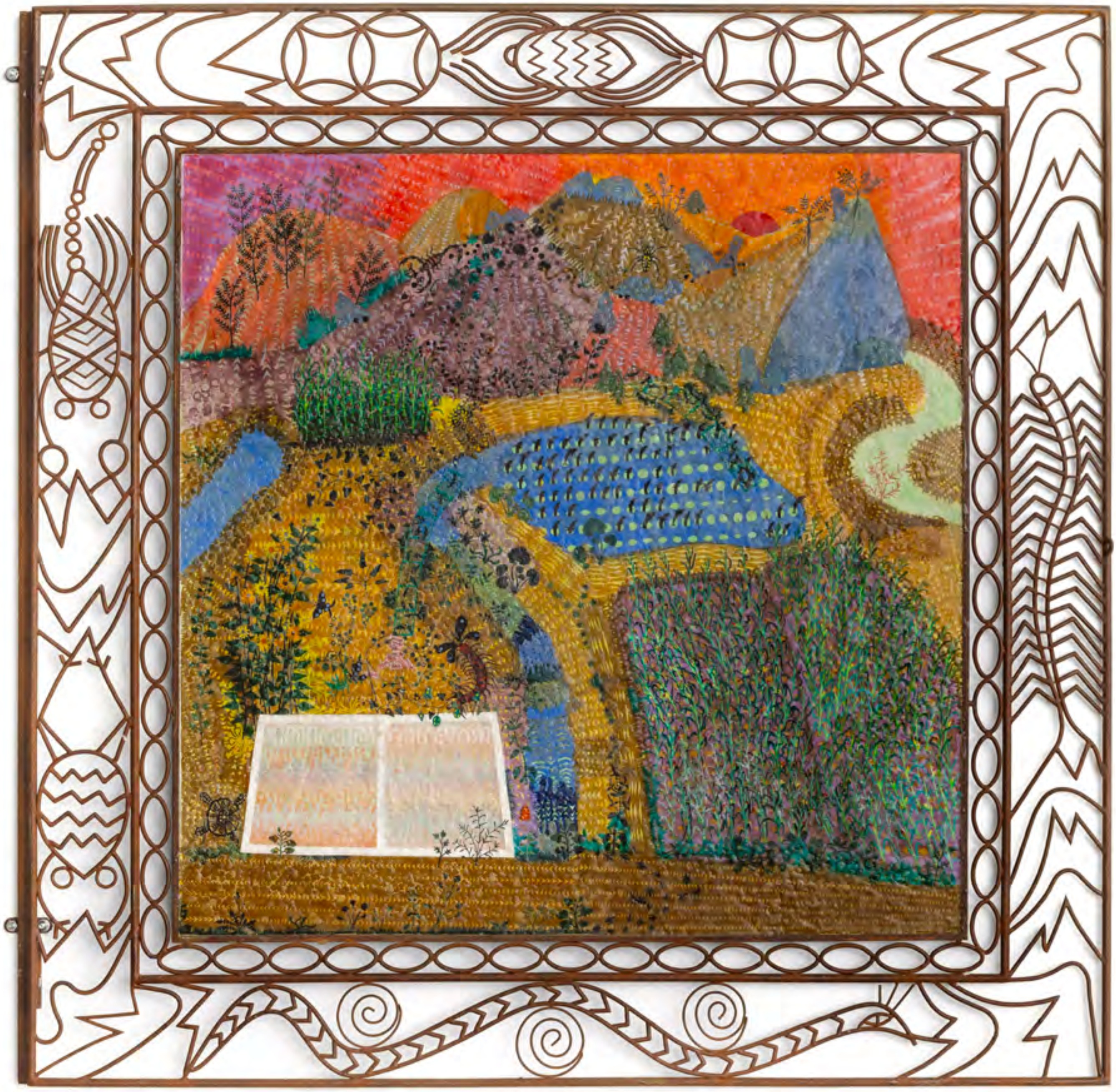
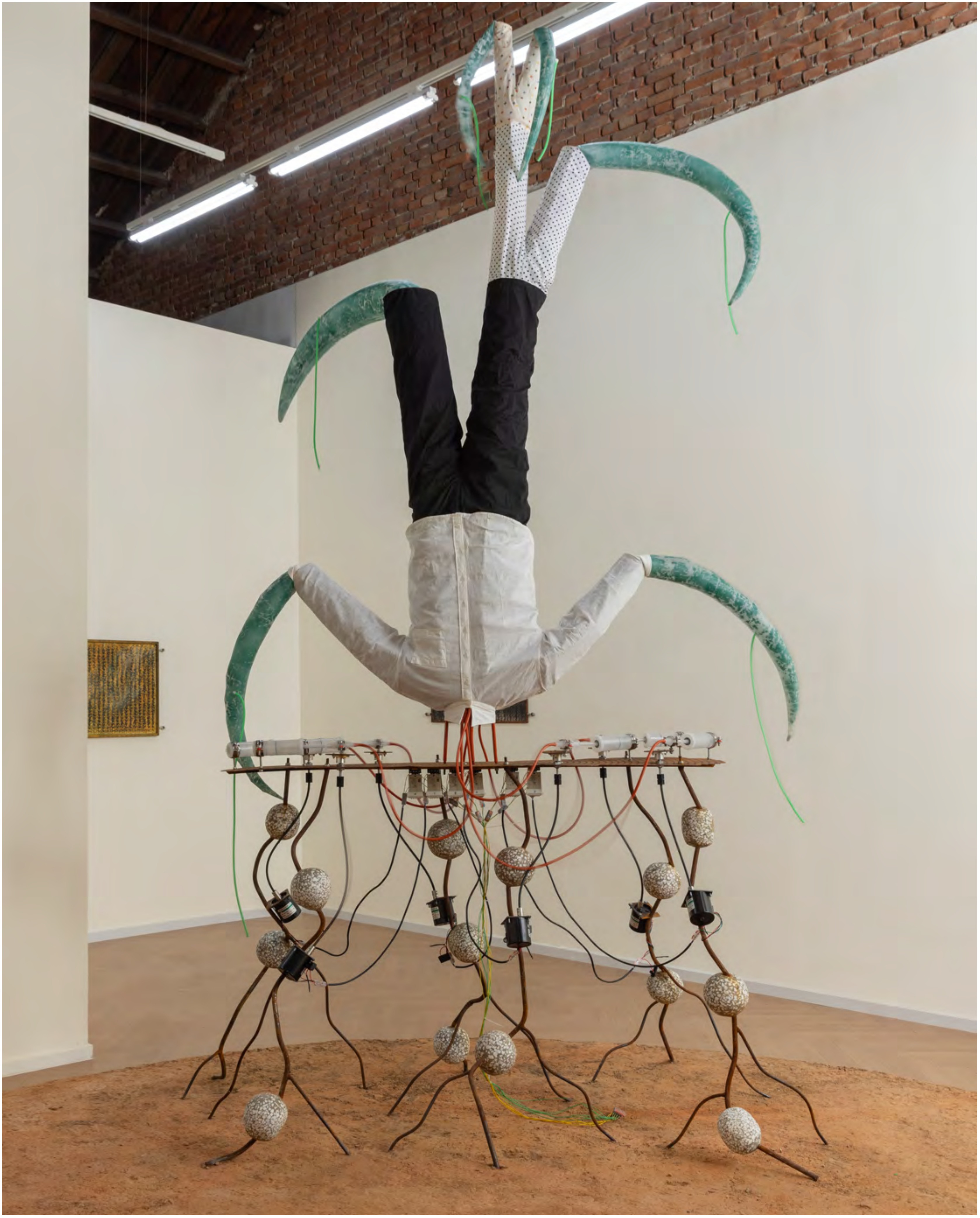
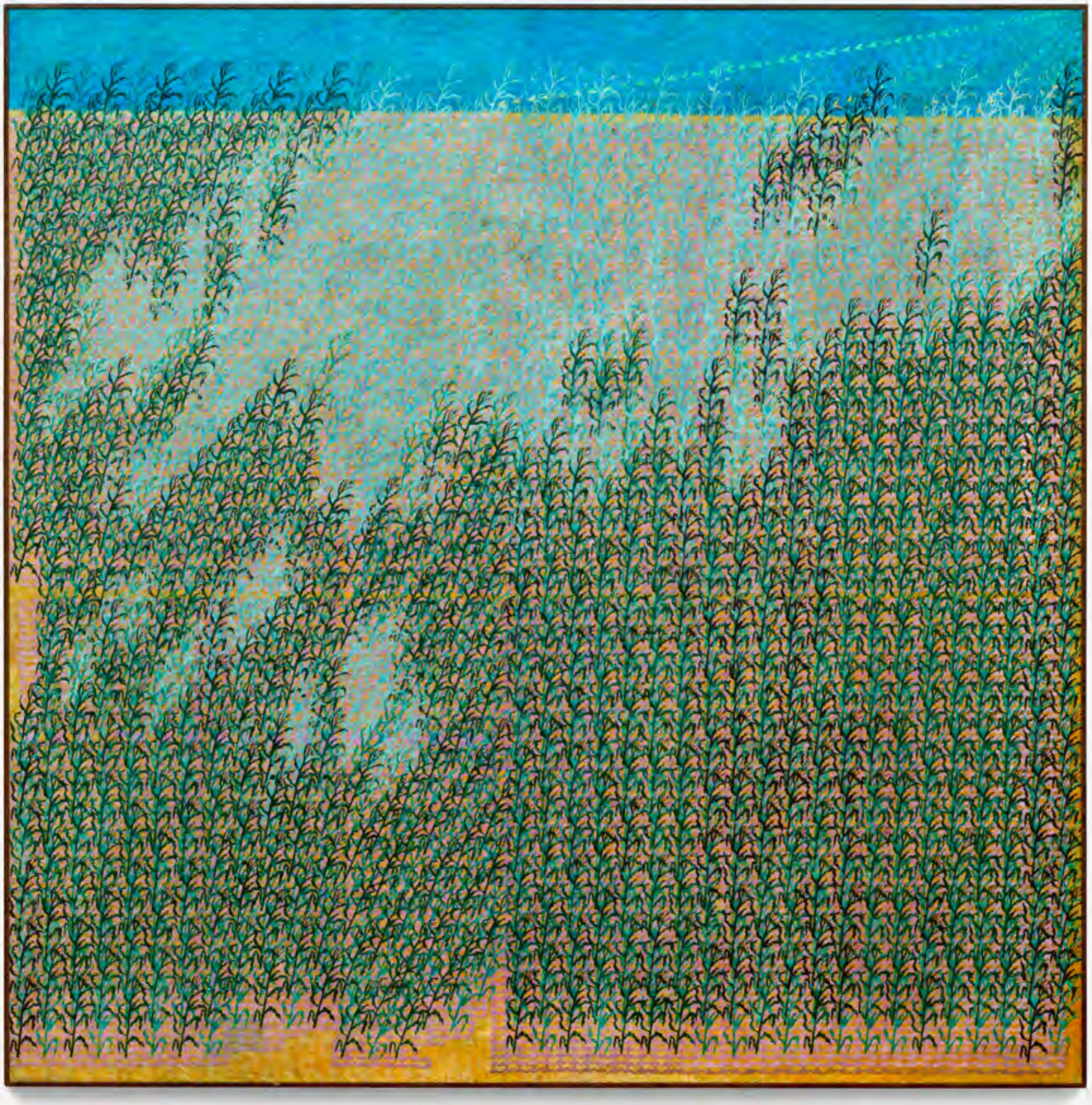
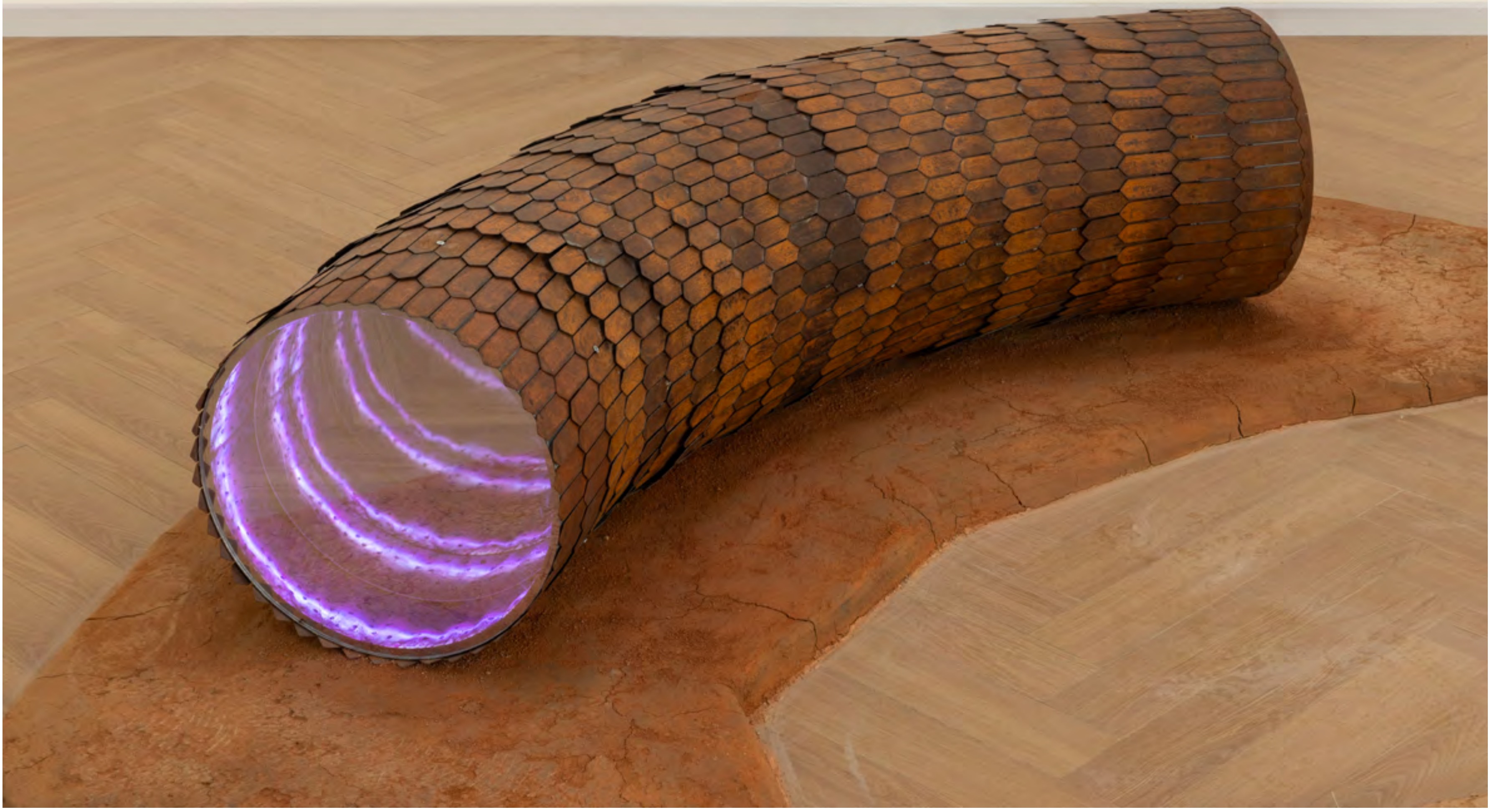
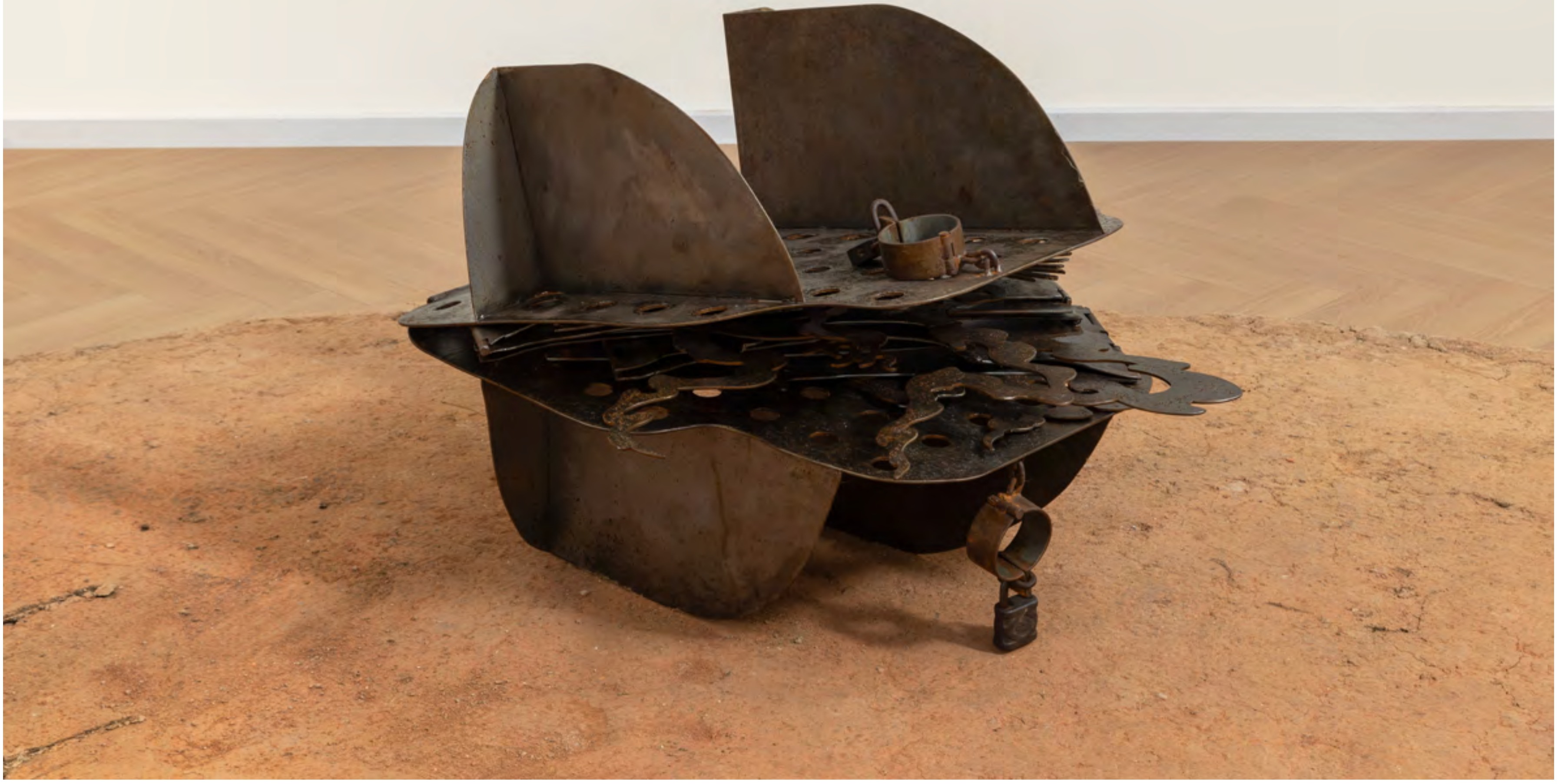
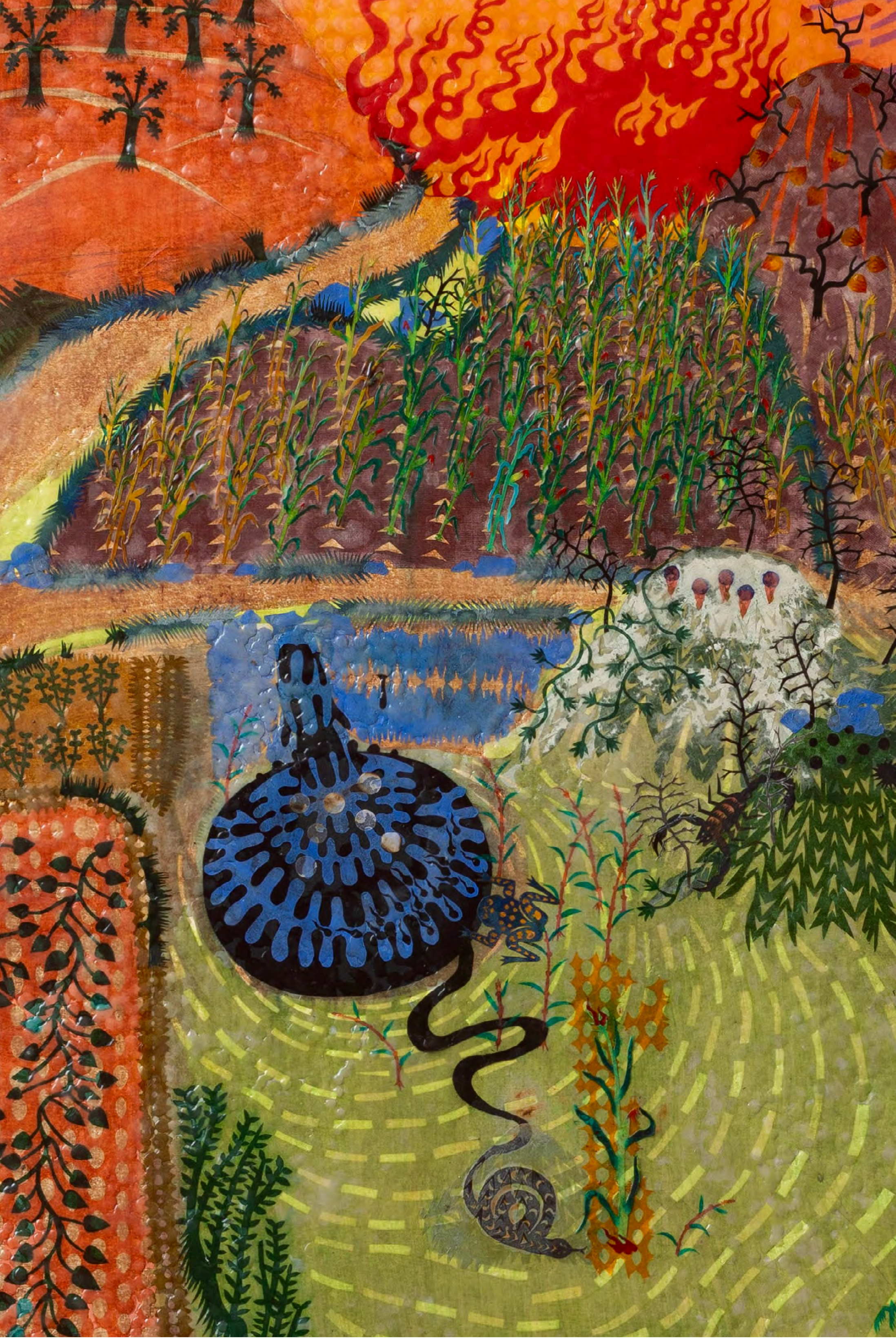
迟世林常觉得自己也是一株玉米,站在辽阔的玉米地里一同晃动,便感到安稳、自在。可如果孤零零插在流光飞驰的水泥城市里,就只能不断摇摆、挣扎着来勉强求生。作为他在记忆和绘画中反复凝望的心田,玉米地是治愈和启迪的源泉,也是各种情感冲撞、压缩下不断变形的容器。此次迟世林将展厅开辟为一片象征的玉米地。观众们趁着暮色,重返童年的老家。绕过打瞌睡的看门狗,穿过半掩着的老铁门,从蜿蜒的土路上缓缓爬上田埂,看见茂盛的玉米叶在视野里逐渐蔓延、起伏、摇摆着,随天空一样无尽且纯洁。看不见的田野深处,万物勃发而有情,在生死轮回里共生。然后,疑心渐起,高耸的玉米杆和野草像机器一样尖叫?最远处的浮云泛起屏幕的油光?迟世林以滴蜡剪纸画描绘的乡土天地如神话般永恒,也因封闭而虚弱。铁门上的画幅中,粮食、土地、水流、野草、昆虫、人类、牲畜、村舍、神灵组成一个安然共眠的乡野循环系统。后墙上的五幅画作描绘了那些令人一看就是一整天的玉米地,跨越留白,接续为环绕的远景。几千枚剪纸玉米如同符文,被连缀为咒语的长句,编织在混合了小庙壁画与像素游戏的稀薄云层下,宁静而脆弱。粗粝的手搓机械装置则呈现了生命在现实压力下的异化状态。门前土狗是装了蚂蚱腿的狗毛土块,在两种力的牵引下重复着必败的前行,直到将自己磨损殆尽。缝合了制服西装的晴空草于来自钢筋、瓦砾的根系,被一圈简陋的充气筒疯狂驱动着,在膨胀与干瘪间循环。挺拔的玉米秆被折叠进一本作为刑具或健身器具的铁书。迟世林需要亲自躺在土中,把它穿戴固定,通过不断拉展书页的劳役来让玉米重新抽穗。而展厅最深处的角落,是一小截匍匐于黑暗的蛇腹。它披覆着锈蚀的鳞片与年少时的忏悔,从两端的内脏截面向内延伸出无限的紫色甬道,通向宇宙深处混沌而宁静的内核。正如玉米本是发源于墨西哥的美洲作物,被广泛种植于中国北方的历史不早于18 世纪中叶,却在向基层日用的逐层下渗中被内化为丰满的传统。游荡在山河故事里的童年滋养出了赤子之心、众生之爱,让迟世林总能平淡天真地与万物共处。做机械也像玩石头,从创新里恬然生出个人化的古意。可禅机不止于对别人微笑,当澄明的心境终须直面现实生存的繁杂与烦躁时,他朴直的超脱还是否足够茁壮?从初学艺术时至今,迟世林依然在用行动提问着“艺术可以对生活有用吗?”
一看就是一整天策展人:王彦均
2025.8.9-2025.9.14
"When I was a child in the countryside, nothing captivated me more than watching cornfields—
listening to the whisper of stalks swaying in the wind. I could quietly gaze at them for an entire day."
"And then?"
"Then I graduated and stayed in Beijing. No space for that anymore, no time. City life is too frantic, too exhausting."
"Did you ever think of going back?"
"I can’t. I no longer fit into that cultural environment. And the countryside isn’t the same as it once was." Chi Shilin often imagines himself as a stalk of corn—rooted in a vast field, swaying in unison with the others, finding solace and belonging in that collective rhythm. But standing alone in the rapidly shifting urban landscape, he feels only ceaseless turbulence, a struggle to survive. The cornfield, revisited endlessly in his memories and paintings, becomes both a source of healing and inspiration, as well as a vessel warped under the pressure of colliding emotions. For this exhibition, Chi Shilin transforms the gallery into a symbolic cornfield. Visitors are invited to step into the twilight of childhood memory—past a dozing guard dog, through a half-open iron gate, along a winding dirt path that slowly rises to the fields. There, lush corn leaves stretch into the distance, undulating like waves under an endless, pristine sky. Hidden in the depths of the field, countless lives grow and intertwine, bound by shared emotion and cyclical existence. Yet the longer one looks, the more unsettling it becomes. Why do the towering stalks tremble like machinery? Why does the distant haze glint with the oily glare of a screen?
C h i S h i l i n’s w a x - d r i p p e d p a p e r - c u t landscapes depict an idyllic nature, mythic in its timelessness yet fragile in its isolation. On the iron gate, plants, soil, water, humans, animals, architecture, and deities merge into a slumbering ecosystem. Five large-scale paintings on the far wall capture the hypnotic expanse of cornfields—the kind one could lose a day staring into. Thousands of paper-cut cornstalks, arranged like incantatory runes, weave beneath a hazy sky that blends temple murals with pixelated game aesthetics. The handcrafted mechanical installations, meanwhile, reveal life distorted under real-
world pressures. The Dog of Earth, flecked with real fur, trudges forward on mechanical limbs, pulled by opposing forces until it grinds itself to dust. A hollow grass, stitched together from office uniforms, inflates and deflates in a manic cycle. A proud cornstalk is folded into an iron book—a torture device—which Chi Shilin must wear while lying in the soil, laboriously stretching its pages to coax the plant back into bloom. And in the deepest corner of the gallery, a segment of serpent’s belly crouches in darkness. Gazing upon the Day Curator : WANG Yanjun
2025.8.9-2025.9.14
C l a d i n r u s te d s c a l e s a n d c h i l d h o o d confessions, its severed ends open into violet passageways, tunneling toward the chaotic yet serene heart of the cosmos. And in the deepest corner of the gallery, a segment of serpent’s belly crouches in darkness. Clad in rusted scales and childhood confessions, its severed ends open into violet passageways, tunneling toward the chaotic yet serene heart of the cosmos. L i ke co r n i tse l f— n a t i ve to M ex i co, yet naturalized as a "traditional" crop in northern China no earlier than the mid-18th century—
Chi Shilin’s rural upbringing instilled in him an instinctive kinship with all living things. His mechanical works carry the playful solemnity of stacking stones, a personalized antiquity. But Zen serenity isn’t just about smiling at the world. When confronted with the raw anxiety of survival, can such detachment remain resilient?
From his earliest days in art to now, Chi Shilin continues to ask through his practice: Can art be of any real use to life?
参展艺术家Artists
作品