本真指引
展览信息
前言Introduction
1723 年,德国作曲家约翰· 塞巴斯蒂安· 巴赫(Johann Sebastian Bach)亲笔誊抄了他创作的15 首二部创意曲和15 首三部创意曲,并将这套对位键盘曲集命名为《本真指引》(Aufrichtige Anleitung)1 。在扉页中,巴赫阐明这是一份为“ 特别渴望学习之人” 所作的实用教学曲集,其中的小曲“ 是一种自由创作的、让简单且独特的乐思得以发展的范例,在强烈统一又对位的结构中运行…… 通常由一个简洁的主题和它的对题构成,展示了对位器乐复调创作的无限可能2。”
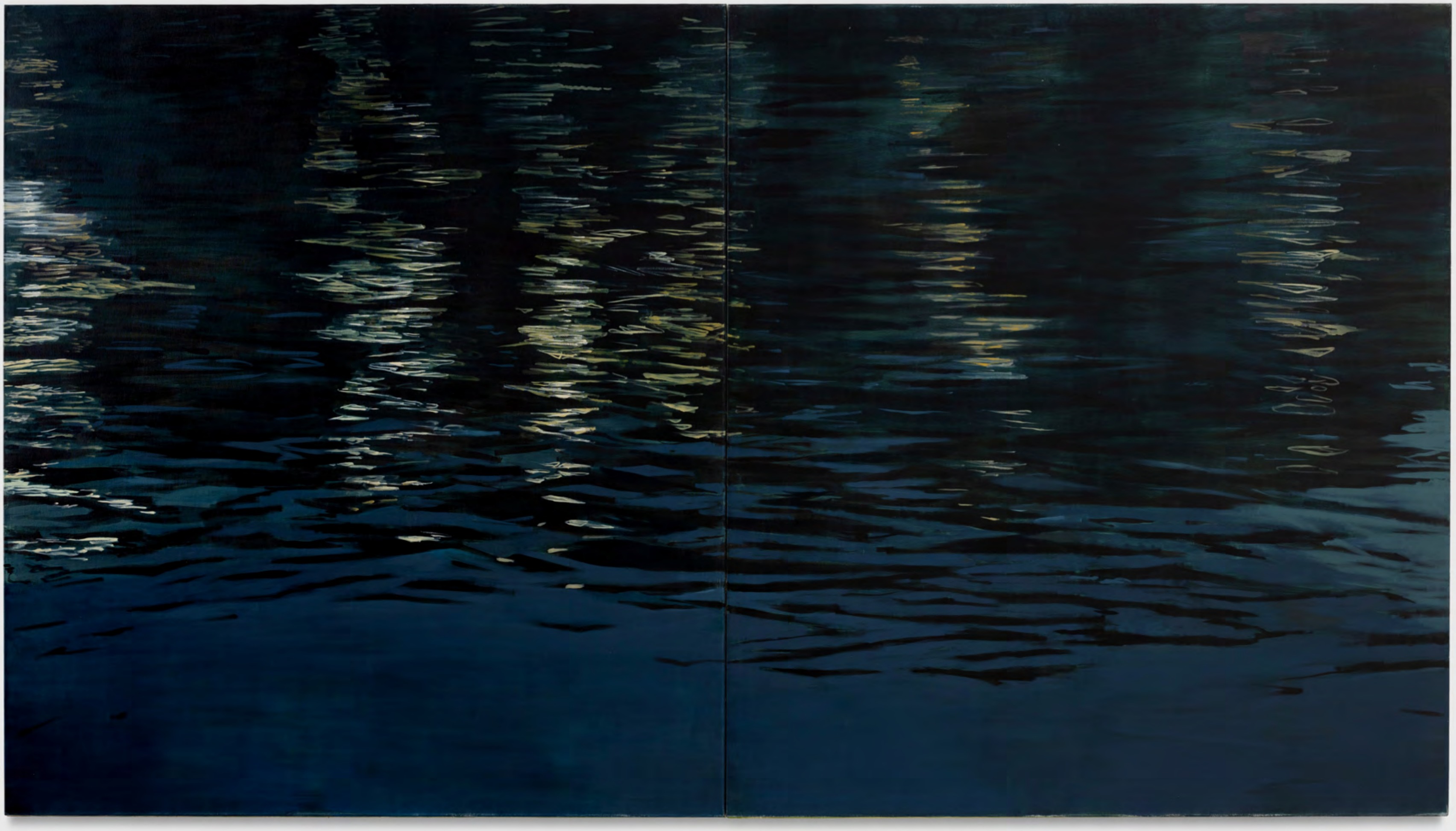
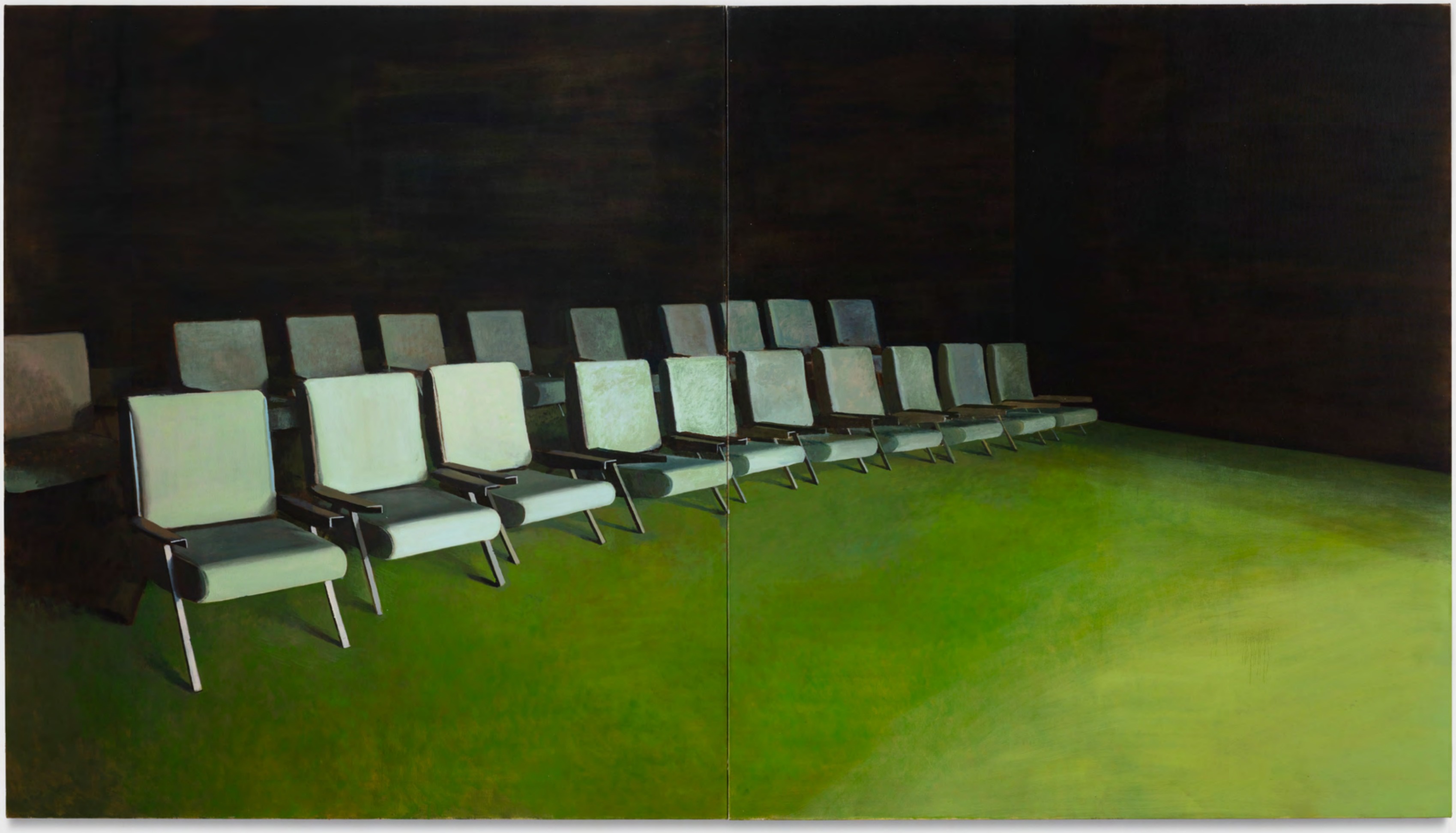
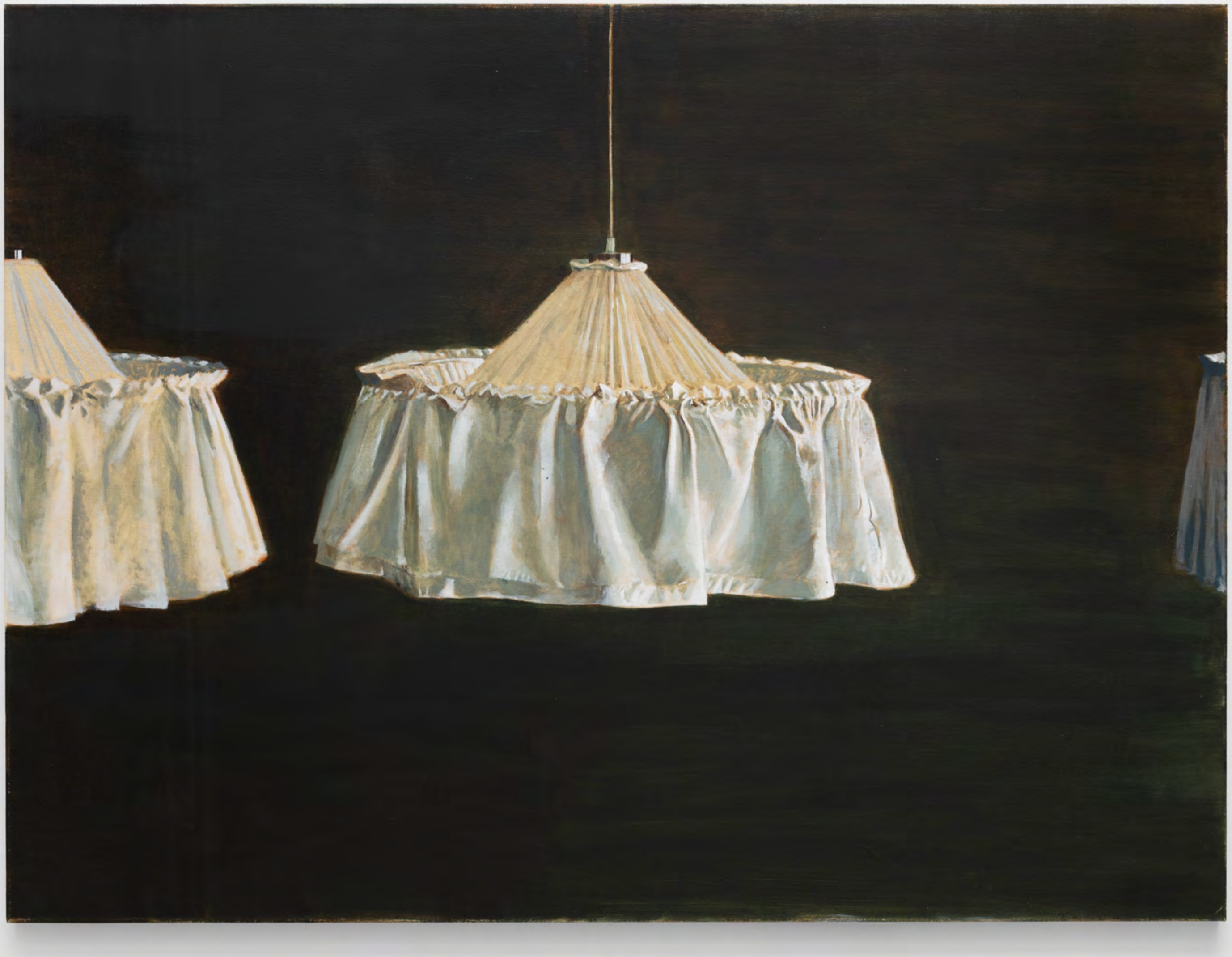
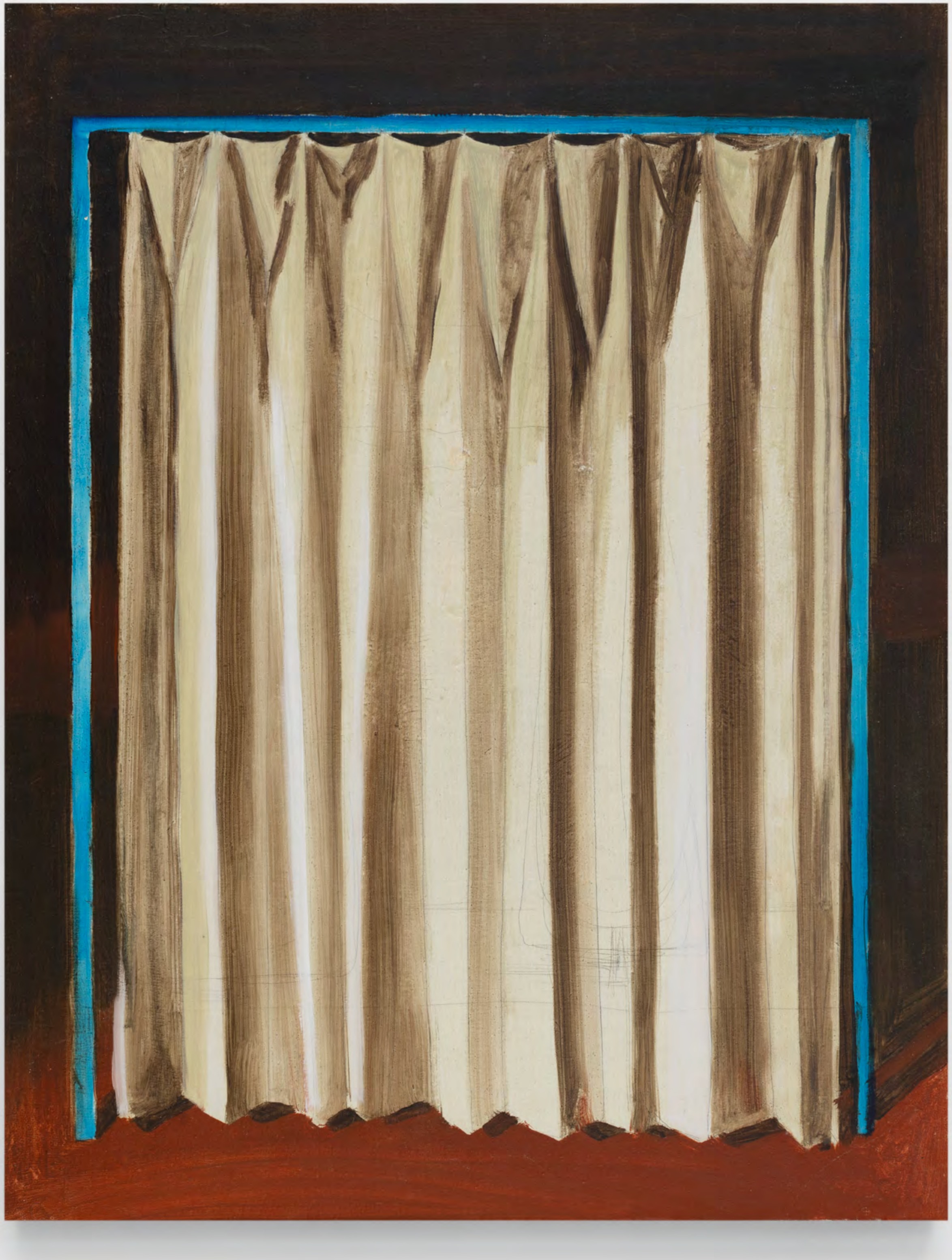
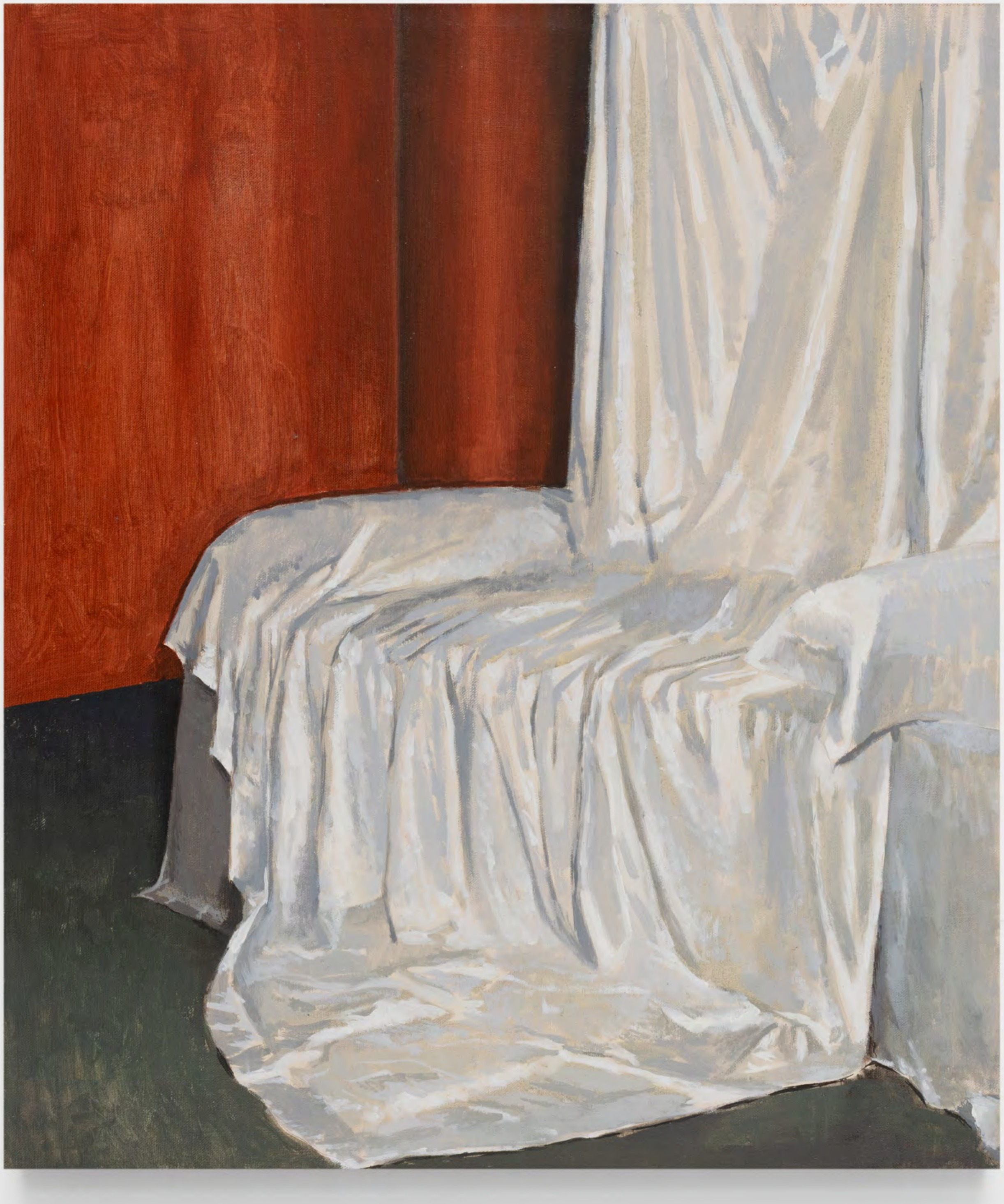
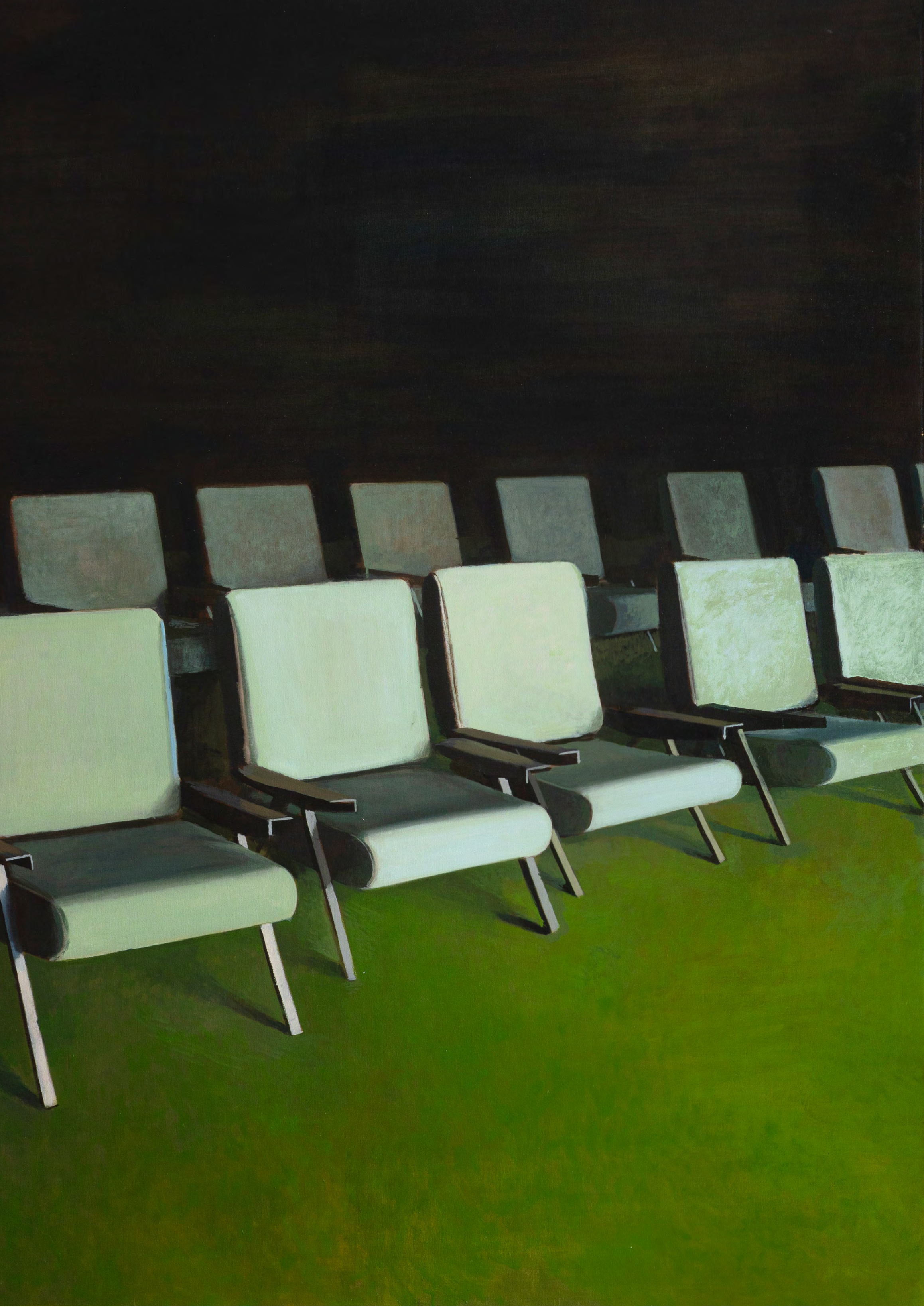
展览“ 本真指引” 呈现苏堃2022 年至2025 年间创作的布面油画和部分纸本作品。通过聚焦房间、剧场等室内空间,以及布帘、灯罩等织物,苏堃使用纯粹功能主义的工作法持续研习图像的对位结构与视觉的复调表现。如同巴赫的教学创意曲集,苏堃作品的视觉语言利落克己,画面主题清晰凝练,多重声部线索有迹可循。乍看工整的符号秩序与协调的色彩层级背后,蕴含着苏堃运用材料和处理图像时细腻而充满活力的“ 延宕”—— 在和谐的语句即将行进为不和谐之瞬,在似是而非的诡诞与明朗的日常经验之间,苏堃将些许同中有异的细节嵌入画面,悬停了臆测的叙事向任何一方绝对倾倒的势能。尝试将苏堃的系列作品《一个房间的多种变体》(2024)作为踏入复调绘画语境的一种练习:绘制五个“ 房间”
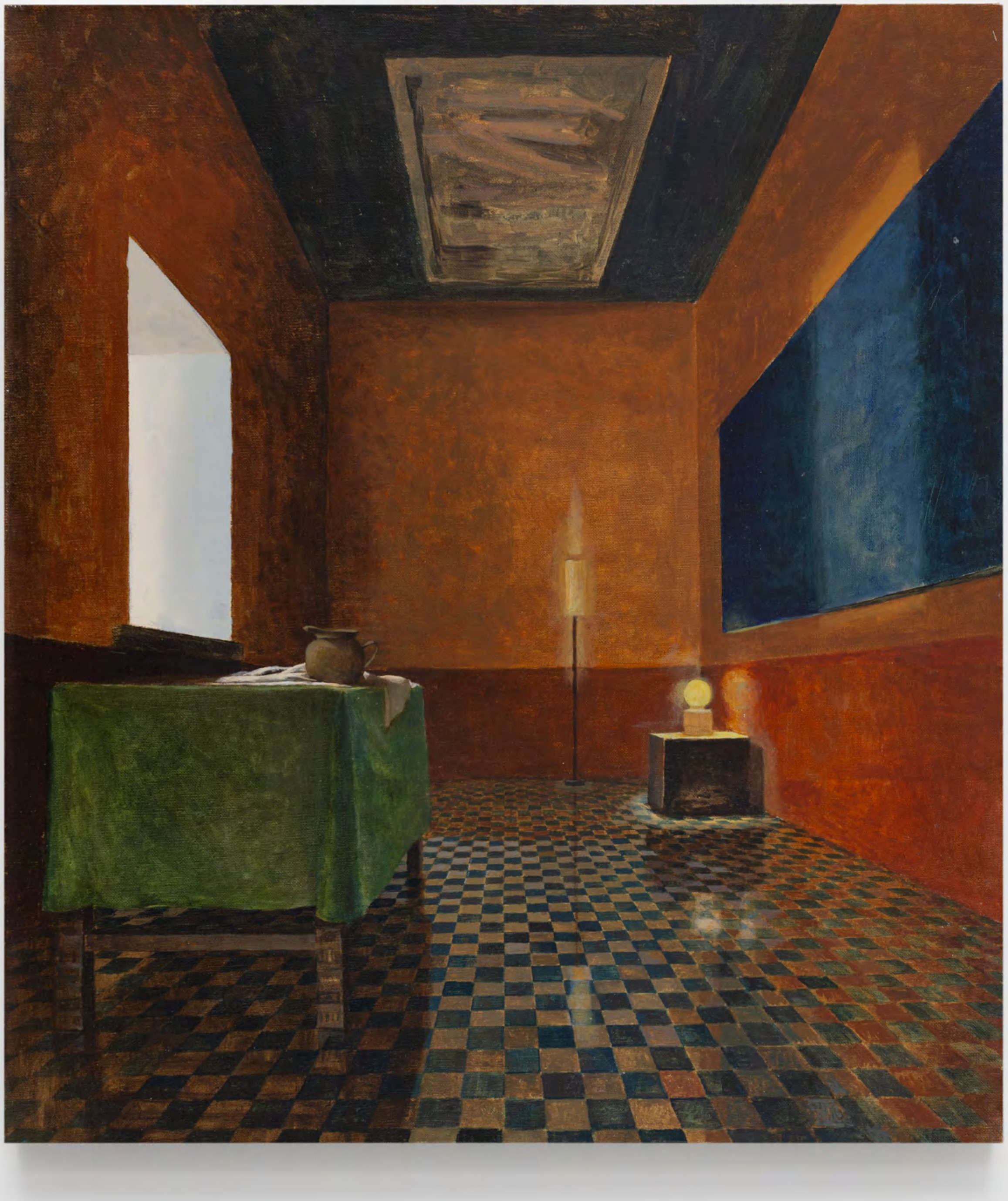
时,苏堃使用消失点完全重合的单点透视法起稿,并以形色不同的侧窗、室内灯和格纹地砖的组合式主题为创作原点,空间填充物和墙面装饰则以非强制对位的自由复调格式交替变换,从而创造出彼此应答又互不从属的独立篇幅。例如3 号作品,顶灯的实体消失于强烈的明暗对比之间,仅余一束冷色聚光如舞台独角戏般照亮整洁而空旷的双人床;在1 号作品画面中央,苏堃似乎引入了一幅安东尼· 凡· 戴克(Sir Anthony van Dyck)的人物肖像,然而这或许是因画中人穿戴白色拉夫领而制造出的错觉。在研究构图与光影表现的过程中,荷兰黄金时代画家约翰内斯· 维米尔(Johannes Vermeer)给苏堃带来另一种“ 本真指引”。在观看《一个房间的多种变体》系列时,不难联想到维米尔的《音乐课》(The Music Lesson,约1662—1665)等作品,尽管这并非一场对大师之作漫无目的的重访:苏堃在其绘画实验和实践中逐步脱离对乐器与弹奏者的具象描绘,从而有意回避一些因音乐主题而引发的情感路径—— 诸如对生命的颂赞或对爱情的咏唱。由此,观者得以充分想象现场观察者可能所处的位置与动态,继而全然地进入一个“ 渴望研习绘画本身” 之人的视域,体验图像、符号甚至色彩本身自单一动机生发,并于连锁画面中演进为复调织体的无限可能。
1 J.S. Bach Database - Aufrichtige Anleitung (Invetions And Sinfonias)[EB/
OL]. http://en.bachdb.com/Works/Aufrichtige-Anleitung. [2025-05-25]. 中译名由艺术家与笔者提供。
2 沃尔夫, 克里斯托弗. 巴赫的音乐宇宙:作曲家和他的作品[M]. 刘广汉译. 桂林:广西师范大学出版社, 2023:77。本真指引策展人:林雨扬
2025.6.14-2025.7.26
In 1723, the German composer Johann Sebastian Bach transcribed his set of fifteen Two-Part Inventions and fifteen Three-Part Sinfonias, p res e n t i n g t h e m a s a c o h es i ve b o d y of contrapuntal clavier pieces under the title Honest Method (Aufrichtige Anleitung)1 . In the preface, Bach described the collection as a hands-on guide for ‘those desirous of learning’ , offering short pieces that serve as models of freely composed music, in which simple yet distinctive thematic ideas are developed. Each work unfolds within a tightly constructed contrapuntal framework, typically beginning with a clear subject and elaborated through interweaving lines that respond to, reflect, or evolve from it, demonstrating the structural clarity and infinite possibility of polyphonic composition.2 Honest Method presents a curated body of work by Su Kun, produced between 2022 and 2025, comprising oil paintings on canvas alongside selected works on paper. The works centre on interior spaces such as rooms and theatres, as well as fabric elements including drapery and lampshades. Su adopts a rigorously functionalist approach to painting, engaging in a sustained exploration of contrapuntal image construction and the polyphonic possibilities of visual perception. Echoing the compositional clarity of Bach’s pedagogical inventions, Su Kun’s visual language is measured and exacting. Each piece is anchored by a distilled theme, with multiple visual lines unfolding through layered, deliberate interplay. The viewer is invited to trace these converging trajectories, where clarity and control give rise to meaning. B e n e a t h t h e a p p a re n t fo r m a l o rd e r a n d harmonious gradations of colour lies a subtle yet animated sense of ‘suspension’ in Su Kun’s handling of material and image — akin to the musical device of delaying resolution. Like a suspended note in counterpoint, his compositions sustain a quiet tension, hovering at the threshold between harmony and dissonance, just as the familiar begins to slip into the uncanny. Through small but intentional deviations embedded within visual repetitions, Su Kun prevents the image from tipping too far into either narrative certainty or abstraction, maintaining a state of poised ambiguity. Su Kun’s series Variants of a Room (2024) may be read as an exercise in approaching the language of polyphonic painting. Each of the five ‘rooms’
is constructed using a single-point perspective, with all vanishing lines converging precisely. These spaces begin with variations on a shared compositional motif: side windows, interior lighting, and tiled floors, rendered in different combinations of form and colour. The furnishings and wall elements shift in and out of view through a freely contrapuntal logic, not one of strict symmetry, but of alternating visual voices that respond to one another without asserting dominance. In Variants of a Room No.3, for instance, the ceiling light dissolves into chiaroscuro, leaving only a narrow beam of illumination that casts the double bed in theatrical solitude, like a scene from a one-person play. In Variants of a Room No.1, a portrait that appears to be by Sir Anthony van Dyck emerges at the centre of the composition. On closer inspection, however, it becomes clear that the Honest Method(Aufrichtige Anleitung)
Curtour : Yuyang Lin
2025.6.14-2025.7.26
impression is created by the sitter’s white ruff collar, a fragment of historical costume that echoes the presence of the master, though it is not, in fact, a work by him. In Su Kun’s study of composition and the treatment of light, the Dutch Golden Age painter Johannes Vermeer offers another kind of ‘honest method’. Viewing the Variants of a Room series, one might be reminded of works such as The Music Lesson (c. 1662–1665), though this is not a nostalgic return to the old masters. Rather, Su’s painterly investigations deliberately move away from the figurative depiction of instruments and players, sidestepping the emotional cues often associated with musical themes, such as celebrations of life or invocations of love. In doing so, he invites the viewer to imagine the potential position and movement of an onlooker within the space, shifting attention towards a visual field shaped by one who is, above all, ‘desirous of learning painting itself’. What emerges is an image-world where figuration, signifier and even colour grow from a singular motif, evolving across interconnected canvases into a polyphonic weave, open to infinite possibility.
1 J.S. Bach Database - Aufrichtige Anleitung (Invetions And Sinfonias)[EB/
OL]. http://en.bachdb.com/Works/Aufrichtige-Anleitung. [2025-05-25]. Chinese title translation credited to the artist and author.
2 Wolff, Christoph. Bach’s Musical Universe: The Composer and His Work. Translated by Liu Guanghan. Guilin: Guangxi Normal University Press, 2023: 77.
参展艺术家Artists
作品