假如我们不再相见 In case I don't see you
展览信息
前言Introduction
南柯画廊(Nan Ke Gallery)将于6月14日欣然呈现黄加煜
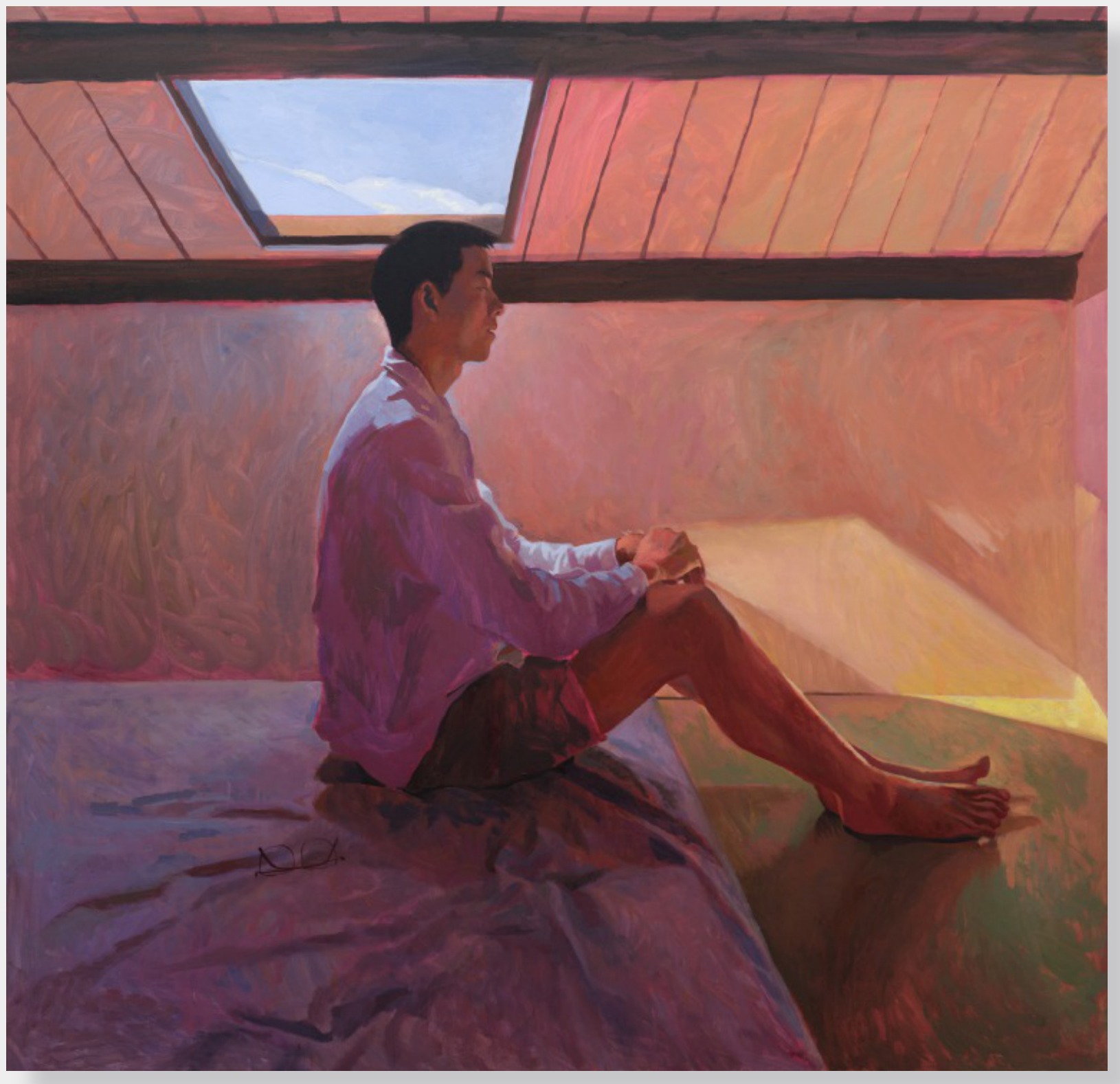
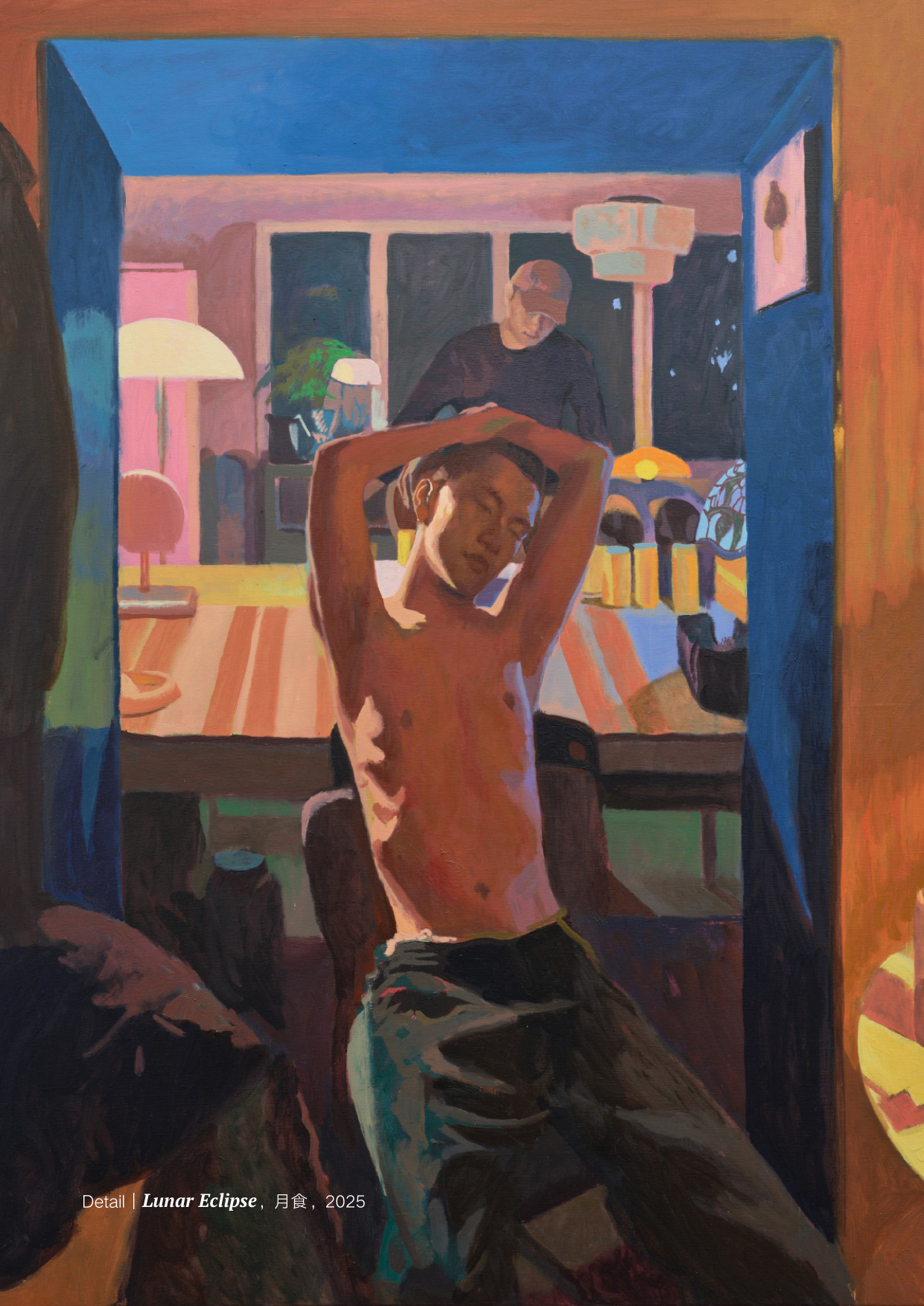
(Killion Huang)的个展“假如我们不再相见”(In Case I Don’t See You)。黄加煜的作品以情感化的色彩作为第一语言,描绘友人的姿势与具有庇护感的室内空间。他的绘画温暖私密,是画家与画中人物彼此信任的“礼物”。观众将在他绘画中的日与夜、酷儿的日常生活与亲密关系中发现笔触中的柔情。 画家将人物所居住的室内空间视作艺术家工作室的一部分,最终的观察体现在作品的构图中。在景别与氛围上,这些构图与德国摄影师赫伯特 · 托比亚斯(Herbert Tobias)战后的酷儿摄影共享了美感上的原则:因自足而表现出的吸引力。在绘画过程中,玫红色是黄加煜作品的底层基调,并经常被刻意保留在画布上,就如同情感的底色。作为一名色弱患者,黄加煜对红色、棕色、蓝色等颜色的感知极为敏锐,视觉差异并非阻碍,反而造就了他极具辨识度的色彩体系。他让真正“主观”的色彩感受推向极致,并仍将事物的边界保留在可辨识的现实场景之中。艺术家坦承,如果不用红色,画面对他而言就会显得过于“灰暗”。这暗示了画面的色彩在心理层面上所提供的安全感,因为,那些在常人看来或许过于浓烈的红棕配色,恰好是艺术家平衡其与外部世界的视觉纽带。室内空间在黄加煜的作品中超越了物理场景的意义,更准确地说,这些“空间”是人物所恰好处在的色彩平面。作品《巴黎海鸥》(Seagull Parisian, 2025)中的天窗场景尤为典型:人物的身体在结构上处在四个色彩平面的中间位置,阁楼顶部与墙面上依稀可以看见床单与地面的蓝色与绿色。画面右侧位置的黄色光亮区域也以线条形式出现在了人物腿部的边缘线位置。事实上,所有色彩都几乎出现在了人物之上,这种对于“空间”的处理是一种双重的映射:人物与其空间的依赖关系,以及,通过色彩所传递的温和的感染力。在另一幅作品《棋盘海岸线》(Chessboard Coastline,
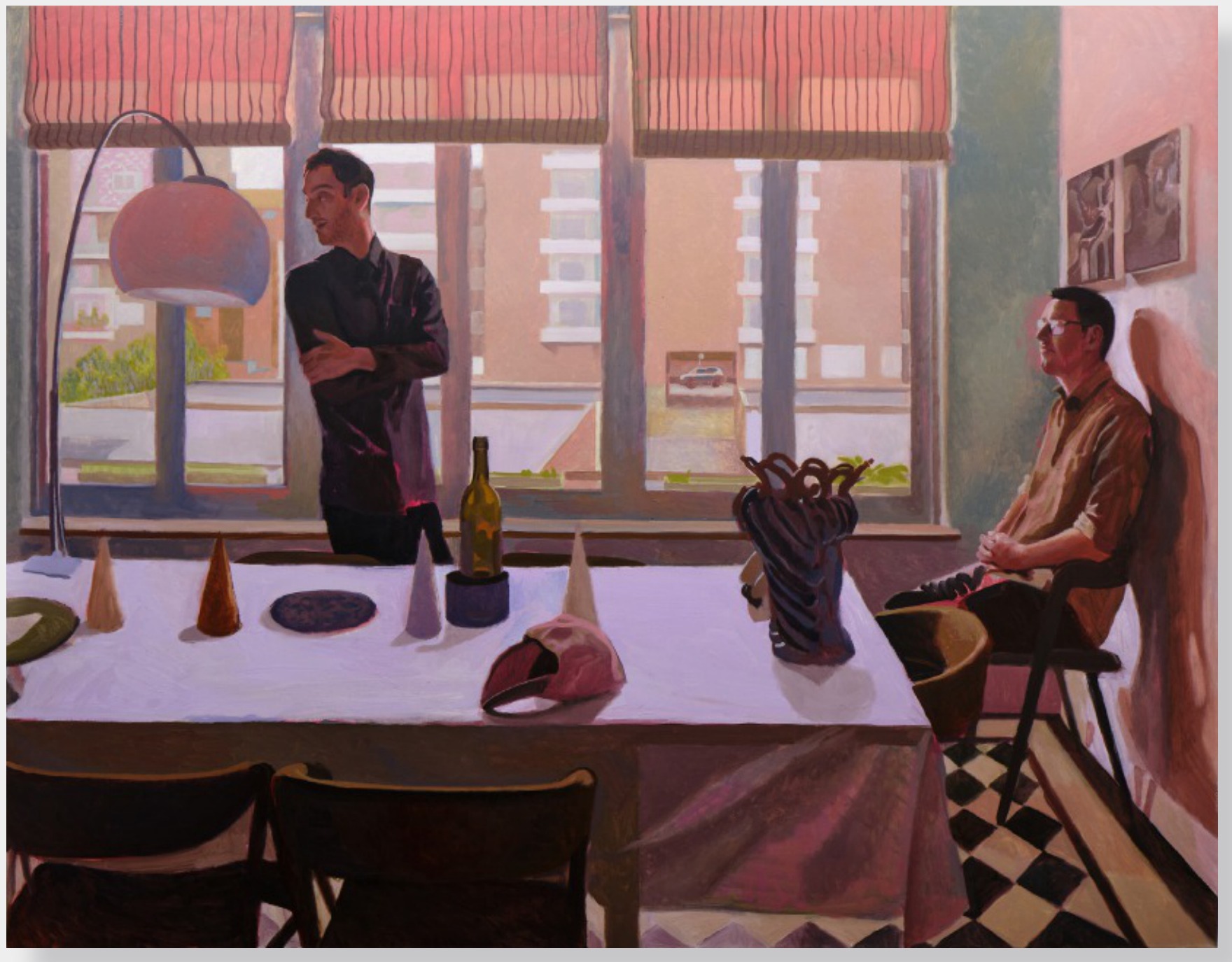
2025)中,画面中的元素处理得异常明确,强调了矩形的造型和明显的边界线。这种处理首先与现实中所处的比利时室内环境的秩序感相呼应,两位人物都处在可倚靠的“平面”当中。更为喜人的部分是长型曲线金属桌灯的灯罩部分:细腻的粉状弧形区域满足了画面柔和的需求,在色彩上又与右侧下方桌布、以及靠椅人物右侧的阴影构成了连续性。艺术家对于身体的记录最早始于学徒时期对于枯燥写生的无感。那一次偶然的经历使他从风景转向了光线在身体上所遗留的自然效果。这种选择显示出,画家倾向于将人际关系置于自然之上的创作倾向。展览中的室内——比利时的严谨室内、上海的有限居所、泰国的宽敞旅店——都成为了测量色彩的温度仪器。通常,黄加煜都会刻意压低顶部空间,致使观众将注意力集中在由摆放的物件所簇拥的身体之上。他的人物面部往往被有意模糊或简化,以此强调身姿与体态在情感泄露时的真实性。在作品《折扇》(Folding Fan, 2025
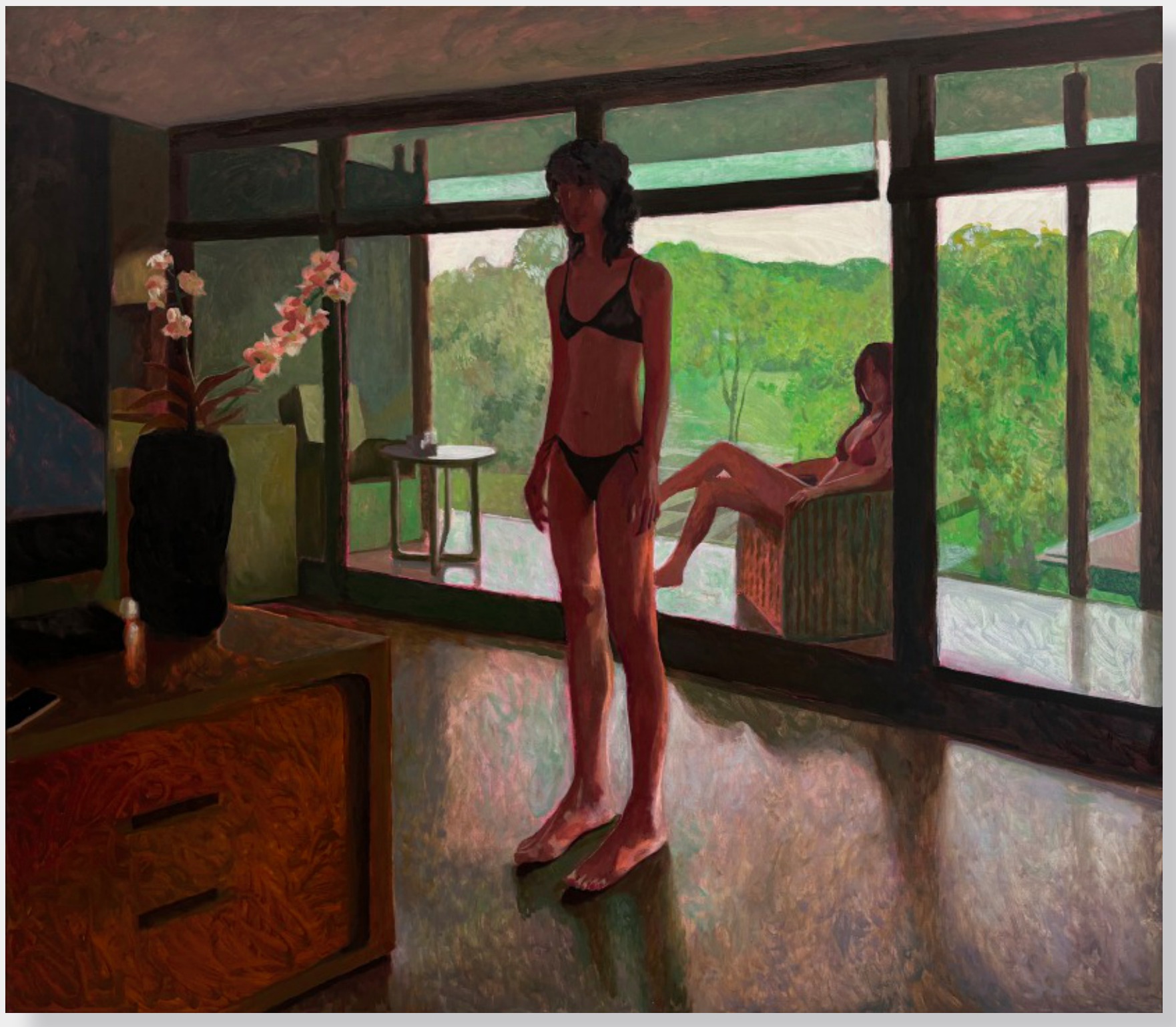
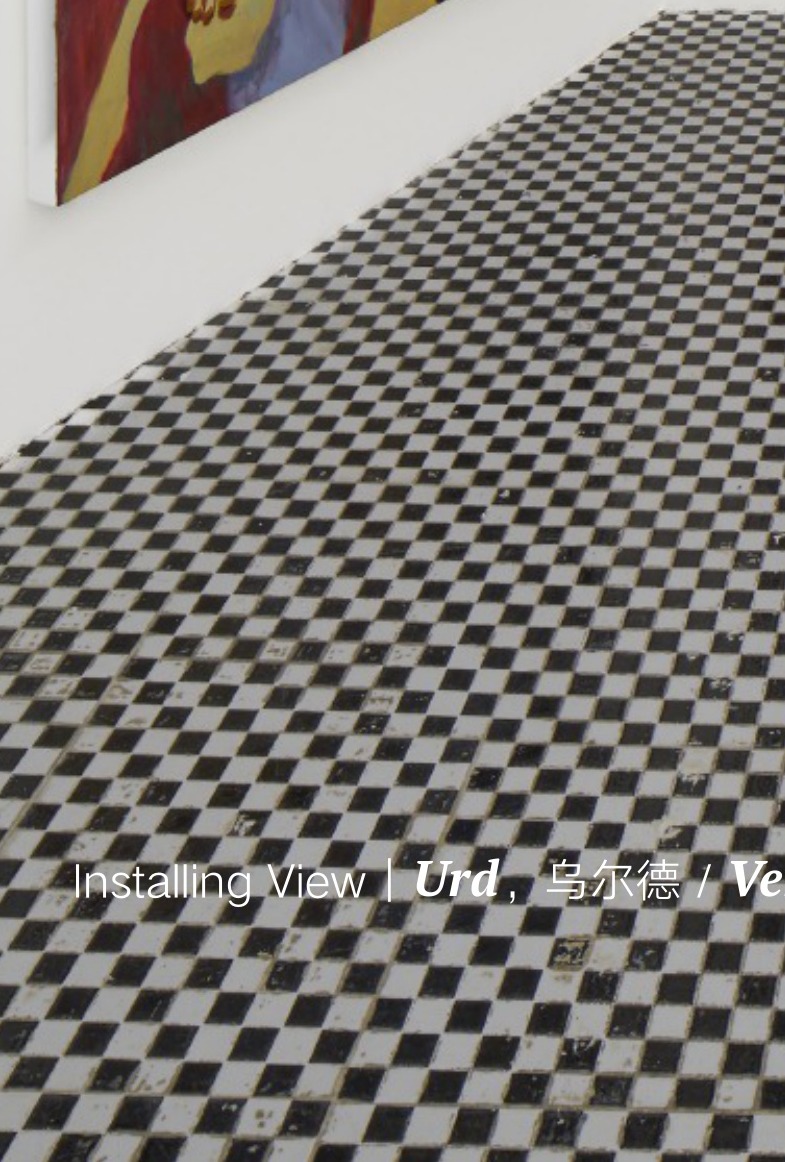
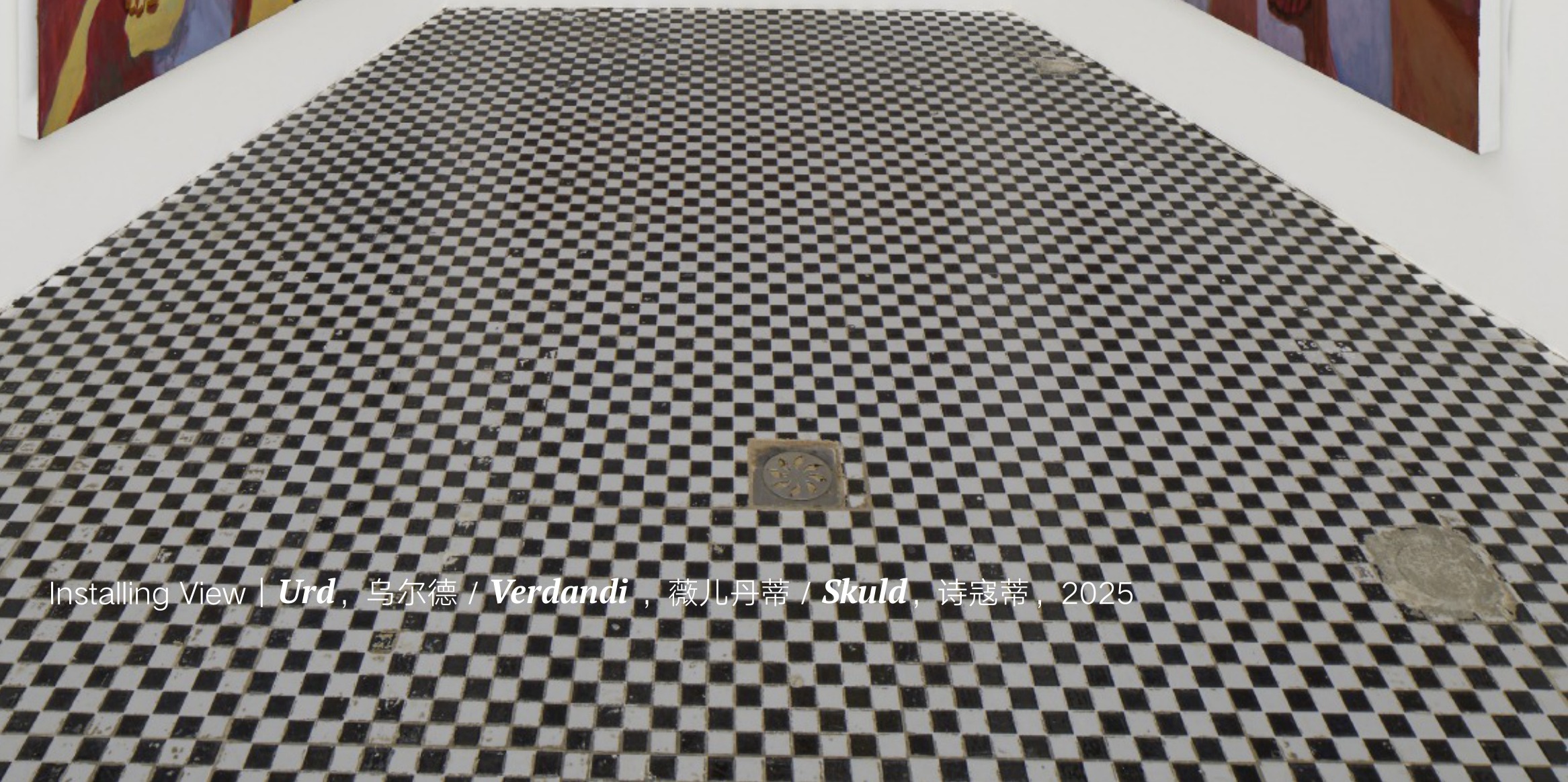
)中,画面中央纤瘦的女性敏感而紧张,其紧绷的拇指与蜷缩的脚趾又与空旷空间构成了对比。然而,在画面的绝大部分地方——明亮的团状地面、背景的绿色山峦以及木质纹理的储物柜——松弛的笔触都在帮助化解拘谨的人物情绪。黄加煜的三联画《乌尔德、薇儿丹蒂、诗蔻蒂》(Urd, Verdandi, Skuld, 2025)以北欧神话中诺伦三女神(Norns)为命题。三位女神代表着时间与命运,即过去、现在与未来,亦隐喻着主体之间的相遇、相处与离别。我们的命运既由这些瞬间交织,又相行渐远。画面中三位站立的男性主体看似相似,而母题所代表的时间性则被融入了作品的光线冷暖变化之中。黄加煜选择通过这种巧妙的色彩控制来塑造时间与命运,这种微妙感贯穿在黄加煜的大多数作品当中。他的敏感在时间之流中唤起观者对于情感关系的共鸣。作为一位青年艺术家,黄加煜并不回避艺术史对其创作的影响。在这份名单当中,包括有法国后印象派画家皮埃尔 · 博纳尔(Pierre Bonnard)的跳跃笔触与室内美学、杰米 · 怀斯(Jamie Wyeth) 的忧郁人像、大卫 · 霍克尼的空间构成与色彩关系、以及他在纽约视觉艺术学院的老师T.M · 戴维
(T.M Davy)的欢愉表达。此外,个展中的作品《跃入洞穴》
(Cave Dive, 2025)也表明,画家正在尝试将人物置于室内空间的景深之处。这一变化将会允许画家尝试更多人造光源以及物件自身的物质特性,并将身体议题嵌套在更为复杂的物质体系与身份议题当中。
IN CASE I DON'T SEE YOU
壺偧彿髦醭畝荁㓄
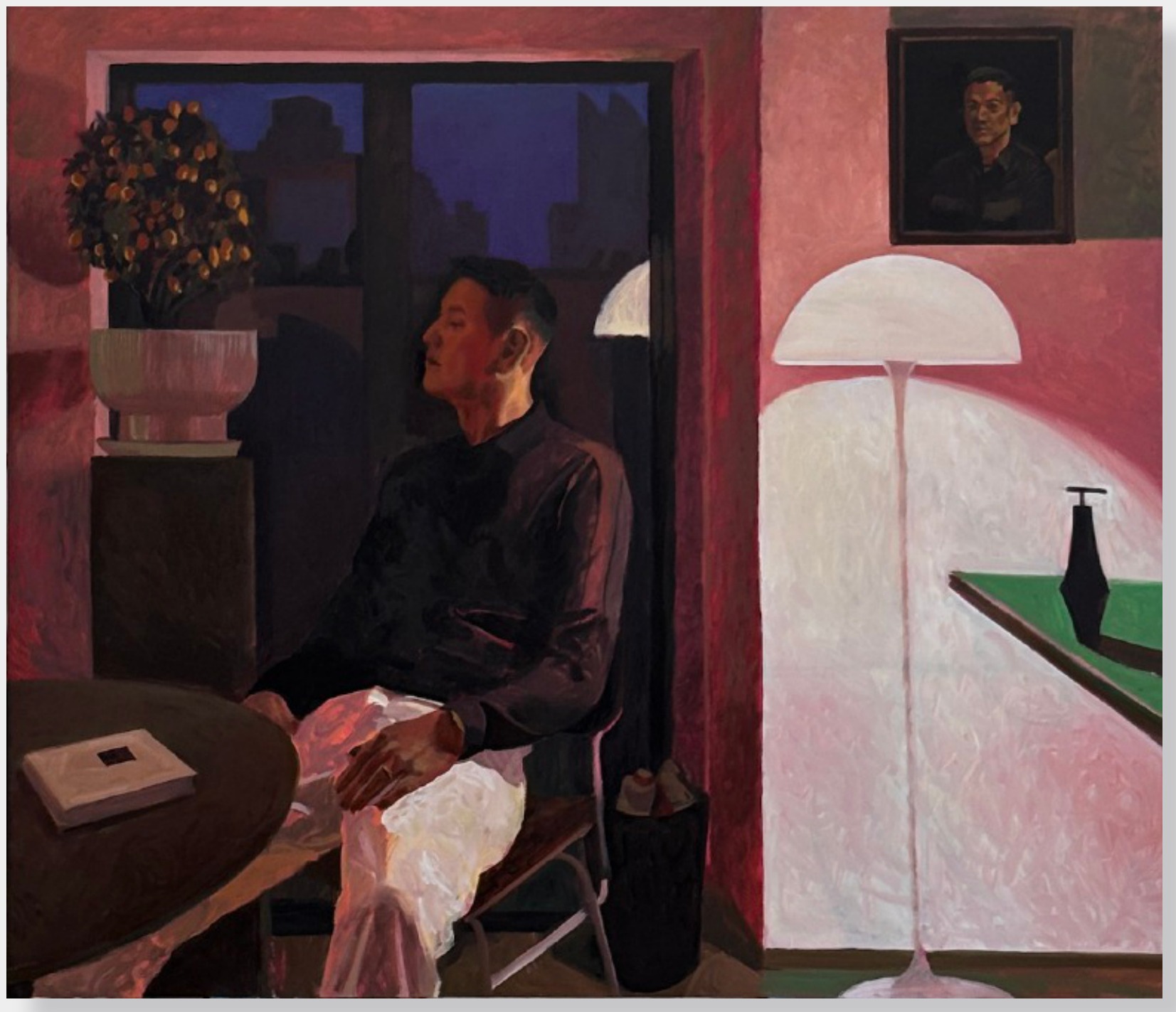
黄加煜试图在绘画当中邀请观众进入一个私密性的边界,并引起共鸣。作品中的玫红色调、被夸大了的匿名身体、洒落在身体边缘的光的线条,投射在色彩中的柔和手感,以及自我舒适的内部空间,这一切都旨在捕捉日夜交替中最为寻常的情感需求。酷儿群体对亲密关系的渴求被安置在了得以呵护自我的室内意象当中。黄加煜的人物意图在社会的排他性网络中保持自我完整,而其自身的赤裸性又与作品的色彩一道促成了一种介乎于羞赧与暧昧之间的效果。展览标题“假如我们不再相见”出自美国电影《楚门的世界》
(The Truman Show),并以白天、黄昏与深夜作为线索,呼应电影中的台词:“In case I don’t see ya: Good afternoon, good evening, and good night!”与其说它代表了告别,不如说它代表着对于相遇的珍重,以及画家在作画时所释出的美好意愿。展览中的作品并非来自于封闭的自我沉溺,而是来自于一种邀请。艺术家邀请观者通过他的特定记忆与空间,抵达人类所共同拥有的朴素而天真的欲望:美与爱。文/夏天
IN CASE I DON'T SEE YOU
壺偧彿髦醭畝荁㓄
Nan Ke Gallery is pleased to present Killion Huang's solo exhibition, In Case I Don’t See You, opening on June 14. Killion's works employ emotive color as their primary language, depicting the postures of friends and sheltered interior spaces. His paintings—warm, intimate, and imbued with mutual trust—serve as "gifts" exchanged between the artist and his subjects. Viewers will discover tenderness in his brushstrokes, capturing the duality of day and night, queer domesticity, and intimacy.Killion treats the interiors inhabited by his figures as extensions of his studio, with compositional choices reflecting careful observation. In framing and atmosphere, these works share an aesthetic principle with postwar queer photography by German artist Herbert Tobias: an allure born of self-containment. Rose pink often serves as the foundational tone in Killion's paintings, deliberately left visible on the canvas like an emotional substrate. As someone with color vision deficiency, Killion perceives red, brown, and blue with heightened sensitivity. This divergence doesn’t hinder but instead forges his distinctive chromatic system—one that pushes subjective color perception to its limits while retaining recognizable realism. The artist admits that without red, his paintings would feel "too gray," revealing how these hues provide psychological security. The intense red-brown palettes, which might appear overwhelming to some, function as his visual tether to the external world. In Killion's work, interiors transcend physical settings; they are planes of color where figures exist. Seagull Parisian (2025) exemplifies this: a skylit attic scene positions the subject at the intersection of four color fields, with blues and greens from bedsheets and floors echoing across walls. A yellow glow on the right edge repeats as linear highlights along the figure’s leg. Here, space becomes a double metaphor—the figure’s reliance on their environment, and the quiet radiance transmitted through pigment. Chessboard Coastline (2025) sharpens this approach, with emphatic rectangular forms and defined edges mirroring the orderliness of Belgian interiors. Two figures lean against planar surfaces, while a curvilinear metal desk lamp—its powdery pink shade softening the composition—ties together the tablecloth and shadowed chair into a chromatic continuum. Killion's focus on the body began during his apprenticeship, when he abandoned sterile life-drawing for the natural fall of light on skin. This shift revealed his preference for human connections over landscapes. The exhibition’s interiors—a disciplined Belgian home, a cramped Shanghai apartment, a sunlit Thai hotel—act as thermometers for emotional temperature. Killion often compresses ceiling space, directing attention to figures encircled by objects. Faces are blurred or simplified to emphasize the honesty of posture, as seen in Folding Fan (2025), where a slender woman’s tense thumbs and curled toes contrast with the room’s languid brushwork. Yet across most of the canvas — in the luminous, cloud-
like floor, the verdant mountain backdrop, and the wood-grained storage cabinet — unfettered brushwork dissolves the figures' restrained emotions. The triptych Urd, Verdandi, Skuld (2025) takes its title and theme from the three Norns of Norse mythology—
goddesses who represent time and fate: the past, the present, and the future. They also serve as a metaphor for encounters, coexistence, and separation between individuals. Our destinies are interwoven in fleeting moments, only to eventually drift apart. In the painting, the three standing male figures appear nearly identical, yet the temporality implied by the mythic motif is subtly embedded in the shifting temperature of light—
moving from cool to warm. Huang Jiayu uses this nuanced control of color to evoke the passage of time and the unfolding of fate. Such delicate sensibility is characteristic of much of Huang’s work, where the flow of time quietly stirs emotional resonance in the viewer, particularly in relation to human connection. As a young artist, Killion openly engages with art history: Pierre Bonnard’s flickering interiors, Jamie Wyeth’s melancholy portraits, David Hockney’s spatial choreography, and the joyous figuration of his mentor T.M. Davy. New experiments like Cave Dive (2025)
plunge figures deeper into architectural space, exploring artificial light and materiality to interrogate identity within complex systems. IN CASE I DON'T SEE YOU
壺偧彿髦醭畝荁㓄
Killion seeks to invite viewers into a private threshold through painting, sparking resonance rather than passive observation. The magenta tones, the exaggerated anonymity of the bodies, the lines of light tracing their edges, the gentle tactility embedded in the colors, and the self-soothing quality of interior spaces—all aim to capture the most ordinary emotional needs that surface in the rhythms of day and night. The queer longing for intimacy is placed tenderly within these protected domestic settings. Killion’s figures strive to maintain a sense of wholeness within socially exclusionary structures, while their exposed nudity, paired with the sensual quality of color, cultivates an atmosphere poised between shyness and ambiguity. The exhibition title, In Case We Don’t See Each Other Again, is borrowed from the American film The Truman Show, and traces a temporal arc through daytime, dusk, and deep night, echoing the iconic line: “In case I don’t see ya: Good afternoon, good evening, and good night!” Rather than marking a farewell, it speaks to the preciousness of encounter—and to the artist’s quiet well-
wishes embedded in the act of painting. The works in the exhibition do not arise from self-absorption, but from invitation. Through his particular memories and spaces, Killion invites viewers to access something universally human and disarmingly pure: the longing for beauty, and for love. Text by Ben XIA Tian IN CASE I DON'T SEE YOU
壺偧彿髦醭畝荁㓄
参展艺术家Artists
作品