展览信息
前言Introduction
前言倪学敏
“旷 ”
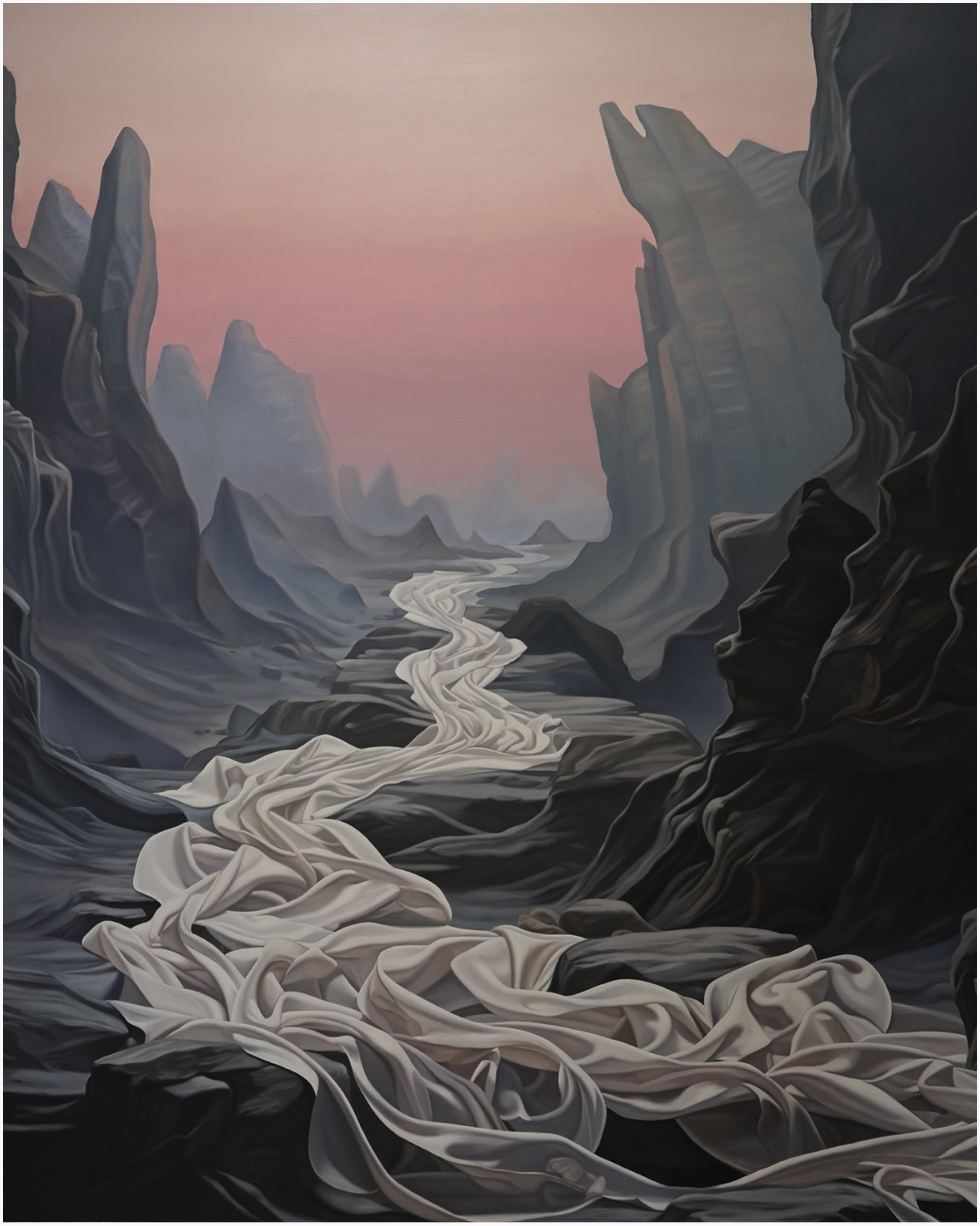
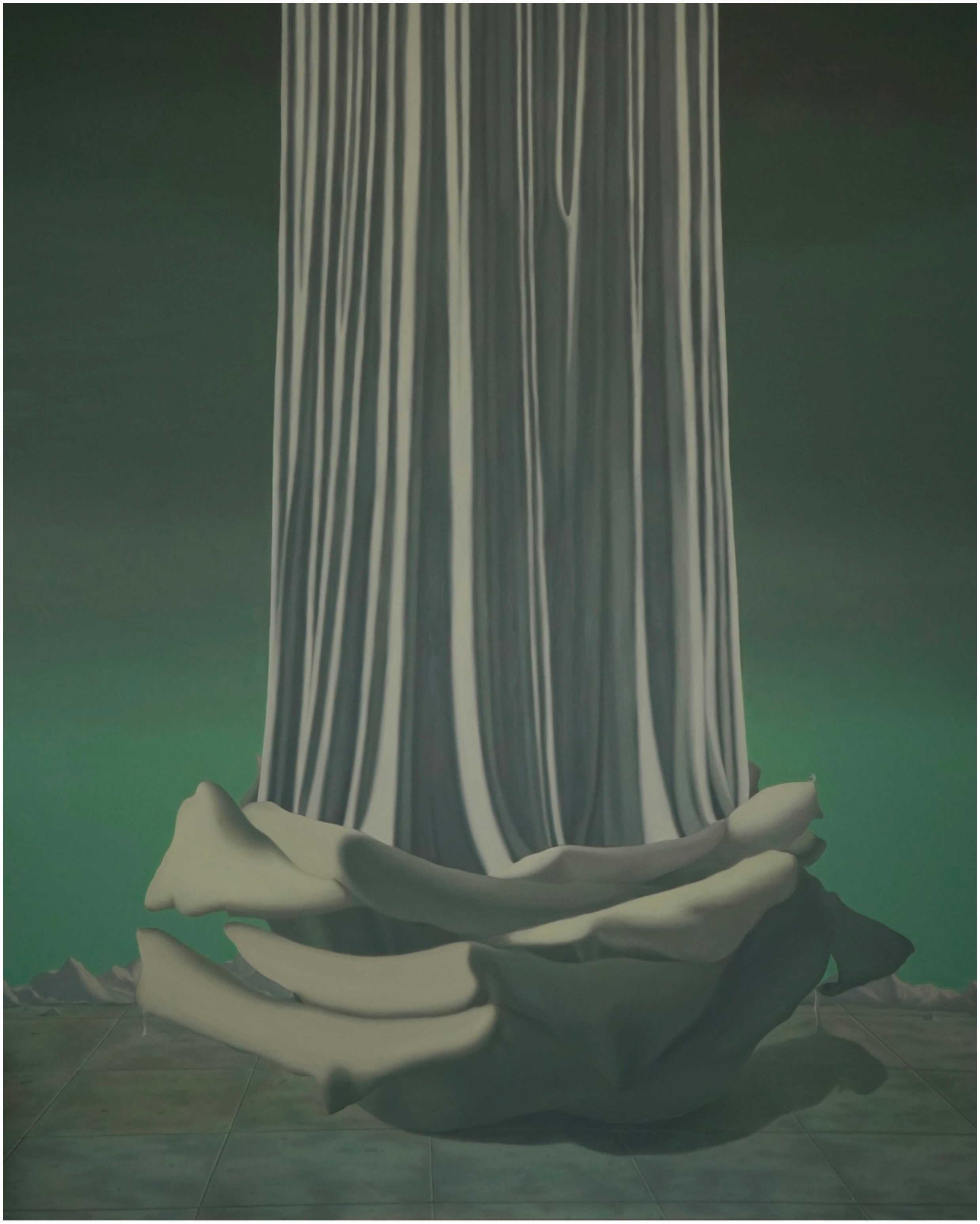
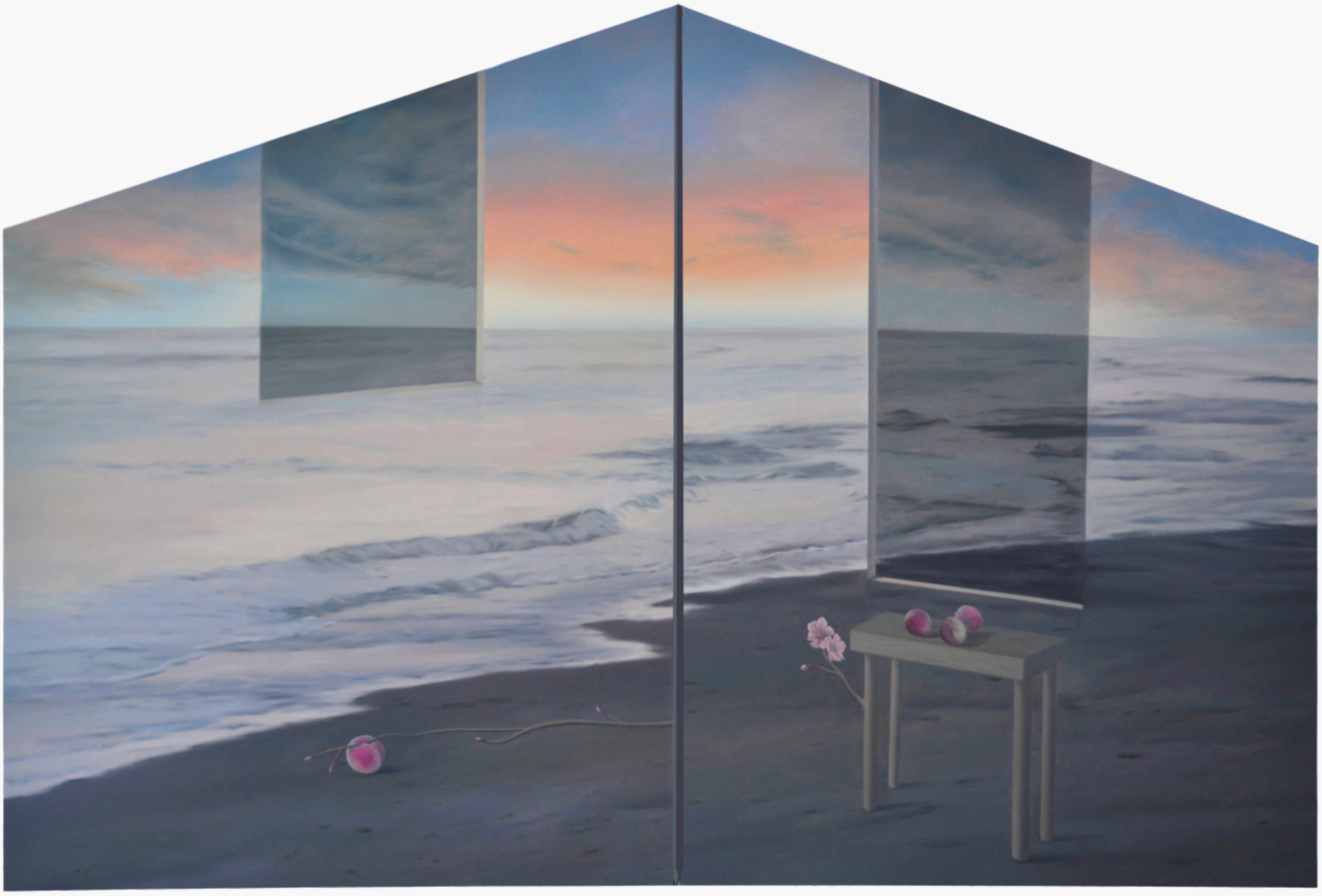
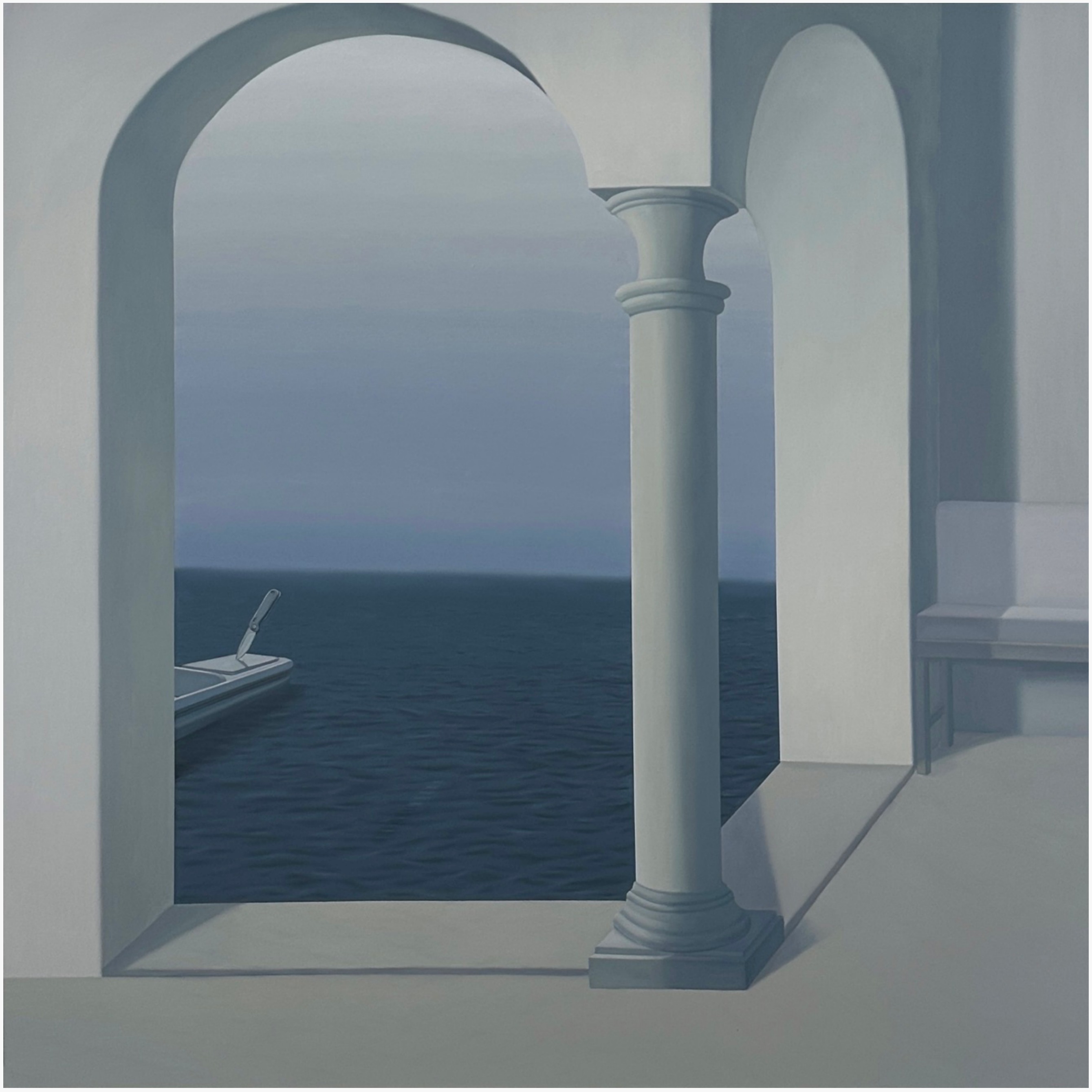
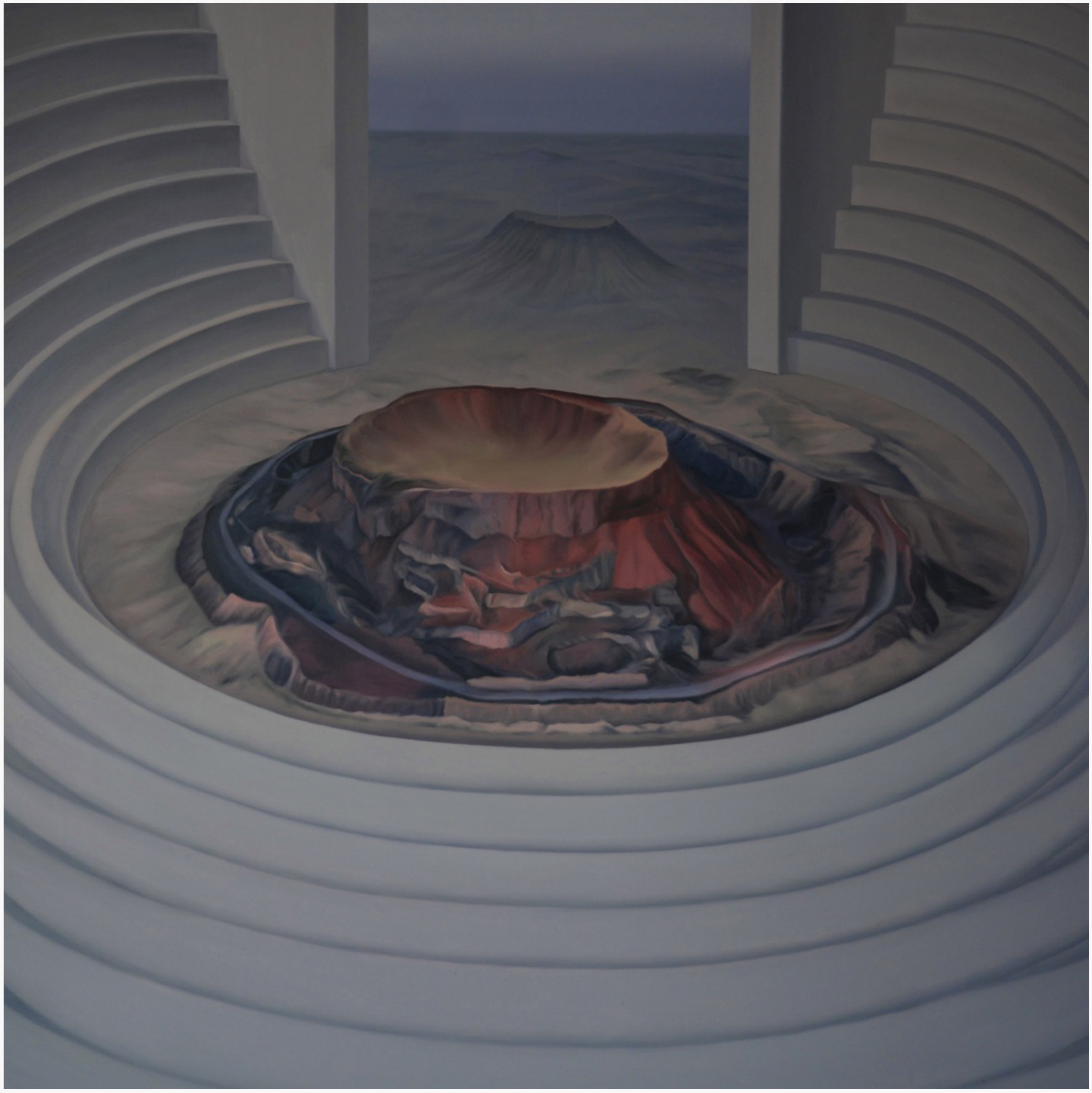
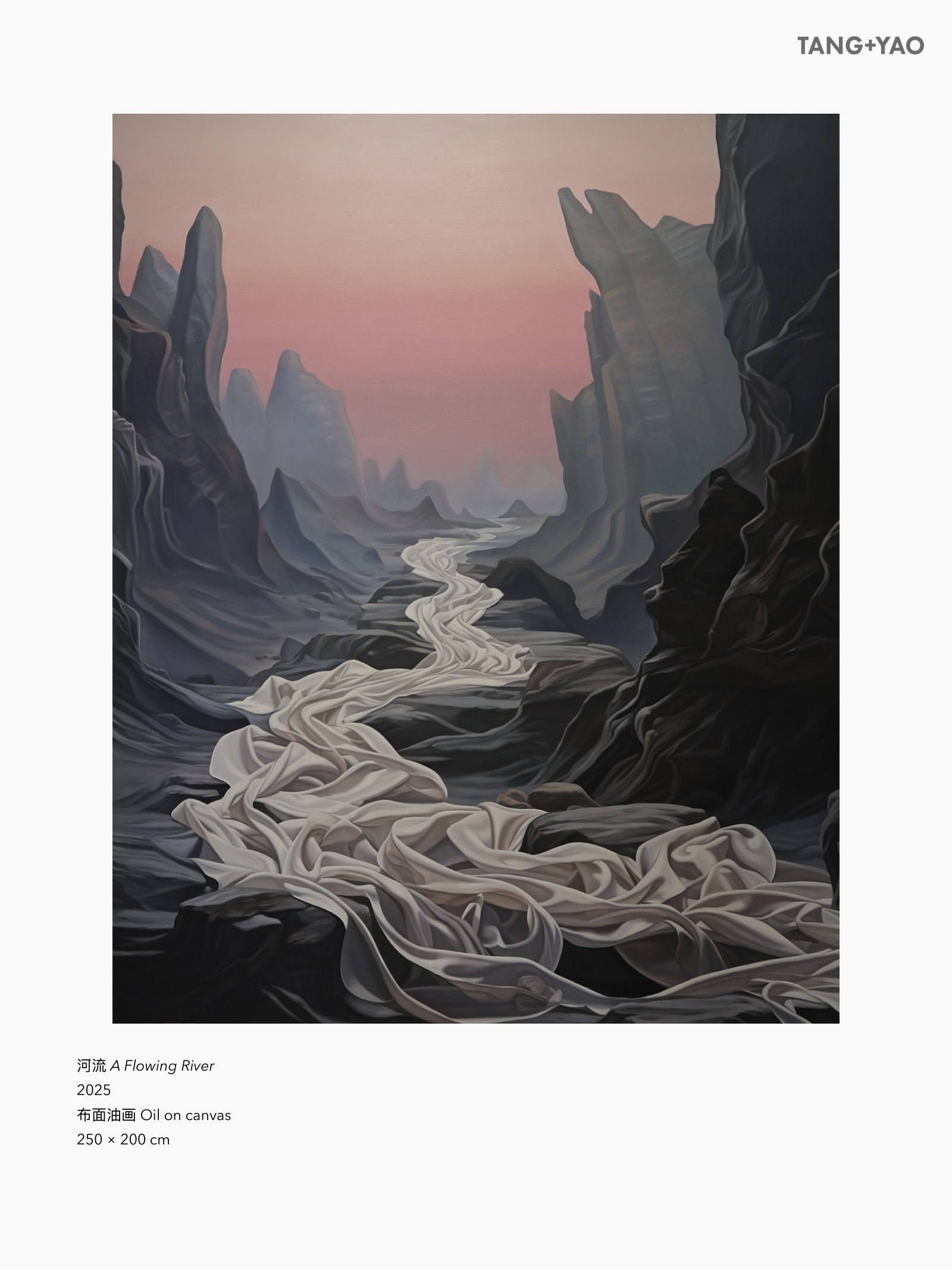
2025年7月12日至8月25日策展人:鲍栋从一开始,倪学敏的作品就有着强烈的存在之思,他画中的世界是一个过去的,因而久远而恒定的秩序,它不属于,更超越于我们置身的这个俗世,他描绘的是一个象征的世界。在这个时代,有人在作品中表现情绪,有人发表观点,有人满口知识,几乎所有人都渴望一种时代的合法性,以“当代”之名。倪学敏却不需要。他似乎不太关心“眼前”与“当下”,在离北京两百多公里的小城,独自心领神会,把自己的象征剧场安置于画布上。帷幕、门、岩石、山脉、海、树林,这些经常出现在倪学敏画面中的道具,尤其是帷幕,它们总是覆盖、包裹、阻挡、遮蔽着其他的事物,甚至幕布经常变成河流与山川本身。然而倪学敏不是在讨论眼见为实的这种
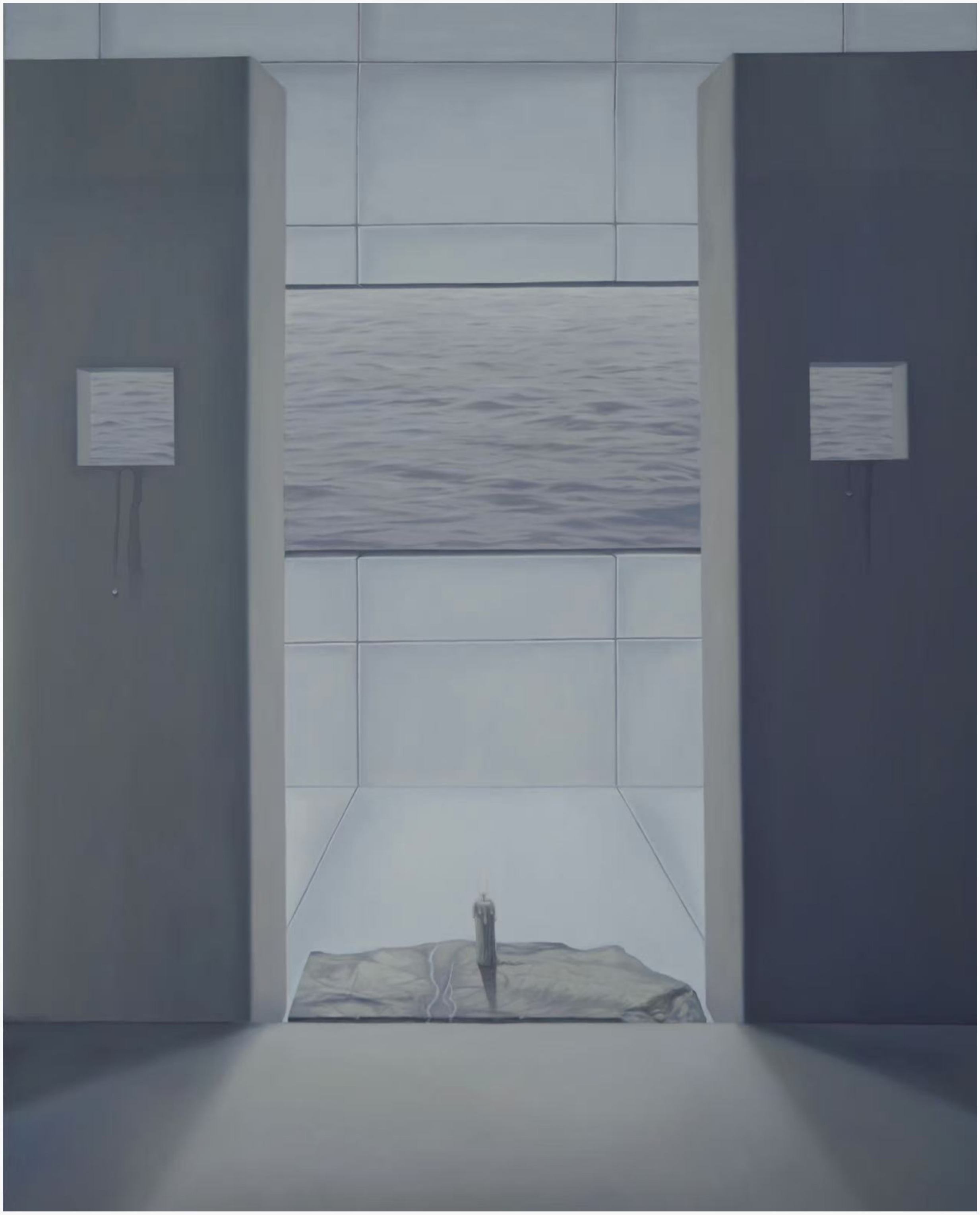
“现实”,而是在构造那种视觉之外的“真理”。在这里,倪学敏似乎是连惯着德国浪漫主义、法国象征主义与超现实主义,而最终落在了存在主义中。存在主义是在哲学经过方法论化之后再次回到本体论的哲学,回到一系列“根本追问”。在倪学敏这里,绘画的语言与技法也被最大限度的忽略与克制,他使用一种默认性的近乎平涂的绘制手法,把个体的身体性表现尽可能压缩,从而把力量集中在一种秩序感的建立上。沉思性的空间秩序指向着世界的荒诞,非理性的形式自动写作则促发了主体的搁浅,倪学敏的绘画让人窥见了存在主义的两层底色:(世界的)虚无与(人生的)无聊。揭开存在之帷幕,或许还有另一层;剥开人生的洋葱皮,最终或许空无一物。然而,在这底色之上,存在的秘密不止如此,因为既然是虚无,那么也意味着充满可能性。倪学敏的绘画在设置重重屏障与迷宫的同时,也总是露出几缕惊奇:峡谷中央的苹果、海边幕帘下的蜡烛、烛台上倒置的火焰、布帷边角燃烧的青烟……解蔽,或者说作为真理的存在之敞开,常常只是意外,是遭遇,是突发奇想,是密林中透出的澄明,是苦思冥想之后的旷然。这正是这个展览主题“旷”的来历。
TANG+YAO
北京市朝阳区酒仙桥路798艺术区七星广场
TANG+YAO Gallery, Seven Star Plaza, 798 Art District, Jiuxianqiao Road, Chaoyang District, Beijing, China
Ni Xuemin
“Lichtung”
July 12 - Aug 25, 2025 Curated by Bao Dong From the very beginning, Ni Xuemin’s works have carried a potent meditation on being. The world within his paintings is an order of the past, hence ancient and constant. It does not belong to, but rather transcends, this mundane world we inhabit. He depicts a symbolic world. In this era, some express emotions in their works, others voice opinions, some are full of knowledge—almost everyone craves a kind of epochal legitimacy under the name of the “contemporary.” Ni Xuemin, however, needs none of this. He seems unconcerned with the “immediate” and the “present,” residing in a small town over two hundred kilometers from Beijing, where he privately apprehends and installs his symbolic theater onto the canvas. Curtains, doors, rocks, mountains, seas, forests—these props frequently appearing in Ni Xuemin’s compositions, especially the curtains, always cover, wrap, block, and conceal other things. At times, the curtain fabric even transmutes into rivers and mountains themselves. Yet Ni Xuemin is not discussing
“reality” as verified by sight; he is constructing that “truth” beyond the visual. Here, Ni Xuemin seems to connect German Romanticism, French Symbolism, and Surrealism, ultimately landing within Existentialism. Existentialism is a philosophy that, after undergoing methodological refinement, returns to ontology and to a series of “fundamental inquiries.” For Ni Xuemin, the language and technique of painting are also minimized and restrained to the greatest extent. He employs a default-like, nearly flat application of paint, compressing the bodily expression of the individual as much as possible, thereby concentrating his force on establishing a sense of order. Contemplative spatial order points to the absurdity of the world, while irrational automatic writing of form precipitates the grounding of the subject. Ni Xuemin’s paintings allow one to glimpse the two underlying tones of Existentialism: the nothingness (of the world) and the boredom (of life). Peeling back the curtain of being might reveal yet another layer; stripping away the onion skin of life might ultimately uncover nothingness. However, the secret of existence above this ground is not merely this, for since it is nothingness, it also signifies the potential for possibility—contemporary art’s reliance on possibility stems precisely from this. While Ni Xuemin’s paintings set up layers of barriers and mazes, they always reveal glimmers of wonder: an apple in the canyon’s center, a candle beneath a seaside curtain, an inverted flame on a candlestick, wisps of smoke burning at the edge of a drape… Unconcealment, or the opening of being as truth, is often merely accidental—an encounter, a sudden fancy, the clearing that pierces through a dense forest, the expansive openness following deep contemplation. This is precisely the origin of the exhibition’s theme, “Lichtung.”
TANG+YAO
北京市朝阳区酒仙桥路798艺术区七星广场
TANG+YAO Gallery, Seven Star Plaza, 798 Art District, Jiuxianqiao Road, Chaoyang District, Beijing, China Preface
参展艺术家Artists
作品