展览信息
前言Introduction
//
越过那光,我能感觉到这身体,聆听风吹进她的心扉,我们的双手询问,今夜什么是她的梦想?今夜,她是谁?她将成为谁?
—— 苏珊·格里芬 《女性与自然:她内在的呼号》
//
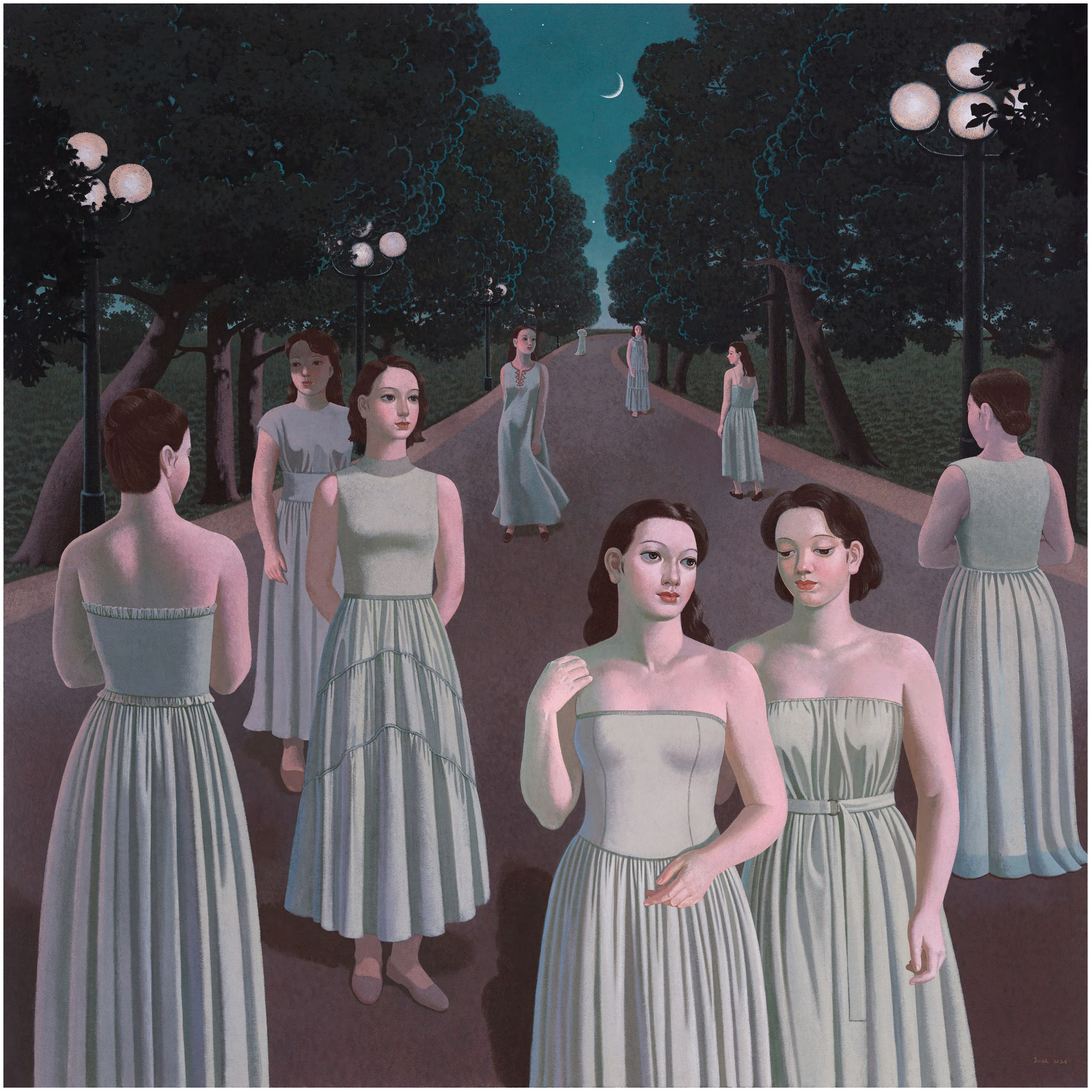
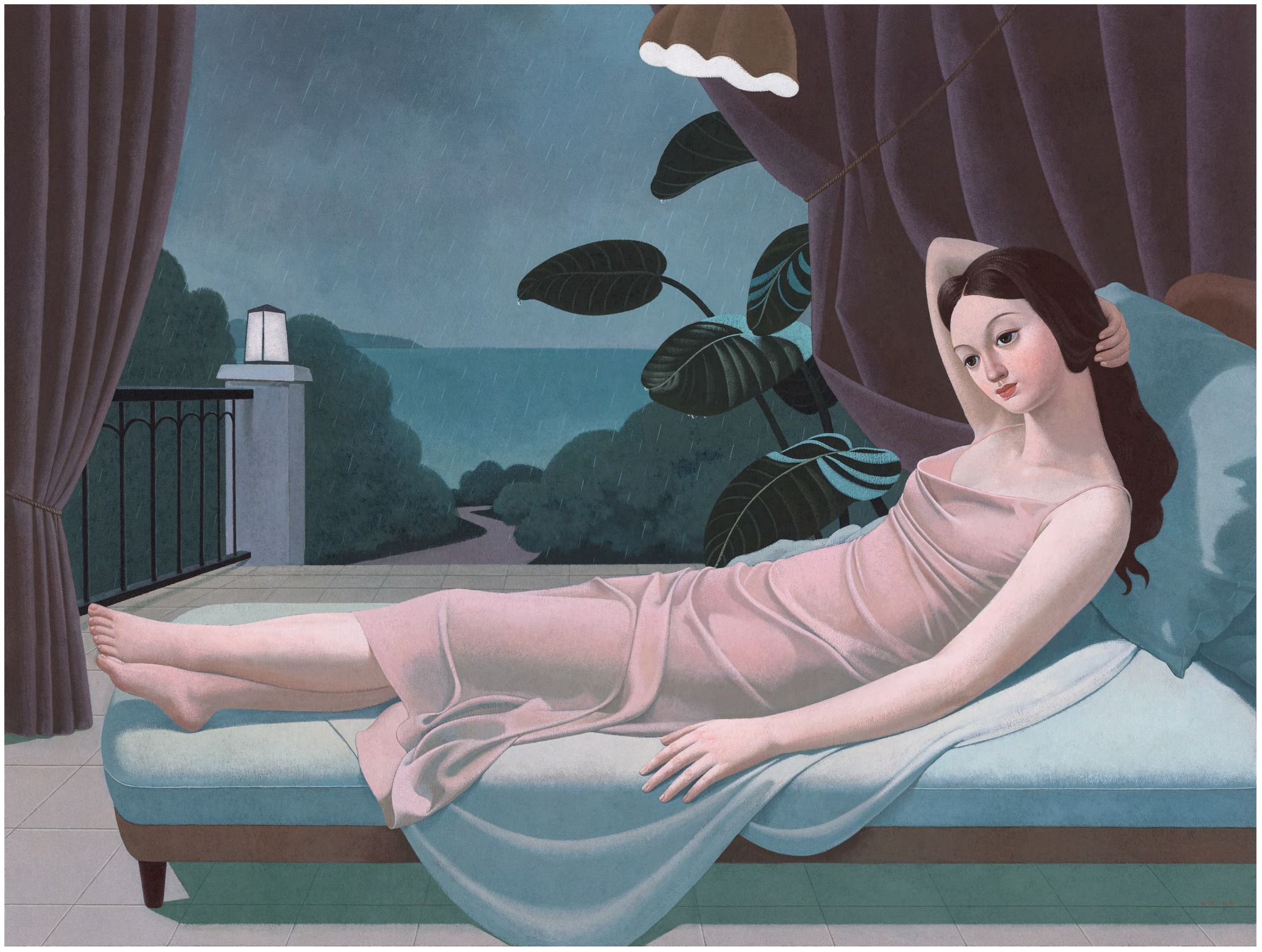
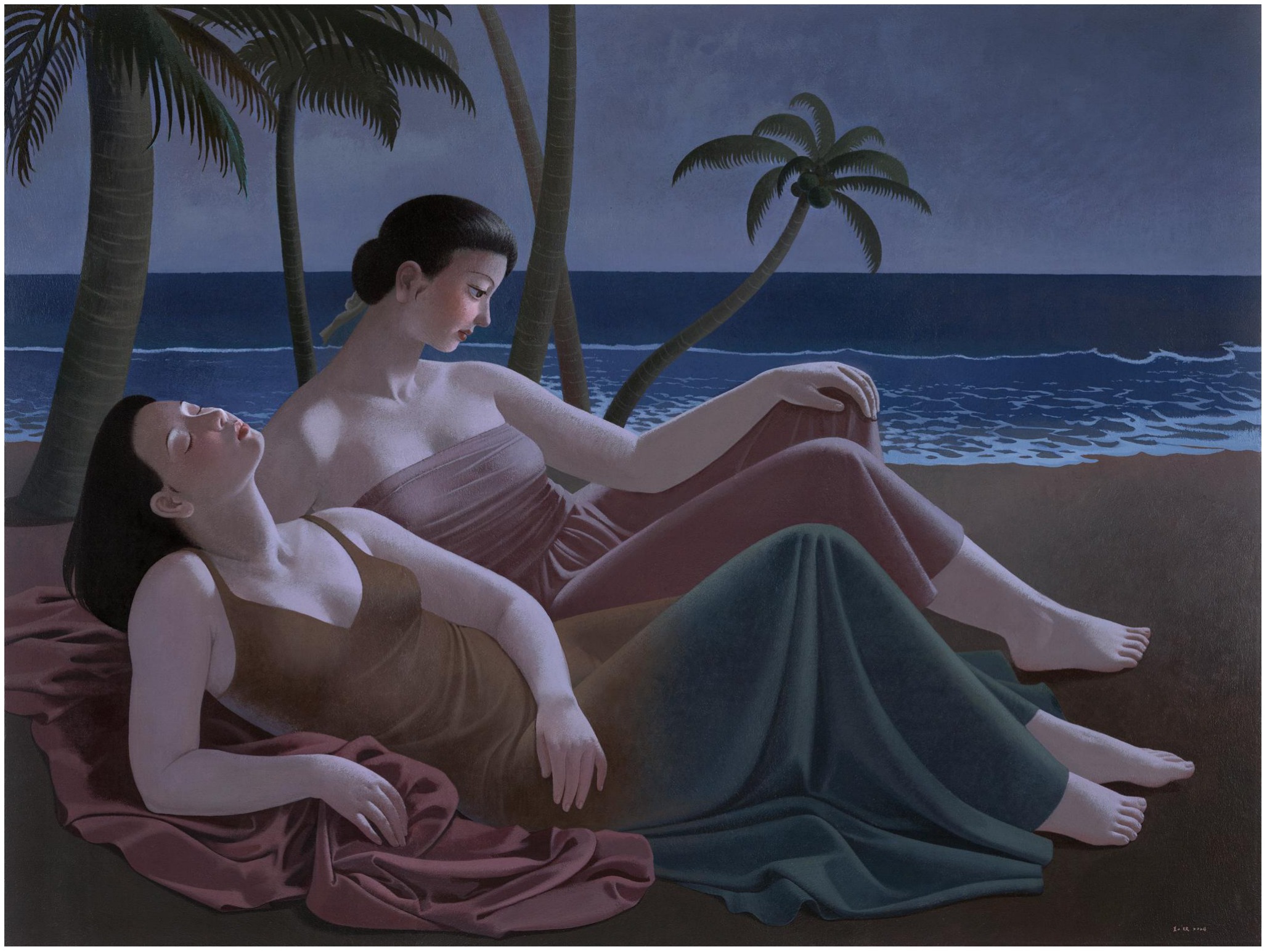
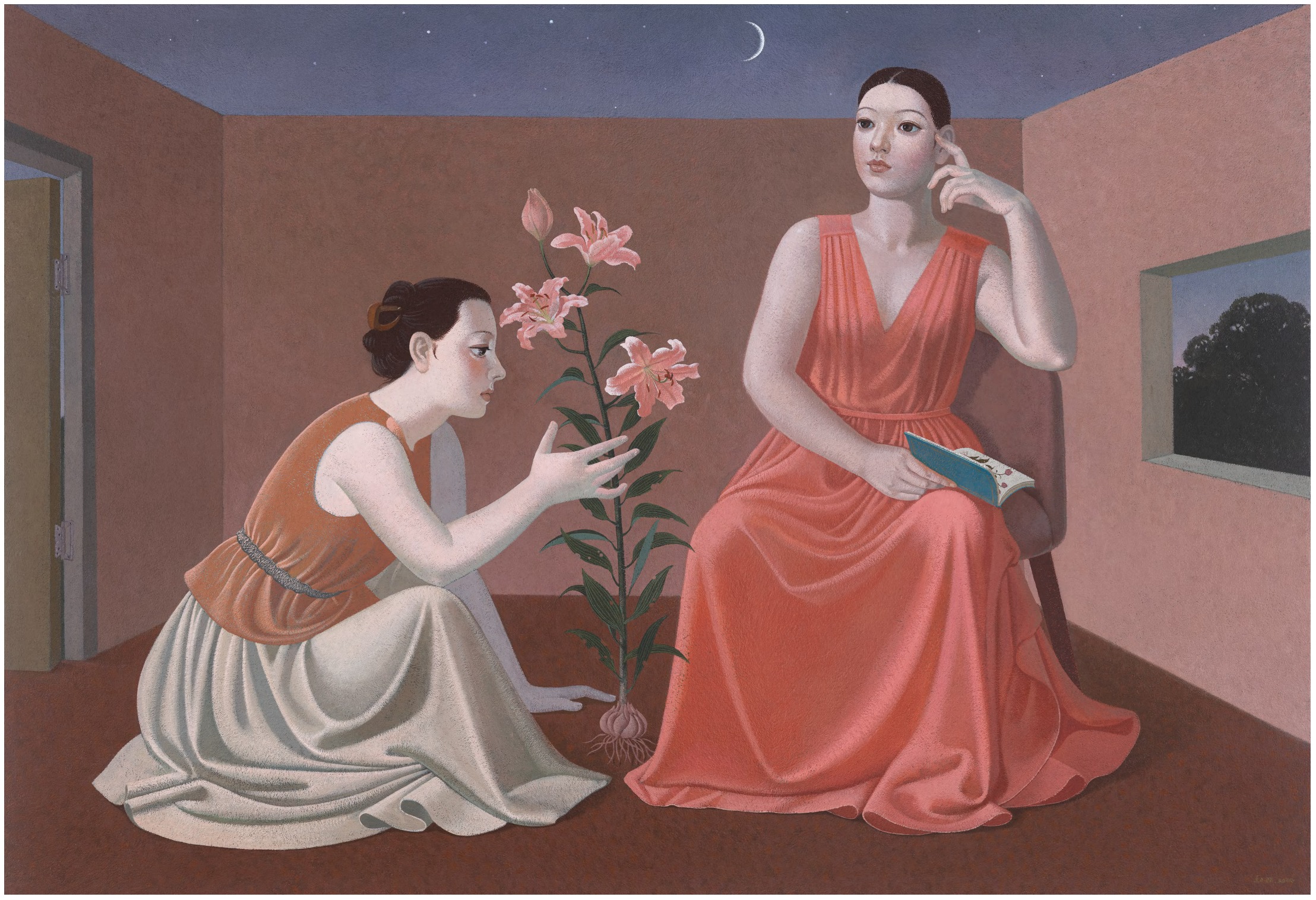
女性作为繁殖者和培育者的传统社会角色(传统不代表正确),常常与柔软,博爱,无私等词汇钩连,与其说这是一种母性本能使然,不如说,她们的性质只是更接近于大自然孕育万物的包容度和附着的恻隐之心。因此,再多的藩篱和桎梏都无法限制女性与自然的相接,她们的双手和梦想会一直创造出口与开放世界共通。《房间》不是圈养的牢笼,缺失的屋顶传递着向上而生的执意;《星月夜》下奔走或驻足的人,不论去往何方都有温柔的光点追随;以及屋内静卧《听雨》的女子,总会和海潮共享一段湿润的记忆。没有人比她们更属于这片大地,因为她们就是大地本身。伴着啼哭诞生的婴孩不谙世事,人们在其纯粹的眼睛里看见了熟悉的脸孔,也看见每一岁的自己。如此令人珍视的爱意,如今正在这里流动。王小双,Iove in Silence
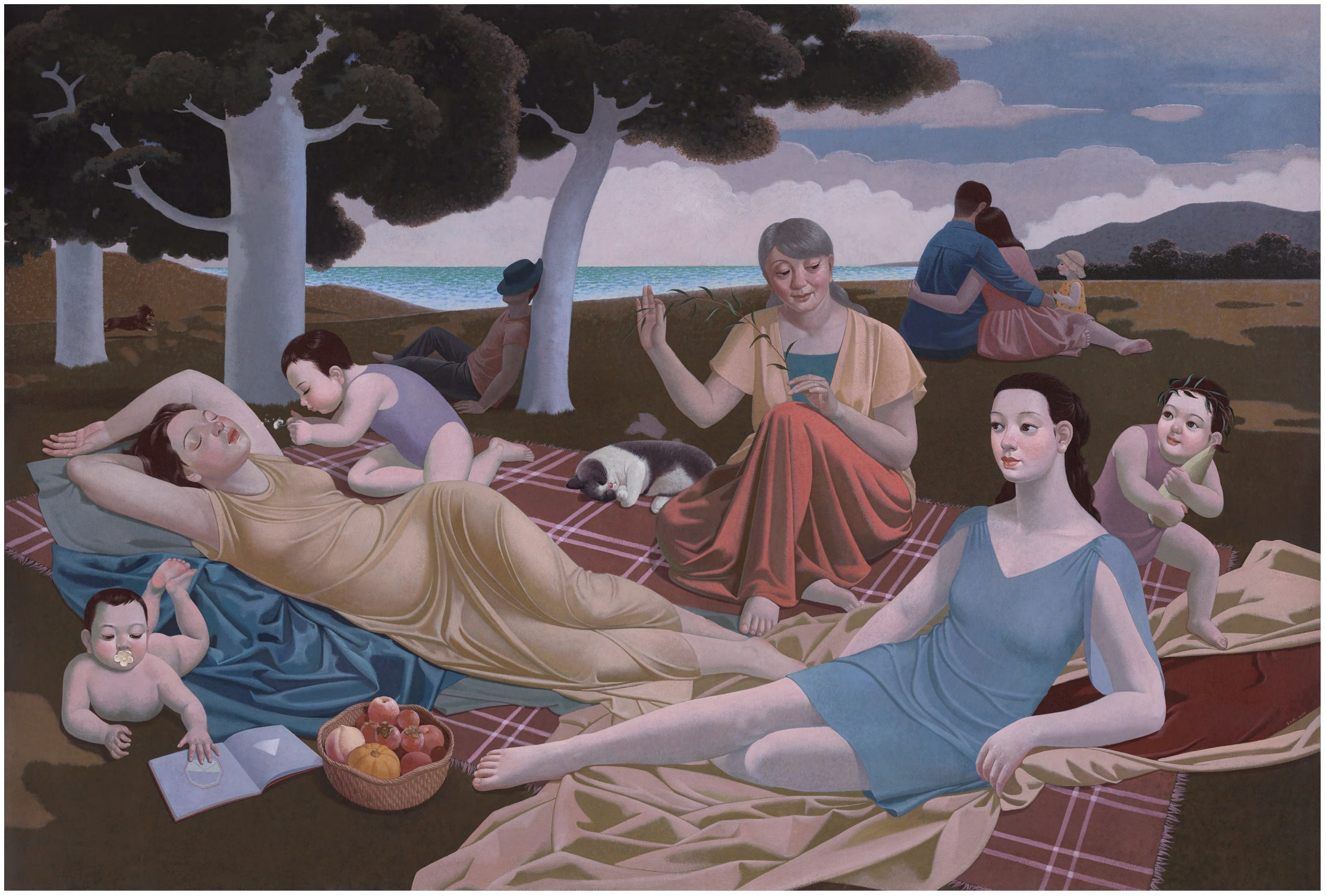
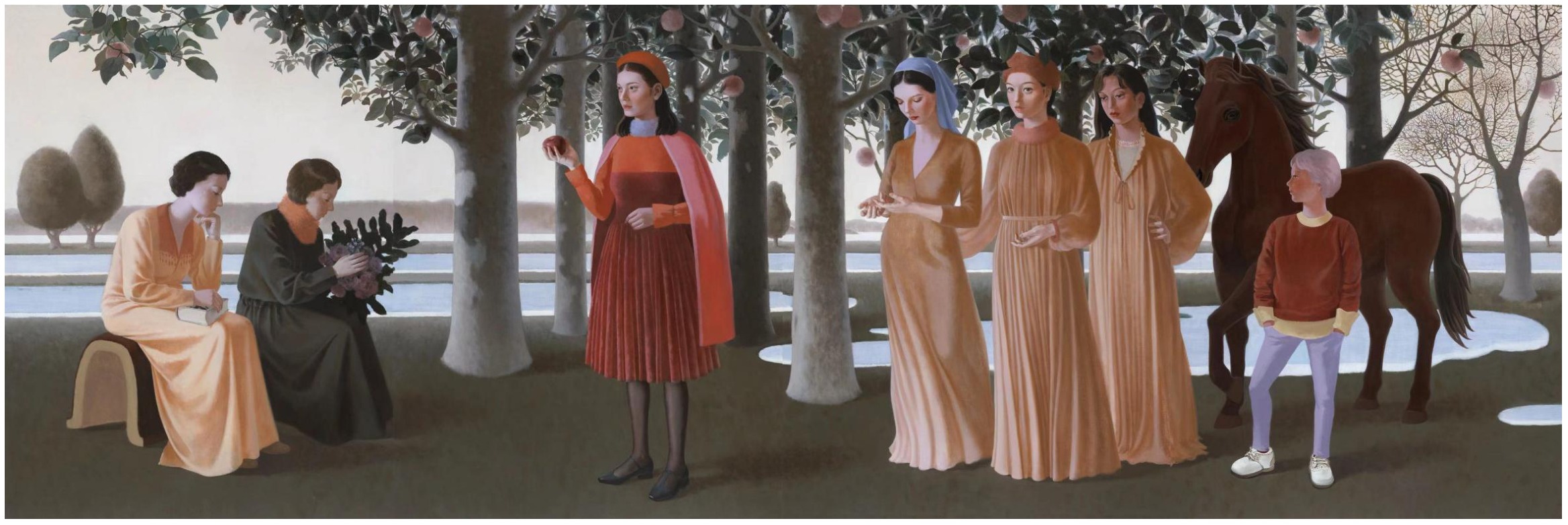
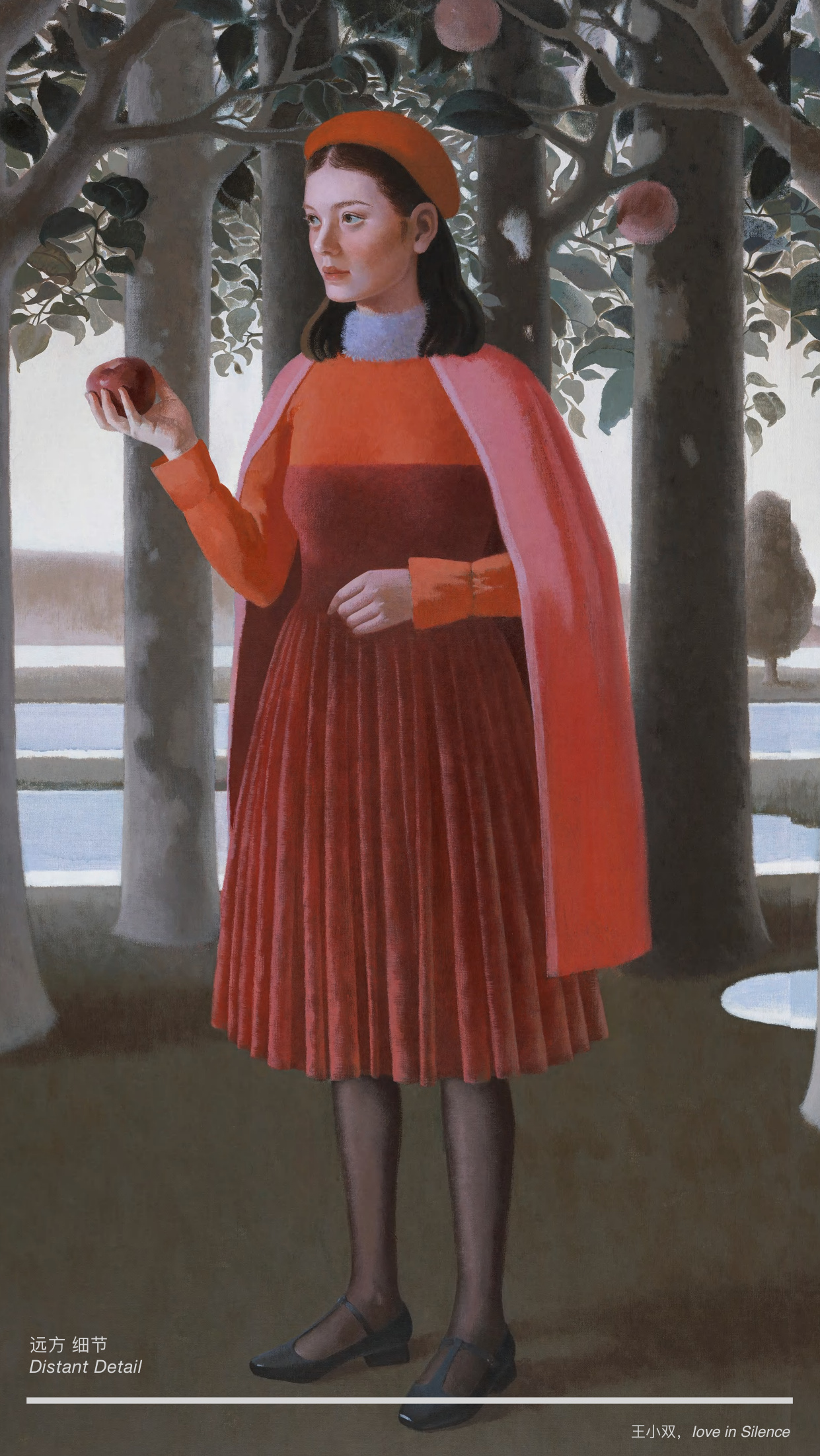
Love in Silence Text/Yuana Soka Art is pleased to announce that Wang Xiaoshuang’s solo exhibition Love in Silence will be presented at Soka Art Beijing Space on September 28, 2024, which is also Wang Xiaoshuang’s second solo exhibition at Soka Art. Curated by Yuana, the exhibition will feature thirteen works created by the artist in the past two years and will run until November 2. After 2022, the birth of a child in the family has given Wang Xiaoshuang the identity of a “mother”. Experiencing the process of a life’s birth has made the artist’s situations and moods very different. The usual sense of wandering in the old works has dissipated, and the image of the lonely urban young woman has a tangible companion and dependence. The transparent and blurred features of the figures in the previous paintings have become clear, so clear that the viewer wants to recognize a specific person from them, as if they have seen the person somewhere before, strange yet familiar. The mixed use of sand clay and acrylic paints makes the surface of the painting grow “sand grains”, which makes the emotion of the work fuller and lingering. Just like in the soft embrace of the abundant sea, under the protection of the tree with no top, everything can get close to the earth and stretch their bodies freely, the similar faces of three generations tell the story of blood relationship, Love in Silence is born here. Wang Xiaoshuang’s creations have a very special feature, which is the characters’ sight: the people in the paintings rarely look straight ahead, nor do they look at each other. They are in the same space but rarely interact, or they are zoning out, or reading and thinking, each of them has their own small world. Some private emotions surge silently and shroud. I look at you, you look away. I will not be disappointed in this, I never expect you to look back at me in the same way, because we are not dependent on anyone. Even though our eyes are so similar, even though we are so close, even though it is sometimes difficult to openly and honestly admit that I am waiting for your attention. It is so complicated.
“Mom is next to me, but I miss her so much with tears.” This is how Korean writer Choi Eun-
young describes the mother-daughter relationship in her novel Bright Night. In the East Asian context, the bond between mother and daughter is complex and subtle. They live in mutual dependence and sacrifice, intertwined with too many entanglements of love and forbearance and regrets of unfulfilled expectations. In the book, my grandmother and I have not seen each other for many years, but she recognizes me instantly because I look so much like my grandmother's mother. This magical maternal kinship generation is also reflected in the artist’s new work Three Generations. Two generations of women hold up the bright baby, and their gaze reveals a few traces of remembrance and infinite expectations. The three of them exude the same atmosphere, speechless but overflowing with warmth, as countless experiences are happening. The inheritance of blood is not just the replication of genes, but also the transmission and continuation of love, it is the common years of a family that are connected by small moments. In Wang Xiaoshuang’s works, in addition to typical female figures, various plant elements have always occupied a large proportion. The curved coconut trees, rain-drenched birds of paradise, lilies that grow well without soil, and fresh fruits and bouquets that are always on the table, all complement the characters and are organically integrated with the surrounding natural environment. On the other hand, the depiction of the other traditional gender, “male”, is minimal. Male images only appear when necessary to serve the painting, for example, as an auxiliary to interpret the relationship between the main characters or enrich the composition. They are either a back view or their faces are covered by a hat, and there is never a complete and specific portrayal of their facial features. The marginalization of the “male” presence, whether it is a subconscious aesthetic preference or intentional, coincides with the views of Ecofeminism. Some Ecofeminists believe that “women are ‘naturalized’ women.” They tend to compare women to natural objects in the world, such as comparing women’s uterus to a
“cave”, and comparing women to the earth, birds, roses, lilies, etc. Because women are closer to nature than men, they can better perceive that they are part of nature, and they are more aware that human existence is immersed in nature, dependent on it, and inseparable from it. In this way, every grass or tree in Wang Xiaoshuang's works seems to have a gender. They jointly construct an ideal
“Kingdom of Females”, where males’ identity as “outsiders” is revealed. Exhibition Information Exhibition: Iove in Silence Artists: Wang Xiaoshuang Duration: 2024.09.28 ~ 2024.11.02 Location: SOKA ART, 798 Art District, No.2 Jiuxianqiao Road, Chaoyang District, Beijing, China Opening Hour: Tue to Sun 10:00-18:30
王小双,Iove in Silence
//
Out of the light we can feel this body, hear the air enter her, and our hands ask what is she dreaming in this darkness? What is she, in this night, becoming?
-- Susan Griffin, Woman and Nature: The Roaring Inside Her
//
Women’s traditional social role as breeders and nurturers (tradition does not mean correct) is often associated with words such as softness, humanity, and selflessness. Rather than saying that this is a maternal instinct, it is better to say that their nature is just closer to the tolerance and compassion of nature in nurturing all things. Therefore, no matter how many barriers and shackles there are, they cannot limit women’s connection with nature. Their hands and dreams will always create outlets to connect with the open world. Room is not a cage of confinement, the missing roof conveys the determination to grow upward; people walking or stopping under The Starry Night will be followed by soft spots of light wherever they go; and the woman lying quietly indoors Listening to the Rain will always share a wet memory with the tide of sea. No one belongs to this land more than them, because they are the land itself. The baby born crying is ignorant of the world, ones see familiar faces in its pure eyes, as well as themselves at every year of age. Such cherished love is now flowing here.
王小双,Iove in Silence
参展艺术家Artists
作品