到新店去
展览信息
前言Introduction
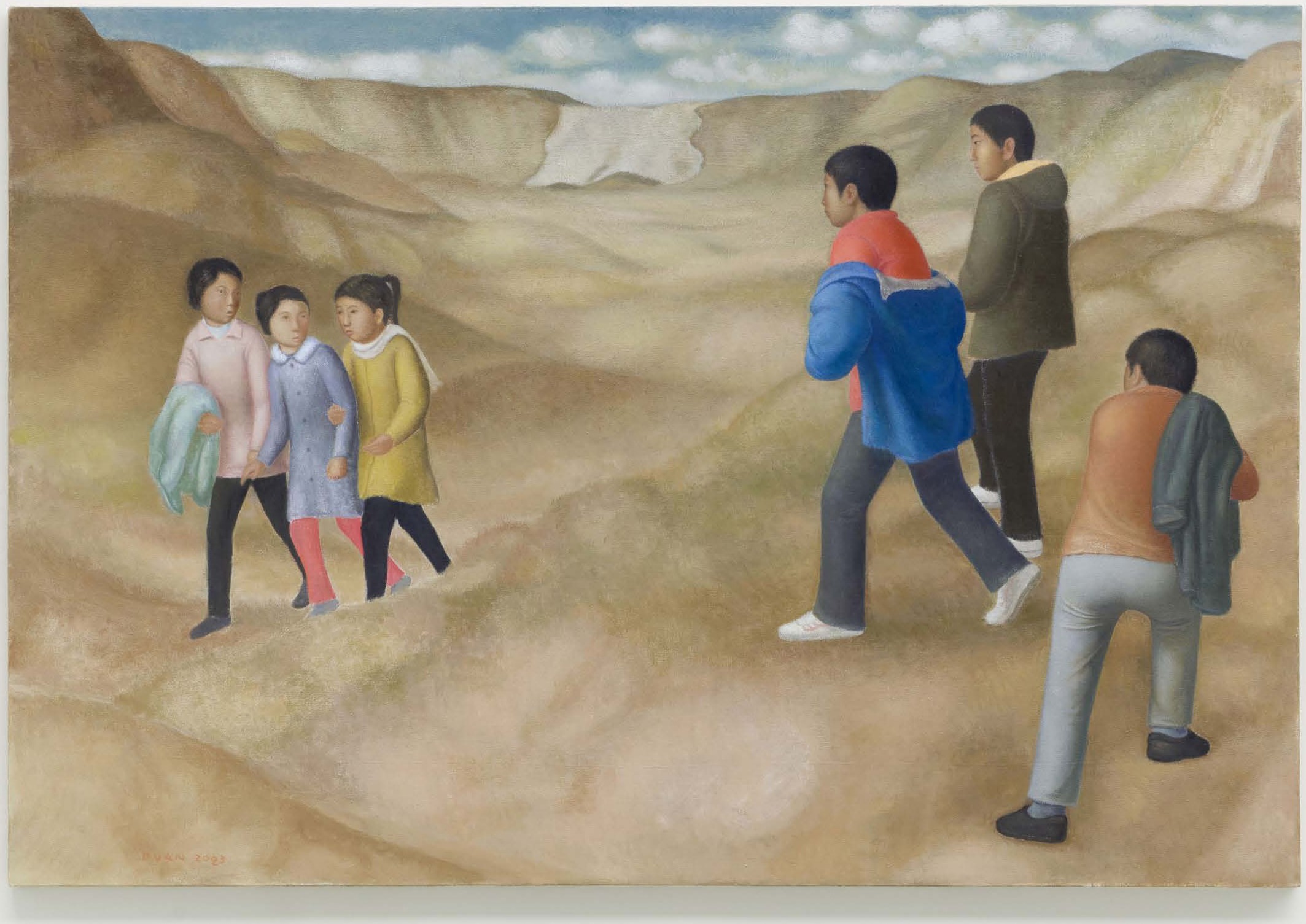
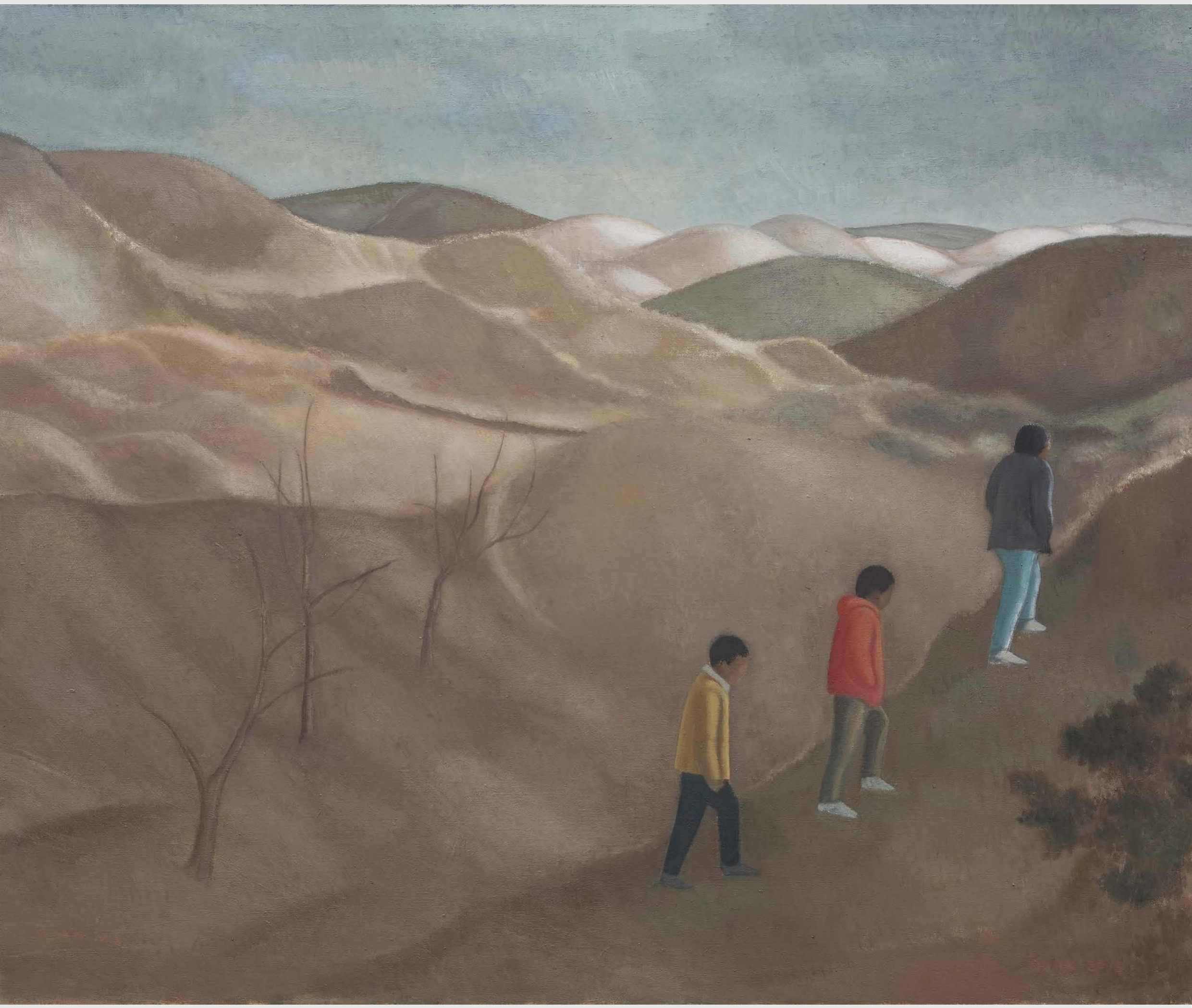
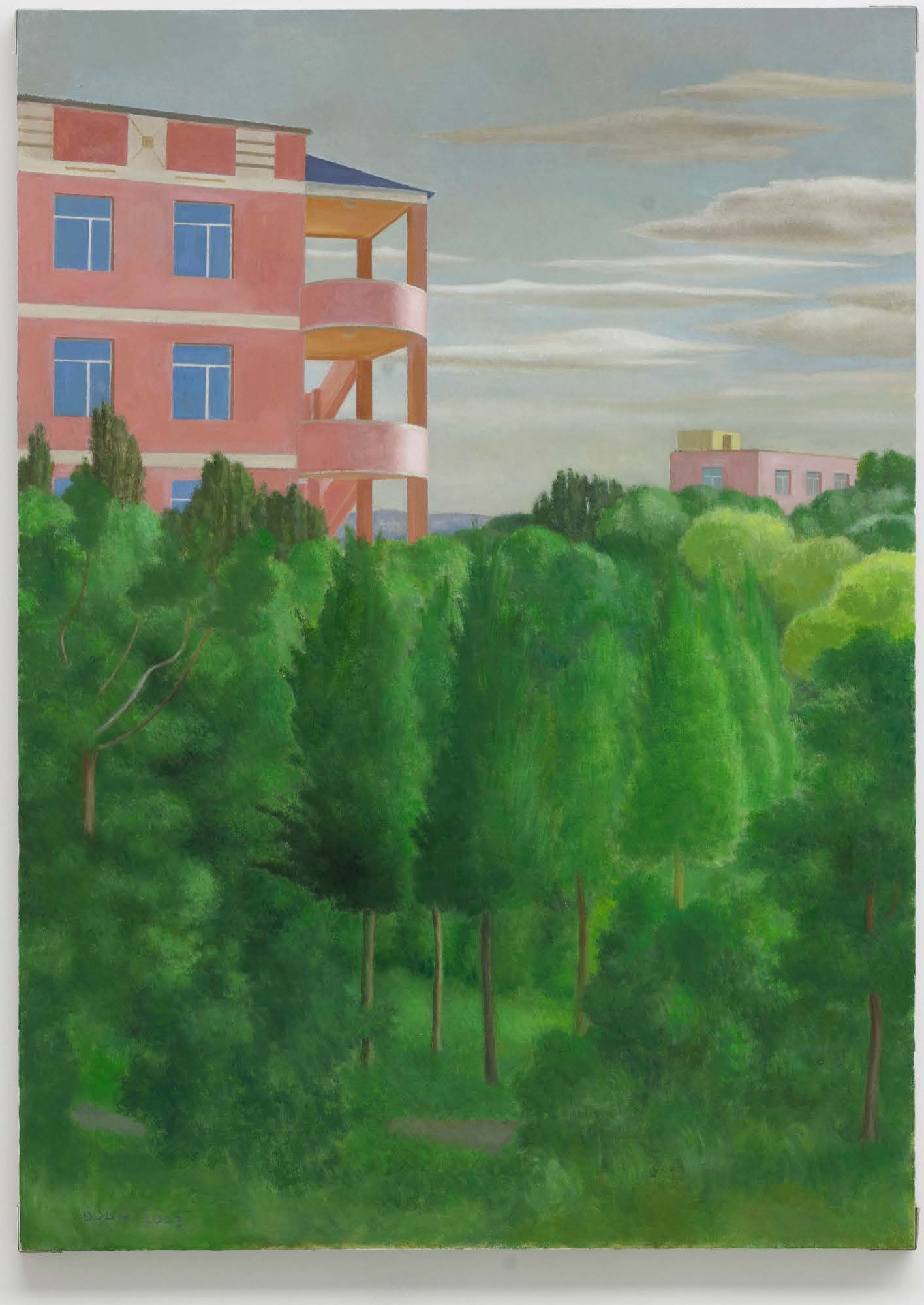
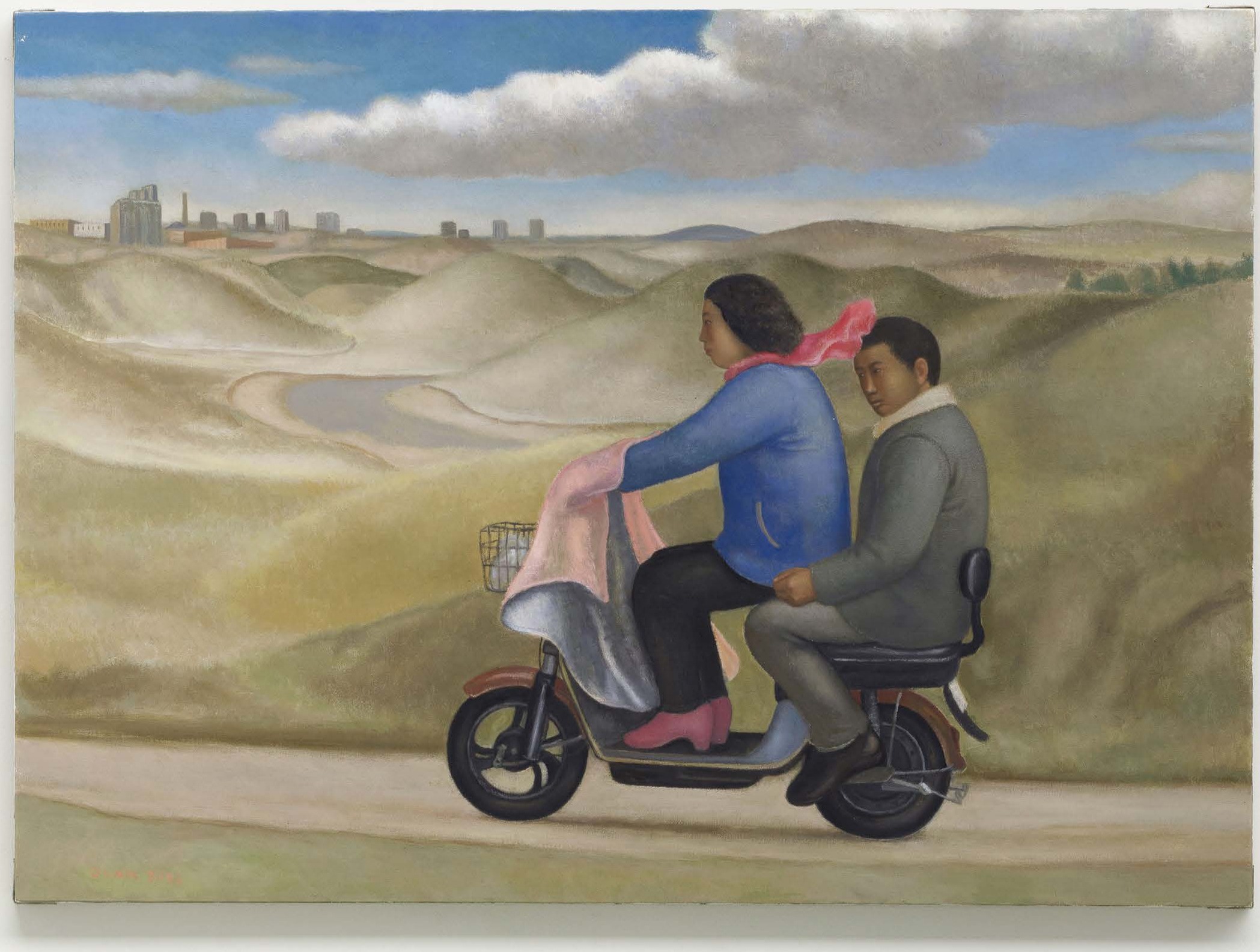
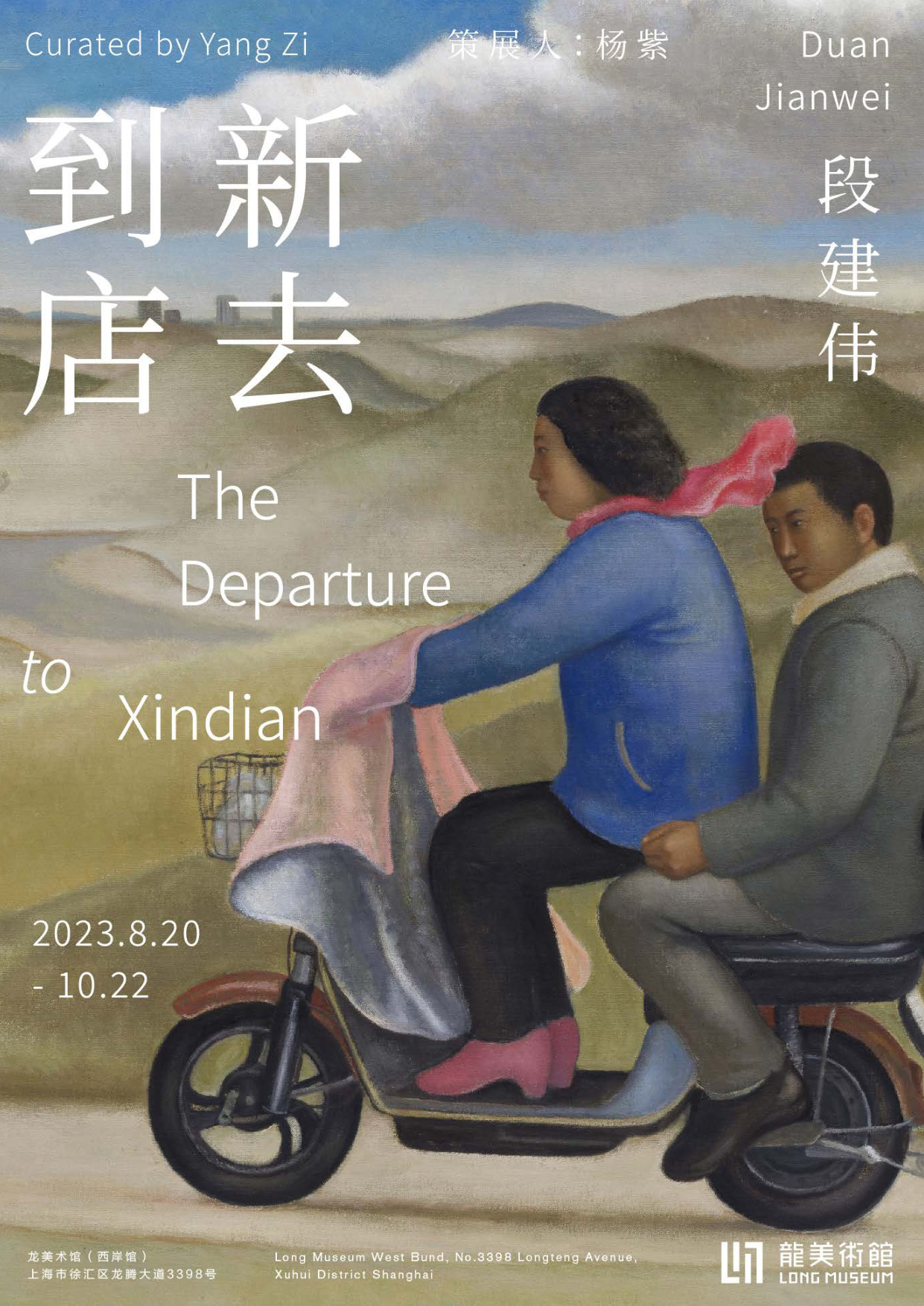
自上世纪90 年代伊始一直延续至今,乡间人物成为段建伟创作的标志题材。这类主题曾植根于农民形象的现实主义绘画。由于该类通俗的图像在艺术家成长年代的普及,段建伟早期选择题材几乎是自然而然的。但在后来的实践中,他发现了此类图像历史蔓延出的诸多可能性,从而构筑该题材与艺术相互衔接的通道。展题“到新店去”源于段建伟喜爱的、以刻画细节见长的短篇小说《到网走去》;“新店”是在中国近年来在郊区或乡村常见的街道和地区名称。“新店”模糊地交代展览乡野题材的印象。同时,“新”
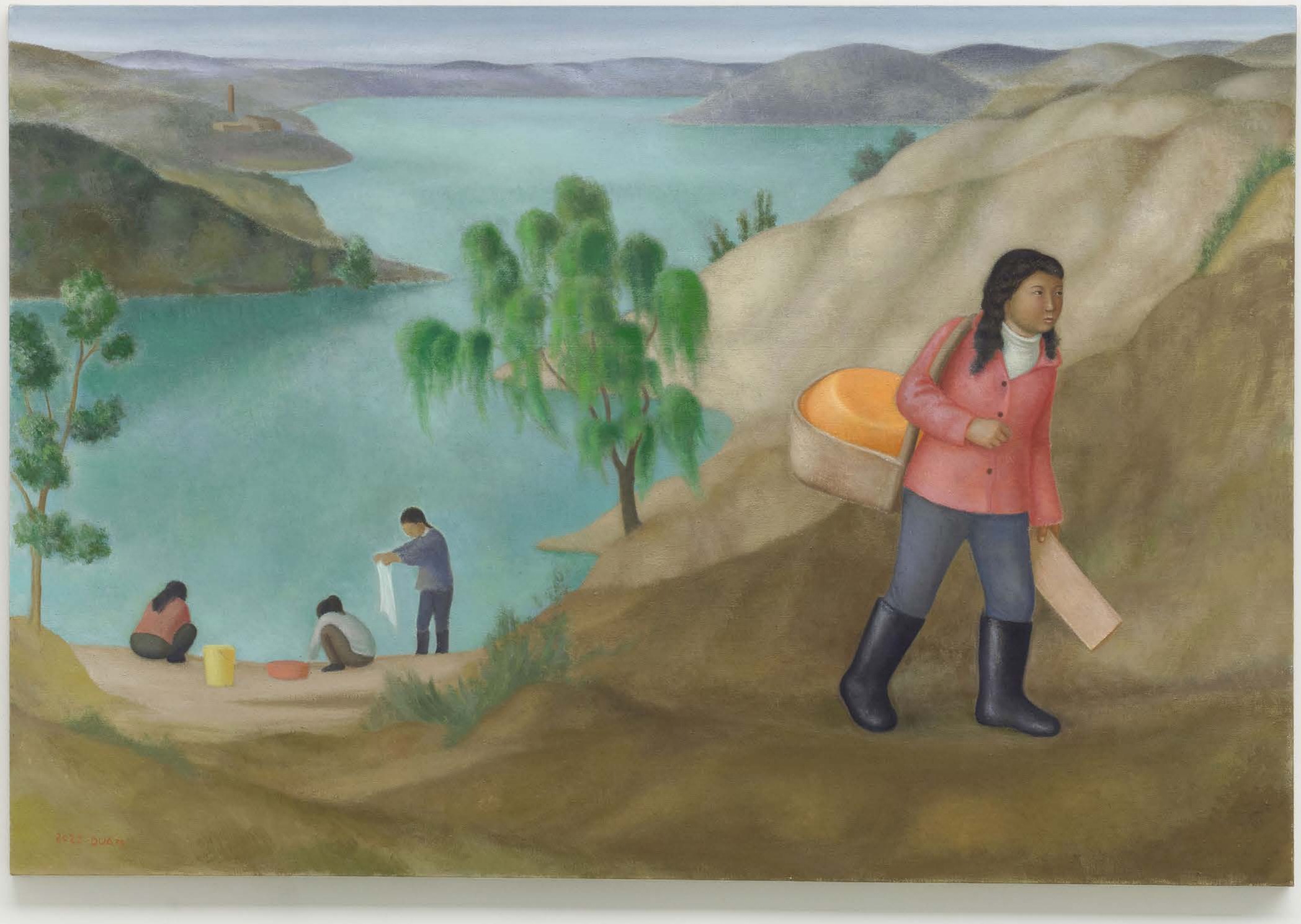
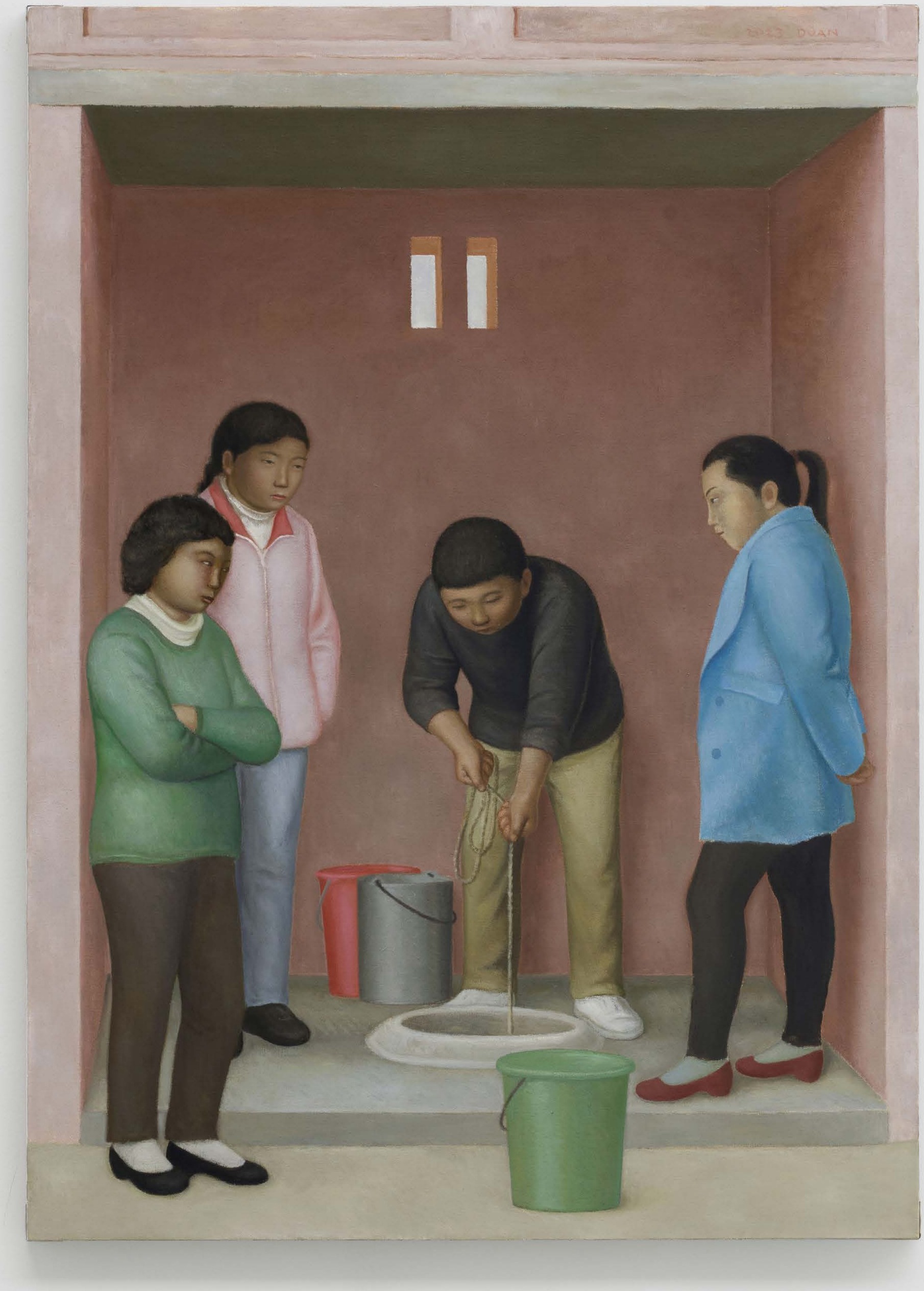
蕴含了艺术家试图在既有的知识系统之外另辟蹊径的意图——他的绘画常被描述为“艺术史”的,尤其与文艺复兴早期的壁画有着不解之缘。事实上,凝固住的崇高感只是他创作的一个部分,艺术家未曾指认任何精炼的词汇去代替或形容自己的创作。“到新店去”中,历史上种种绘画手法被不拘一格地使用。它们被借鉴得如此含蓄,以至于能引发这样的解读和揣测:在段建伟近年来的绘画中,横亘中西的绘画历史只被理解为必要而实用的语汇,刻画人无形的精神性才是他的兴趣所在。段建伟的创作是非现实主义式的现实主义绘画。即是说,他保留了写实的外壳,观众可以轻易地辨认出他绘画对象的形象、动作和关系,然而,这些要素并非为它们所构成的叙事服务,转而逃离叙事以及叙事背后的教化动机。在2022 年的创作《洗衣2》中,湖边穿着雨鞋的两名少女协力拧着浣洗的衣物,面部朝向观众的一位眼神朝向拧紧的衣服,却最终没有停落在衣物上,嘴角浮出一丝浅浅的笑容——
显然,她的思绪已游曳到了令她激动的(或引她发笑的)远方。斑驳的绿色湖面、体积感突出的灌木,以及前景浸泡衣物的圆形水盆,均呼应了人物出神的状态。如此,现实和现实之外的灵性世界,嵌套在一处,形成不可分割的整体,急速扩大了画面的容载幅度。这种嵌套的结构贯穿展览的每幅作品,并提出这样的话题:是否存在一处远方(我们若任意给它起一个名字,它的名字会不会是“新店”?),笼罩在感官探测所及的范围之外?凭观看尘世的肉眼,如何到达那片远方?到新店去文/ 杨紫
HIVE CENTER FOR CONTEMPORARY ART
Since the beginning of the 1990s until now, rural figures have been the iconic subject matter of Duan Jianwei’s practice. Such a subject was once firmly grounded in the realist paintings of peasant themes. The choice of the subject in Duan’s early career came almost naturally because of the prevalence of this type of mundane imagery during the artist’s formative years. But in his later practice, he discovered the many possibilities this type of pictorial history extends, thus establishing a gateway for the subject to be articulated with art. The title of the exhibition, The Departure to Xindian, is a reference to Duan Jianwei’s beloved short story, “Abashiri Made,” famous for its meticulous depictions; xindian is commonly used as the name of a street or district in the suburbs or the countryside in China in recent years. Xindian ambiguously explains the exhibition’s motif of the countryside. Also, xin, meaning new, signifies the artist’s attempt to explore an alternative to the established system of knowledge - his paintings have often been described as art-historical, especially with regard to the early Renaissance frescoes. In fact, the immobilised sublime is only a part of his works, without the artist endorsing any precise vocabulary to replace or describe them. In The Departure to Xindian, historical painting techniques are used eclectically. They are borrowed in a manner so implicit in provoking such interpretations and speculations: in Duan’s recent years of paintings, the history of painting transcending the East and the West is only considered as a necessary and practical discourse, while his interest lies in the portrayal of humanity’s intangible spirituality. What Duan Jianwei creates are non-realistic realism paintings. That is, as he retains the shell of realism, the viewers can easily recognise the images, movements, and relationships of his painted subjects. Yet, these elements do not serve the narrative of which they comprise, instead escaping from the narratives and the edifying incentives behind them. In his 2022 work, Do the Laundry II, two young girls in rainboots by the lake wring out their laundry together; the one with her face turned to the viewer directs her eyes towards the twisted garment without eventually settling on it, and a faint smile emerges - apparently, her mind has wandered to the thrilling (or smile-inducing) land afar. The lake’s mottled green surface, the voluminous shrubs, and the circular water basin in the foreground soaking the clothes all correspond to the figure’s tranced state. As such, the reality and the spiritual world beyond reality are inextricably nested in one place, forming an indivisible whole and rapidly expanding the capacity of the canvas. This nested structure pervades every work in the exhibition and prompts: Is there a place afar (and if we were to designate it by name, would it be xindian?) that is beyond the reach of the senses? How do we arrive at that faraway place with our mortal sight?
The Departure to Xindian Text by Yang Zi HIVE CENTER FOR CONTEMPORARY ART
参展艺术家Artists
作品