个展 衔尾之谕
展览信息
前言Introduction
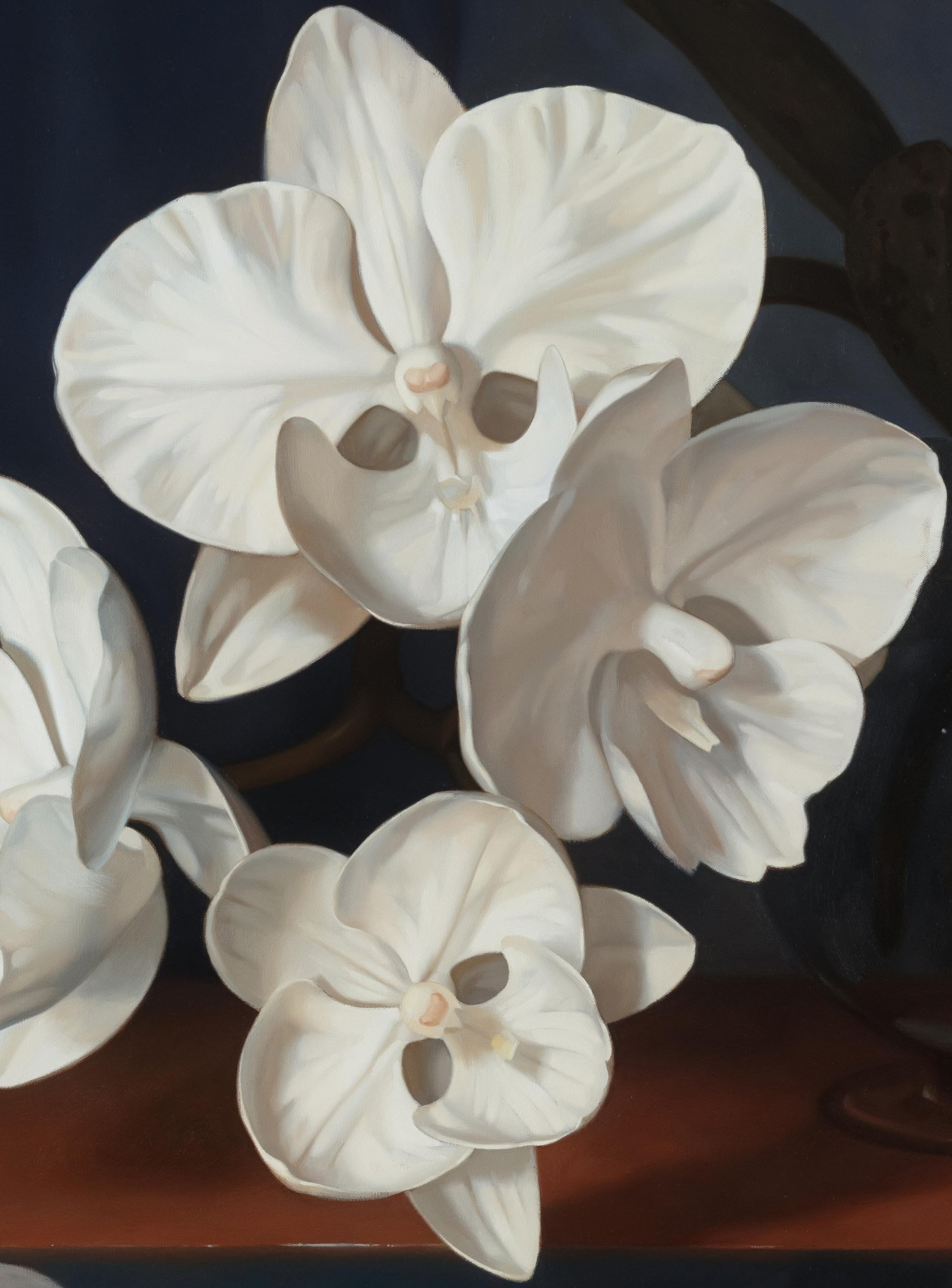
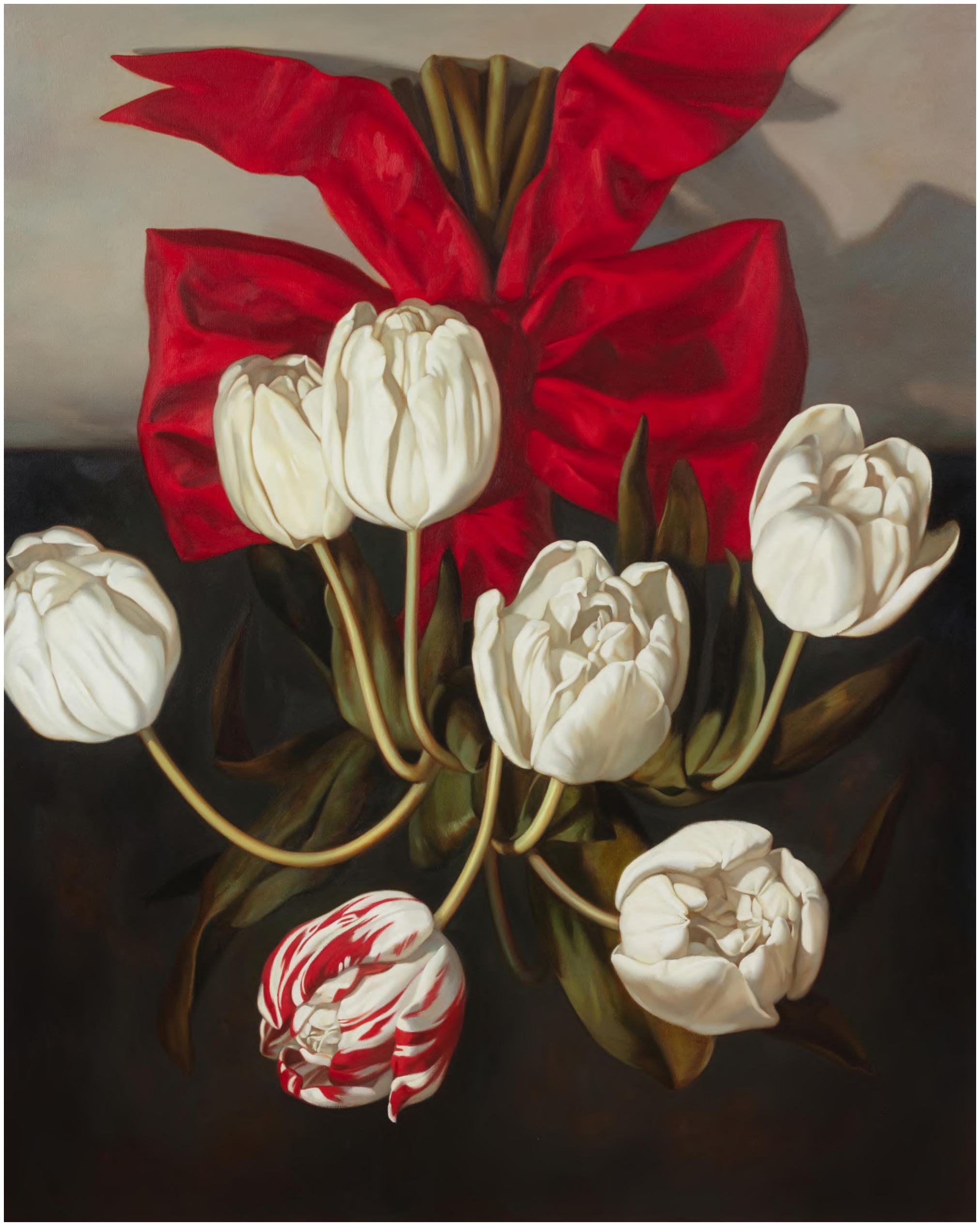
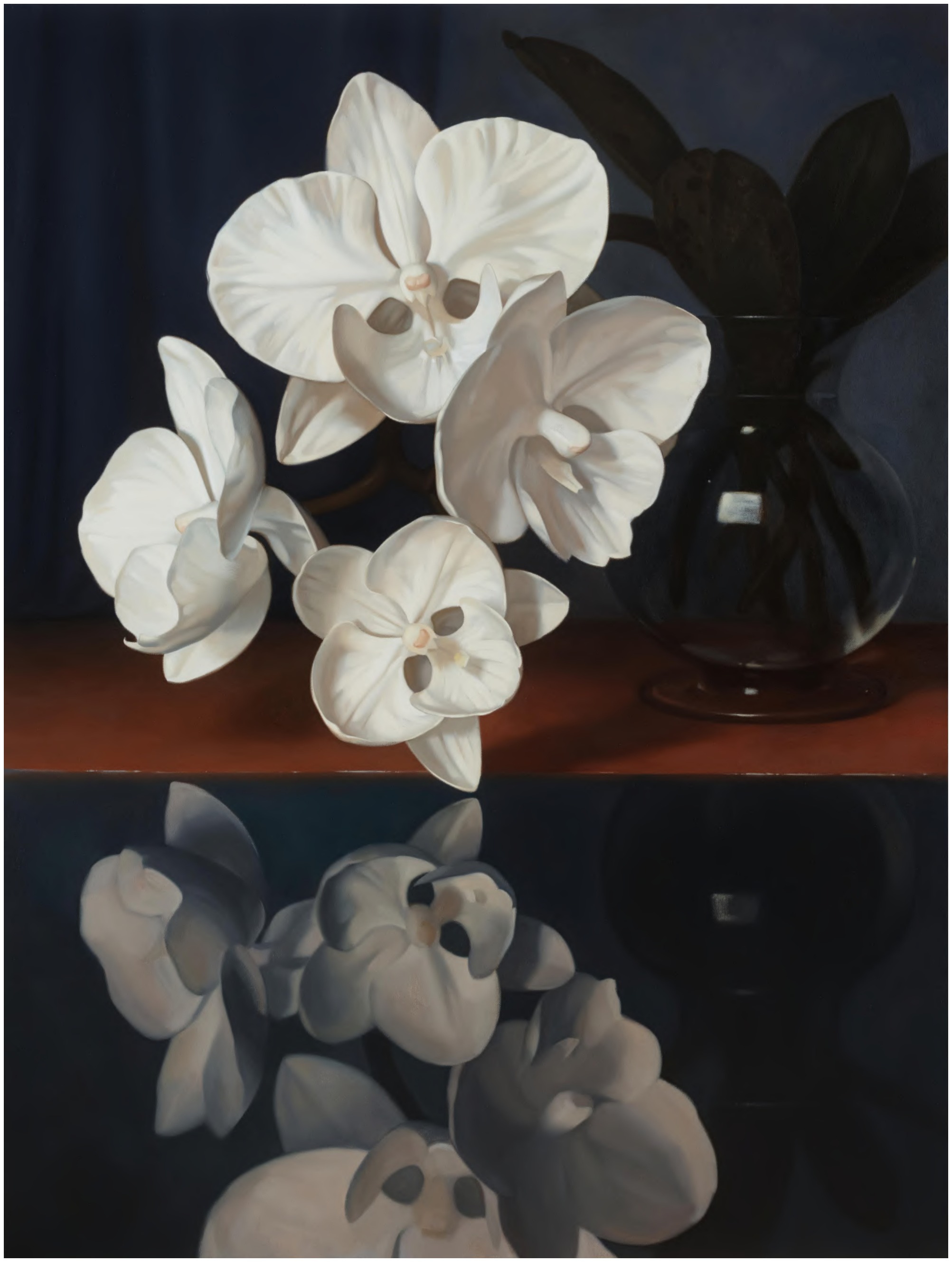
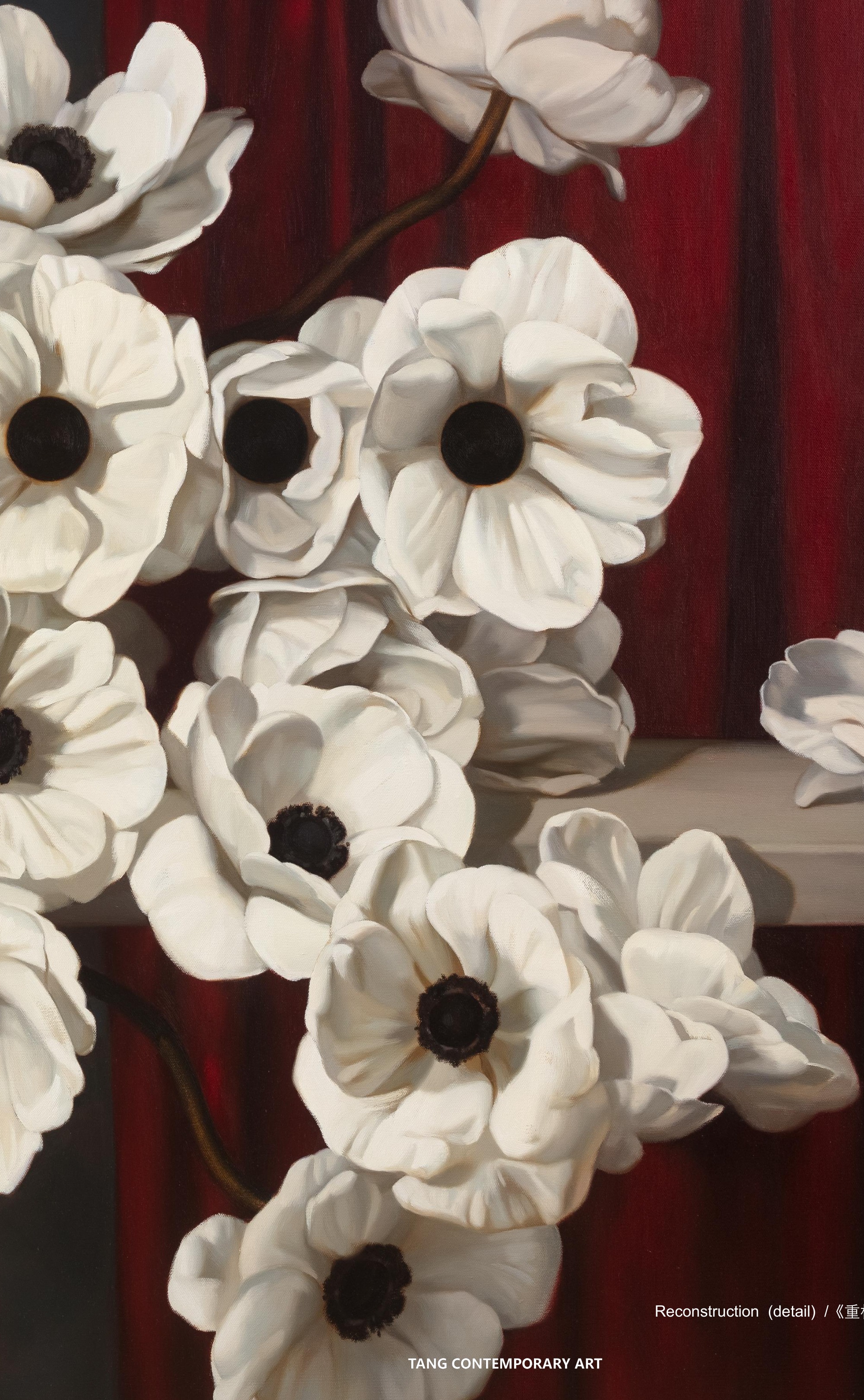
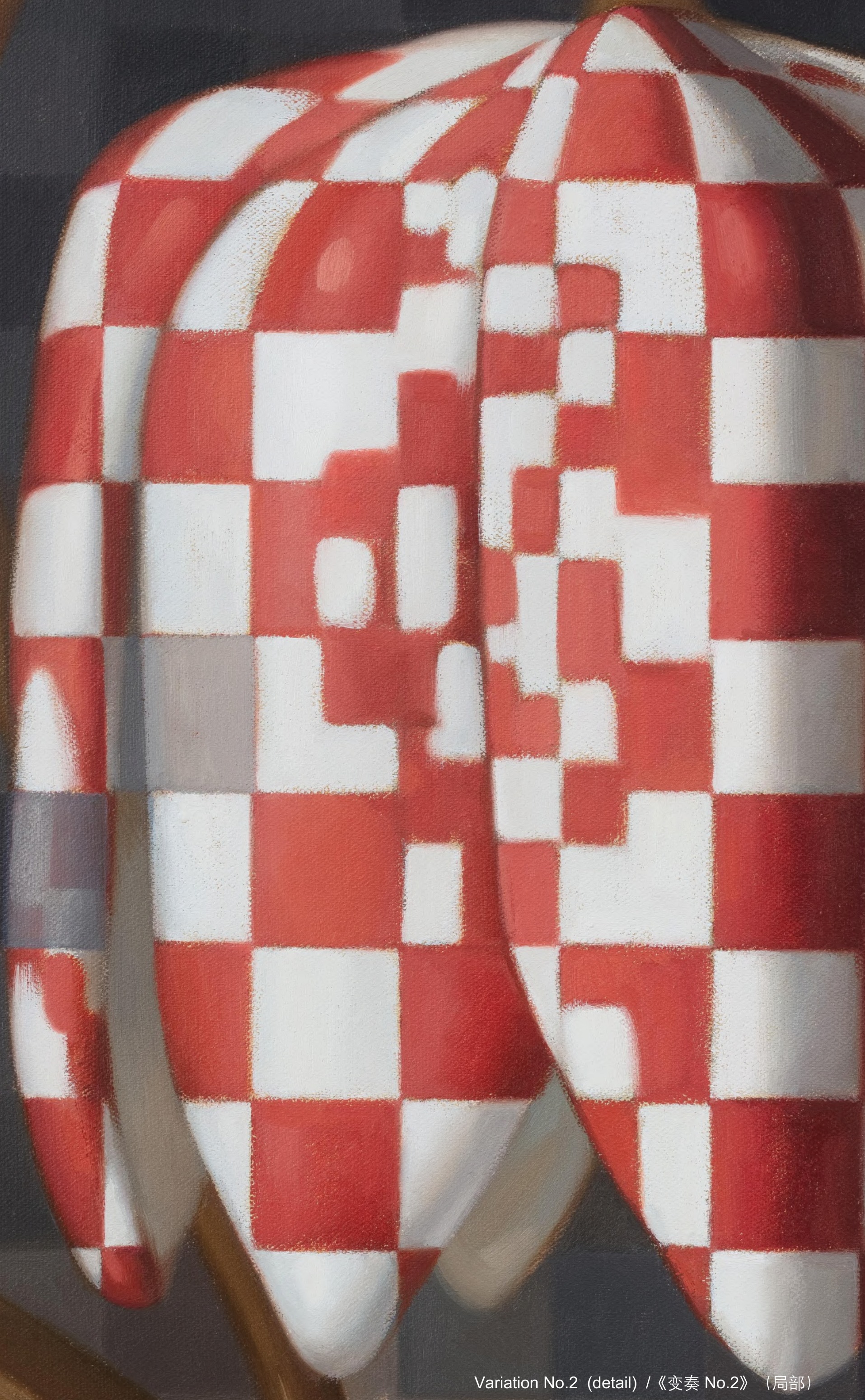
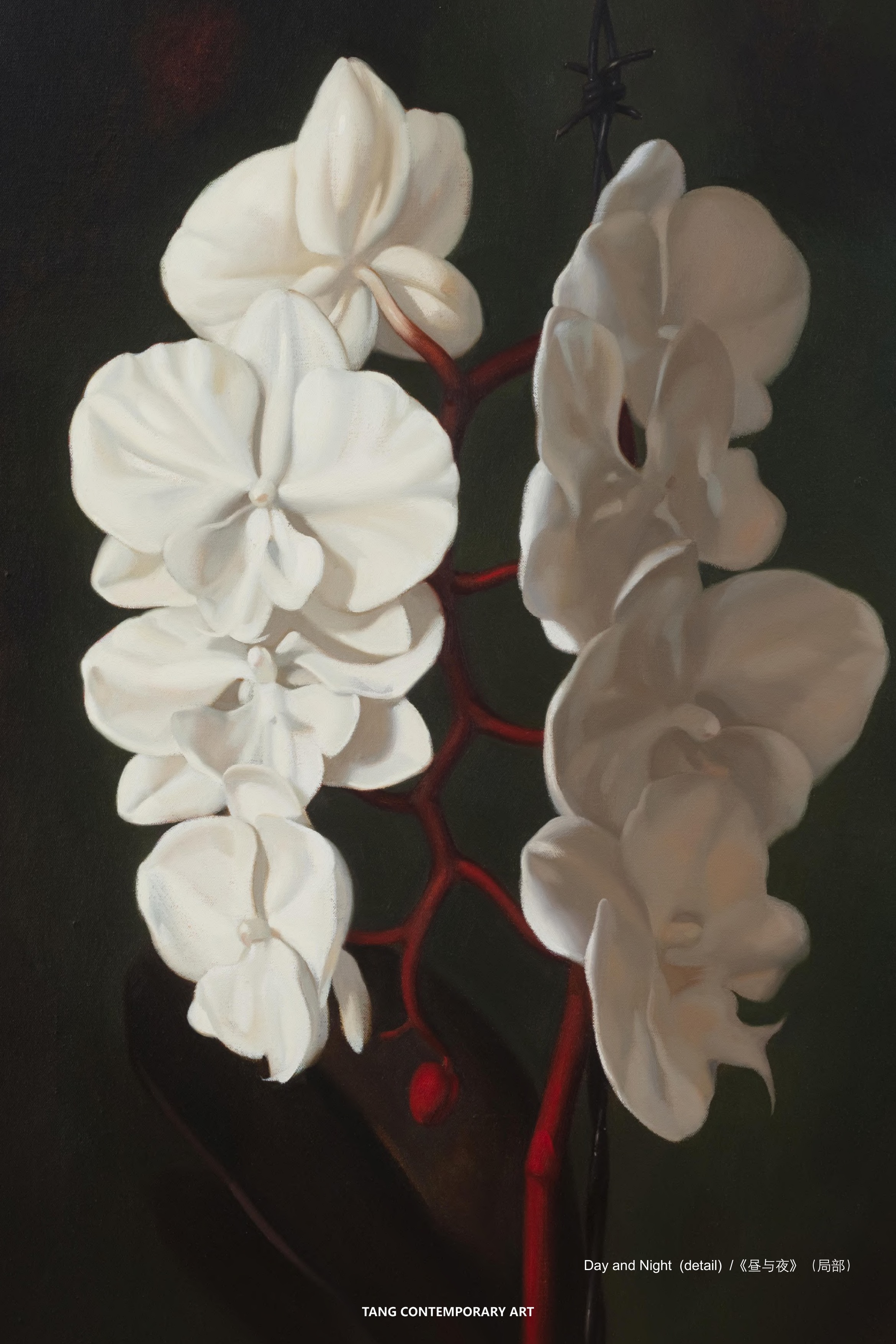
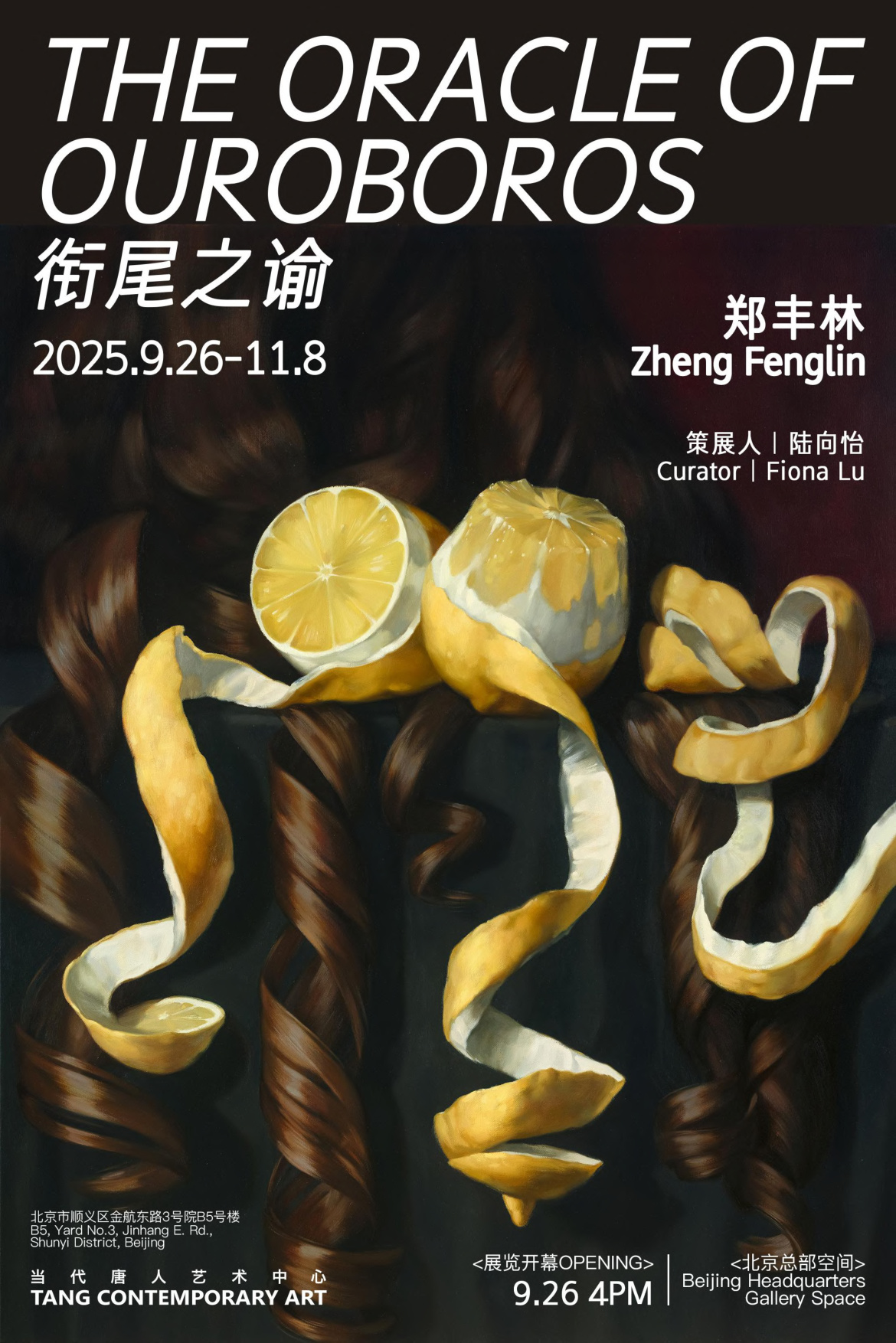
如当代唐人艺术中心荣幸宣布,将于2025年9月26日在北京总部空间推出年轻艺术家郑丰林个展“衔尾之谕”。本次展览是郑丰林完成中央美术学院七年本硕学业生涯后的首展,也是在当代唐人艺术中心宣布代理合作后的首次个展,共展出了郑丰林最新创作的十二件精彩绘画作品。展览由陆向怡策划,将持续至11月8日。静物画自十七世纪在欧洲确立其独立地位以来,始终介于表象与隐喻之间。荷兰黄金时代的画家威廉·克莱兹·海达(Willem Claesz. Heda)的静物画以柠檬螺旋的果皮昭示财富与无常。《约伯记》(Job)中,约伯感慨:“日子短少,多有患难。出来如花,又被割下;飞去如影,不能留存。”花卉、蝴蝶、壁龛、贝壳这些古典静物画中的典型形象不仅是技艺的炫示,更是一套精细的符号系统,物件超越其物理存在,成为道德训诫、信仰隐喻与命运预言的载体。郑丰林的创作深植于这一视觉传统,又以当下视角重构其秩序。她将静物画中的象征性从历史语境中剥离,置于个人神话的经纬中重织。不同于古典静物画的极度宁静,在郑丰林的绘画中,呼吸般的生命感以近乎形而上的方式流淌。静物不再是单纯的物体,而如一个富有情绪的人,一个正在生长变化的生命体,一幕拉开帷幕的话剧现场。她笔下的静物似人,人似静物,在其精心排演下达到微妙的神圣平衡。画笔之下的细腻肌理,如柠檬皮一刀刀的蜷曲刻痕,花瓣侧光的笔触经络,既延续了古典静物画对物质性的极致追求,也展现了郑丰林对形式符号的独特编织。色彩浓郁如夜,光线炽亮如昼。钴蓝、深红、金黄、纯白,在对抗中达成形式的对立统一。物象在脱离写生感的超现实场域中异质同构:卷曲的发和柠檬皮,梳子与贝壳,蝴蝶与蝴蝶结。这种想象力驱动的变形记,既非对自然的摹写,亦非纯粹的幻象,而是通过视觉辩证法将矛盾元素淬炼成新的生命整体。色彩成为情感的震颤频率,每一笔浓郁饱和的铺陈都是物象向精神维度的跃迁,最终在画布上形成一种自我生长的有机语法。
“衔尾之谕”作为展览主题,恰是她此次展览的核心理念:蛇衔其尾的古老图腾(Ouroboros),在此转化为苹果皮与蛇形共生的无限螺旋。通过扭曲透视与质感错位,将玉石冷感的蛇与果皮的生物温热感共存,制造认知层面的“知觉悬搁”。观众在凝视中被引导至一种临界状态,既确认物象的物质性,又质疑其现实指涉,最终在这种张力中触及物象背后的精神性内核。无限延伸的苹果皮、白玉光泽的蛇、半隐的天使羽翼,既呼应了巴洛克静物画对“永恒循环”的痴迷,又注入了东方哲学对“因果消解”的沉思。画面削弱经典叙事中诱惑与堕落的单向指控,转而构建一个自我消解、自我疗愈的循环系统。画中天使不再审判蛇性,而是以削苹果的仪式性动作,诱使欲望显形、循环、最终升华为纯粹的形式游戏。这种“以诱惑解构诱惑”的辩证逻辑,正是她对静物画本质的深刻洞察。物件之所以承载象征,并非因固有意义,而是因人类始终渴望在物质中窥见命运的映射。郑丰林以近乎修道士的耐心施以笔触,让画面涌动着超现实的灵光。柠檬的酸涩、苹果的甜腻、蛇鳞的冷冽转化为视觉的味觉与触感,在感官的交叠中松动现实与幻想的边界。其作品不再是对古典静物的简单复刻,而是一场与艺术史幽灵的对话:她以饱含生命力的细腻笔锋撬开静物画的符号外壳,让当代人的精神渴望,对治愈、对永恒、对意义循环的希冀,从画面中涌出。当我们凝视画面,亦是在凝视自身欲望的形状:它们如何缠绕、如何断裂、又如何在新生的叙事中重获救赎。正是见欲望如见衔尾之蛇,见世界如见无穷之谕。
Tang Contemporary Art is delighted to announce the opening of "The Oracle of Ouroboros," a solo exhibition by emerging artist Zheng Fenglin, at its Beijing headquarters on September 26, 2025. This marks Zheng’s first show since completing her seven-year undergraduate and postgraduate studies at the Central Academy of Fine Arts, as well as her debut solo exhibition under representation by Tang Contemporary Art. The exhibition features twelve remarkable new paintings by the artist, curated by Fiona Lu, and will remain on view until November 8. Since the establishment of still life painting as an independent genre in 17th-century Europe, it has always straddled the boundary between representation and metaphor. The still-life works of Dutch Golden Age painter Willem Claesz. Heda, with their lemon peels spiraling in elegant twists, symbolized both wealth and impermanence. In the Book of Job, Job laments:“Mortals, born of woman, are of few days and full of trouble. They spring up like flowers and wither away; like fleeting shadows, they do not endure.” The typical motifs in classical still life painting—flowers, butterflies, niches, shells—are not only demonstrations of technical prowess but also a refined system of symbols. These objects transcend their physical existence, becoming vessels for moral instructions, religious metaphors, and prophecies of fate. Zheng Fenglin’s practice is deeply rooted in this visual tradition, yet she reconstructs its order from a contemporary perspective. She removes the symbolic meaning of still life from its historical context and reweaves it into the fabric of a personal mythology. Unlike the serene stillness of classical still life, Zheng’s paintings pulse with a lifelike, almost metaphysical, energy. The still life no longer serves merely as a passive object; it takes on the qualities of a person—a living, evolving organism—set in the scene of an unfolding drama. In her works, the still-life objects resemble humans, and humans resemble objects. Under her meticulous orchestration, a delicate, sacred balance is achieved.The detailed textures in her brushwork, such as the spiraled knife cuts of a lemon peel or the delicate lines on flower petals, not only continue the classical still life’s pursuit of materiality but also showcase Zheng’s unique weaving of formal symbols. The colors are rich, like night; the light is intense, like day. Cobalt blue, crimson red, golden yellow, pure white—all clash and reconcile in a harmonious unity. Objects within a surreal field, detached from their naturalistic origins, form heterogeneous yet harmonious relationships: curled hair and lemon peel, comb and shell, butterfly and bow. This transformation driven by imagination is neither a mere imitation of nature nor purely a fantasy but a visual dialectic that alchemizes contradictory elements into a cohesive new life. The colors become a trembling frequency of emotion, where each brushstroke, dense and saturated, marks an object’s transition into a spiritual dimension, ultimately forming an organic syntax that grows organically on the canvas. The title, "The Oracle of Ouroboros," encapsulates the core idea of the exhibition: the ancient symbol of the Ouroboros—the serpent biting its own tail—is reimagined here as an infinite spiral of apple peel and snake form coexisting. Through distorted perspectives and sensory dislocation,the cold, jade-like serpent skin and the warm, biological apple peel are brought together, creating a “perceptual suspension”
on a cognitive level. Viewers are guided into a liminal state of contemplation, where they acknowledge the materiality of the objects yet question their real-world references, ultimately allowing access to their spiritual core within this tension. The endlessly extending apple peel, the gleaming white jade snake, the half-concealed angel wings—these elements echo the Baroque still life’s obsession with the
"eternal cycle" while also infusing Eastern philosophy’s reflections on "the dissolution of cause and effect." The imagery weakens the classic narrative's one-sided accusations of temptation and fall, instead constructing a self-dissolving, self-healing cycle. In the painting, the angel no longer judges the serpent but, through the ritualistic act of peeling an apple, invites desire to manifest, cycle, and ultimately be sublimated into a pure formal play. This dialectical logic of “deconstructing temptation with temptation” is a profound insight into the very essence of still life painting. Objects carry symbols not because of inherent meanings but because humans have always longed to glimpse fate reflected in the material world. Zheng Fenglin applies her brush with almost monastic patience, imbuing her scenes with a surreal aura. The sourness of the lemon, the sweetness of the apple, the coldness of the snake’s scales—all transform into visual sensations of taste and touch, loosening the boundaries between reality and imagination. Her works are not simple revivals of classical still life but rather a dialogue with the ghosts of art history: with vibrant, meticulous strokes, she pries open the symbolic shell of still life, allowing the spiritual yearnings of contemporary people—the longing for healing, eternity, and the cyclical nature of meaning—to surge from the canvas. When we gaze upon her paintings, we are also gazing at the shape of our own desires: how they coil, how they break, and how they are redeemed in a new narrative. It is in encountering desire that we encounter the ouroboros, the endless prophecy of the world.
参展艺术家Artists
作品