林中造屋
展览信息
前言Introduction
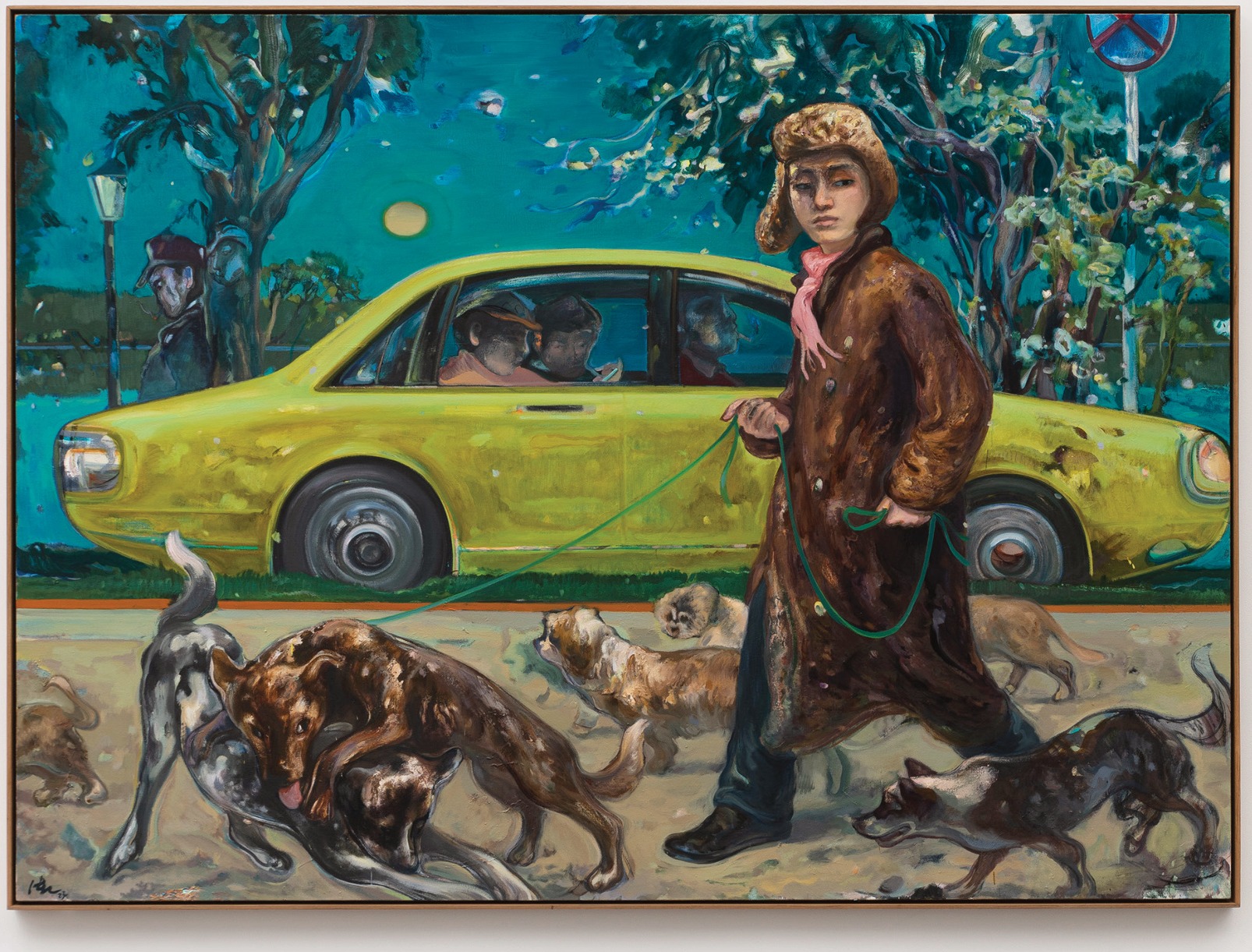
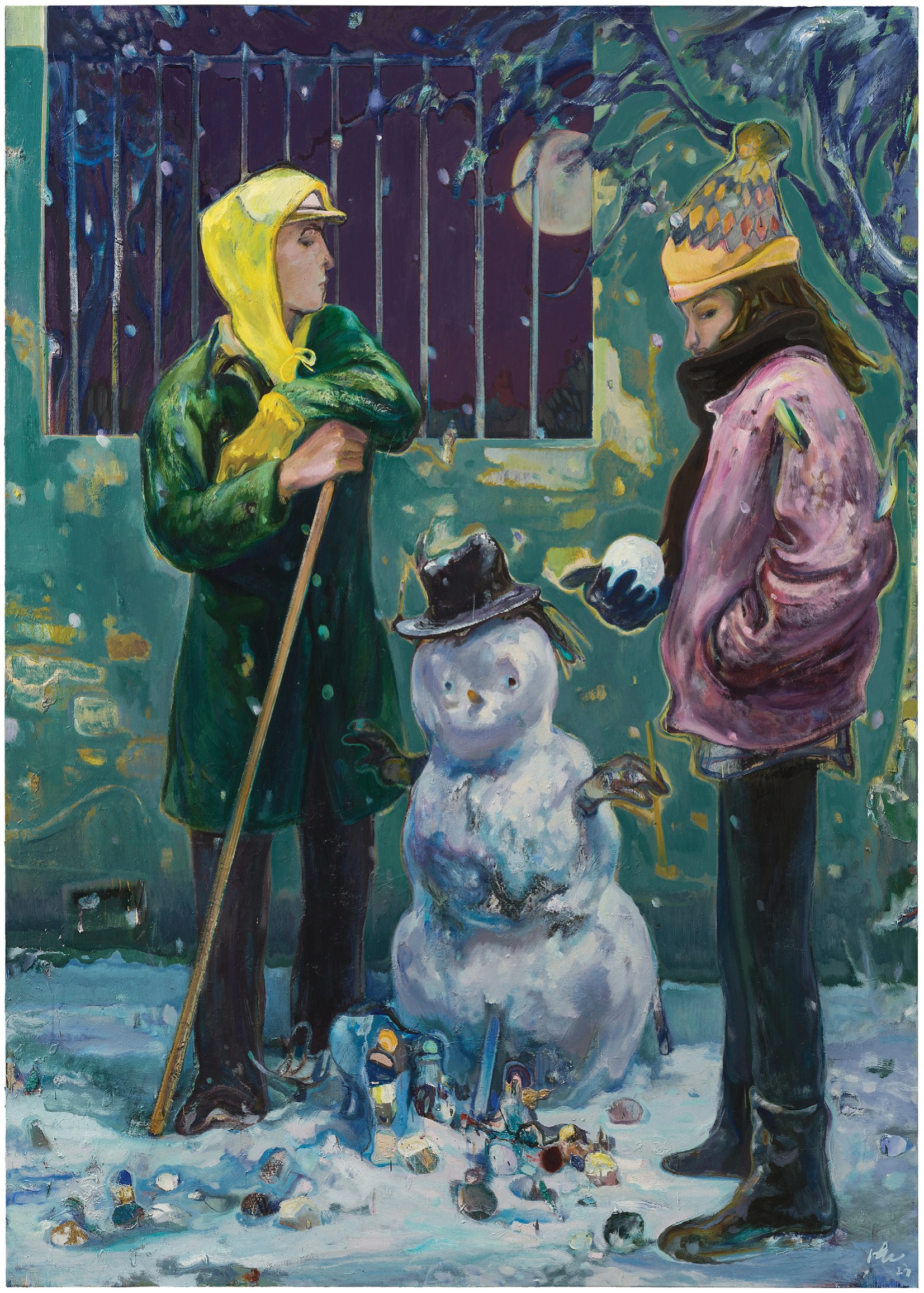
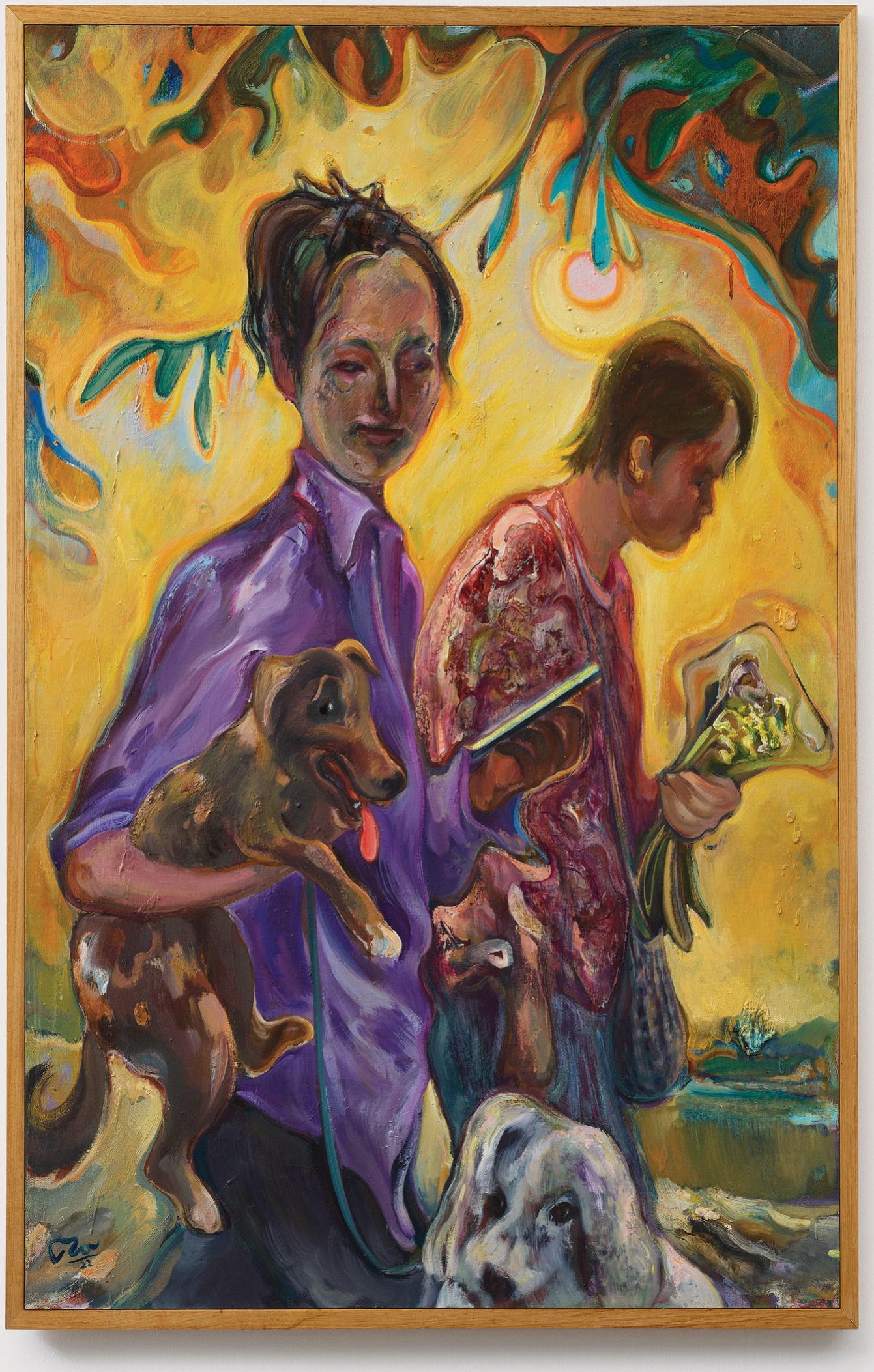
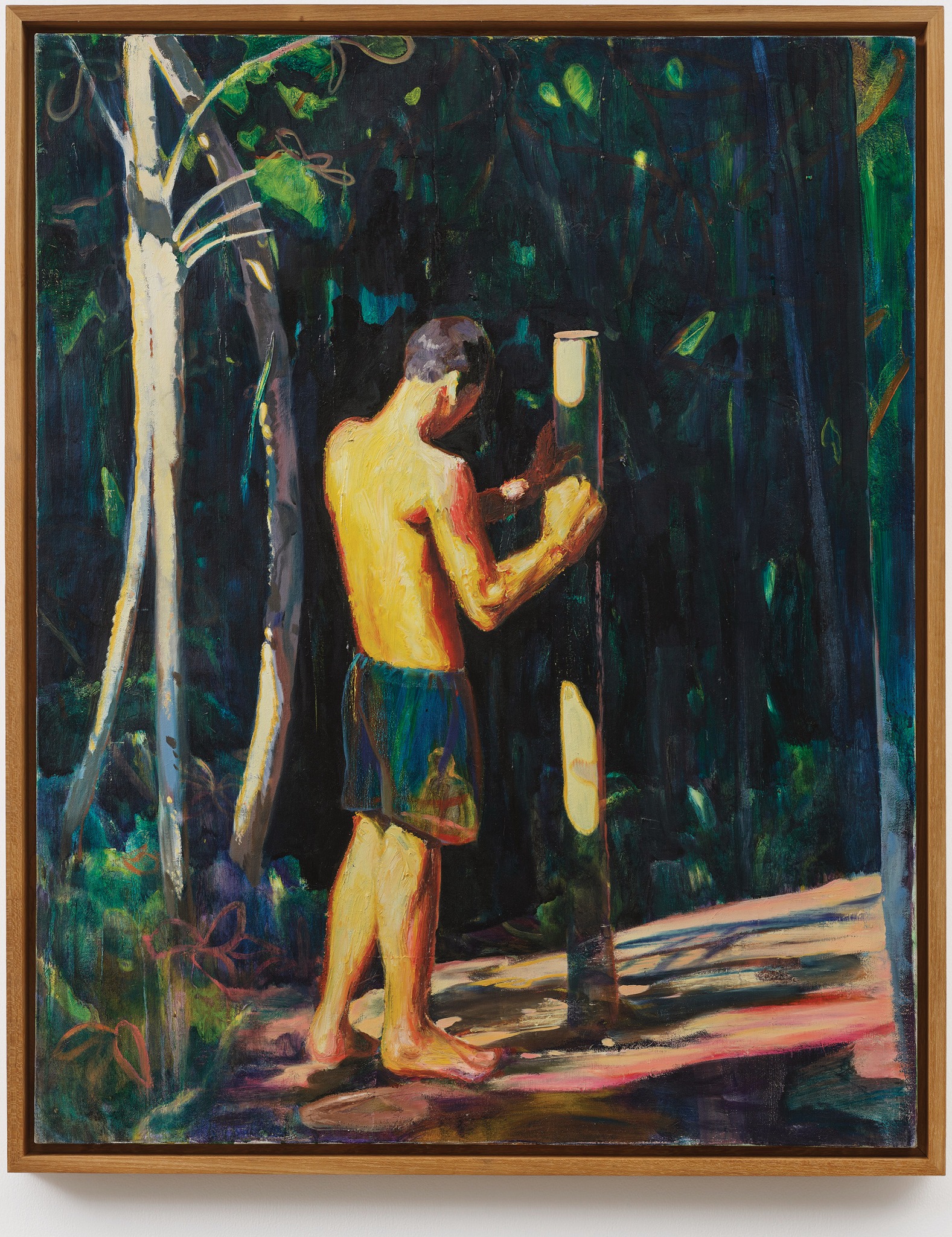
陈作的画作绝大部分是一种画家自证的方式,一个感觉、一段记忆、一个印象、一个符号、一个瞬间都可能是陈作创作的起点。“我迷恋那种随机感和不可控的东西,我觉得那就是绘画中的一种博弈。”雪、人与狗——这些近年来反复出现在陈作画面中的元素源于艺术家在北京顺义罗马湖艺术区的真实的生活体验。在创作中,陈作会反复抓取某种东西,但它并非是图像式的,而是某种“一直在追求的理想型的模型或结构”。
Most of Chen Zuo’s paintings are exercises in self-affirmation as a painter. A feeling, a memory, an impression, a sign, a moment, any of these can be a creative spark for the artist. “I’m obsessed with the sense of randomness and things which cannot be controlled. I think it’s one form of struggle in painting.” Snow, people, and dogs—these recurring elements in Chen Zuo’s recent paintings are a part of the artist’s real life experience at Roma Lake. When creating, Chen Zuo repeatedly grasps a certain thing, something which isn’t graphic, but is instead “a model or structure of an ideal form I have always been pursuing.”
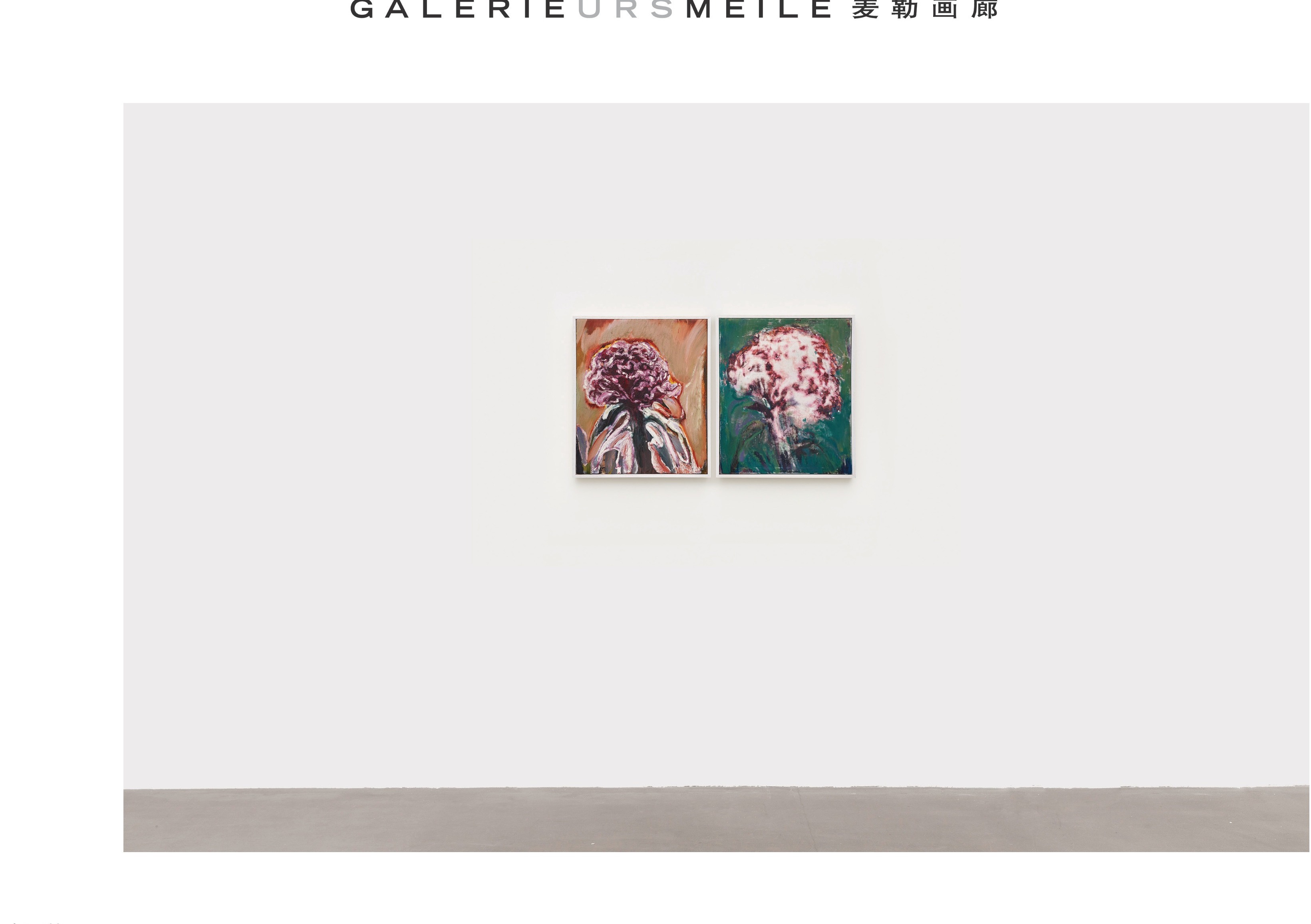
陈作的作品中充盈着对个体经验的觉察和强烈的冲突下的磨擦感,以及对抗下的秩序,看似抒情、浪漫,与此同时,又交织缠绕着对于周遭的反思与关切,是割裂的、痛楚的、危险的。其中《贵妃の爱》是一场关于不安的凝视。在果酸和果蝇的共同作用下,逐渐腐败塌陷的芒果让陈作想起在金边大屠杀纪念馆所见的经验。陈作决定用一种肖像画的态度和观察方式开展创作,在这糜丽甜香的背后是一个画家展开共情的可能,试图拾起消费至上的日常中、微不足道的货物上的最后一丝尊严。
Chen Zuo’s works are filled with perceptions from individual experience, the feel of abrasion under intense conflict, and the order that lies beneath the surface of resistance. They appear expressive and romantic, but are also entangled with reflection and concern about their surroundings. They are divided, anguished, imperiled. The artwork GuiFeiの love is a deep gaze into unease. Mangoes rotting under the joint effects of citric acid and fruit flies reminded Chen Zuo of what he saw at a Killing Fields memorial in Phnom Penh, Cambodia. Chen Zuo decided to approach the creation through the attitude and observational methods of portraiture. Behind this extravagant sweetness is the potential for an artist to engage in sympathy, an attempt to grasp that last thread of dignity within the consumption-dominated everyday.
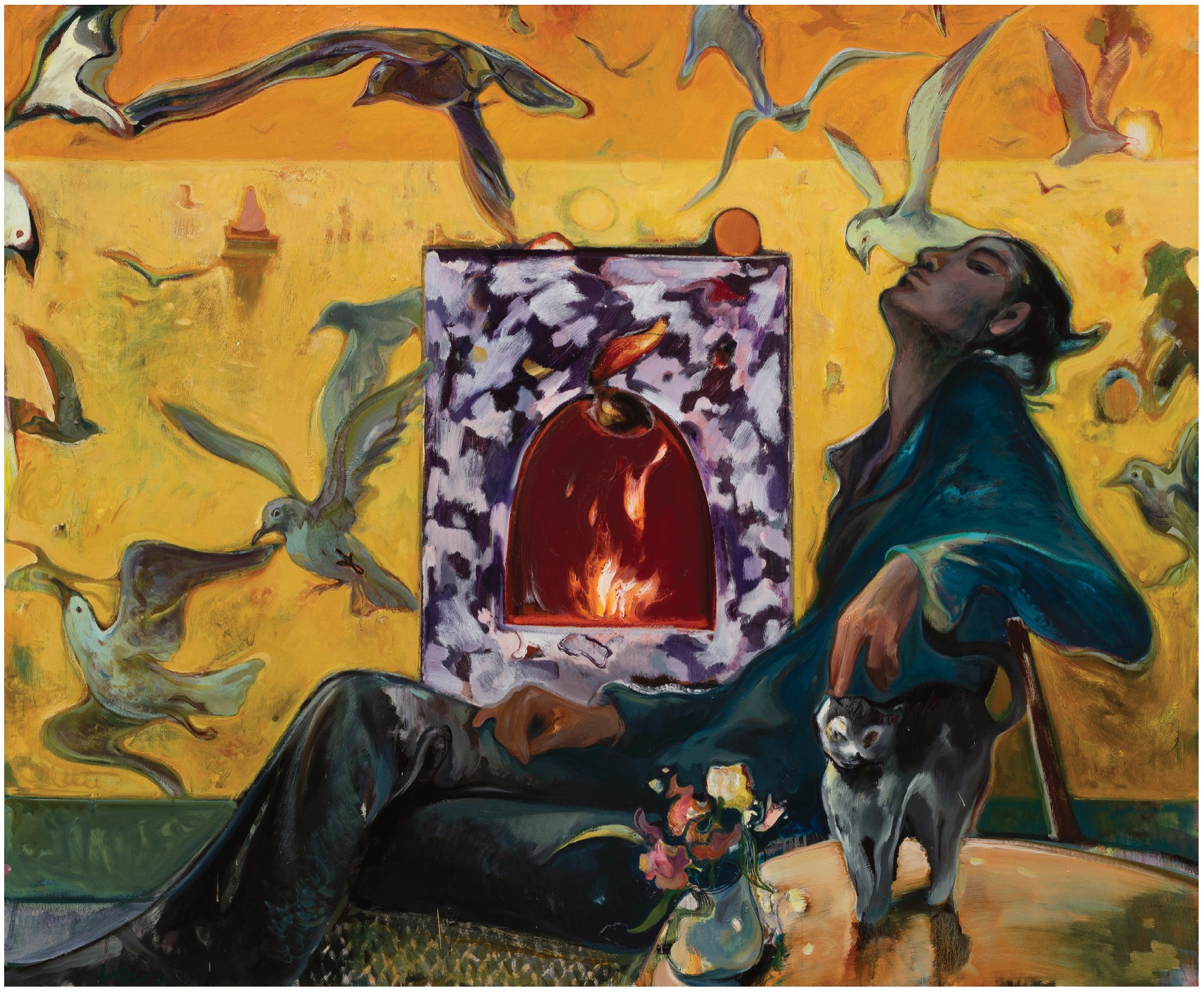
无论从色彩、质地,还是画面叙事角度切入,陈作的作品看起来并不轻松明快,斑斑驳驳的画面呈现出令人不安的冲突、割裂感。这一破坏式的行为并非某种刻意的经营,而是艺术家试图在明晰的图像和混沌的感觉(偶然性)中找到两者合拍的清晰、和谐的统一。在陈作看来,重要的是绘画过程中留下的个人的行动痕迹、图像之上的物质累积和图像形成背后的思考与对抗。
Whether in terms of color, texture, or the picture’s narrative perspective, Chen Zuo’s works appear anything but relaxed. The mottled plane reveals an unsettling sense of conflict and rupture. This destructive behavior is not intentionally orchestrated, but is the result of the artist’s search for the clarity of synchronicity and the unity of harmony between a clear image and a sense of chaos (chance). For Chen Zuo, what matters are the traces of individual action left in the process of painting, the accumulation of material, and the thinking and opposition behind the formation of the image.
“我一直觉得这个时代是一个不缺怀疑的时代,但是缺少相信。我还是想去抓住一些可以相信的东西。“陈作一直试图通过绘画作为媒介对现实中的割裂予以弥合,正因如此,我们能从他的作品中解读到对于完整性的强烈的追求,这正是艺术家口中的“古典主义的底色或是难以避让的路径”。
“I have always felt that this era has no lack of skepticism. What it lacks is belief, true belief. I want to grasp onto things that can be believed in.” Chen Zuo has consistently been trying to use the medium of painting to mend the ruptures in reality, and because of this, we are able to see his powerful pursuit of wholeness in his works. This is what the artist means when he says that “the classicalist undertone is a path that cannot be avoided.”
凝视陈作的作品,在神秘与沉静之余,我们还会惊喜地感受到一股轻狂不羁的“少年气”,犹如稚嫩的幼兽向着天空龇牙咧嘴,又糅合着几许酷飒、浪漫的诗意。观看陈作的作品绝不轻松,时间与劳作的痕迹层叠累积于画布之上,创作路径的准确性和丰富度也让观看变得更具挑战、更有趣。
Gazing at Chen Zuo’s works, beyond the mystery and solemnity, we are also met unexpectedly with an unbridled “youthful air”, like a young beast baring its fangs at the sky, yet mixed with a cool, romantic poeticism. Viewing Chen Zuo’s works is not a relaxing affair. The traces of time and labor stack up on the canvas, and the precision and richness of the creative path makes the act of viewing more challenging and fascinating.
参展艺术家Artists
作品