展览信息
前言Introduction
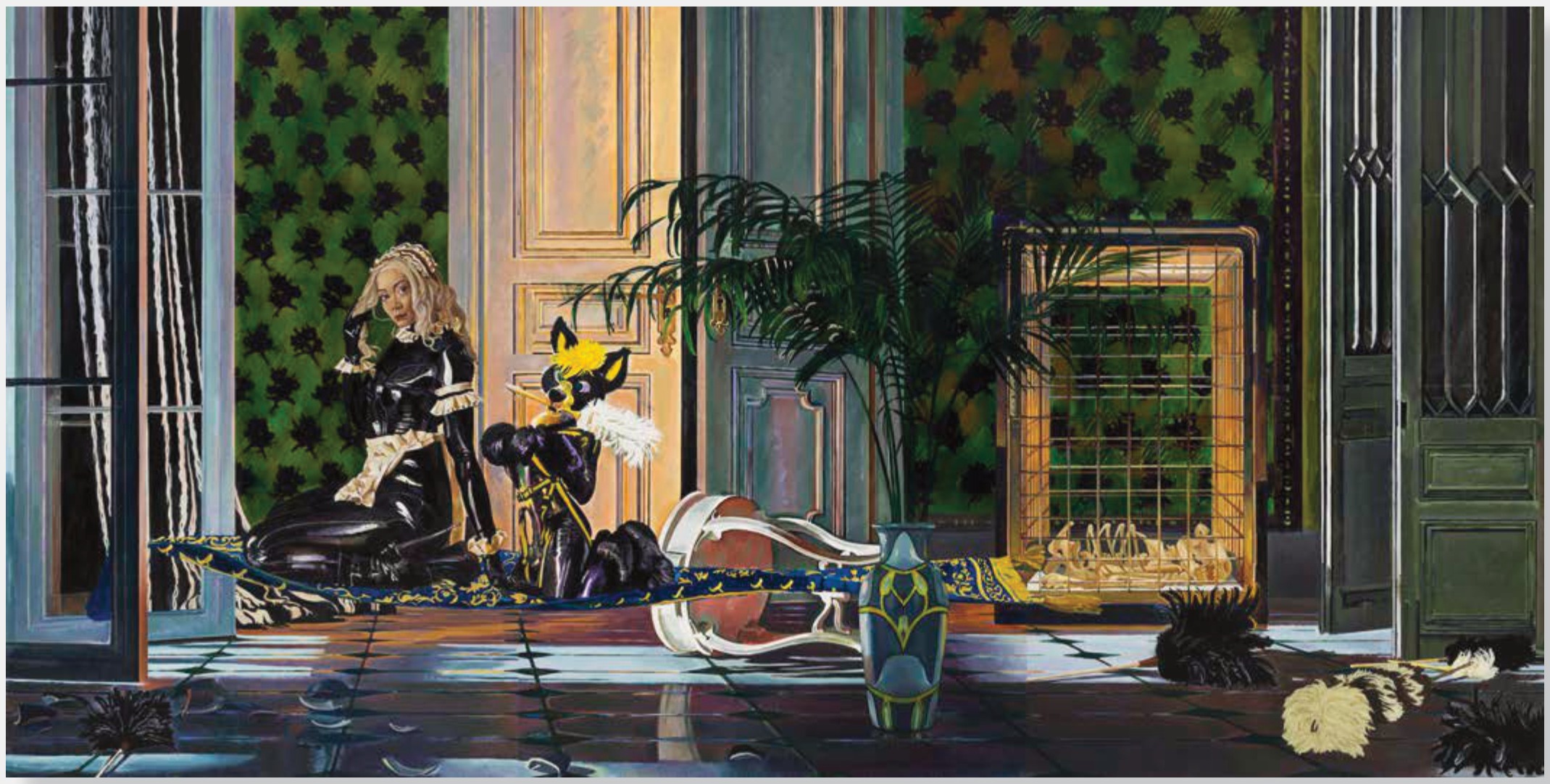
龚辰宇:阿尼玛格斯策展人:赵小丹蜂巢当代艺术中心荣幸地宣布,将于2024年12月20日在蜂巢|上海主空间呈现艺术家龚辰宇的最新个展“阿尼玛格斯”(Animagus)。此次展览是继“蜂巢·生成第十五回 龚辰宇:陈列物”,(2015);“龚辰宇:凿冰”(2018);“龚辰宇:他方世界与少年”(2022)后,艺术家在蜂巢的第四次大型个展,将呈现龚辰宇对人类学、民族志的广泛兴趣,以及后疫情时代人类生存境遇的深刻反思。艺术家的绘画实践无疑是从这些现实根基上升腾而起的异象,以显现人性中歧义、矛盾与含混的意志内核。此次展览由策展人赵小丹策划,将持续至2025年1月22日。展览主题Animagus出自J.K罗琳在哈利·波特宇宙中创造的组合词,是变形学中巫师们变身为某种特定动物的术法。作为一种后天习得的能力,练就Animagus的过程充满了惊险变数与挑战。将这一概念引入到此次展览,不仅是因为语词及其来源本身就携带着某种通往神秘未知隐匿世界的属性,更是高度契合龚辰宇最新创作中的理性框架。从森林、苔原到冰原,作品的场景轮换如同一个铺陈的镜厅(Hall of Mirrors),似乎艺术家正沿着他的出生地黑龙江不断溯源,从它的上游地带以及北境的西伯利亚地区获取更多来自“祖先”的灵性感召。透过人类学研究的视角主义(Perspectivism),龚辰宇在绘画中主动建构了一个有别于人类中心的多元认知体系。在因此展开的绘画远征中,现实中如浪涌般的精神困境和道德枷锁成为艺术家持续前行的隐藏动机。作品画面中视角的转移腾挪,加速打破稀释和消解有意站在别处,作为观察者身份的艺术家的过往认知。在意识和遐思的出走与归来之间,艺术家感知世界的意志和能力得以持续增强。对龚辰宇而言,画面中的变身主体以及基于此展开的关系性叙事,不仅意味着身份的流动,在不断投身和抽离的过程中,基于现实的经验性世界已然被超越此在的观念性世界所置换。展览自《飞毯》(2022)拉开帷幕,背景的三重门的设置不仅打开了绘画的时空维度,左侧飘起的窗帘与涌入地面的冷冽月光,也在强化这一刻的突如其来。沿着打碎的花瓶、倒地的置物架与散落地面的羽毛掸,当视线最终回转到带有明显童话意趣的异域飞毯上,身着社会符号化装扮的女仆与皮毛制服的随行犬,似乎正打算和观者做最后的道别。然而当我们将注意力转向飞毯的流苏尾翼,一个被绿植遮挡掩映的金色牢笼与呈卧姿的完整动物骨骼,意在释放更多不寻常的信息。通过结构性的重置,结束白天劳作的女仆与日常被囚禁于笼中的随行犬,在夜晚出走以打破被施加的行为禁忌。作为衔接,《飞毯》将艺术家的创作从“他方世界”的战争叙事中迅速回撤,如同伞兵速降,刹那进入到由游猎民族、尼特族(NEET)i以及守望者们构成的现实涡旋中。
i 即“Not in Education, Employment, or Training”的缩写。
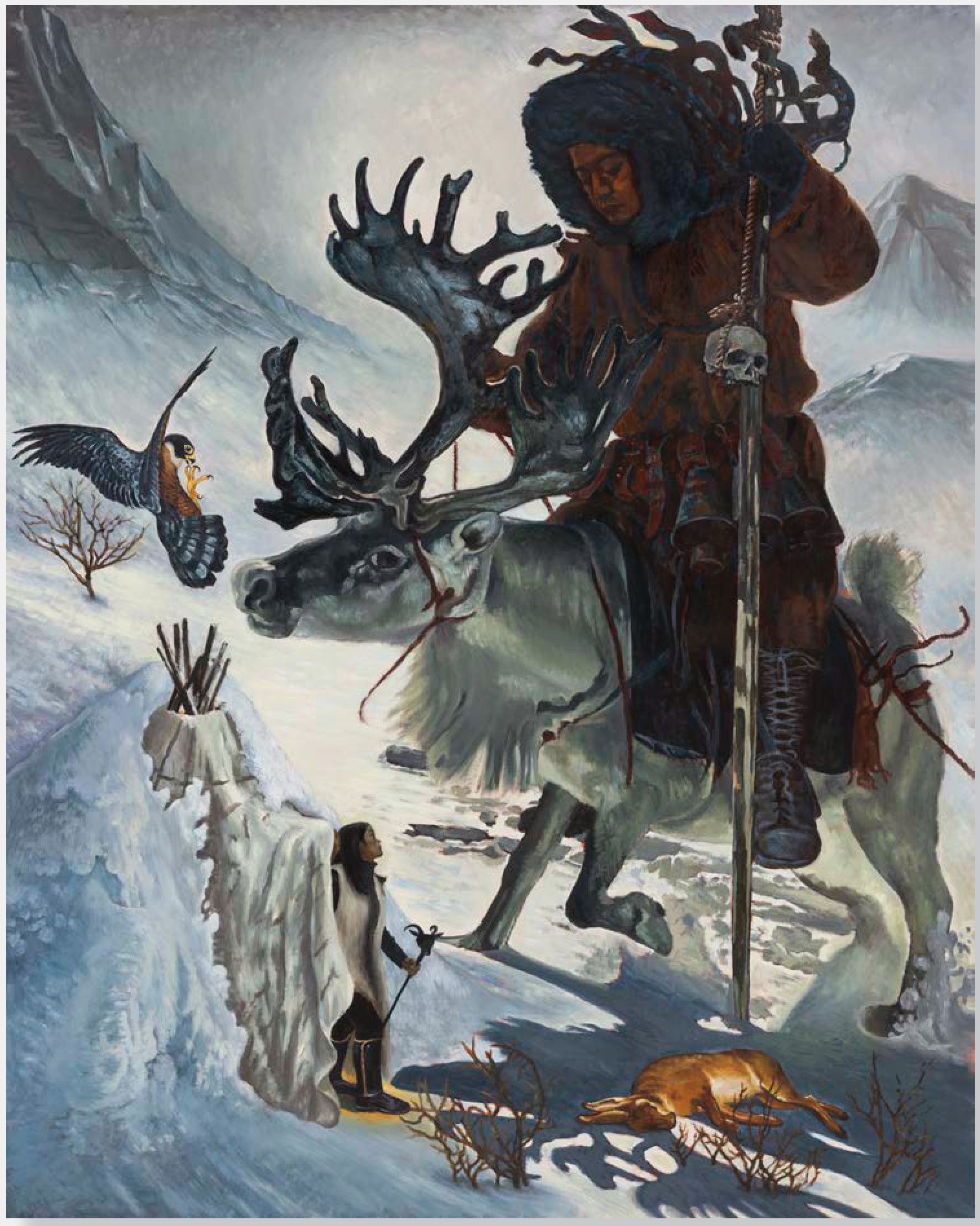
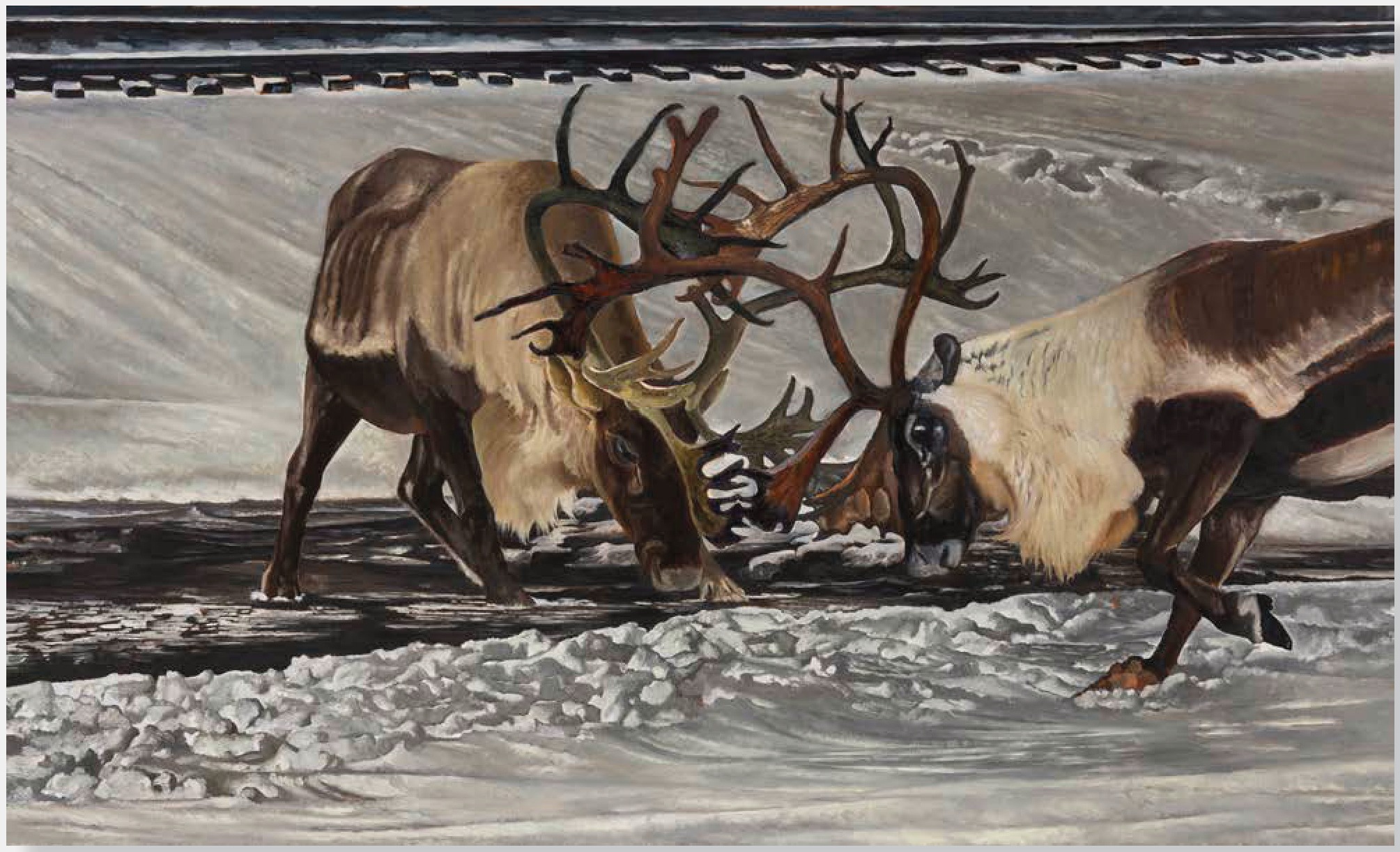
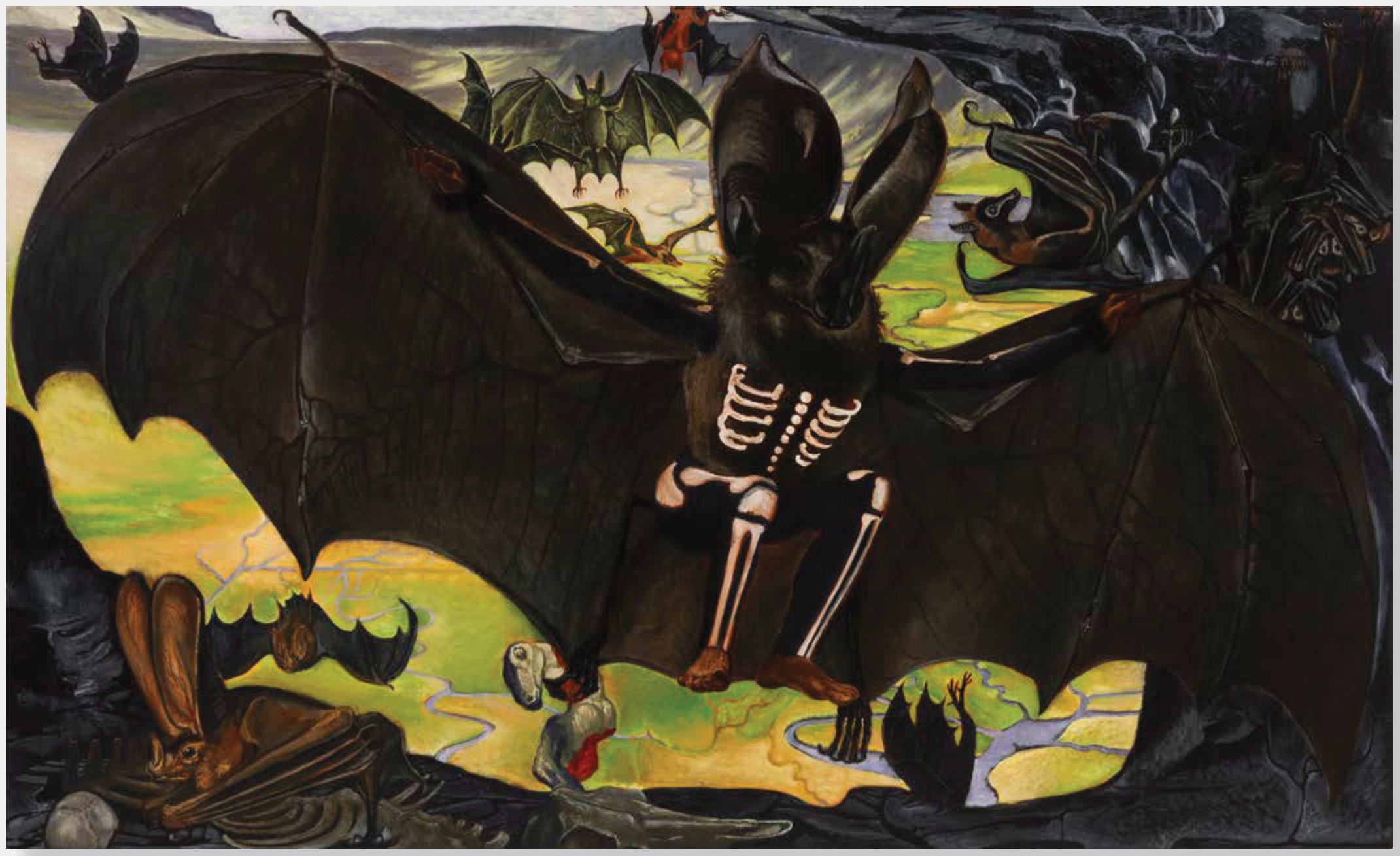
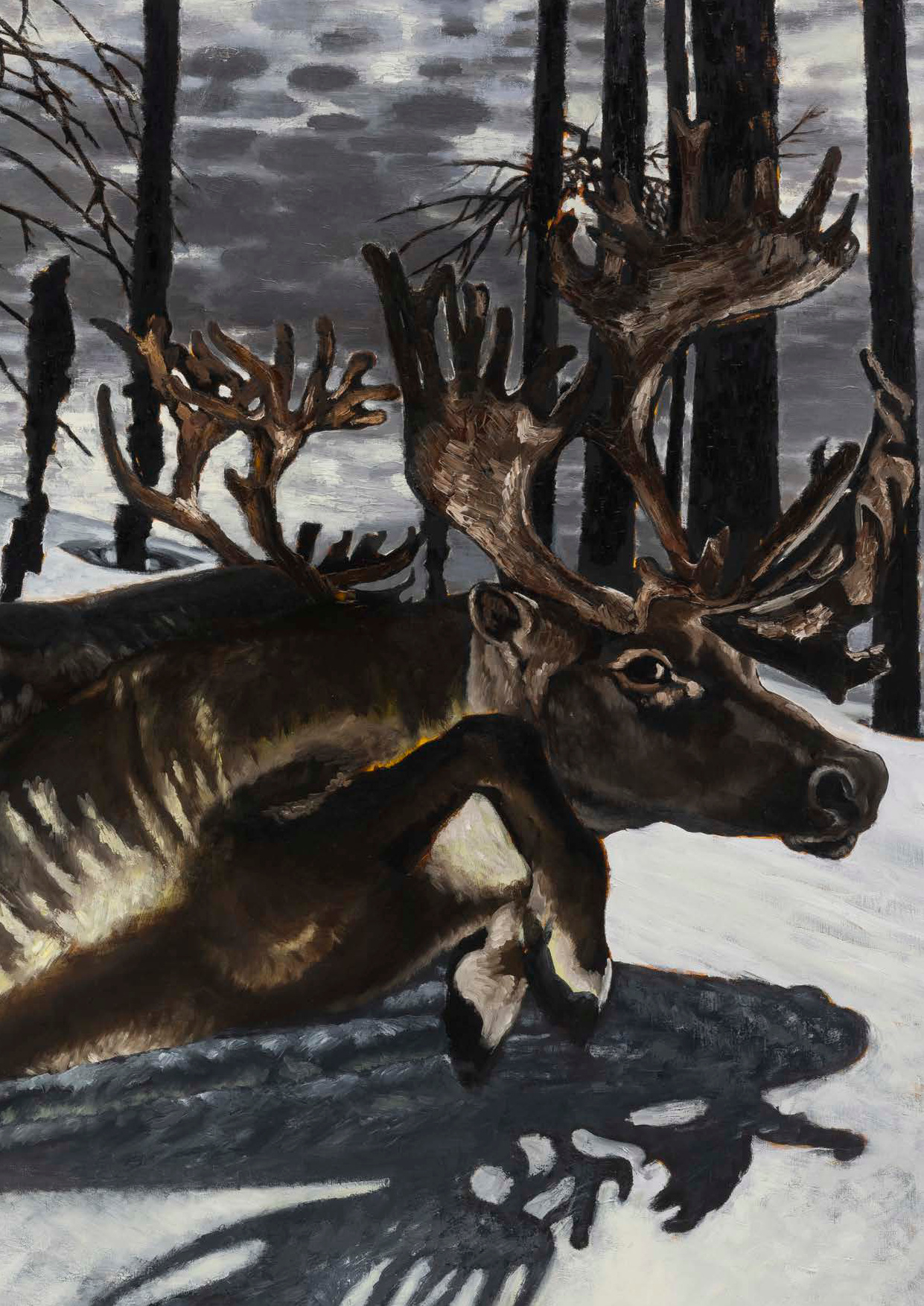
一如丹麦学者拉内·韦尔斯莱夫在《灵魂猎人》的开场,对尤卡吉尔猎人老斯皮里登狩猎伪装场景的描述i。龚辰宇的作品《伴旅》(2024),也恰如其分地呈现了这样一个狩猎的时刻:两头并排而行的驼鹿如涉水般在积雪中艰难跃走,伪装成驯鹿的猎人紧随其后悄然入局,龚辰宇借鉴马修·巴尼的影像作品《堡垒》ii中爱达荷州雪地中的背景,影像中狩猎女神狄安娜对狼的诱捕与猎杀,闪回至龚辰宇作品中游猎民族敛声屏气的一幕。在模仿与诱惑之间,艺术家将猎人定格在人与非人的中间状态。在随即展开的另一件作品《溪边的争斗》(2024)中,画面顶部麦格芬般的铁轨指向艺术家出生及成长的居所,艺术家有意将角斗中驯鹿的鹿角设定在画面中心,改造形态赋予冷暖来强化这种决裂感。多重情绪如画面底部涌动的浮冰,艺术家将游猎民族的式微与悲鸣嵌合其中,留下抑或出走,似乎这种斗争映射的不仅是驯鹿的,也是族群的。当我们暂时跨越与梦为眠的密林,乘坐蝙蝠的软翼来到尼特族(Neet)的洞穴。作品《蝙蝠的报恩》(2024)与《蝙蝠的报恩No.2》(2024)试图以双重视野呈现潜伏于特殊时期的群体性分化。如果说前者表述的是来自异族的主动供养,那么后者则显现为个体主动切断与群体的社会性关联,在自设的庇护所进入与主流轨迹和价值观背离的生存状态。此外,艺术家着意为蝙蝠赋予一重骑士的身份与属性,试图将观者一同带入小岛工作室在《死亡搁浅》iii构建的世界观之中,蝙蝠骑士如同游戏中的传奇送货员山姆,在末日景观下承担着资源供给以及将分裂的群体互联的责任。当迦楼罗在暗夜中将达尔文宣称的人类共同祖先黑猩猩捕获,由作品《两足兽与四足兽》(2024)引发的思考不仅限于岛屿法则带来的现实性挑战。在创作中,艺术家对演化而非进化观点的执行,在多元化趋向的感知中逐渐瓦解复杂现实性大厦的根基。在展览的最后,我们重新踏入牧神潘与宁芙们的居所,那些宣判为往昔的神祇经由灵魂池(Soul Pool)已然流转归位昨日的山林。牧神倚靠繁枝茂叶吹奏储存在海螺中的记忆与动响,环绕在其周身的物种也暂停追逐躲藏,在神性的庇护和馈赠下休憩享宴。如果说通过牧神,艺术家试图恢复既存于万物的节奏与韵律,在创作中抵达一种“A freedom of Pan”式的自由,那么宁芙们将神经丛与植物的藤蔓和叶脉联结,则在一种创造性的加载中弥合着对生命和生命力本身的思考。缓慢狭长的思绪在人性的尘埃中起伏沉降,生物性与精神性的双重显化构成龚辰宇创作的基因锁链。穿行于未标地的意识空间,作品成为艺术家探测灵性地景的载体,伴随着野性思维与林间风声,多重现实在一次次故事的讲述中铺展开来。
i “看到老斯皮里登前后摇摆着他的身体...毛竖着的鹿皮大衣,帽耳突出的帽子,雪橇覆盖着麋鹿的平滑的大腿,当在雪地上移动的声音特别像麋鹿发出的,这使他像一头麋鹿;但是帽子下他脸的部分有着人的眼睛、鼻子和嘴巴,手握来复枪,这使他像一个人...”
ii 马修·巴尼的影像作品《堡垒》创作于2018年,时长134分03秒,曾于2019年在UCCA尤伦斯当代艺术中心展出。
iii《死亡搁浅》是一款由小岛秀夫工作室开发,索尼互动娱乐发行的开放世界动作冒险游戏。于2019年上线。
Gong Chenyu: Animagus Curator:Zhao Xiaodan Hive Center for Contemporary Art is pleased to announce the presentation of Gong Chenyu’s upcoming solo exhibition, “Animagus”, opening at Hive Shanghai on 20 December 2024. Following “Display” (2015),
“Ice Chilling” (2018), and “Youth in the Otherland” (2022), this marks the artist’s fourth major solo exhi
bition with the gallery and reflects on Gong’s wide-ranging interest in anthropology and ethnography, as well as his profound examination of existential circumstances of humanity in the post-pandemic time. The artist’s painting practice serves as a vision that emerges from the very fundamentals of reality to reveal the ambiguous, contradictory, and perplexing core of will in human nature. This exhibition is cu
rated by Zhao Xiaodan; it is on view until 22 January 2025. The title of the exhibition, “Animagus”, a compound word invented by J.K Rowling in her Harry Potter series, refers to the shape-shifting terminology used by wizards in the subject of Transfiguration. The process of practising such an acquired power conceals many thrilling variables and challenges. This idea is introduced into this exhibition not only because the word and its origin inherently carry a certain accessibility to a mysterious and hidden world, but also because of its compatibility with the theoretical structure of Gong Chenyu’s most recent works. From forest to tundra and then to ice field, the land
scapes in the paintings rotate as if in the elaborate Hall of Mirrors, as if the artist is tracing back along Heilongjiang, his birthplace, to its upper reaches and further north into Siberia, to capture more spiritual inspiration from his ancestry. Through the study of perspectivism in anthropology, Gong Chenyu consciously constructs in his works a pluralistic cognitive system different from the anthropocentric one. In Gong’s consequent painting expe
dition, the turbulent psychological dilemmas and moral shackles of reality become his implicit motives to keep on marching. In his works, the shifting of perspectives accelerates the breakdown, diversion, and dissolution of the past perceptions of the artist who intentionally remains elsewhere, as an observer. In the process of the departure and return of consciousness and reverie, the artist’s will and ability to per
ceive the world continue to be reinforced. For Gong, the transfigured subjects in the images and the un
folding relational narratives do not only signify a fluidity in identity but that in the process of continuous commitment and withdrawal, the empirical world grounded in reality has been replaced by a conceptual one that transcends the present.
As the exhibition unfolds with Flying Carpet (2022), the layout of three doors not only expands the tem
poral and spatial dimensions of the painting, but the flowing curtain and cooling moonlight pouring onto the ground from the left window also emphasise a sudden occurrence of this moment. Tracing along the broken vase, fallen end table, and scattered feather dusters, when the viewer finally returns to the exotic flying carpet with distinctly mythical references, the maid in her socially symbolic costume and a companion furry dog in a leather bodysuit seem to be bidding the viewer farewell. However, when we shift our attention to the fringed tassels of the flying carpet, a golden cage shaded by greenery and a re
clining complete animal skeleton, they signal more unexpected information. Through a structural reset, the maid, who has ended her daytime labour, and the dog, imprisoned in the cage during the day, escape at night to break the enforced restraint on their actions. In connection, Flying Carpet is a prompt retreat from the war narrative of “Youth in the Otherland”, like a paratrooper’s quick descent into the vortex of reality consisting of the nomadic hunter-gatherer people, the NEETsi, and the Watchers. Similar to Danish anthropologist Rane Willerslev’s observation iiof the Yukaghir hunter Old Spiridon’s dis
guise in the opening paragraph of Soul Hunters, Gong Chenyu’s work Travel Companion (2024) fittingly presents such a moment of hunting: two moose travelling together wade through the heavy snow, and the hunter disguised as a reindeer quietly follows behind. Gong borrows the snowy Idaho landscape from Matthew Barney’s film Redoubtiii, in which the goddess of the hunt Diana’s trapping and hunting of wolves, echos the scene of the nomadic hunters’ cautious breath-holding in Gong’s work. Between imitation and entrapment, the artist defines the hunter as somewhere between human and inhuman. In another work that immediately follows, The Fight by the Stream (2024), the MacGuffin railroad tracks at the top of the image suggest the artist’s birthplace; he deliberately places the antlers from the reindeer fight in the centre of the image, reinforcing the sense of separation by transforming the form with warm and cold tones. Mixed emotions are like ice floes drifting at the bottom of the image, in which the artist has embedded the decline and lamentation of the nomadic people, to stay or to leave, perhaps this con
flict is not only about the reindeer but also about the community. i NEET, an acronym for "Not in Education, Employment, or Training”. ii “Watching Old Spiridon rocking his body back and forth … The elk-hide coat worn with its hair outward, the headgear with its char
acteristic protruding ears, and the skis covered with an elk’s smooth leg skins, so as to sound like the animal when moving in snow, made him an elk; yet the lower part of his face below the hat, with its human eyes, nose, and mouth, along with the loaded rifle in his hands, made him a man.“ Rane Willerslev, Soul Hunters: Hunting, Animism, and Personhood Among the Siberian Yukaghirs (University of California Press, 2007). iii Matthew Barney, Redoubt, 2018. 134’03”. The film was on view at UCCA in 2019.
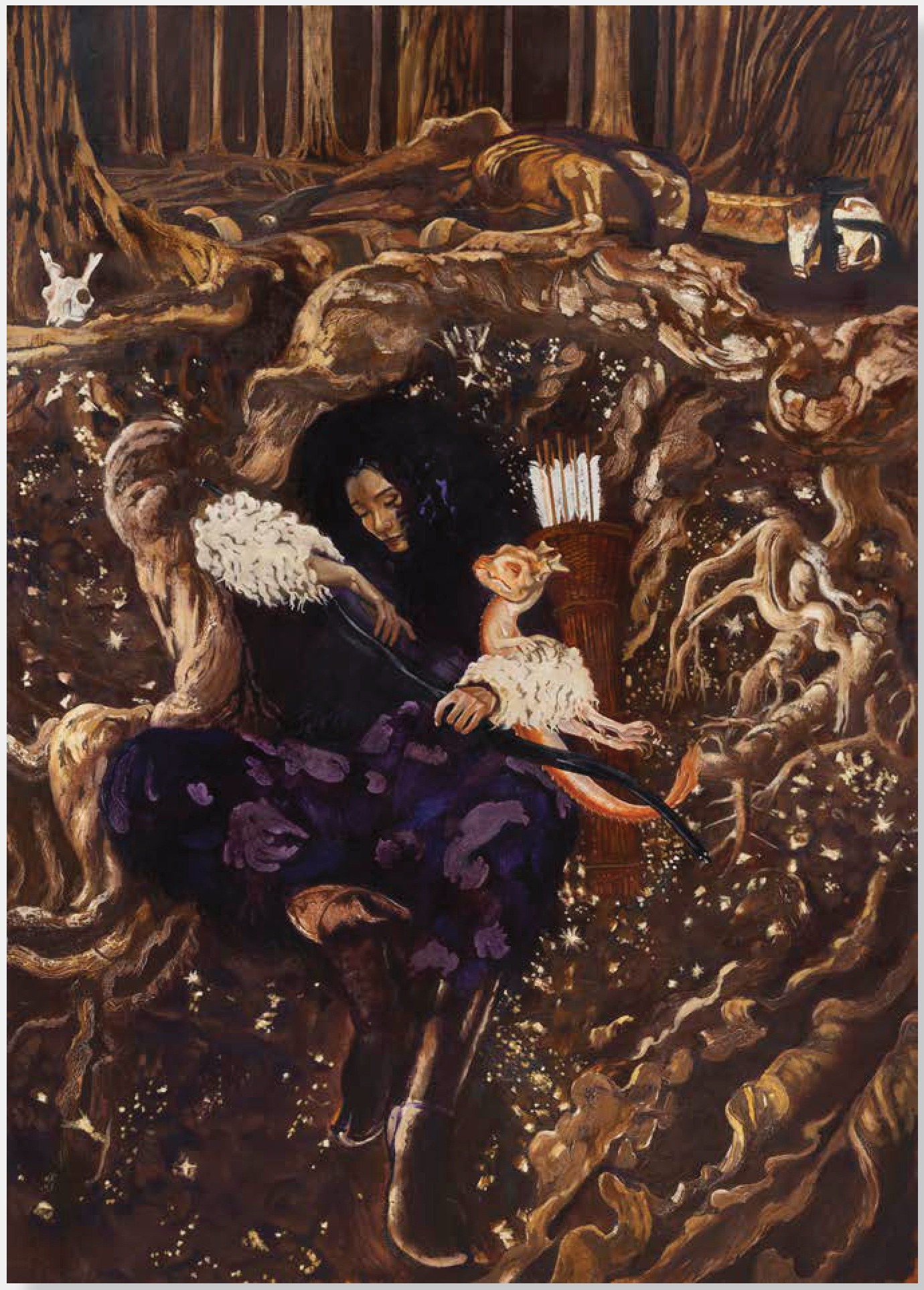
As we temporarily traverse the deep forest of reveries, we arrive at the cave of the NEET people on the flexible wings of a bat. The Bat’s Reward (2024) and The Bat’s Reward 2 (2024) attempt to present, through a double vision, the collective division submerged in a special period of time. If the former ex
presses the active supply from the outsider, the latter reveals the individual’s voluntary severance of social ties with the collective, entering a state of existence that deviates from the prevailing trajectory and values in the self-established sanctuary. Meanwhile, the artist has deliberately granted the bat the identity and characteristics of a knight, in an attempt to immerse the viewer in the world of Death Strandingi, a video game developed by Kojima Productions, where the bat-knight is like the game’s legendary deliveryman Sam, shoulders the responsibility of supplying resources and reconnecting the divided community in the post-apocalyptic landscape. When Garuda captured the chimpanzee, Darwin’s claimed collective ancestor of humanity, the reflection provoked by Bipedal and Quadrupedal Beasts
(2024) extends beyond realistic challenges imposed by island rule. In his practice, the artist’s execution of a metamorphic rather than evolutionary perspective gradually dismantles the foundations of the com
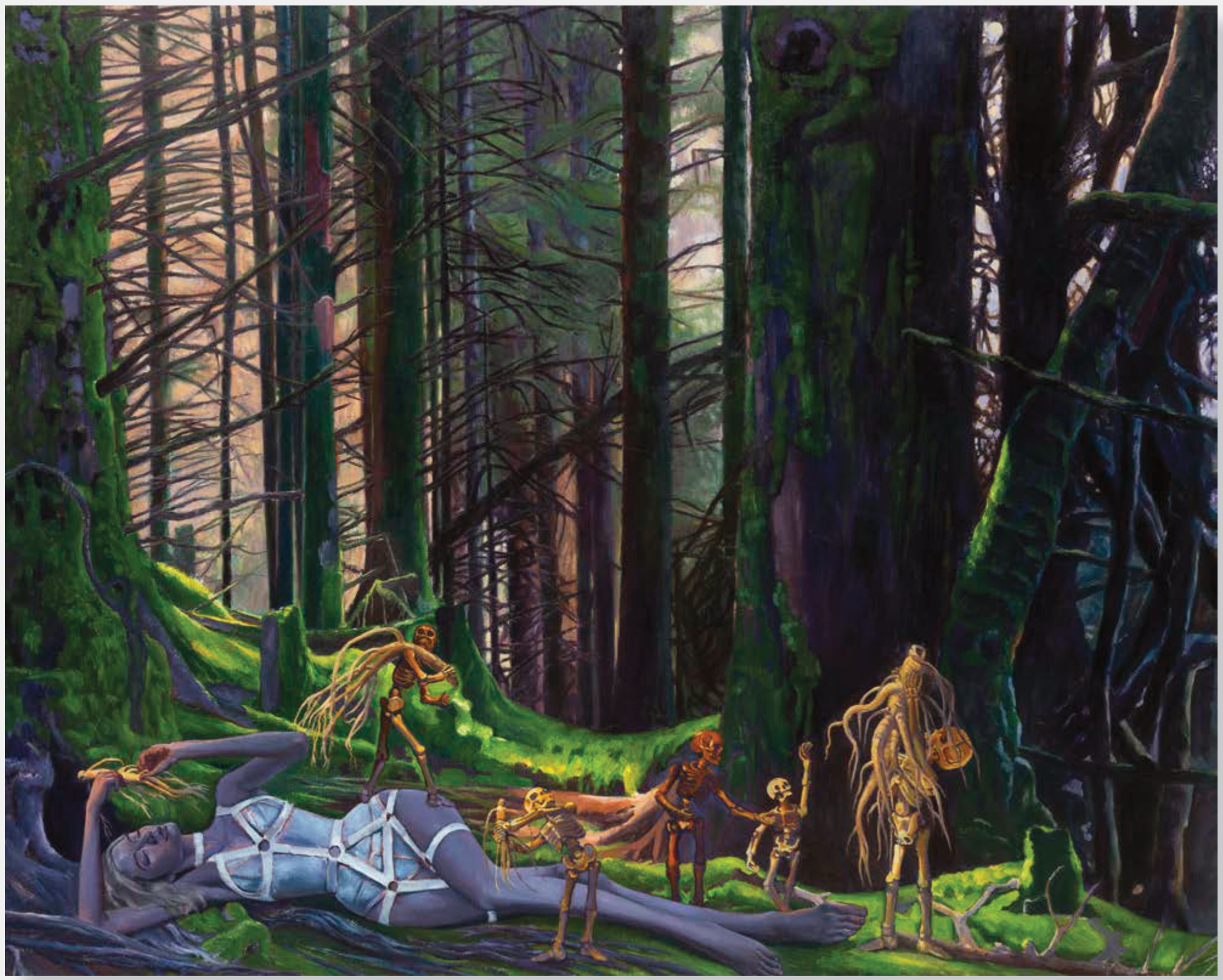
plex reality in the perception of pluralistic tendencies. At the end of this exhibition, we re-enter the residence of Pan the god of shepherds and nymphs, where the gods condemned as the past have returned to the forests of yesterday through the Soul Pool. Lean
ing on lush foliage, the god of shepherd plays the memories and sounds stored in the conch, and the species that surround him pause their chase and hide, resting and enjoying the feast under the shelter and blessing of divinity. If through Pan, the artist attempts to restore the rhythm that exists everywhere, achieving “a freedom of Pan” in his practice, nymphs connecting the nerve plexus with the vines of plants embody the contemplation of life and its vitality in a creative process. As slow and leisurely thoughts rise and fall with the dust of humanity, the manifestation of biology and spirituality becomes the genetic chain of Gong Chenyu’s practice. Passing through the conscious space of unmarked land, the artist’s works become a vehicle for him to explore the spiritual landscape, and along with wild thoughts and the wind in the woods, multiple realities are unfolded in the process of narration. i Death Stranding is an open-world action, adventure game developed by Kojima Productions and published by Sony Interactive Enter
tainment. It was first released in 2019.
参展艺术家Artists
作品