梦十夜
展览信息
前言Introduction
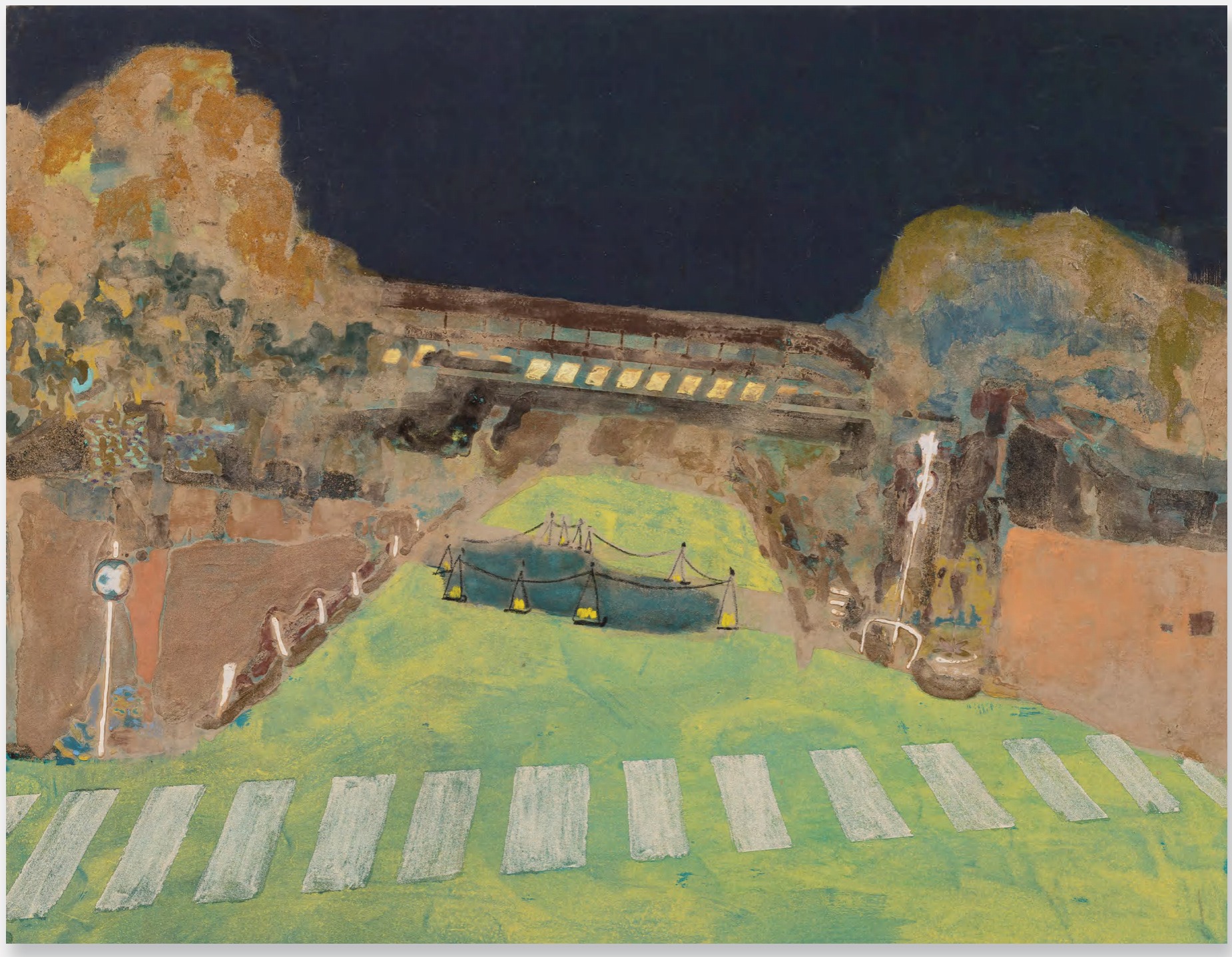
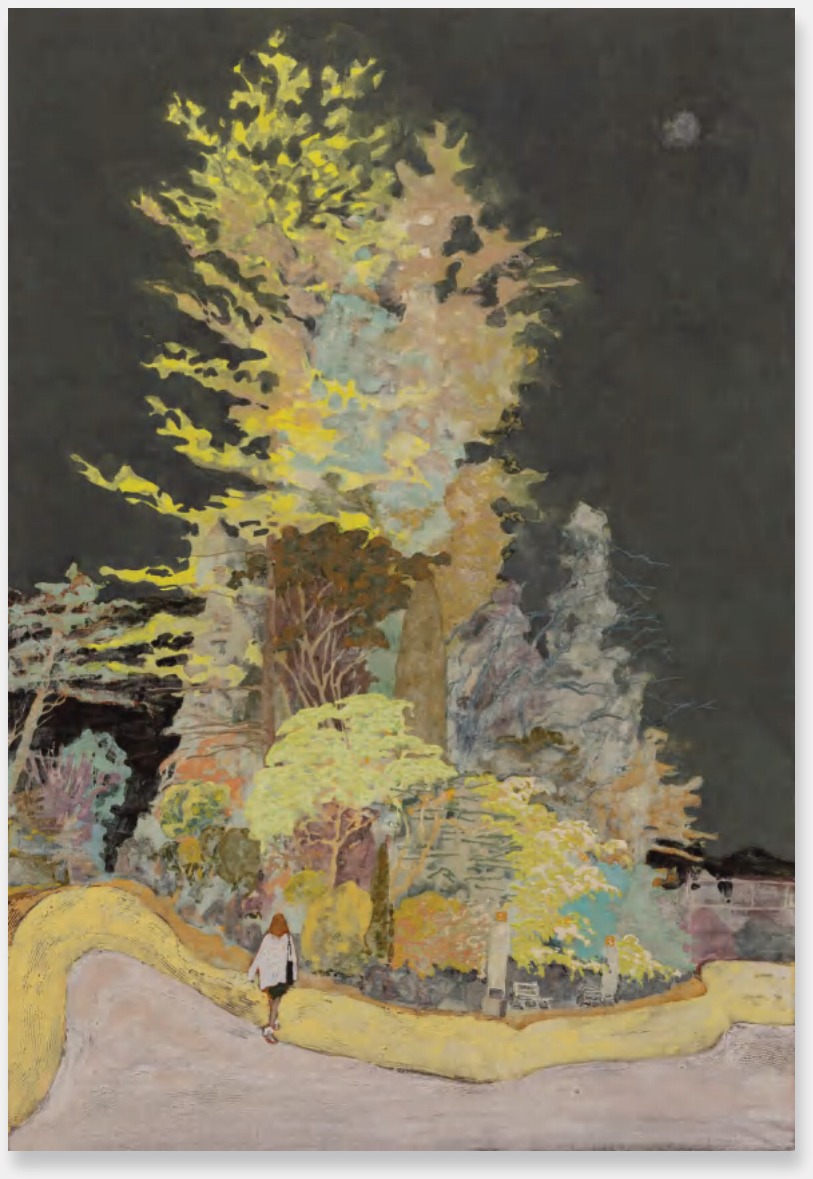
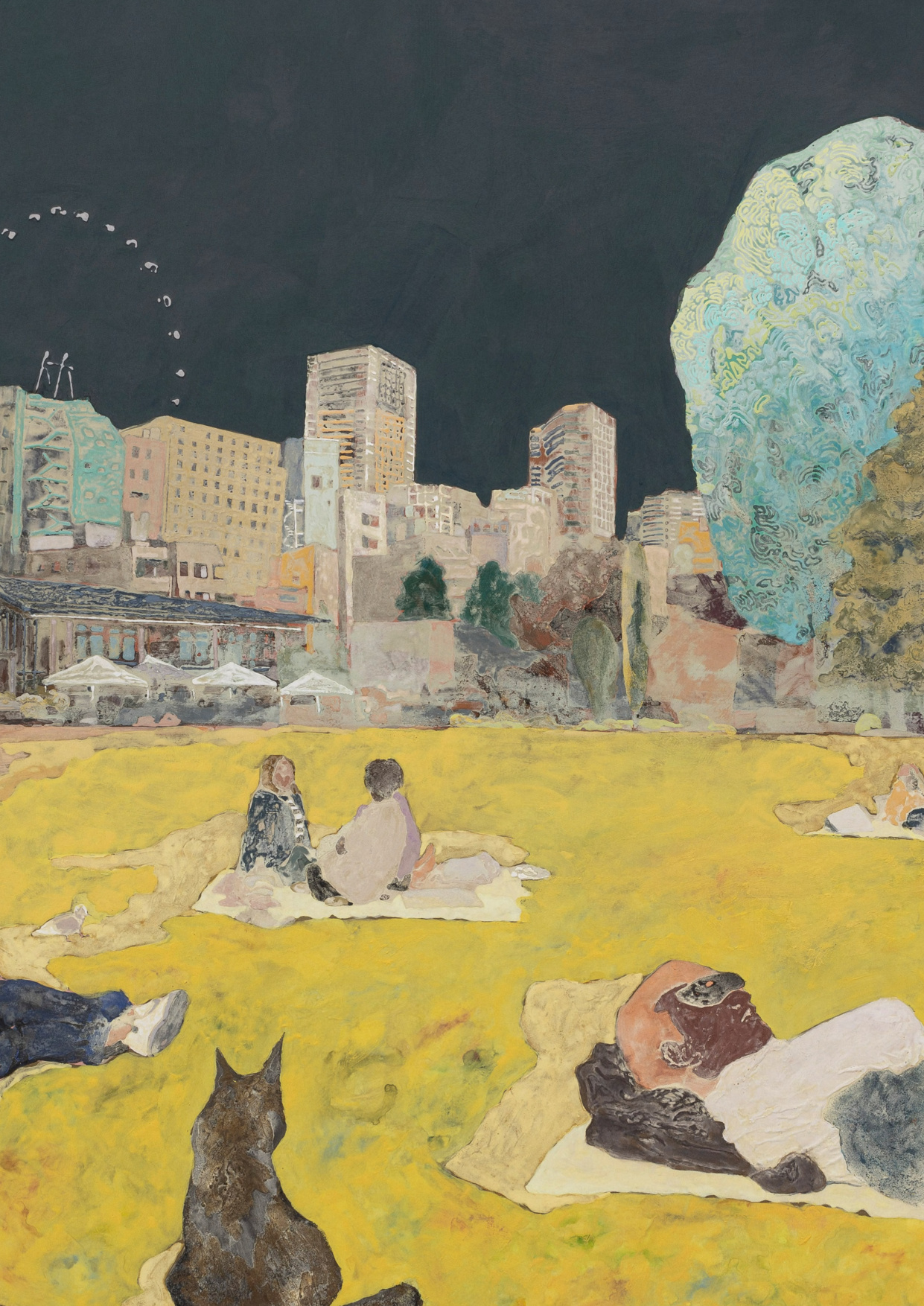
与此同时,由画中重屏的多元构筑,到空间窥视的戏剧经营,再到卷轴、屏风等空间性媒介的应用,空间营造的实践构成了艺术家文化基因的显性表征。而坡道,作为他空间叙事的核心语素,又在其艺术实践中展现出多重隐喻维度。这既是一处真实可触的物理空间,又是个体与集体互动,并由此产生不同“情动”体验的公共场域。陈天逸通过俯仰视角的切换以及景观的错置,使得坡道走向与景物相悖、画面时态与现实时空背离,并借此制造出了一处处不定形与未定性的平滑空间。在此空间内,相熟的景物与异变的文化得以共生,陈天逸以连续性的残留有现实世界结构的异梦,勾连起新旧记忆中相熟的锚点,由未历风景的乡愁中不断提炼个体身份的认同。艺术家的目的并不在重建原地,而是以动态的记忆生态系统邀请观者进入,个人记忆与集体记忆在此糅合,自传式的叙事通过口述等框架获得意义,并最终在记忆共享的机制中编织一场场集体的幻梦。这既是“失去的整体性”的回响,又是现代性语境下普遍的精神症候。
1. 梅洛-庞蒂认为,感知者与被感知者同时从属于“同一肉身”,它将我们的身体、他者的身体、和世界中的物交织在一起,将我们包裹在一个还不存在主客体之分的“原生存在”的场域之中。
2. 德勒兹在《千高原》中指出“情动”是身体潜能与外界互动生成的强度流变,是前个体的生命力量,强调动态生成而非静态情感状态。
3. 普鲁斯特在《追忆似水年华》中建构的感官记忆范式,特指特定物象触发无意识记忆涌流的现象。
4. 斯宾诺莎将人体同外界的身体发生感触,并由此产生情感的过程称为“身体的感触”。
Chen Tianyi:
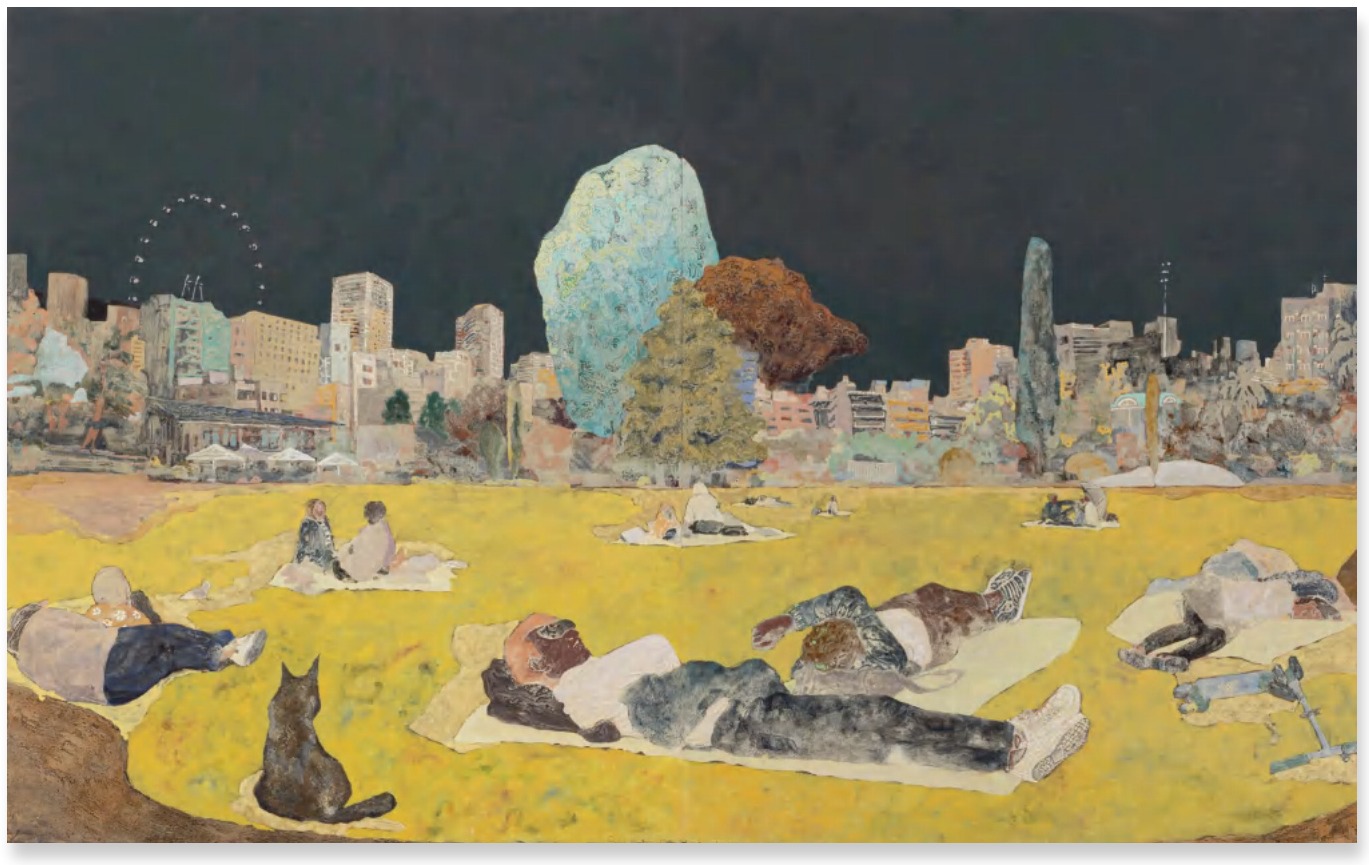
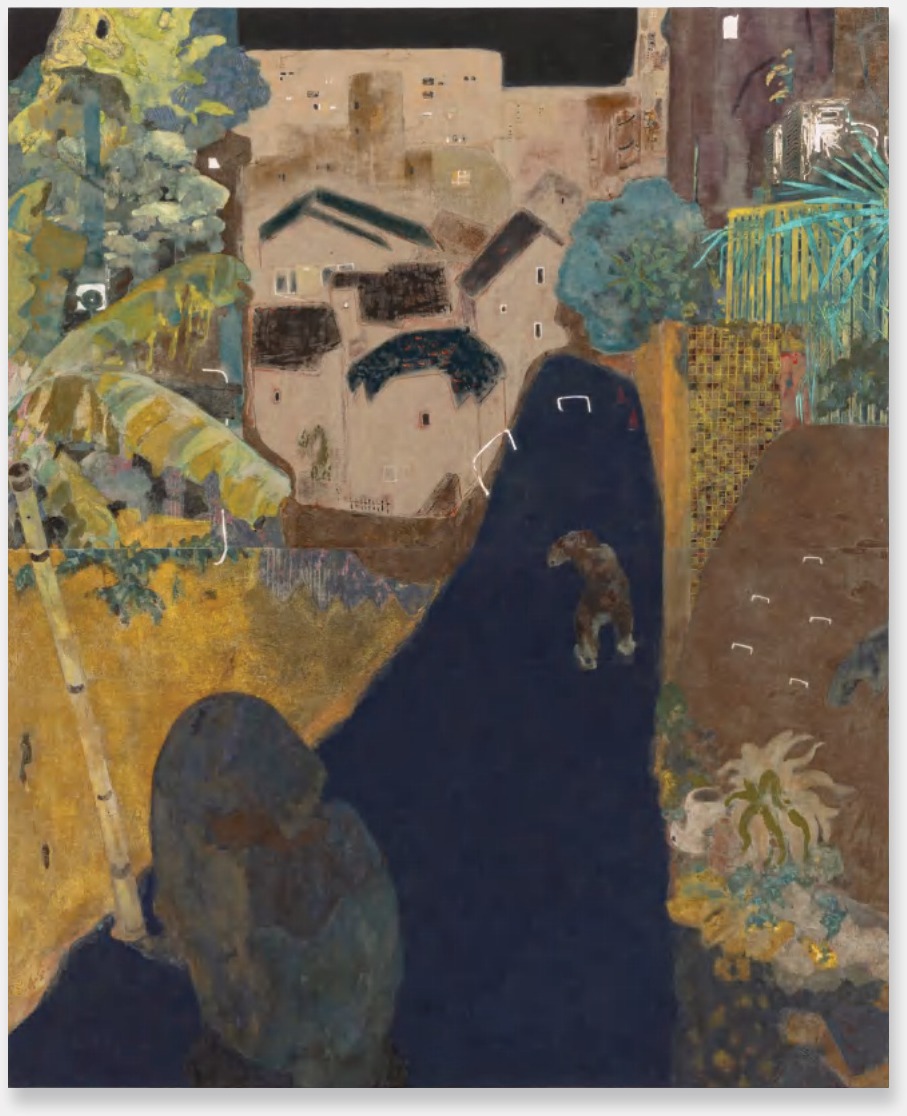
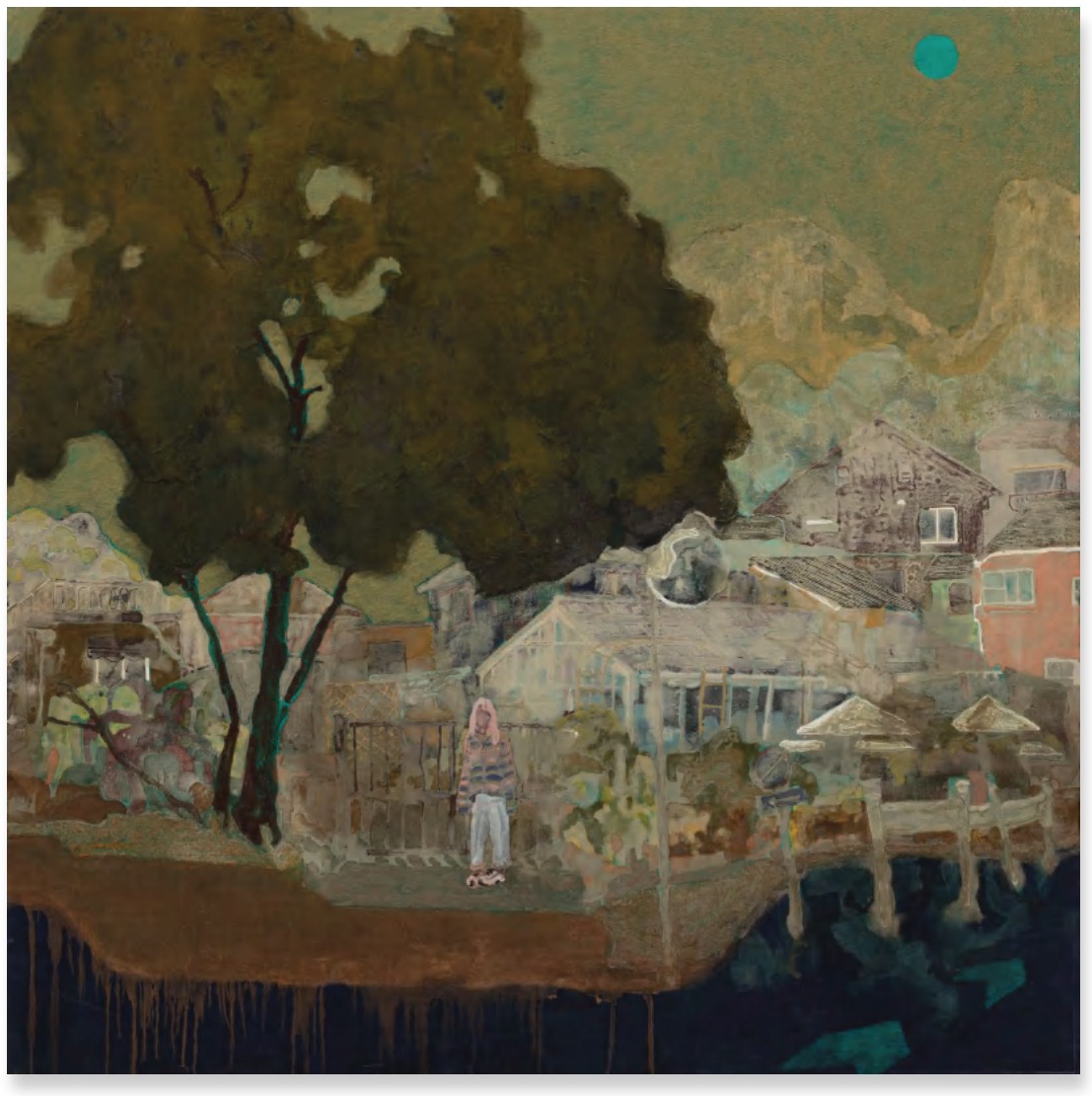
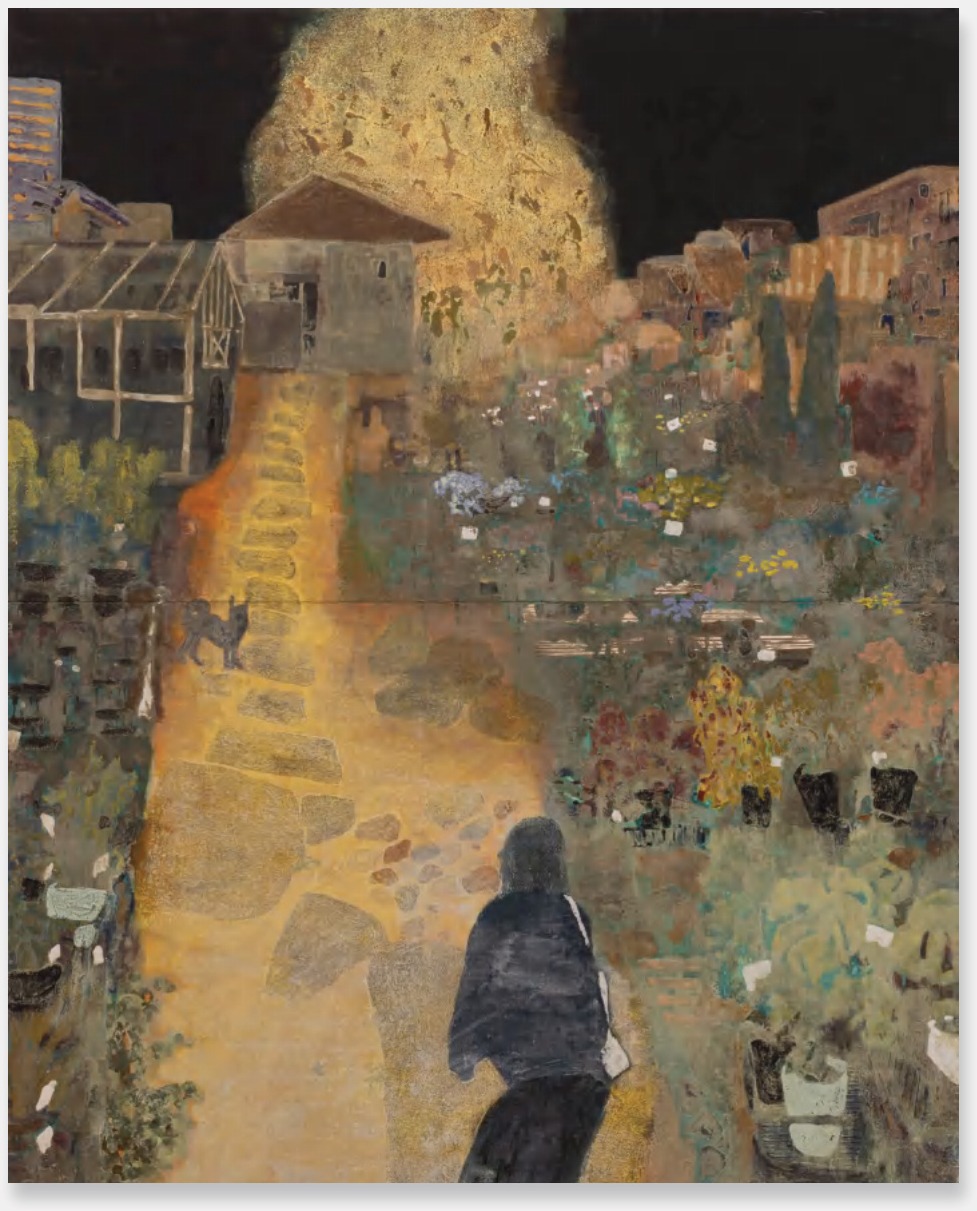
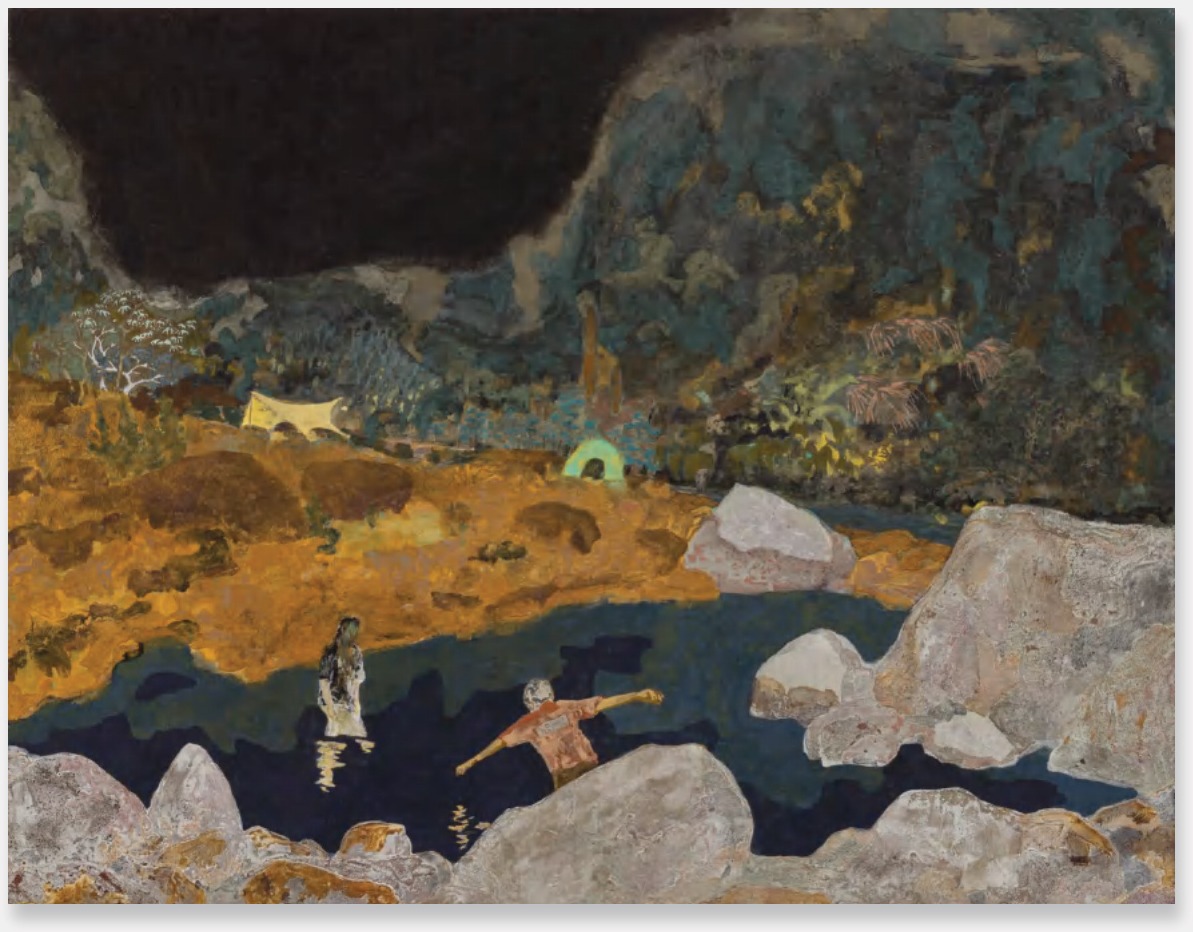
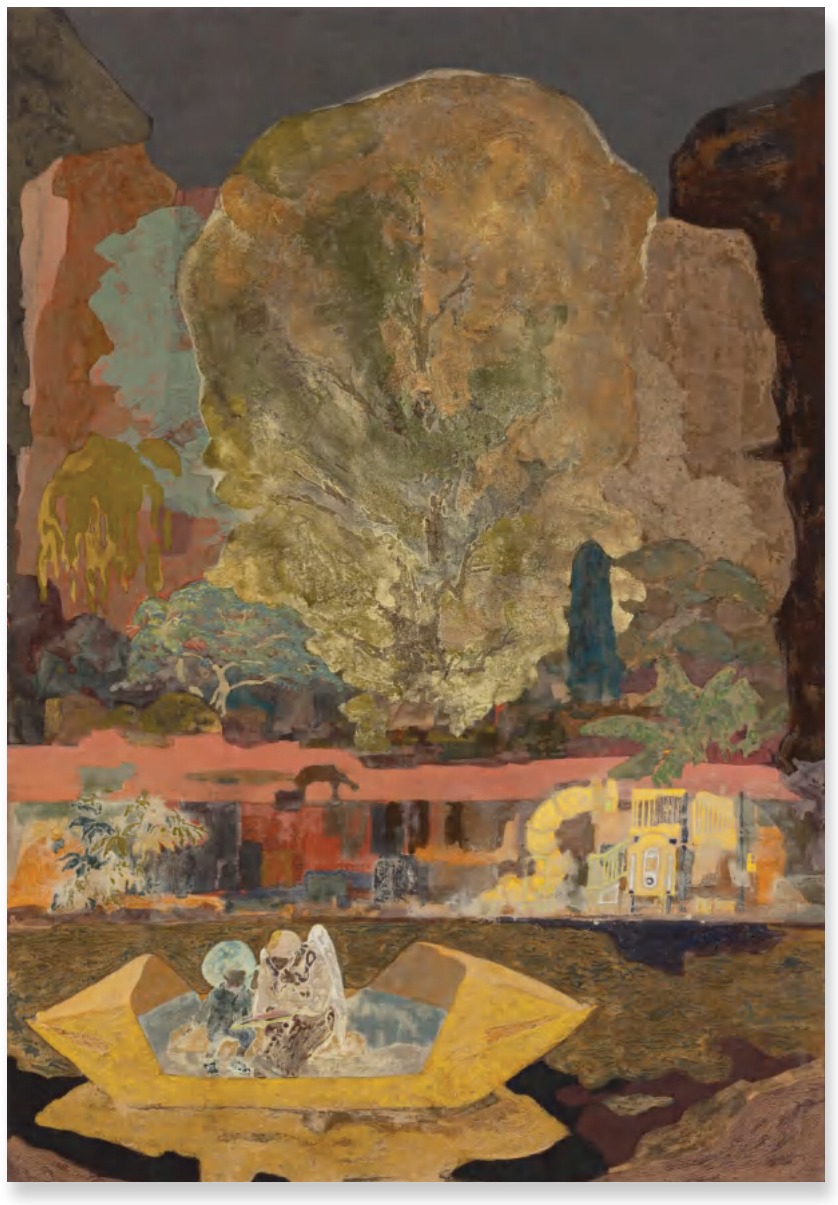
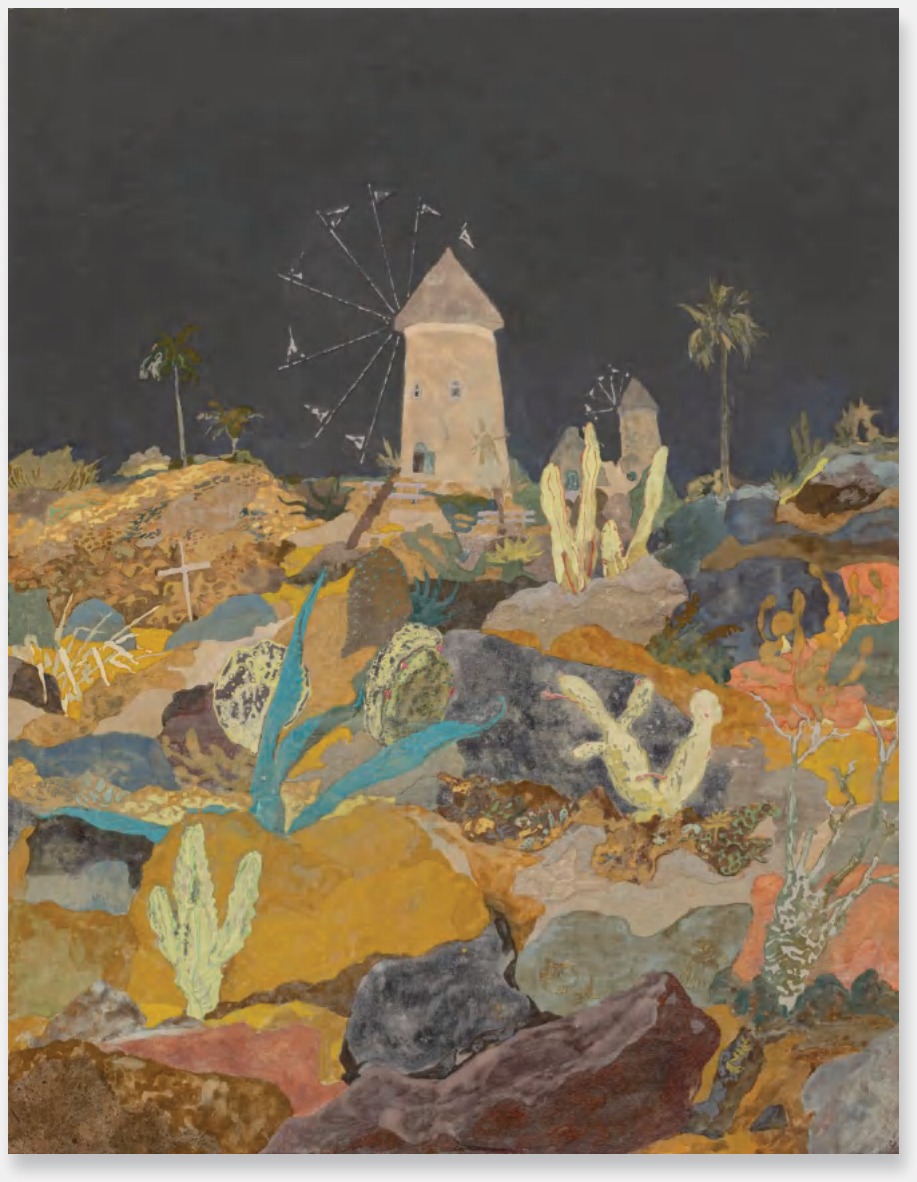
As I Walked Out One Evening Curator:Lin Shengbing Hive Center for Contemporary Art is pleased to present artist Chen Tianyi’s first solo exhibition, ‘As I walked out one evening’, opening on 26 April, 2025, at Shanghai’s Hive Becoming space. This exhibition focuses on a series of paintings from the artist’s recent practice. The exhibition is curated by Lin Shin-
gling, and will be on view until 13 June. Dreams are the gateway to the real order, a world of perfection that departs from reality. As the Jap-
anese word '夢中になる' signifies, when the consciousness becomes absorbed in the vortex of preoccu-
pation, the boundaries of reality are shaken, and this intermediate realm between dream and reality serves as the liminal space in which one learns to engage with the world. This is where Chen Tianyi’s practice is grounded, in his sketches of foreign landscapes, especially the streets and lanes of his To-
kyo residence. In particular, midnight remains his window of inspiration - both a moment of ambigu-
ity where tenses and identities intersect, and a time of vulnerability where the subconscious breaks through its monitoring mechanism. Following the physical displacement and migration of the body, along with the disconnection of cultural ties and the reconstruction of identity, the artist is compelled to rediscover new coordinates in the ‘interweaving’1 with the world. Through symbolically embedding structures of familial memory, the artist collects and assembles fragments of identity-related histories among scattered technological mediums and cultural apparatuses, and in turn, weaves relational iden-
tities into the narrative structures through inhabiting mnemonic ecological niches, thereby creating the cultural trajectories of memory ecologies. What emerges from this identity demarcation system is the diversity of relationships intertwined in life and the different desires that are trapped in between. The Chinese exhibition title ‘Ten Nights of Dreams’ refers to an eponymous collection of prose poems written by Natsume Soseki. In his book, Netsuke transforms a dream into an allegory, borrowing mi-
raculous yet not inaccurate ravings to build a labyrinth of mental images existing in the gap between reality and fiction, which, in the folds of the grotesque narrative, provoke philosophical refections on the nature of love and desire, the trembling loneliness of existence, and the callousness of interper-
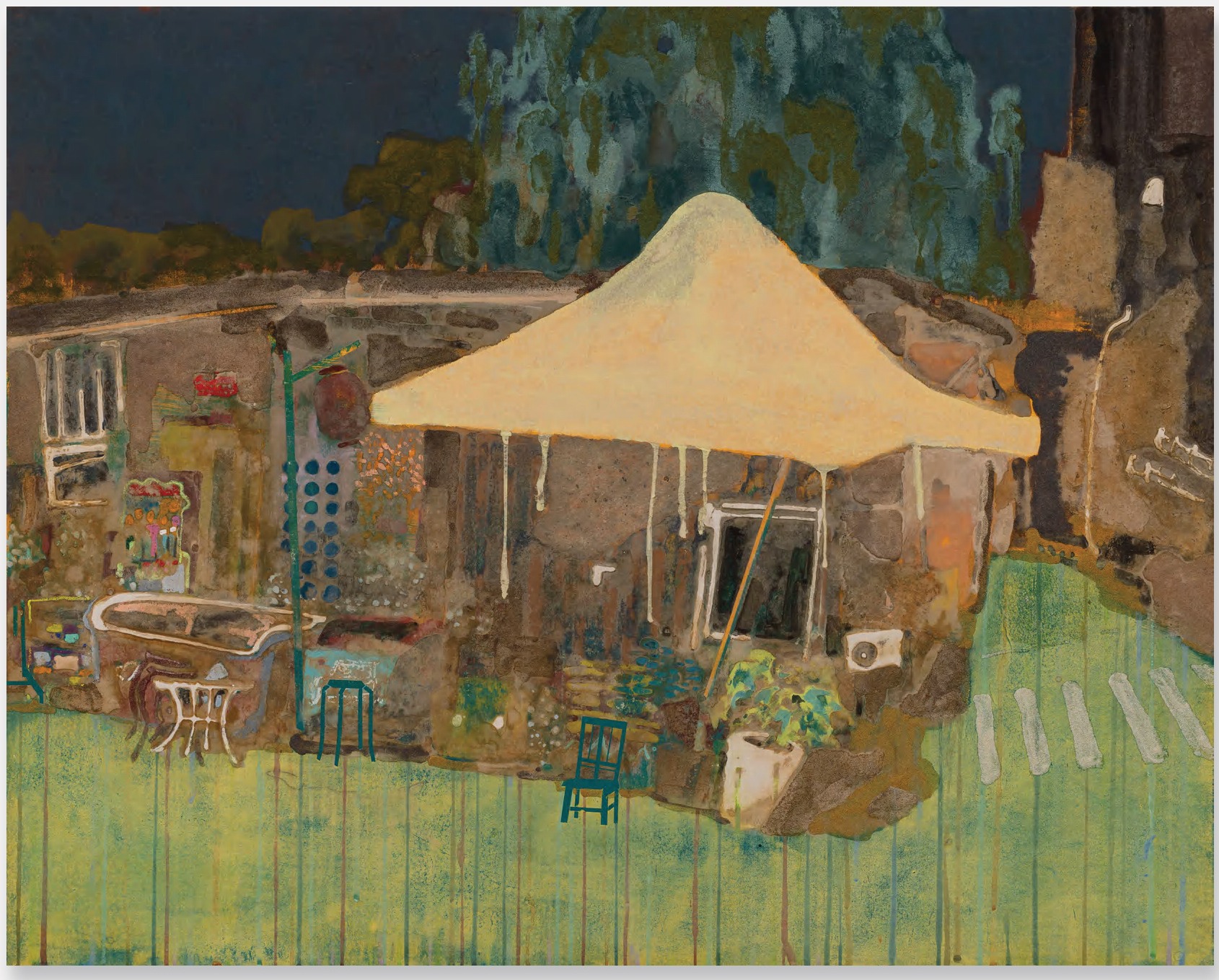
sonal detachment. This way of composing a work, which encapsulates an inner core about ethics with a mystical façade, corresponded to Chen Tianyi’s practice. However, in the illusory dreams that the latter weaved, Chen incorporates additional experiences of reality and structural residues of real-world memory. Though the concentration and displacement of encoded desires, the artist depicts foreign landscapes that are unconsciously processed to both reveal strangeness and yet imply nostalgia. In
latter weaved, Chen incorporates additional experiences of reality and structural residues of real-world memory. Though the concentration and displacement of encoded desires, the artist depicts foreign landscapes that are unconsciously processed to both reveal strangeness and yet imply nostalgia. In this enclave he created, space is not an objective vessel, but a field of possibilities for physical action. Time, rather than a physical uniformity of passage, becomes a ‘retention-protention’ structure in the bodily experience. Chen’s dynamic topology of ‘interweaving’ the body, consciousness, and the world establish a network of ‘affect’2 between the palpable physical space, coarse mineral pigments, and diverse images of cultural identity, while reinforcing them into a visible tactile field, completes the rec-
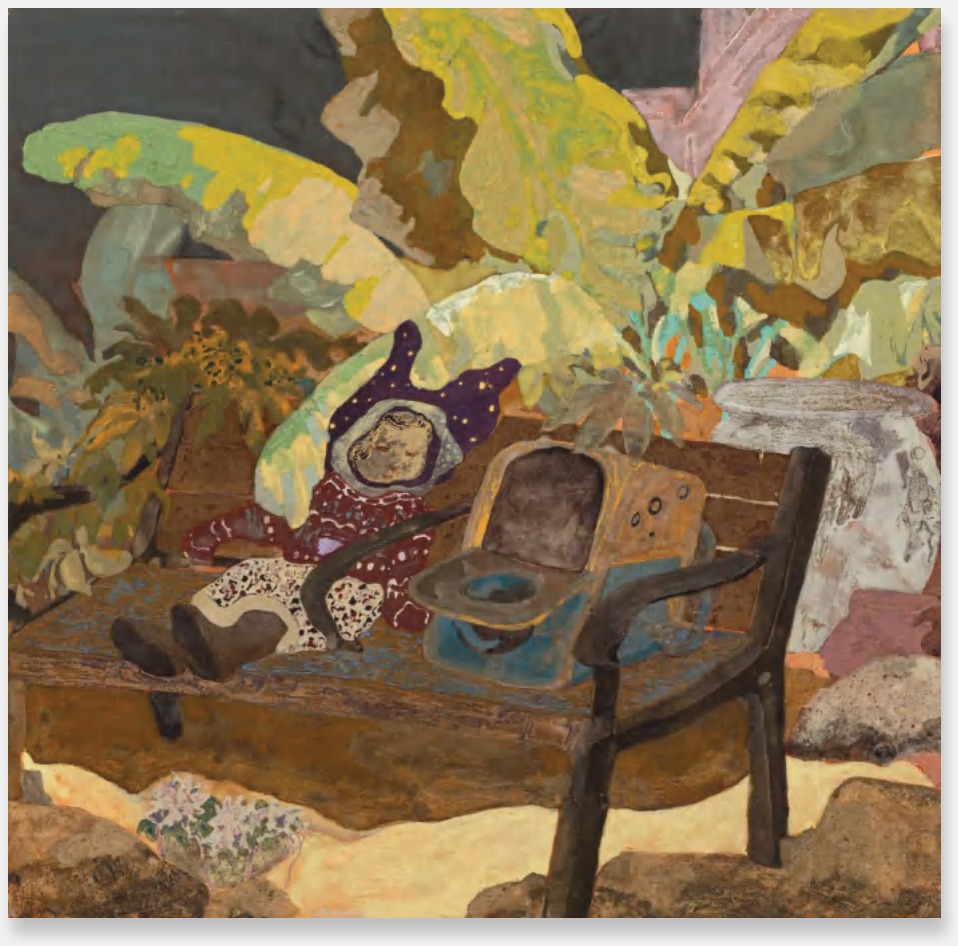
onciliation of traumatic memories resulting from cultural dislocation and triggers different ‘Madeleine moments’3 in the interaction with the viewers. One thing worth mentioning is that Chen is evidently influenced by East Asian literature. Be it the fragmentary prose or a narrative, the tension lies in the dialectical unity between individual falsification and intrinsic reality, in which the artist achieves the construction of identity by means of sincere idle talk. Here, the material does not remain just a medium, but also a co-conspirator of ‘affect’. The decision to choose and transform mineral pigments is a crucial aspect of Chen Tianyi’s practice. This is both derived from his cultural memory constructed through familial narratives and closely con-
nected to his exploration of embodied cognition. By establishing an isomorphic relationship between mineral sedimentary structures and memory mediums, the artist transforms his creative practice into a movement of difference and repetition. This process of materialising bodily experience corresponds to the productive nature of ‘affection of the body’4. Regardless of layering or scraping, when engaging with the surface of the pigments, his physical movement is both an inscription of memory traces and a reverse-construction through tactile feedback. This bilateral mechanism turns the work into a hybrid, where materiality and spirituality are mutually translated at the interface and continue to evolve. Ad-
ditionally, in a time when digital technology is increasingly deconstruction material reality, the material existence of mineral pigments serves as an embodied anchor to counter the virtualisation of memory. Depending on the diachronic processing of the material, Chen transforms the aura into a topological space of memory with tactile depth, thus realising the contemporary translation of cultural memory and identity under the material critical state of the medium. In the meantime, from the multi-faceted construction of the double screen in paintings, the theatri-
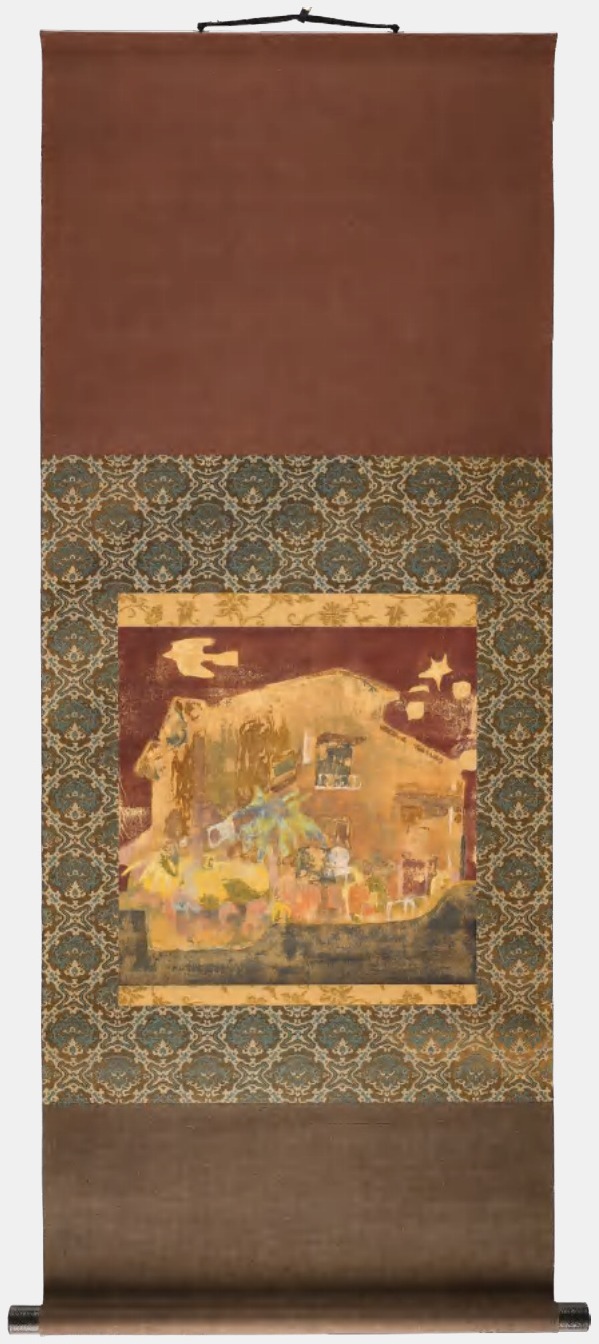
cal manipulation of spatial voyeurism, to the adoption of spatial mediums such as the scroll and the folding screen, the practice of space construction represents an explicit manifestation of the artist’s cultural identity. The core element of the artist’s spatial narrative, the ramp, in turn, unfolds multiple metaphorical dimensions in his practice. The ramp is both a tactile physical space and a public field where individuals interact with the collective, thereby creating different ‘affect’ experiences. Chen has created an amorphous and undefined ‘smooth space’ by switching the viewing angle from the top to the bottom and dislocating the landscape so that the direction of the ramp contradicts the scenery
while the temporal state of the image deviates from the reality of time and space. In this space, famil-
iar sceneries and shifting cultures are able to coexist in which Chen connects familiar anchors in old and new memories with the continuity of bizarre dreams remnant of the real world, and continuously reflects on individual identities from ‘nostalgia of unexperienced landscape’. Rather than reconstruct-
ing the original place, the artist invites the viewer to enter the dynamic memory ecosystem, where indi-
vidual and collective memories are combined, autobiographical narratives acquire significance through dictation and other structures, and ultimately weave a collective dream in the mechanism of memory sharing. This is both a response to the ‘lost wholeness’ and a common psychological symptom in the context of contemporaneity.
1. “… Merleau-Ponty affirms the cobelonging of the sentient and the sensible to the same ‘flesh’ that interweaves our body, the other’s body, and the things of the world, and that envelopes them in a hori-
zon of ‘brute’ or ‘wild Being’ in which the subject and the object are not yet constituted.”
2. Gilles Deleuze, in A Thousand Plateaus, points out that ‘affect’ is a flux of intensities generated through the interaction between the body’s potential and the external world. It is a pre-individual life force that emphasizes dynamic becoming rather than a static emotional state.
3. The sensory memory paradigm constructed by Marcel Proust in In Search of Lost Time specifically refers to the phenomenon in which a particular object triggers a surge of involuntary memories.
4. Baruch Spinoza refers to the process by which the human body comes into contact with external bodies and thereby generates emotions as the “affection of the body.”
参展艺术家Artists
作品