展览信息
前言Introduction
界限消失公共赋予的“理所当然”与个体体验到的“荒诞不经”剧烈碰撞,支撑我们认知的“界限”倒塌。我们被迫直面存在的或然性本质。
“界限消失”的瞬间。并非外部的灾难,而是内在认知的剧震。面对意义的废墟,艺术家往往有责任一次次呈现自我的“界限消失”,呈现自己独立而真实对抗混沌的辩证法。冯嫣关注公共意义与失序之间的张力。通过感官体验梳理个体经验。孙珂则聚焦于物质与记忆的转化,隐喻意义本身的脆弱与重构的可能。苏昱铭以光谱作序分解界限,温和动能坚定对抗。马小萌以充满错位与疏离的影像语言,揭示日常表象下的裂隙。
The intense collision between the "taken for granted" bestowed by the public and the "absurd" experienced by individuals has led to the collapse of the "boundaries" that support our cognition. We are forced to confront the probabilistic nature of existence. The moment when "boundaries disappear". It is not an external disaster, but a dramatic shock in internal cognition. In the face of the ruins of meaning, artists often have the responsibility to repeatedly present the "disappearance of their own boundaries", and to present their independent and true dialectics against chaos. Feng Yan focuses on the tension between public significance and disorder. Sort out individual experiences through sensory experiences. Sun Ke focuses on the transformation of matter and memory, the fragility of metaphorical meaning itself and the possibility of its reconstruction. Su Yuming decomposed the boundaries with the sequence of the spectrum, and the gentle kinetic energy firmly resisted. Ma Xiaomeng, with her visual language full of dislocation and estrangement, reveals the cracks beneath the surface of daily life. Dissolving Boundaries

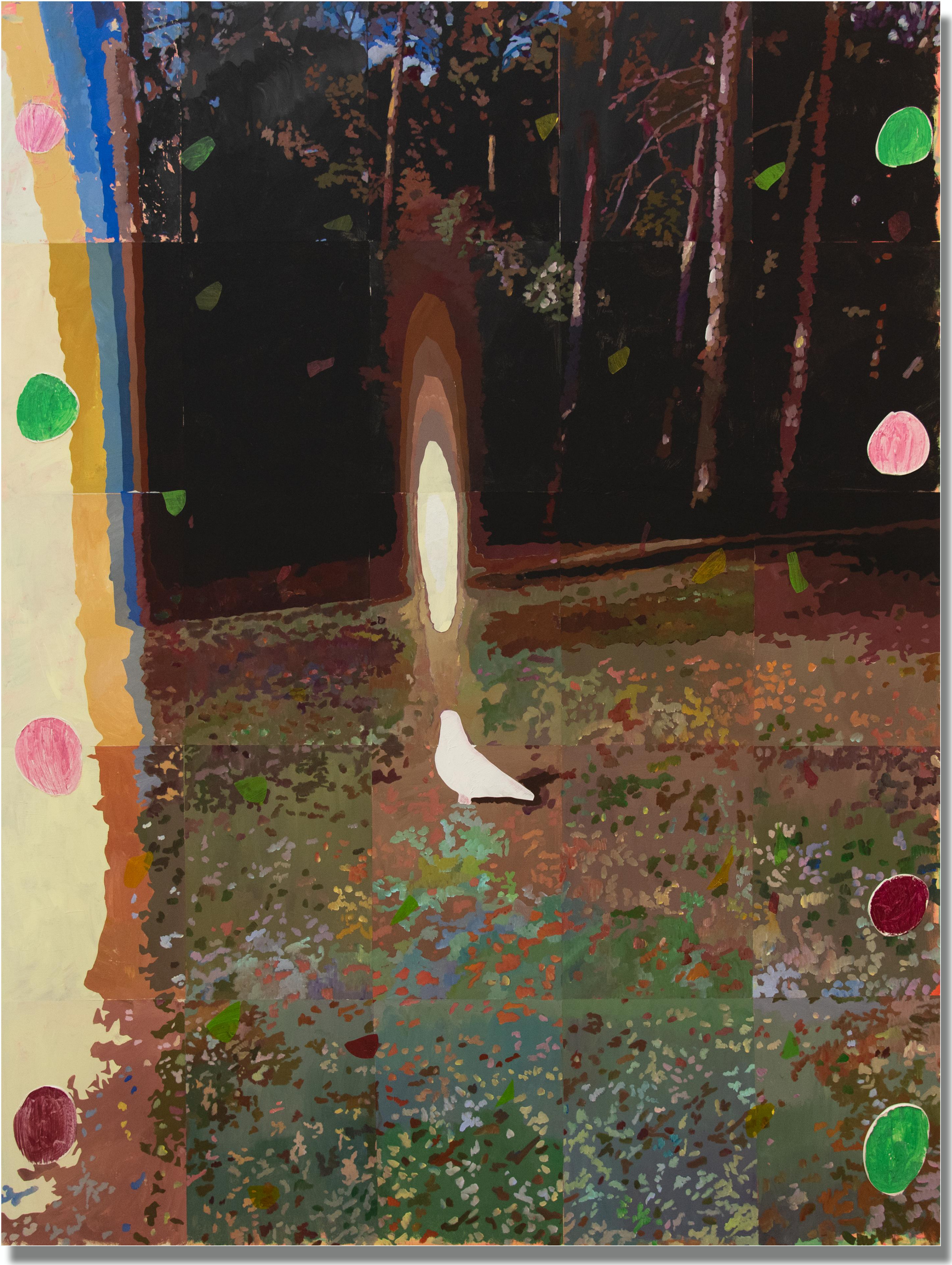
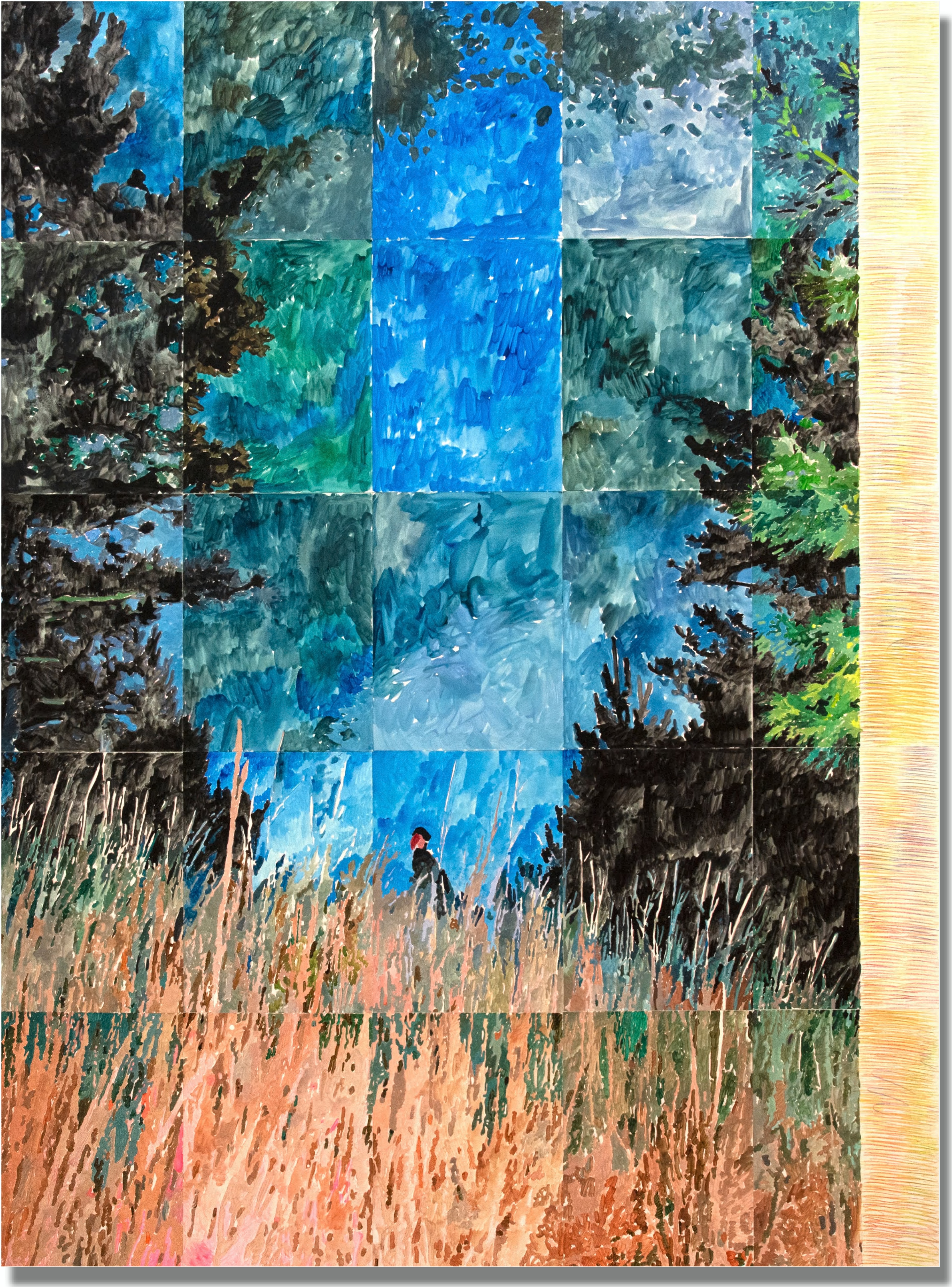
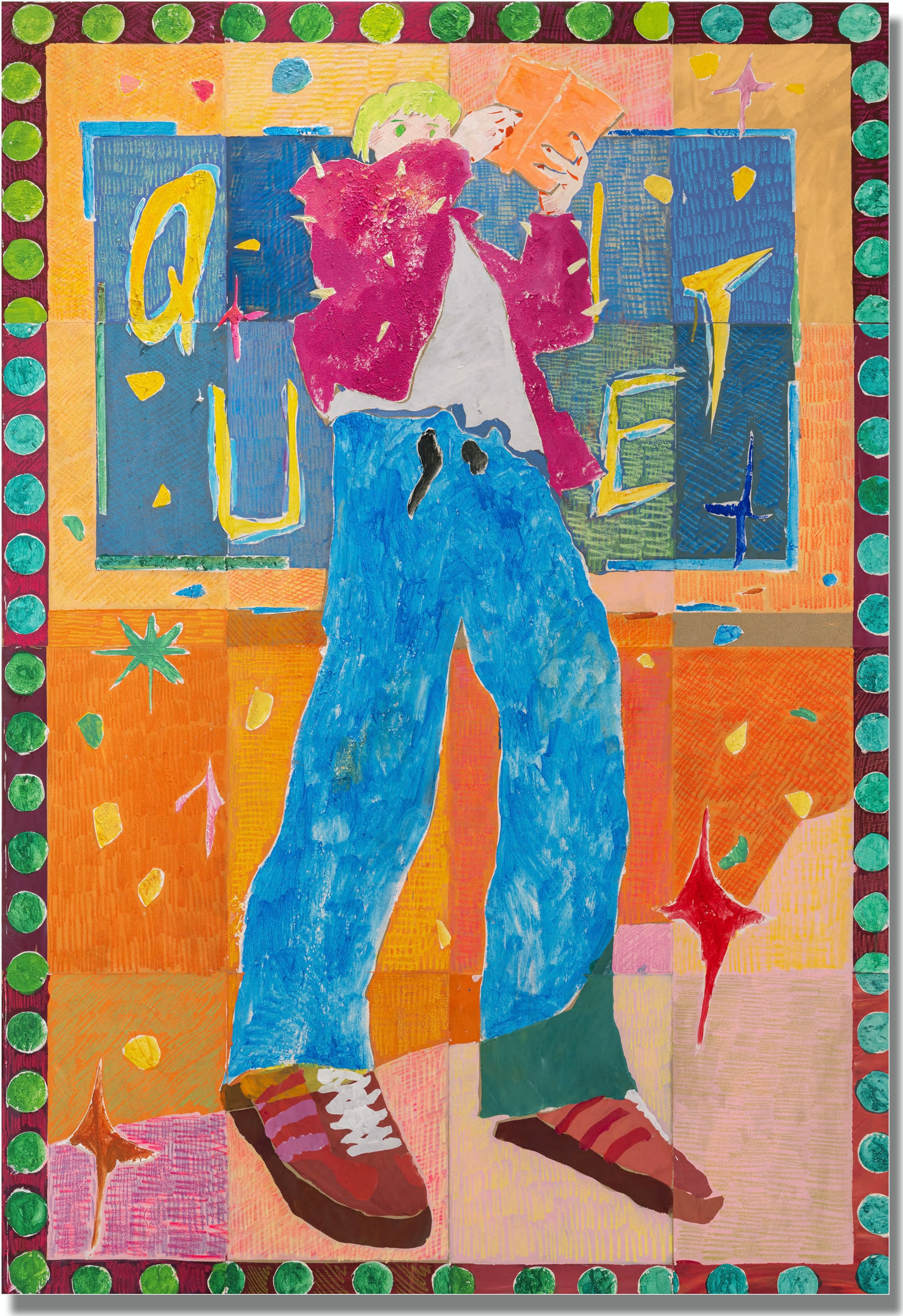
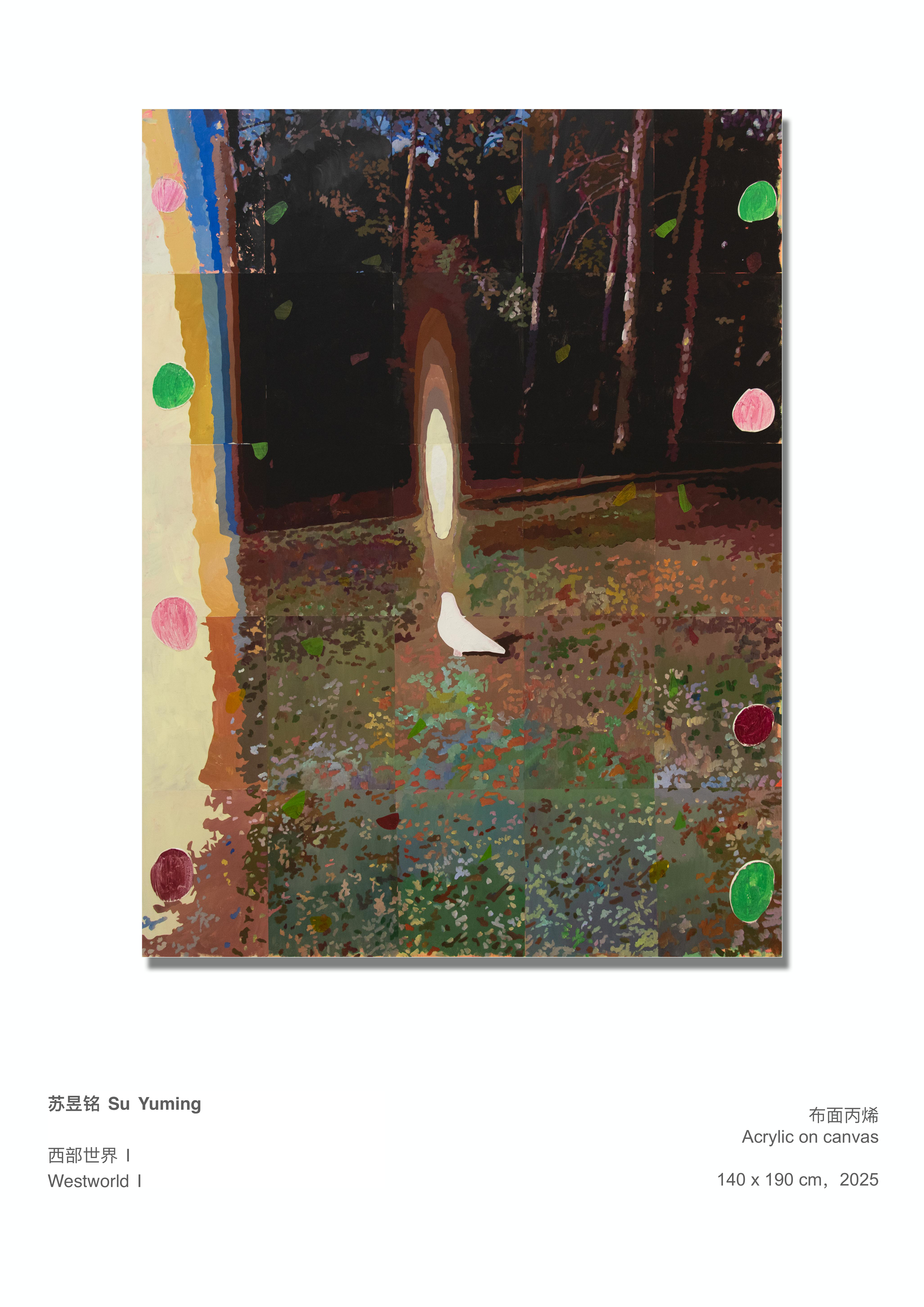
苏昱铭的作品以“光暗共生”的辩证语言,构建了一场对立又交融的流动剧场。在这次展出的作品中,将白鸽在隐蔽的菲林树荫中,人物置于破碎的光影交界处,画面中“故障美学”的电子频闪、麂皮质感的磨砂肌理,恰似道德临界点的视觉显影。荧光字符与漂浮的异色碎片,暗示技术时代善恶选择的偶然性。他笔下孤独个体,在黑暗里凝视微光,又在光明中投下暗影,揭示破坏性与建设性本是一体双生。这种莫比乌斯环般的循环,如石版画“步骤严谨却接纳划痕”的创作哲学,当算法解构了传统道德框架,邀请观者直面混沌,在灰度光谱中重寻向善的能动。
Su Yuming's works, with the dialectical language of "coexistence of light and darkness", construct a mobile theater that is both opposing and integrated. Among the works on display this time, white doves are placed in the shade of concealed film trees, and figures are situated at the fragmented junction of light and shadow. The electronic flickering of "fault aesthetics" and the matte texture of suede in the picture are just like the visual manifestation of the moral critical point. Fluorescent characters and floating fragments of different colors suggest the contingency of the choice between good and evil in the technological age. The solitary individual in his works gazes at the faint light in the darkness and casts shadows in the light, revealing that destructiveness and constructiveness are inherently twin. This Mobius ring-like cycle, like the creative philosophy of lithography that is "rigorous in steps yet accepting scratches", when algorithms deconstruct the traditional moral framework, invites viewers to confront chaos directly and rediscover the initiative of goodness within the gray-scale spectrum.
参展艺术家Artists
作品