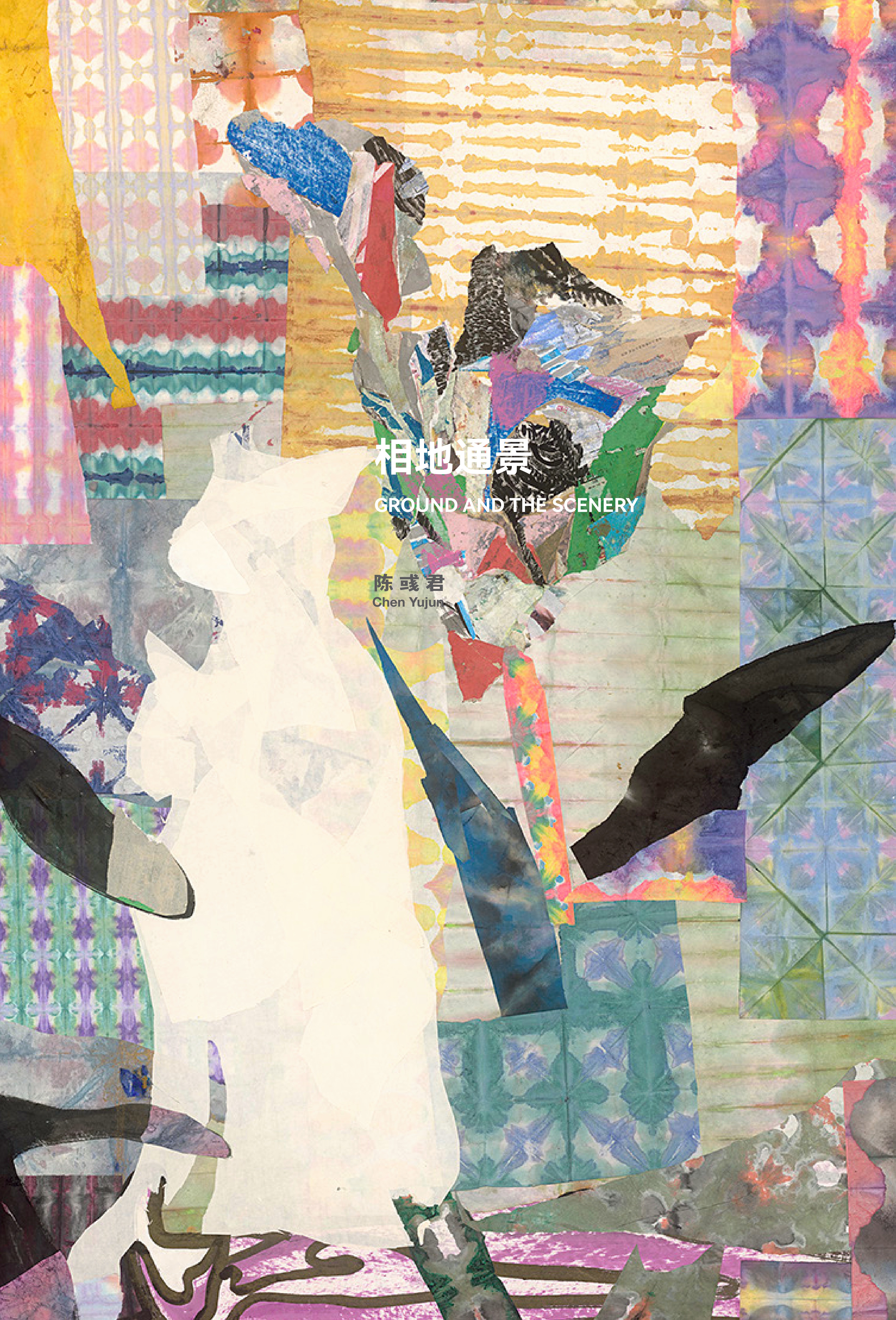
相地通景
展览信息
前言Introduction
《九歌》入画古已有之,然多为传统仕女画,尚未有当代理念的抽象及拼贴作品。
“Truth, like light, blinds. Falsehood, on the contrary, is a beautiful twilight that enhances every object.”
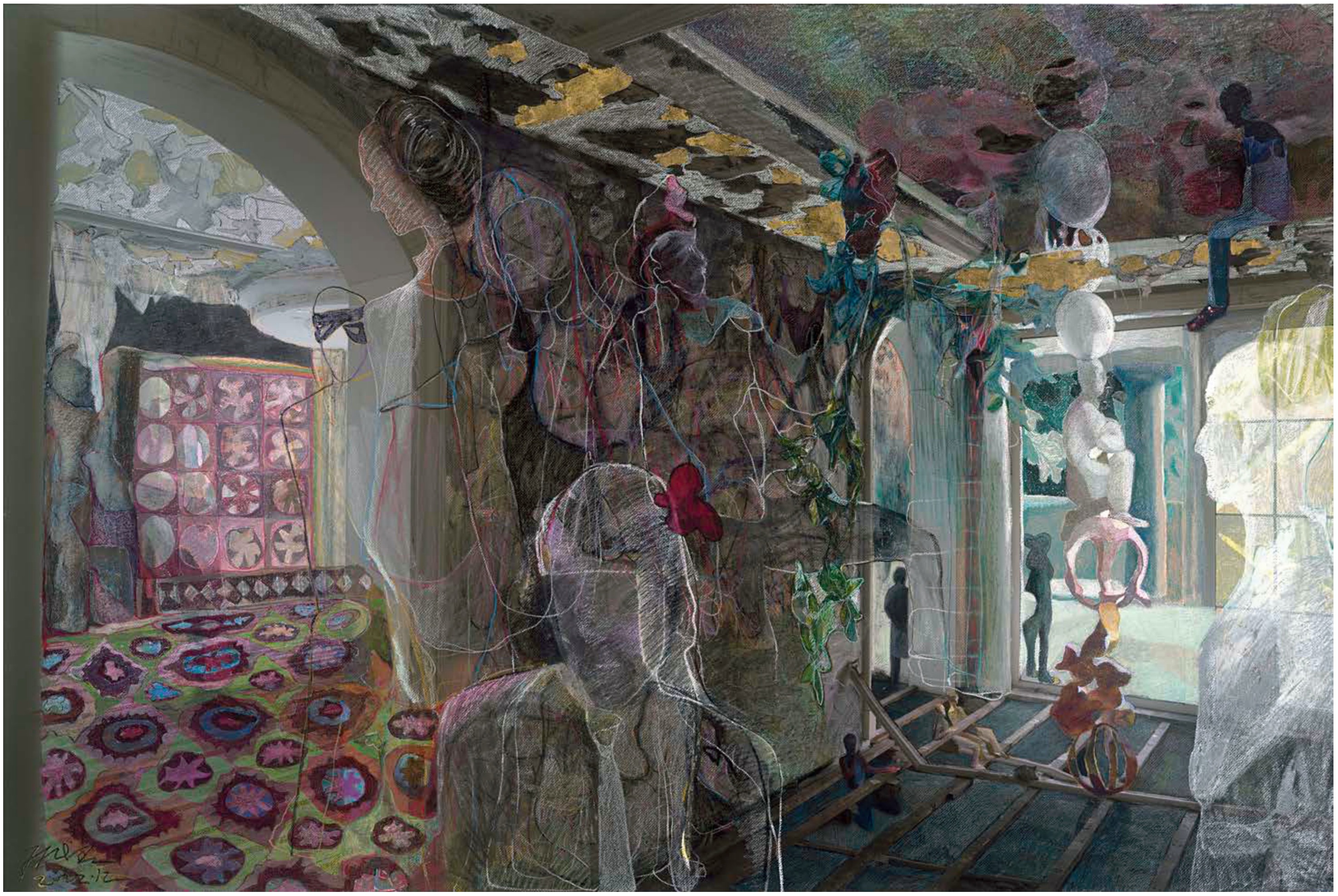
局部
“瞻彼淇奥,绿竹猗猗。有匪君子,如切如磋,如琢如磨。瑟兮僩兮,赫兮咺兮。有匪君子,终不可谖兮。”
——《诗经·卫风·淇奥》
“Truth, like light, blinds. Falsehood, on the contrary, is a beautiful twilight that enhances every object.”
- Excerpt from La Chute
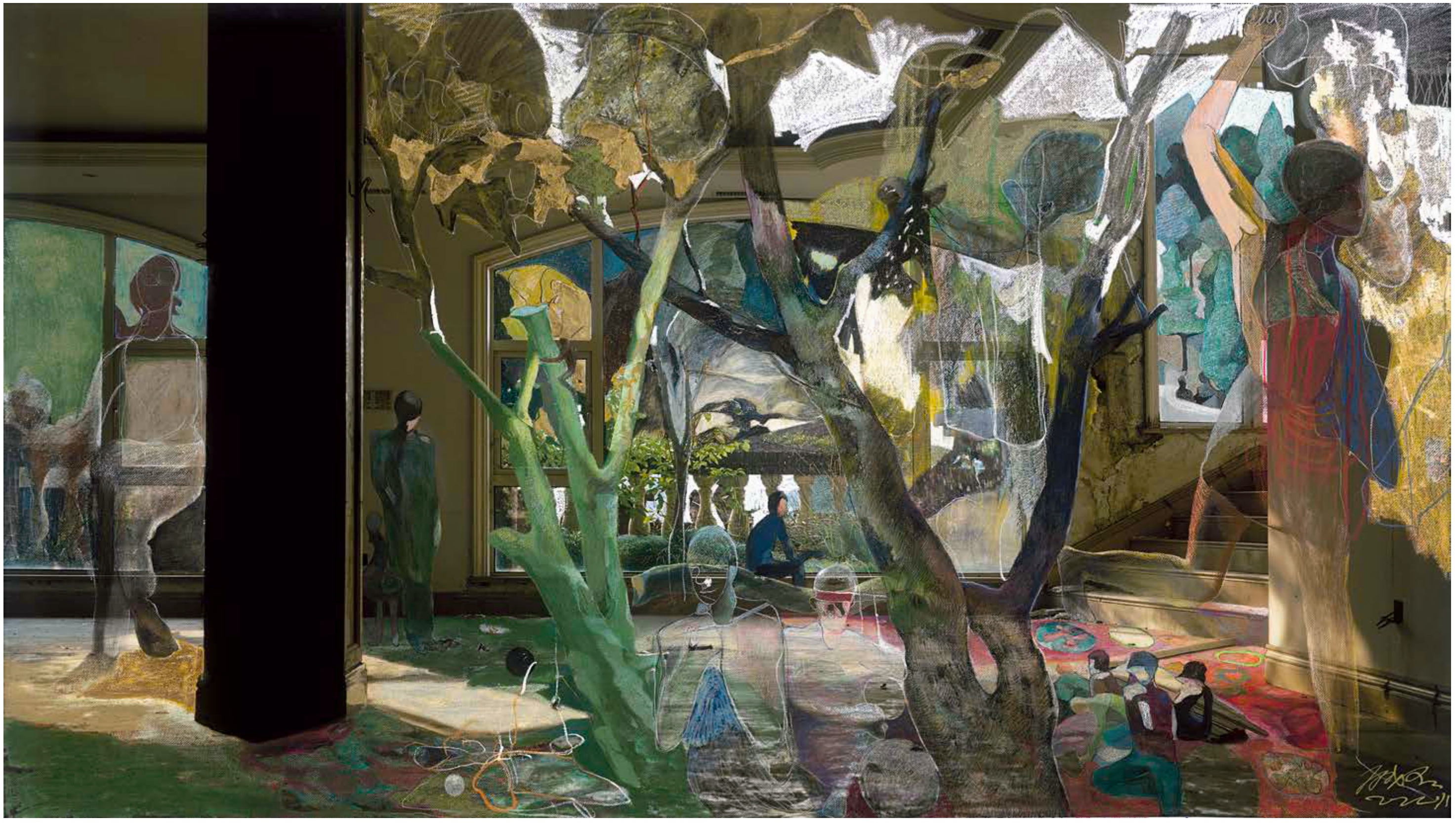
局部
“这样,从要塞最高的那座塔楼的顶部,我发现要惋惜的不是受苦,不是死在上帝的怀抱里,不是哀悼本身。因为死者得到人们的悼念,要比生者更显而易见,更有力。我明白了人的忧患,我惋惜的是人。我决定治愈他们。我可怜这样的人,黑夜中他在祖屋里醒来,以为在上帝的星空下可以遮风挡雨,突然前面却是一条征途。我禁止有人提出问题,深知不存在可能解渴的回答。那个提问题的人,只是在寻找深渊。”——
《要塞》节选
“Truth, like light, blinds. Falsehood, on the contrary, is a beautiful twilight that enhances every object.”
- Excerpt from La Chute
“Truth, like light, blinds. Falsehood, on the contrary, is a beautiful twilight that enhances every object.”
- Excerpt from La Chute
局部
“这样,从要塞最高的那座塔楼的顶部,我发现要惋惜的不是受苦,不是死在上帝的怀抱里,不是哀悼本身。因为死者得到人们的悼念,要比生者更显而易见,更有力。我明白了人的忧患,我惋惜的是人。我决定治愈他们。我可怜这样的人,黑夜中他在祖屋里醒来,以为在上帝的星空下可以遮风挡雨,突然前面却是一条征途。我禁止有人提出问题,深知不存在可能解渴的回答。那个提问题的人,只是在寻找深渊。”——
《要塞》节选
“Truth, like light, blinds. Falsehood, on the contrary, is a beautiful twilight that enhances every object.”
- Excerpt from La Chute
局部
“有某种不属于人类的东西存在于一切的美的核心当中,连绵起伏的山脉、温柔的天空和婆娑的树影刹那间都失去了意义,那些感觉只是我们赋予那些事物的一种幻象。”——《荒谬的墙》节选
“Truth, like light, blinds. Falsehood, on the contrary, is a beautiful twilight that enhances every object.”
- Excerpt from La Chute
局部
“这个世界并不重要,谁承认这一点,谁就赢得自由。”——《卡利古拉》节选
“Truth, like light, blinds. Falsehood, on the contrary, is a beautiful twilight that enhances every object.”
- Excerpt from La Chute
局部
“流亡以它自己的方式向我们指明各条道路,唯一的条件是我们善于在流亡中同时拒绝奴役和占有。”
——《流放与国王》节选
“Truth, like light, blinds. Falsehood, on the contrary, is a beautiful twilight that enhances every object.”
- Excerpt from La Chute
局部
创作动机是与我的自身身份相关的。莆田这样一个带有特殊地缘文化特质的地方,一方面在地理位置上比较偏远闭塞,但同时它又很开放。在这个背靠大海的地方,人们注定要通过四通八达的海路去谋生,并把全球化的视野回流到这里。这片土地本身就带有一种对冲的矛盾和张力,作为莆田人的我也是同样。在思想上,我非常坚定地寻找故乡的根,但在行动上又是非常坚决地向外漂流。
99:“相地通景”在翻译后的英文标题中同时包括了locality“地方的”与universality“普遍性、广泛性”
两个概念,这两者在您的创作中有什么关联?陈:“相地通景”很难用英文直译,但我希望能在中文和英文这两个语境中产生各自的张力。这种张力对我来说是富有弹性的尝试空间。无论是围绕木兰溪的艺术创作、2022 年西岸博览会上的“地中海项目”,还是疫情刚开始的时候,发起的“重返木兰溪”在地性活动和一系列的论坛,其实都与“从地方性到全球化”这个话题有关。实际上,我认为不管是地域、对象,还是创作的主题,它们在现实生活中都是相互串联的综合的整体。同样的,“相地通景”英文中提及的“地方性”和“普遍性”,其实也是一个相互串联的整体关系。
99:您提到通向某种“景”,具体来说,是要通向哪种“景”?陈:“景”是每个人与世界的关系、与故乡的关系、与自己的关系。有人也曾问过我,“之前是木兰溪,现在是地中海,是不是意味着你已经‘离开’木兰溪了?”在我的创作过程当中,无论是木兰溪还是地中海,其实都是在探讨我自己,甚至是每个人与故乡的关系。在从事艺术创作,用艺术表达不同阶段的感受的过程中,我常会联想到老家门口的一棵树。小时候会觉得这棵树就是所有的外部世界,但当我们离开故乡,这棵树就变成了一个包含着记忆和情感的内部世界。而当外部世界与内部世界慢慢成为一个整体的时候,你会发现,这棵树其实就是你自己。每个人的生命中,都会有一棵家乡的树,这其实也是从地方性到普遍性的问题。把自己置身于内部和外部的关系中,慢慢地我意识到我的创作所代表的正是我的世界——在出发的时候有一个远方,也就是“景”,走着走着发现这个“景”其实就是你所见、所想、所创造的内心的世界。对我来说,最后要走通的不是外部的世界,而是自己。
99:在不断接近这个“景”的过程中,也会存在不同的路口和偶然性,会影响到您的路径吗?陈:2022 年6 月份在龙美术馆重庆馆做的《艺术“家”》这个展览,让我很清晰地看到了自己的路径。实际上,在此之前,并没有很仔细地梳理自己这些年来的工作,我的路径其实是有点“奇怪”的,更像随遇而为的感觉。但回过头来看,其实一直以来都有一条明确的线索和一股内驱力在其中。通过艺术创作去阐释自我,是一种很抽象的形式,但我认为只要内心最初追求的东西始终在那里,不管是什么样的路径、有多少个岔路、绕了多远,最终总会回到这条主线上来。前几年我做了很多社会活动,大家会觉得陈彧君是不是不做艺术了?虽然我不知道现在做的事情是对是错,要如何界定,但是我内心是非常清晰的,这些都是我艺术实践过程当中的某个阶段。当下这个阶段,我想要回到艺术本身,甚至是更纯粹的绘画本身,来呈现我目前的路径和思想状态。艺术家没有终点,我希望通过“相地通景”让大家看到我的一个底层逻辑。
99:2022 年创作的作品与经典文学有什么样的关联性?比如与《诗经》、《卡利古拉》等。陈:在生活和创作上,我其实是比较随性的,读书也是同样。如果将了解这个时代设定为目标,我认为需要借助更多体系的知识。比如我也会读一些跟商业有关的书,但并不是要从事这个行业,我会觉得通过不同的路径和工具,会对这个时代有更整体的认识和理解。在五、六年前,很多艺术家觉得这个时代太无聊、太平庸了。但疫情的发生,让这个时代在剧变,
The Intercontinental Sea, also known as the Inland Sea, is a sea lying between several continents. The Mediterranean Sea, more specifically, refers to the body of waters between the continents of Europe, Africa and Asia, whose formation can be dated back hundreds of millions of years. It is connected to the Atlantic Ocean by the Strait of Gibraltar in the west and to the Red Sea via the Suez Canal in the east, covering an area of about 2.51 million square kilometres. The Mediterranean Sea is small yet immense, less than a hundredth of the Earth’s surface area, while borders more than twenty countries along its coastline, including Egypt, Greece, France, Italy, Turkey and Algeria. The Mediterranean Sea is shallow yet profound, as the Nile, the Ilisos, the Rhone, the Po, the Ceyhan, the Chelif and many other mother rivers that have given birth to a host of regional civilizations all flow into it, and will continue endlessly and flourishingly. Here is where the ancient Egyptian, Greek and Roman civilizations germinated and proliferated; where the Persian, Macedonian, Arab, Eastern and Western Roman and Ottoman empires rose and fell; and where the Jewish, Christian and Islamic religions were instituted and thrived. Thousands of years ago, it was here, on the shores of the Mediterranean, that Noah's ark docked under the rainbow “bridge” after surviving the flood, that Socrates proclaimed his famous words “I am a citizen of the world”, which is still ringing in our ears today. For nearly a century, Camus, who was born in this land of sun, with a pessimistic outlook of human fate but an optimistic view of human being, proposed a
“Mediterranean Ideology” shortly after the end of World War II, on the premises of the value and dignity of humanity. He believed that the love of life could exorcise the despair of life and that the fight against evil could overcome the darkness of reality. In doing so, the mankind would eventually embrace an ideal home awash in the bright Mediterranean sun. Saint-Exupéry, who understood the misery of human beings well, felt deeply sorry and was determined to heal the mankind. Before the outbreak of war, amid one lonely night voyage after another, he had foreseen that future generations would all end up lost in the vast universe. Amongst hundreds and thousands of planets, they would be struggling to find their true home: the Earth, the only planet that bears their familiar fields, homely premises and undying warmth. In 2017, with deep nostalgia, Chen Yujun brought his solo exhibition “Mulan River – Cuò” to the Petach Tikva Museum of Art in Israel, ten thousand miles away from his own home. For the first time, the sound of the lapping waves of the Mediterranean was blended with the gurgling waters of Mulan River, the mother river of Chen’s hometown. The Mediterranean Sea, once only a knowledge from a textbook and a colour block on a globe, is now vivid in front of his eyes. He couldn’t help but imagine how many trials and tribulations his clan ancestors, who left their hometown in Putian, had endured in the past hundred years to establish a new home along the Mediterranean Sea; and how the Land and Sea Silk Road, which began in the Han and Tang dynasties, would once again return to this destination in a thousand years later. Just as the Mulan River has nurtured Putian culture, all human civilizations around the world are nourished by the mother river of their homeland without exception. As the poem goes, “Don’t you see the Yellow River come from the sky, rushing into the sea and never come back?” Every mother river that feeds its offspring will ultimately merge into a swath of sea and since the sea systems on Earth are inextricably linked, so are all mother rivers. No matter how different the geography, terroir, language, customs, culture and faith may seem, the sea that all mankind gazes upon is essentially the same shared system of waters. This inspiration is instantaneously transformed into the title: The Earth Waters. For Chen Yujun, the Mediterranean“sea” is now not only the meeting end of all the mother rivers that have nurtured regional civilizations, but also the Earth “waters” - the new start embodying the impartial upholding of“All under heaven are of one family”. This is no longer a particular sea, but the “waters”
where all the rivers on Earth converge; this is no longer someone's sea, but the “waters” that unite the fate of all human beings. Once the war has subsided and the epidemic has been dispelled, we will be facing the sea with spring blossoms. By then, the Earth Waters will no longer be a dream aspired by the wandering and far-journeying, but the home that everyone on Earth should cherish and protect the most. At times, it is as boiling as fire, signifying a melancholy destiny; at other times, it is as calm as glass, incarnating a magnanimous love. The Earth Waters, the origin of terroir and civilization, the way back to exile and nomadism, bestows its blessings generously and equally. May the endless symphony it plays be eternal and everlasting!
参展艺术家Artists
作品