作品 部分
展览信息
前言Introduction
回归线在地理学中用于定义太阳直射地表的南北界线,而非真正存在的线。冉凯的全新个展以“回归线”为题犹如一种隐喻,他在个人成长与游历的路途中开始反折,借助“线”回归到对绘画的精神性追求,也在创作中复归于自我,踏上内在精神的追寻旅程。
In geography, the tropic of cancer serves as a conceptual boundary, rather than an actual, existent line, marking the northern limit of the sun's direct rays on the earth's surface. The title of Ran Kai's new solo exhibition, "Imaginary Line," functions as a metaphor; it reflects his journey of personal growth and travel, where he begins to fold back on himself. Through the medium of "line," Ran reconnects with a spiritual pursuit of painting, returning to his inner self and embarking on a journey of spiritual exploration.
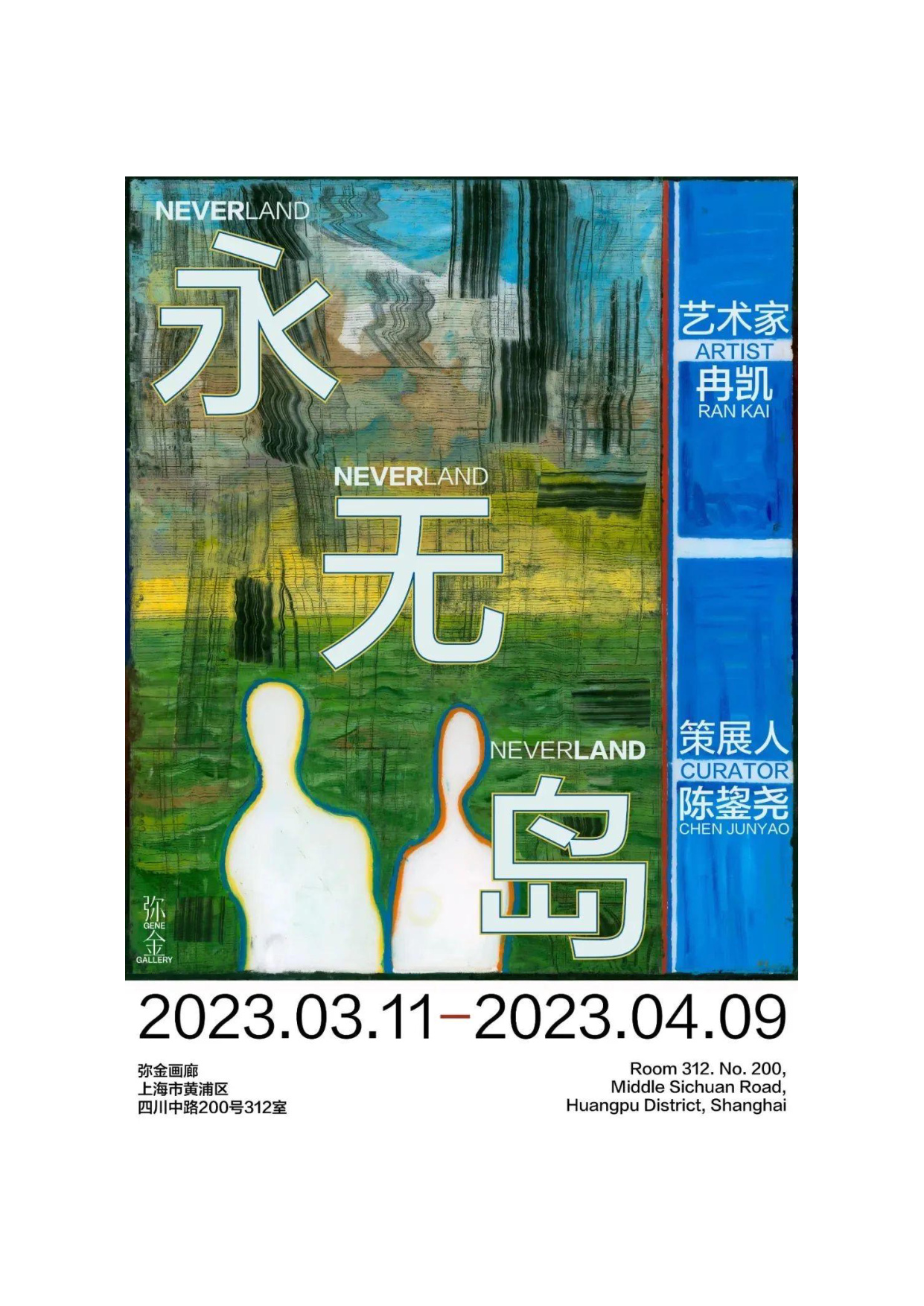
如果说“永无岛”(上一次个展)中的作品以人物剪影直接面对大海的方式,呈现了艺术家过往记忆中朝向海边迁徙的历程,“回归线”则将曾经的去处化为背景。
冉凯在画面中仍然以水平线分割出上下两部分明显的底色,虚实相间的线模拟着地图上的路途,前景则由更多的线构成叠加的身体、空间等。曾经的理想与情愫,不再是冉凯的所想之地,却以记忆般的底色留存于画面,成为新的探索方向的起点。
In Ran’s previous solo exhibition "Neverland," the works illustrated the artist's past migratory memories towards the shoreline through silhouettes of figures directly facing the sea. In contrast, the new series of works in "Imaginary Line" transform past destinations into mere backgrounds. Ran employs a horizontal line to divide the canvas into distinct upper and lower sections, using a blend of realistic and abstract lines to simulate a journey on a map. The foreground is composed of more overlapping lines that create bodies and spaces. The ideals and sentiments of the past are not only Ran's desired destinations, but also being preserved as the impression of memories in the background, as the starting point for new explorations.
冉凯的每一件新作,其命名方式都与之诞生的路径有关,他会从自己日常阅读的文本中搜寻灵感来源,进而凭借想象去推敲画面。值得注意的是那些非中文语境的段落,在软件不够准确的翻译中,误读产生的偏差却让作品通往新的岔路,再度回到他所着重的,与现实有关但又稍显模糊的呈现。一些有关于“英雄主义”和“战斗”的作品透露出颇具戏剧性的冲突感,让人想到经典的英雄回归故事——《奥德赛》。漂泊于异乡,见识了无数种族、城邦、文化的英雄奥德修斯,在赛斯·伯纳德特(Seth Benardete)眼中代表了‘无人’的双重形式:Outis
(无人)和 Métis(心灵)的双重合体。可以说,旅途中的英雄也是无名的集体心灵的象征,无论现实身份何其不确定,方向却总要指向回归之路,这与冉凯的心境不谋而合。
Each new work by Ran is titled in relation to its creation origin; he always draws inspiration from texts he engages with daily, using imagination to distill visual narratives. Notably, those segments that originate from non-Chinese contexts, with misinterpretations in software translation, lead Ran to new interpretive paths that finally return to a somewhat vague representation of reality—an aspect he emphasizes. Some works exploring themes of "heroism" and "fight" evoke a dramatic sense of conflict, reminiscent of classical hero-
return narratives such as "The Odyssey." The wandering hero Odysseus, who encounters numerous races, city-states, and cultures, represents a dual form of 'no one' (Outis) and 'mind' (Métis) in Seth Benardete's perspective. It is fair to say that the hero on the journey symbolizes an anonymous collective psyche, irrespective of the uncertainty surrounding real identities, always pointing towards a return path—an alignment with Ran's own state of mind.
存在正是自我诞生后必会思考的问题,古希腊史诗中的战斗造就了英雄,源于现实的反思也在文学的流转中见证着从神的时代如何走入人的时代。而在图像中,从神到人的题材集大成的时代莫过于文艺复兴时期,冉凯毫不掩饰对以丁托列托为代表的威尼斯画派的喜爱。古典主题与故事是这位大师创作中的重要主题,冉凯更多则从其作品中汲取了战争场面与形象中线条的描绘。在他看来,线所引导出的不仅仅是形式感,其中透露的精神性也不言而喻。H·沃尔夫林在《艺术风格学》中指出线描着重于事物的界限,线条起到的是视觉途径和观察引导的作用,“固体物的均匀、结实、清晰的边界给观众一种安全感,仿佛他能用自己的手抚摸这些边界。”
Existential questions inevitably arise following the birth of self: the battles depicted in ancient Greek epics forge heroes, while reflections on reality chronicle the transition from the divine to the human era in literature. In visual art, the Renaissance epitomizes this convergence of divine and human themes. Ran unabashedly expresses his admiration for the Venetian school, particularly Tintoretto. Classical themes and narratives form significant aspects of Tintoretto’s work, from which Ran draws lines and compositions reflective of war scenes and imagery. For Ran, lines signify not merely form but also an inherent spirituality. Heinrich Wölfflin, in "Principles of Art History," emphasizes that line drawing focuses on defining boundaries, guiding visual pathways and observation: " The evenly firm and clear boundaries of solid objects give the spectator a feeling of security, as if he could move along them with his fingers..."
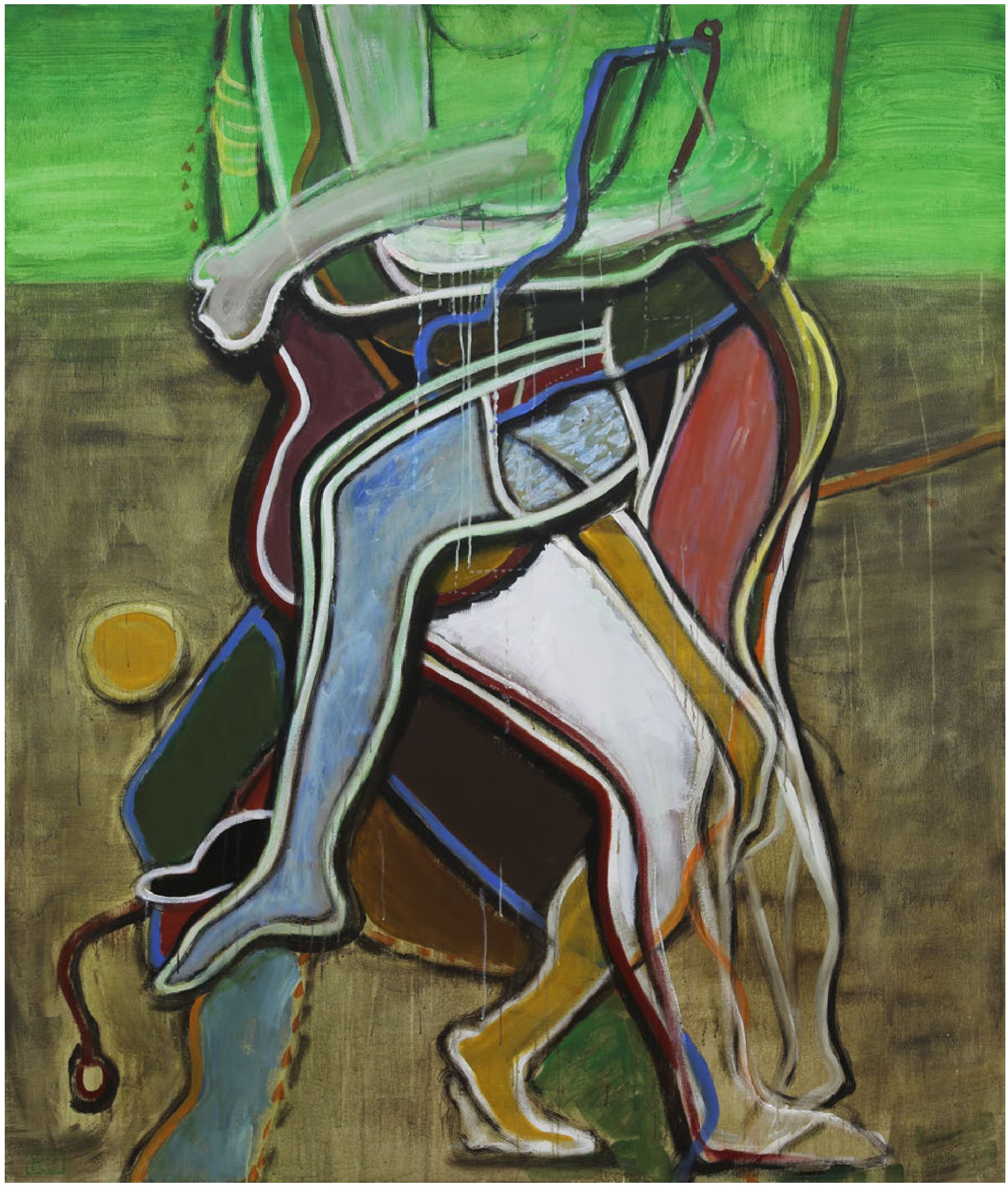
冉凯在新作中先以薄色涂底,而后将自己行走过的路线化为虚实相间的地图居于中央,再于其上直接画出线条,将具有英雄主义式的、悲剧式的形象交叠起来,试图从交叠中找到不同层面相互间的关系。明暗线的排列构建出了空间,而从中产生的开拓或新生之感让他觉得兴奋。人们很容易从显现艺术家意识流变痕迹纪录的线中感受到躯体的形态,而以性别为代表的特定意味被冉凯消除殆尽,他试图仅通过肢体动态去呈现情绪、精神性或本能中的潜意识。在上一次展览中,艺术家的画面中就出现了人的形象,他也曾尝试以线来体现面部肖像,但正如维特根斯坦(Ludwig Wittgenstein)眼中“人的身体是人的灵魂的最好的图画”那样,用线交叠出的身体对冉凯而言是更好的选择。
In this new series of works, Ran first applies a thin color layer and transforms his walked routes into a blend of realistic and abstract maps situated centrally. He then directly overlays lines on the top, intertwining images that are both heroic and tragic, seeking to explore the interrelations among the different layers in the overlaps. The arrangement of light and dark lines constructs a sense of space, and the resulting feeling of expansion or rebirth excites Ran. Viewers can easily perceive the forms of bodies recorded through the traces of the artist's stream of consciousness. Yet Ran seeks to eliminate specific meanings associated with gender, aiming to present emotions, spirituality, or subconscious instincts solely through bodily dynamics. In his previous exhibition, human figures appeared in paintings, and Ran experimented with lines to depict facial portraits. However, as Ludwig Wittgenstein's assertion, "The human body is the best picture of the human soul," Ran considers the overlapping bodies rendered in line to be a better choice.
在依稀可辨认的手臂、腿部延伸出的对角线所形成的构图中,可以感受到冉凯画作中强调的某种戏剧性,这与丁托列托为人们所熟知的众多画作保持了相应的延续。多层平面叠加下所诞生出的丰富空间感是冉凯更为看重的部分,他在交叠的线条间涂色,有意借鉴米罗(Joan Miró)画作中极具趣味性的简化符号,也会尝试以大小切割形块构成的立体主义风格。
In the compositions formed by diagonal lines extending from vaguely recognizable arms and legs, viewers can sense a certain dramatic quality emphasized in Ran's works, which maintains a continuity with the drama in Tintoretto's paintings. The rich spatiality through multiple overlapping planes is of particular importance to Ran; he colors between the interwoven lines, deliberately drawing inspiration from the playful simplifications in Joan Miró's works, while also attempting to present Cubist style characterized by the fragmentation of shapes.
冉凯提到了乔治·康多(George Condo)于职业起步阶段(1980年代)试图创造的“假老大师”风格作品,康多强调的是将传统的绘画方法转化为当代主题,只要有新的东西来表达,使用何种方式并不重要。同在上个世纪80年代,当发展超过百年的多样的西方艺术风格瞬间涌入中国时,中国艺术家所体会到的新奇感和不知所措可见一斑。而今天,在信息传递更发达的年代,艺术家选择何种方式来表达自己显得愈加复杂。冉凯并不担心自己当下的选择是否够时髦,他只是想将自己感受到的现实景物的予以再建构,将其与艺术史上的多种风格结合、变形,最后的目的仍是要与现实中存在的事物互相对弈。
Ran once referred to George Condo's " Fake Old Masters " style developed during his early career in the 1980s, where Condo emphasized transforming traditional painting methods into contemporary themes, suggesting that the manner of expression is secondary to the novelty of the idea. In the 1980s, as diverse Western art styles of long history flooded into China, Chinese artists experienced a mix of curiosity and confusion. Today, in an era marked by advanced information transmission, the complexity of artists' choices for self-expression has even intensified. Ran is unconcerned with whether his current choices are fashionable; rather, he aims to reconstruct the realities he perceives, blending and transforming them with various styles from art history, ultimately seeking to engage in a dialogue with existing realities.
“完整的图像对我来说无法接近想要的状态,我更需要它有距离感。”在进一步用线穿插形状的过程中,冉凯给画面带来了更多空间,轮廓线不一定完全具有连续性,而塑形的表现也在局部肌理和色彩的选择中被淡化。不追求可以快速干燥和极具覆盖力的丙烯,冉凯坚持使用油画材料,以层层构建的方式允许画面产生更丰富的深度、色彩和笔触,他在交叠的线中表现出活力,摆脱有序的对称性,更注重感觉和氛围,而不是技术上的准确性。在冉凯用线建构的世界中,他找到了属于自己的路。
"For me, a complete image does not approach the desired state; I need it to have a sense of distance." In the process of further intertwining shapes with lines, Ran adds more spatial dimensions to the canvas, where contour lines need not maintain complete continuity, and the shaping of forms is subtly diffused in the choice of localized textures and colors. Instead of pursuing fast-drying, opaque acrylics, Ran adheres to oil painting materials, allowing for a richer depth, color, and brushwork through layered construction. The overlapping lines convey vibrancy, breaking free from ordered symmetry, emphasizing sensation and atmosphere over technical precision. Within the world constructed by lines, Ran has discovered his own path. Ran Kai: Imaginary Line Written by:Meng Xianhui
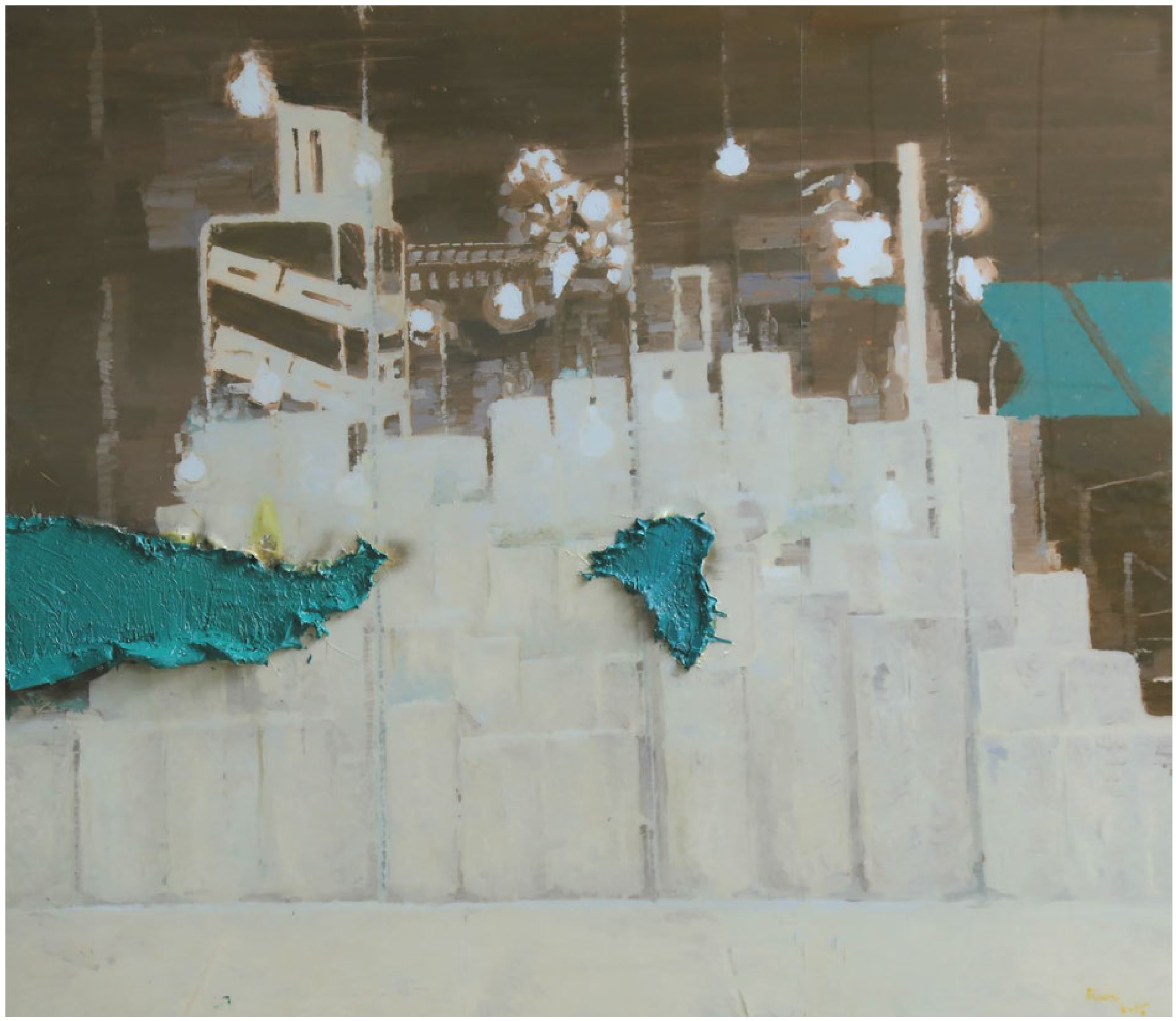
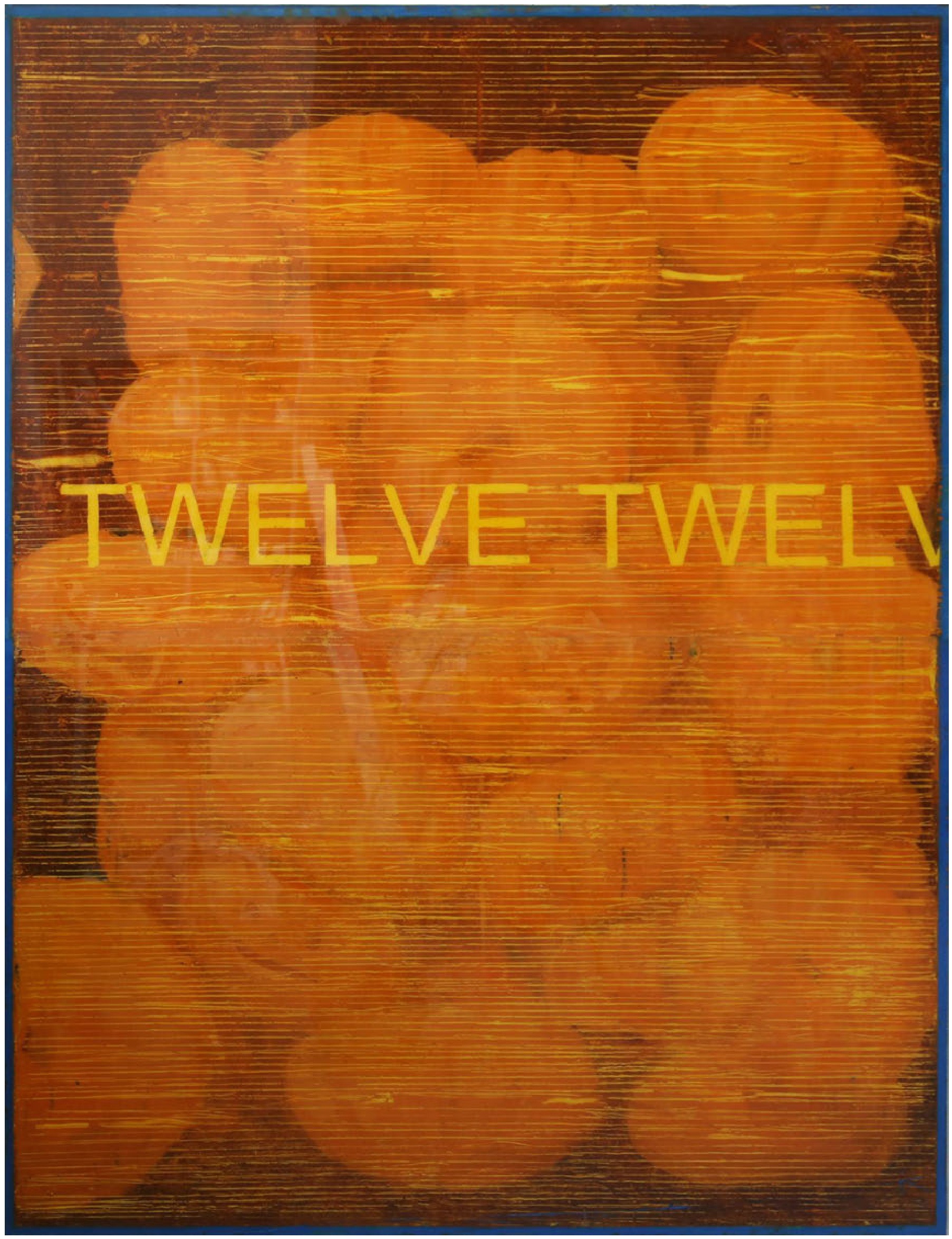
之前一批作品延续了“看海”系列当中交织线条与平面图像的多重叠压,互为交融,从而形成“不确定性”画面的个人方法。随机形成,并列形状和令人迷失的空间。
现实的多重性也是这个阶段延伸的内容,个体经验中的多重历史,多重偶像,多重身份,在当下的交织。综合了神话,文学,历史及当下现实的多重参考。将画面图像分层。其中包括对女性形象的演绎,遥远神话的征用,自我现实的追忆。同时拒绝清晰的叙事意图,走向复杂而难以琢磨的心理暗示,让画面中每一个单重“身份”
变成一个迷,也变成不可信任的经验。这也是将具体指向性形象变得抽象隐喻的经验,让每一层叙述都在涌现和消失当中。
The previous batch of works continued the personal approach of intertwining lines and flat images in the "Watching the Sea" series, blending together to form an "uncertain" image. Randomly formed, parallel shaped, and bewildering spaces. The multiplicity of reality is also an extension of this stage, the interweaving of multiple histories, idols, and identities in individual experiences in the present. Integrating multiple references from mythology, literature, history, and current reality. Layering the visual image. This includes the interpretation of female images, the requisition of distant myths, and the recollection of self reality. At the same time, rejecting clear narrative intentions and moving towards complex and elusive psychological implications, turning every single "identity" in the picture into a mystery and an untrustworthy experience. This is also the experience of turning specific directional images into abstract metaphors, making every layer of narration emerge and disappear.
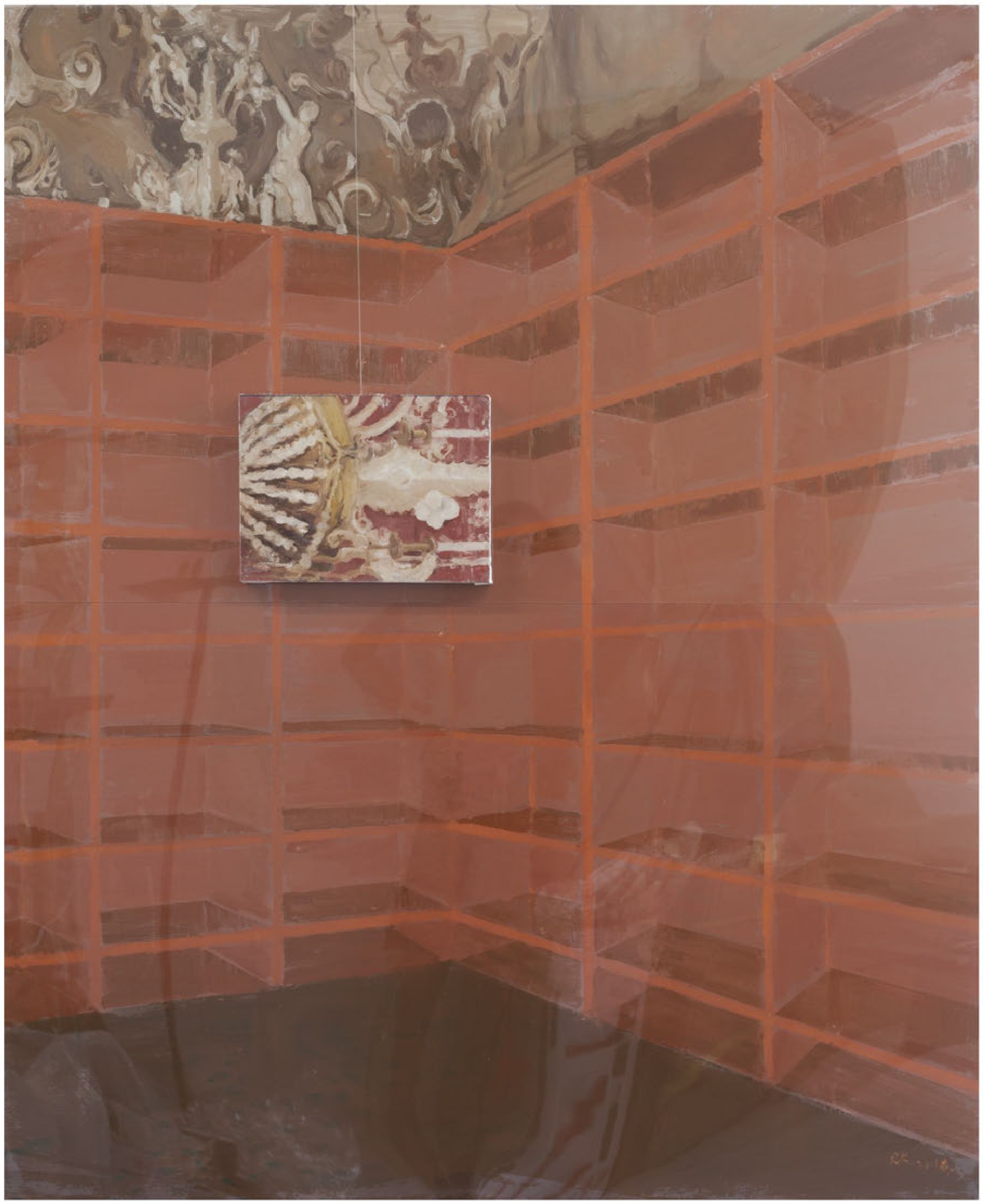
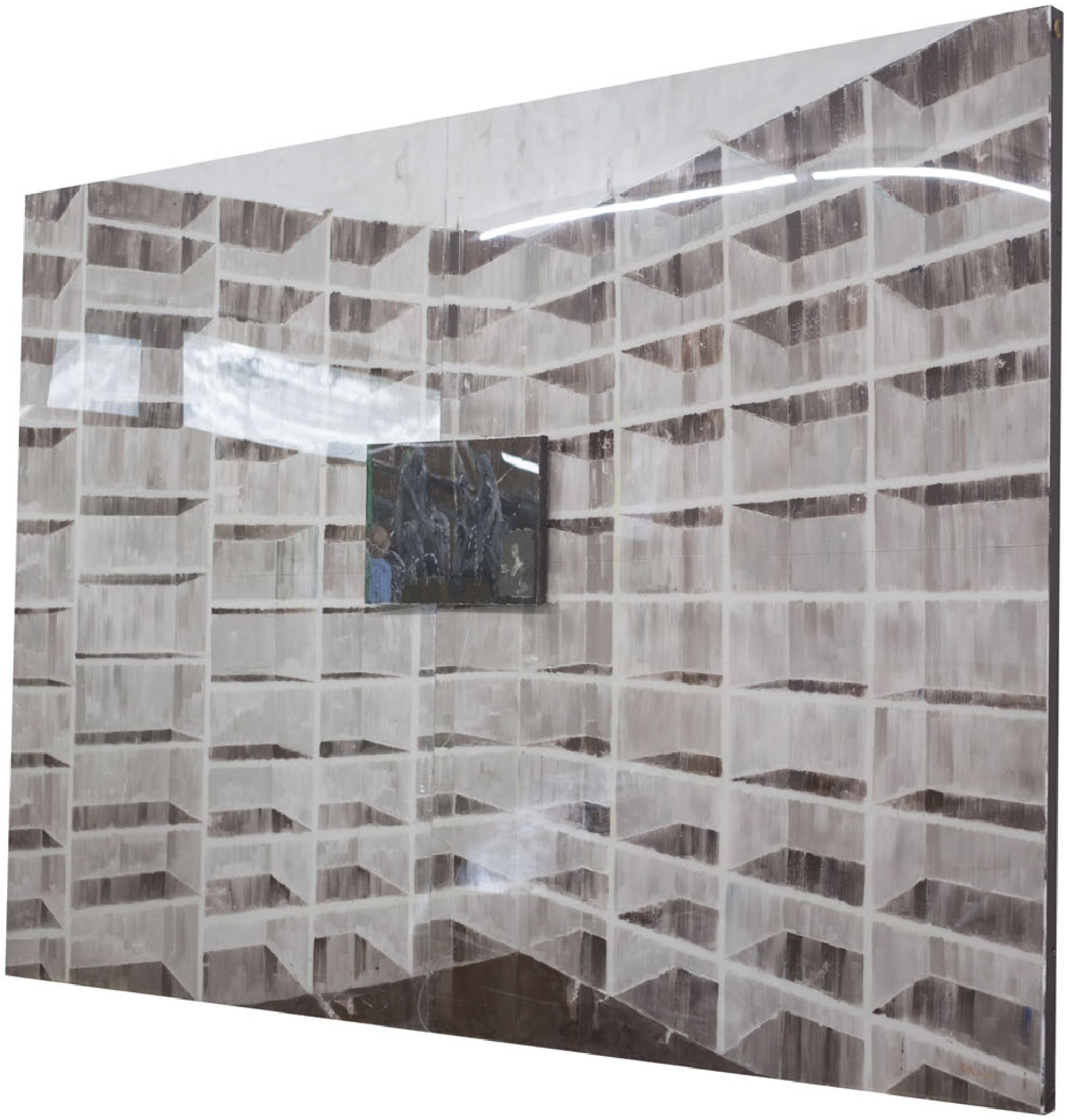
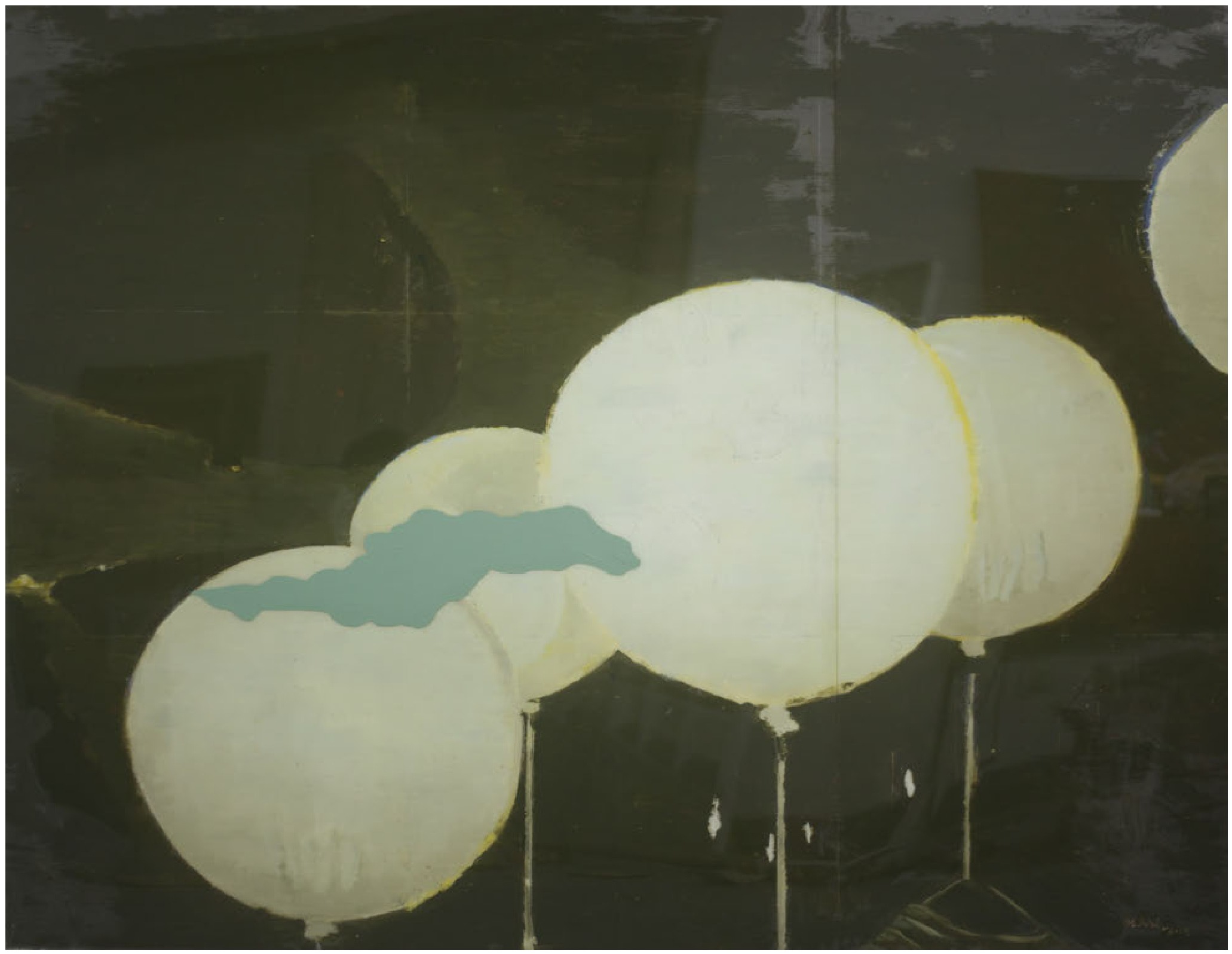
Since 2016, the "Watch the Sea" series has been centered on "screen landscape" and "truth and lies". The use of glass materials gives these works an extremely smooth "screen" feeling, which is not only reflected in the external flatness. It is also reflected in the "squeeze" in the production of his works.
"Destruction of" uncontrollable "and other process factors. The material that emerges in the end of the work is luminous and brilliant, which is accompanied by the crisis of reflection and fragmentation.
"Watch sea" series of works in the background, with artists from inland from migrating to the seaside city of experiences, at the same time of constantly close to where she is in another Angle away from the ", and "sea" in this batch of works is also a metaphor for some good "at the same time, the work under the bad screen effect of penetration into the image represents a better outside of another world, The silhouettes of broken church Windows, the silhouettes of two people full of emotional allegories, etc., are the artist's touch on another kind of lie." Distant and broken beliefs, personal experiences, and unavoidable idols link the vein of this batch of works. And the timeliness "is emerging in the work, part of series began to remove the original adhere to the paint surface of the organic glass, another covered by oil painting sex screen are present in front of the audience, ranging from complete to reveal itself to more than one year's time. In addition, the texture of the squeezed oil painting and the superposition of multiple layers of language present another kind of internal timeliness.
参展艺术家Artists
作品