展览信息
前言Introduction
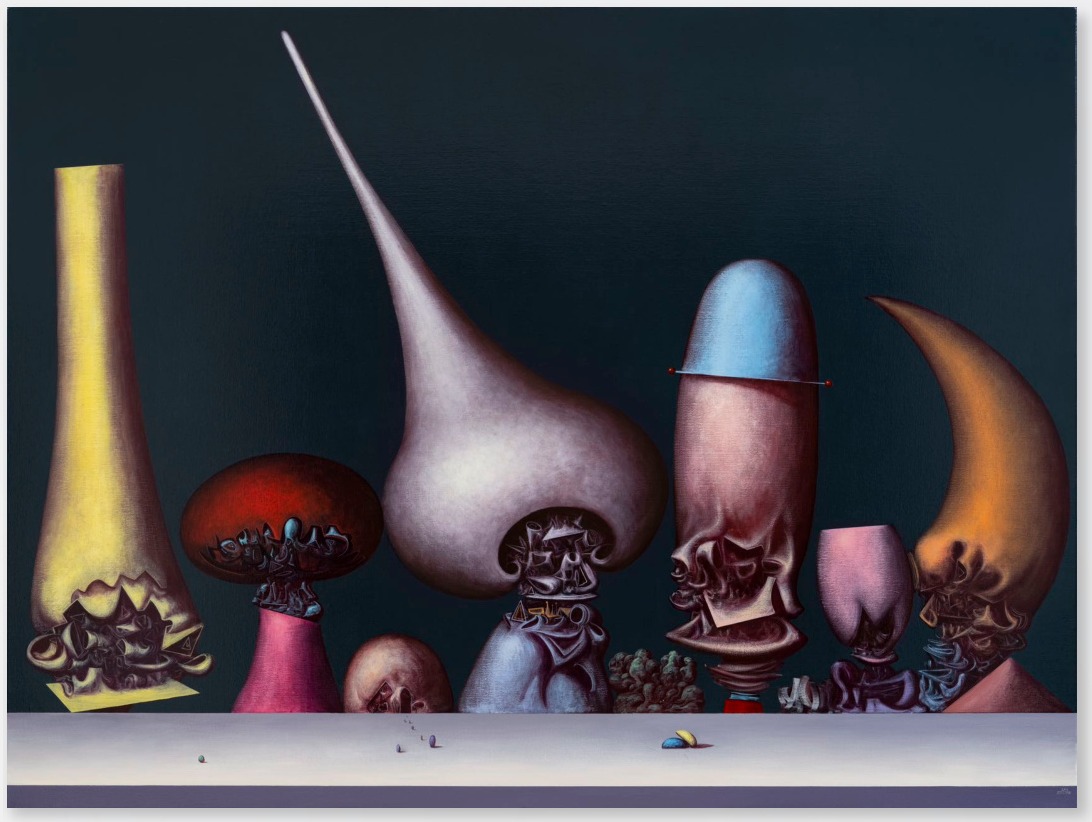
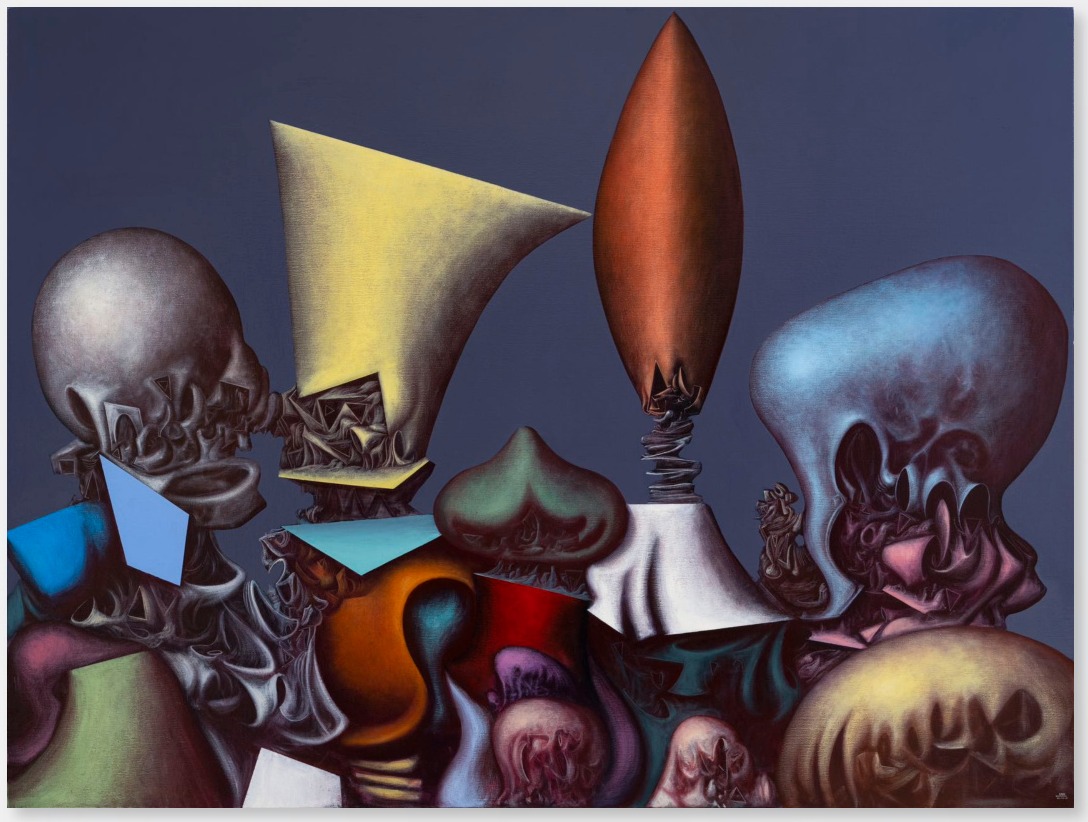
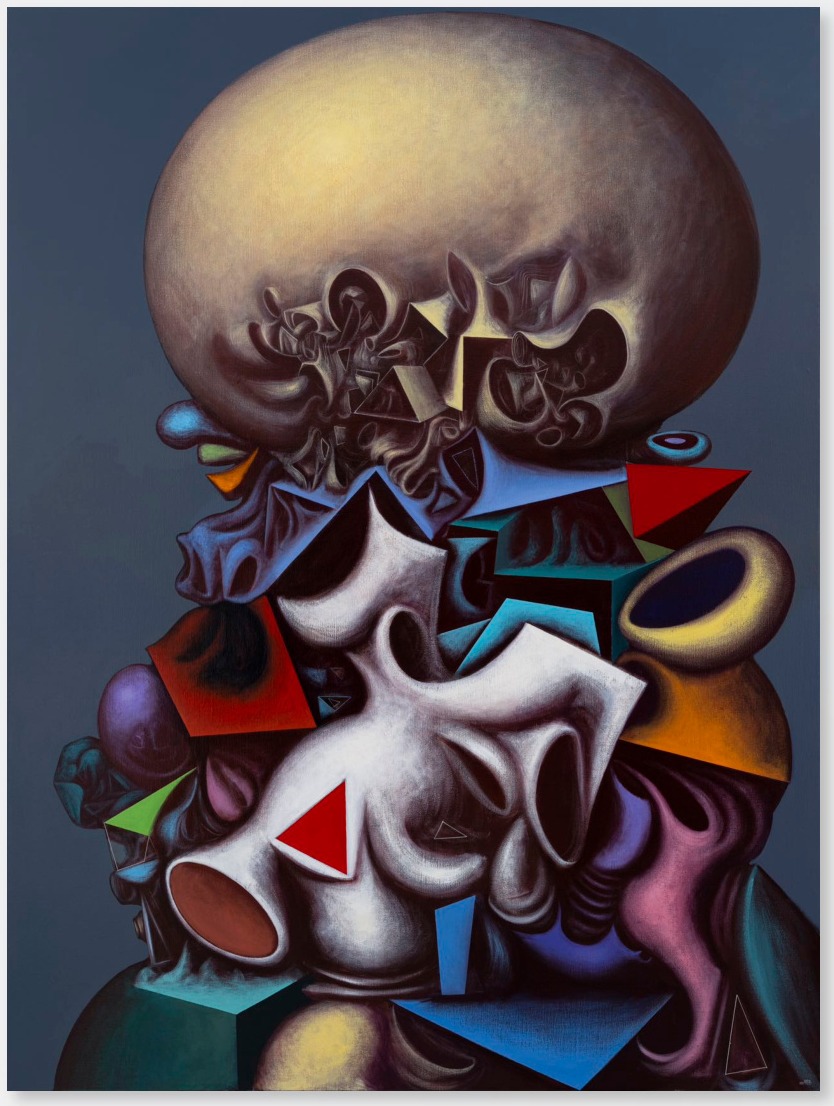
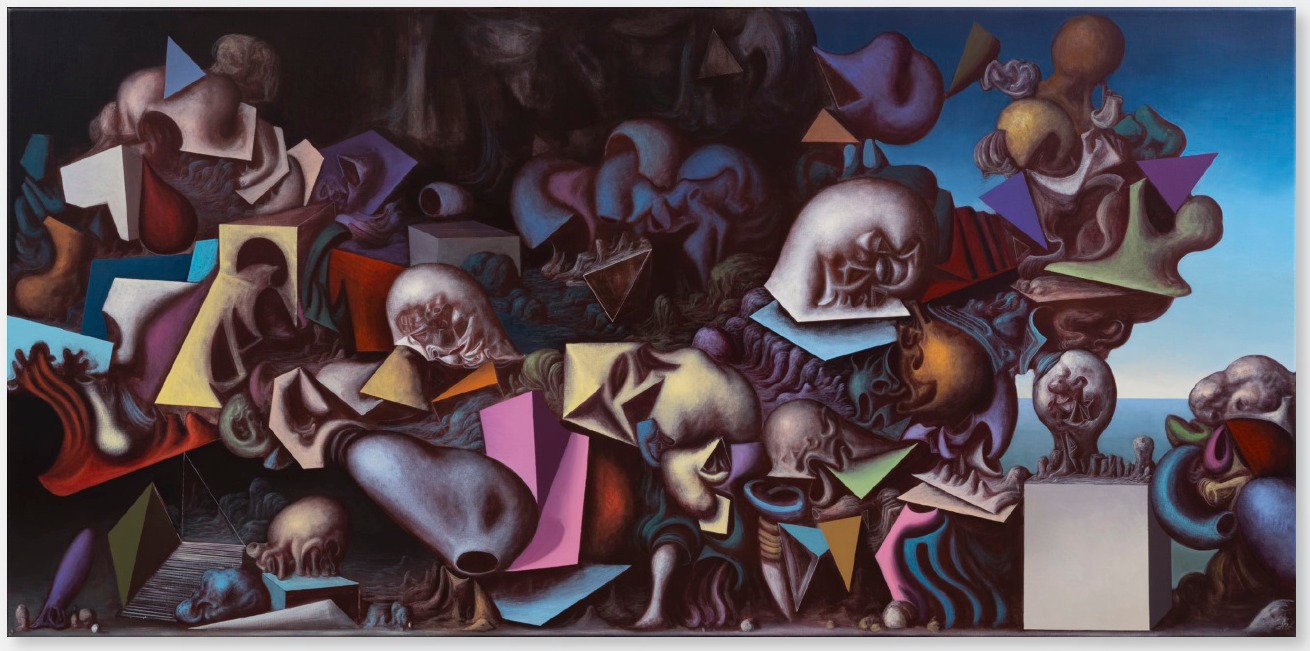
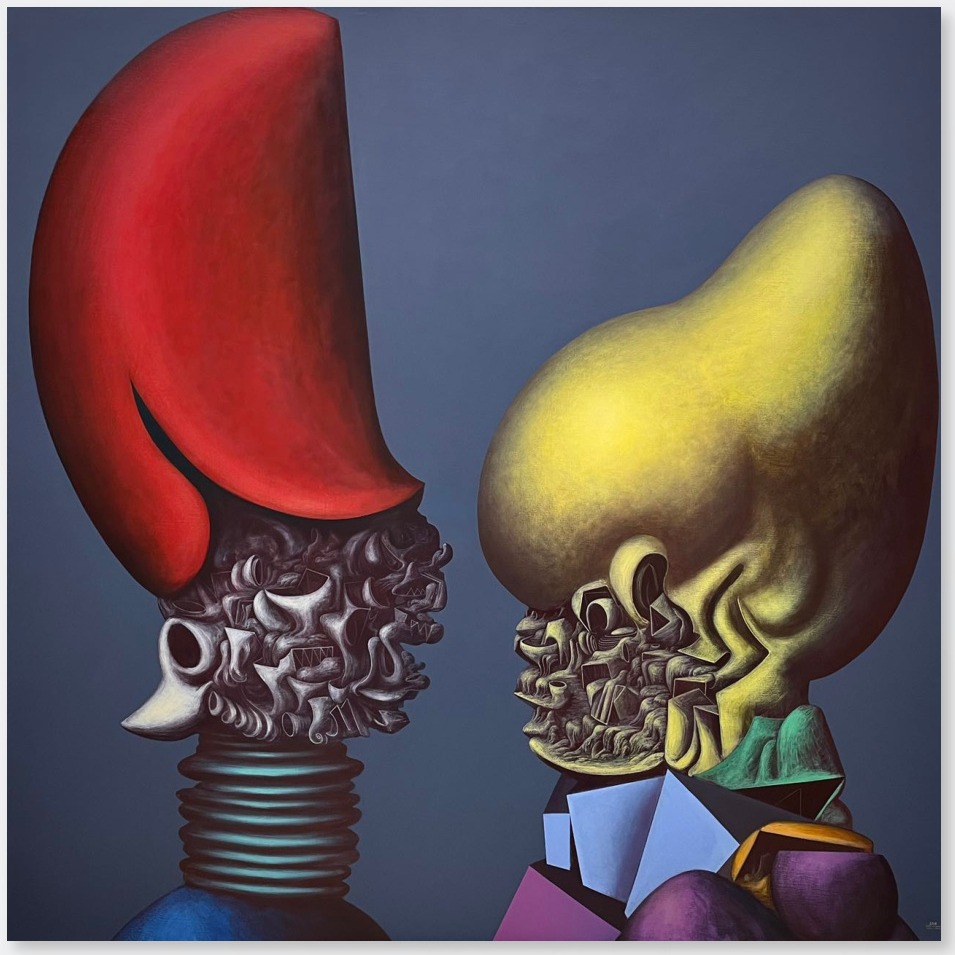
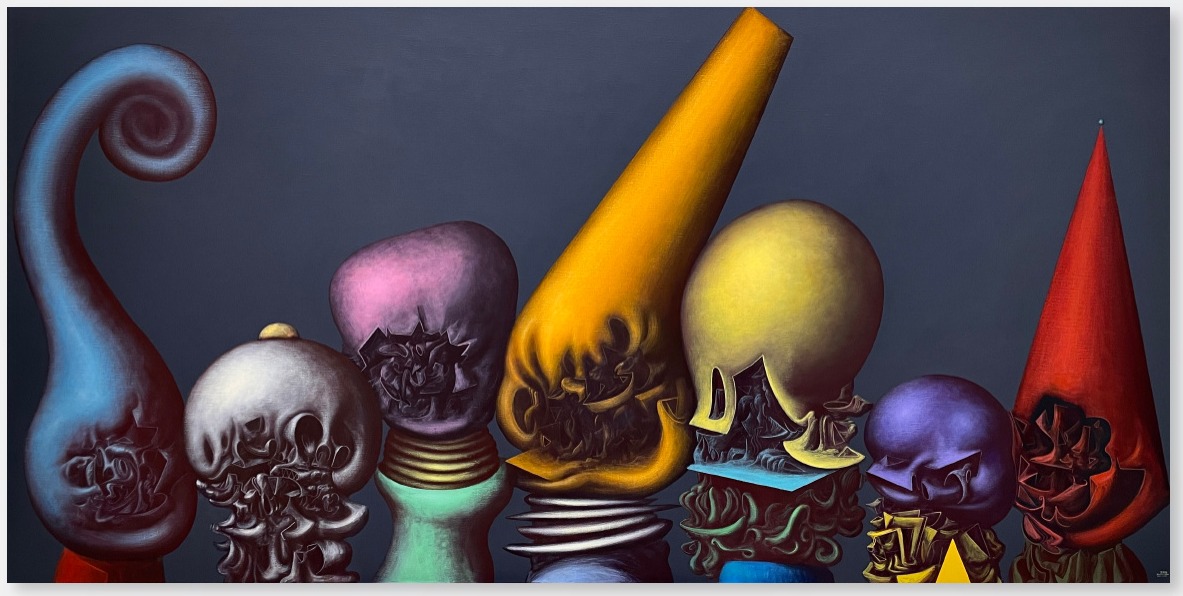
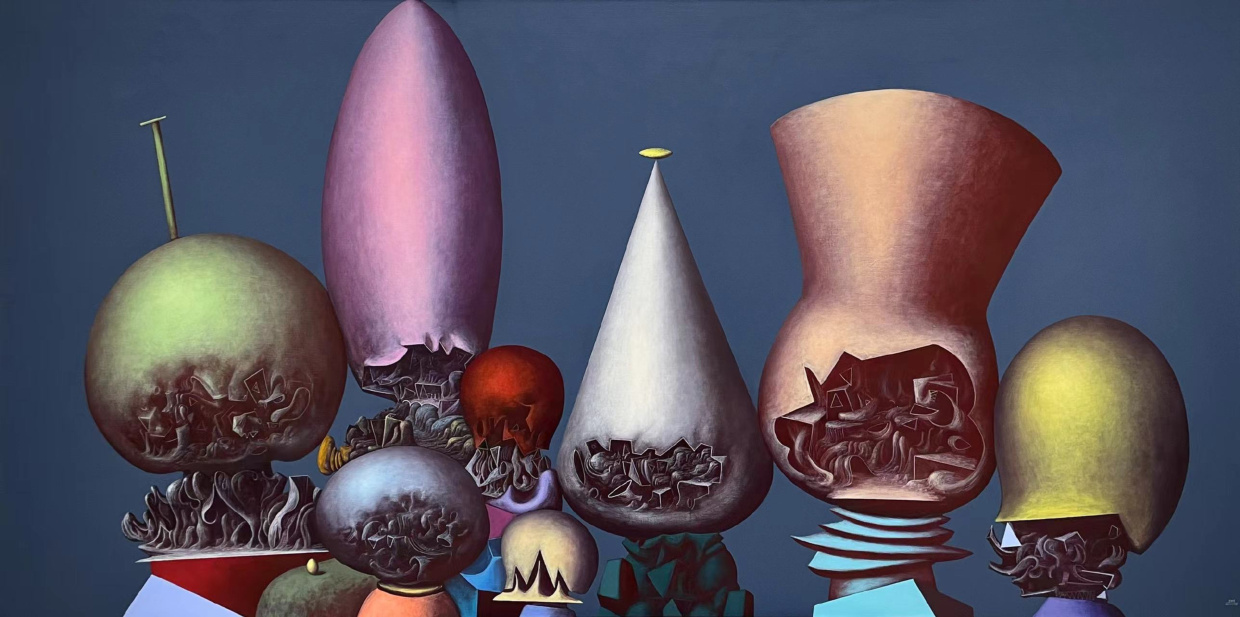
a highly formalized "folded body" replacing discernible facial features. It intricately delineates the myriad facets of the capricious real world. Compared to his previous landscapes and other series, the latest
"Portrait" series represents Fanseng's further refinement of painting. Those "mountainous forms" are often compressed to a corner, suggesting the illusion of scale relationships; the symphonic sense of rhythm gives way to refined expressions in composition. Personified images often stand side by side in the form of half-length figures, resembling architectural towers in a rhythmic fashion. Formal apertures, folds, and geometric shapes collaboratively construct abstract bodies and faces. However, they are no longer just faces but a blend of landscapes and portraits, combining to form a "faciality"—evoking Dong Qichang's inscription for Wu Bin's painting The Five Hundred Arhats:
"If one sees all appearances as no appearances, then one sees the Arhats." The creation of the "Portrait" series can also be seen as a contemporary echo of the same spirit. Fanseng's breakthrough in portrait painting lies in breaking free from attachment to the concrete subject. Subsequently, using abstract forms to carry perception, allowing perception to flow without solidifying in reality, it freely converges into the myriad expressions of the human heart and desires in the viewer's gaze—termed by Faneng as "One Heart, One Portrait." As a metaphorical expression of the current reality, the "Portrait" series intrinsically retains the eternal essence of humanity. These portraits, constructed through pure, abstract forms, reveal the unceasing nature of desire and present a certain temporality on the surface structure. As if the portraits could disintegrate at any moment into colors, lines, forms... Fanseng only temporarily borrows external forms, injecting his perception of the reality into them without forming a definitive answer. Thus, in the constant interchange between painting and reality, the "Portrait" remains free due to its abstraction and generates meaning through its anonymity.
文/邵光华
参展艺术家Artists
作品