仇英的房间
展览信息
前言Introduction
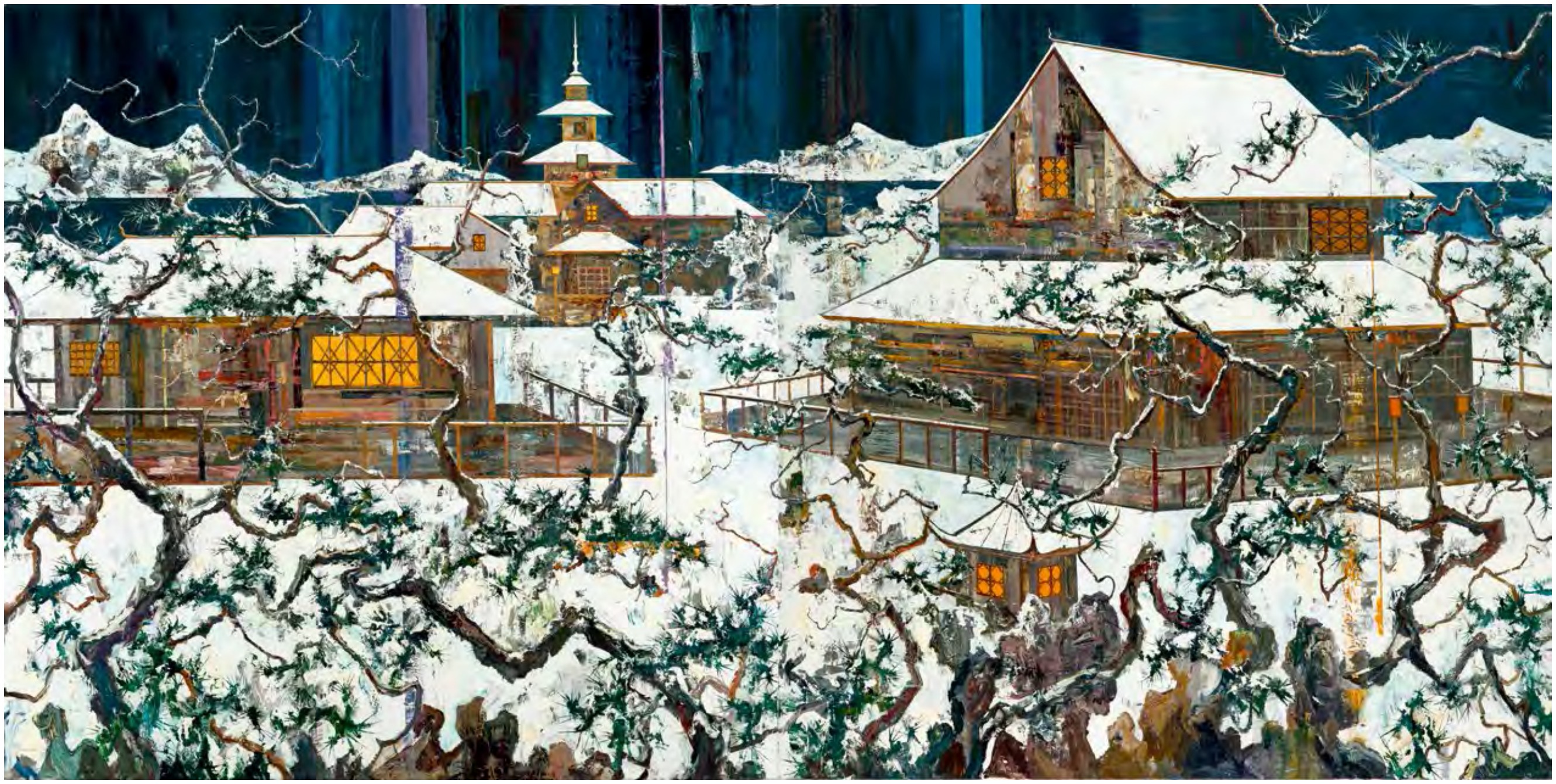
黑匣子斗转迷雾前莫测,梦回文人复家园能谈谈你对儿时老宅子的记忆吗?舅舅家的老宅子,是外曾祖父留下的,一楼就是以前的中药堂,外曾祖父是一位德高望重的老中医,我没见过他。但我记事时,外曾祖母还健在,她出生在清朝末年,直到活了94 岁去世。我小时候每年寒暑假都会去老宅住很长一段时间,对老宅子特别有感觉。它是一个三层结构,一楼主要是厨房、客厅和两间卧室,二楼也是卧室,外公外婆、舅舅、舅妈,两个表哥都住在一起,晚上会一起看很多香港的老电影。三楼几乎完全没有修缮,柱子和房梁的榫卯都保留了很老的木质结构,还有一个晒被子的巨大露台。由于它是全开放式,没有包裹,视野很好,能看到蜿蜒的街道和各式高高低低的老房顶。印象中,小时候会和两个哥哥上去捉迷藏,其中还有一个阳台每到下雪的时候会有积雪,我们会在那打雪仗。为什么这座老宅子跟你的绘画产生联系了?随着年龄的增长,到初中时我就决定学美术了。有一年暑假,因为母亲的工作调动,就让我一个人去老宅,虽然有点不情愿,但我还是带着速写本去了。丽水是有名的火炉城市,夏天气温特别高,我就跑到阁楼去画画。那时阳光透过窗格进入到房子里,地板上产生了许多锐角、钝角的光影。虽然我画的是素描,但当时我把这些东西都描绘出来了。这是唯一一次画那座老宅子,因为后来租掉了,舅舅也搬家了,但我开始迷恋起这种老结构的东西起来,每逢过年路过老家,也会在这座老宅子外面看上一眼。后来父亲的收藏、日本的寺庙,都对我产生了一种类似的共鸣,比如我对老旧的颜色,木板上留下的斑驳痕迹的迷恋,都可能是从小在老宅子阁楼玩耍时留下的烙印。
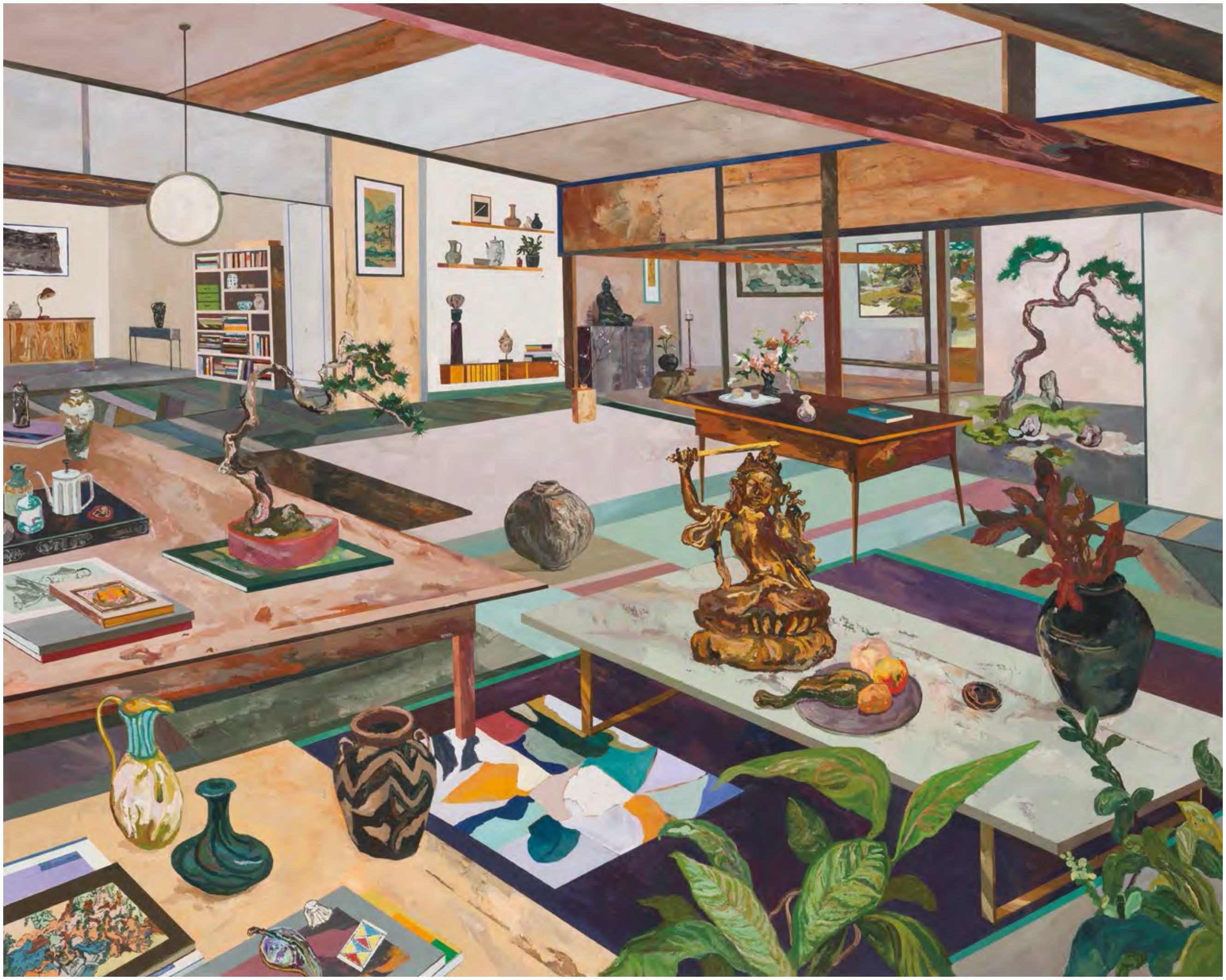
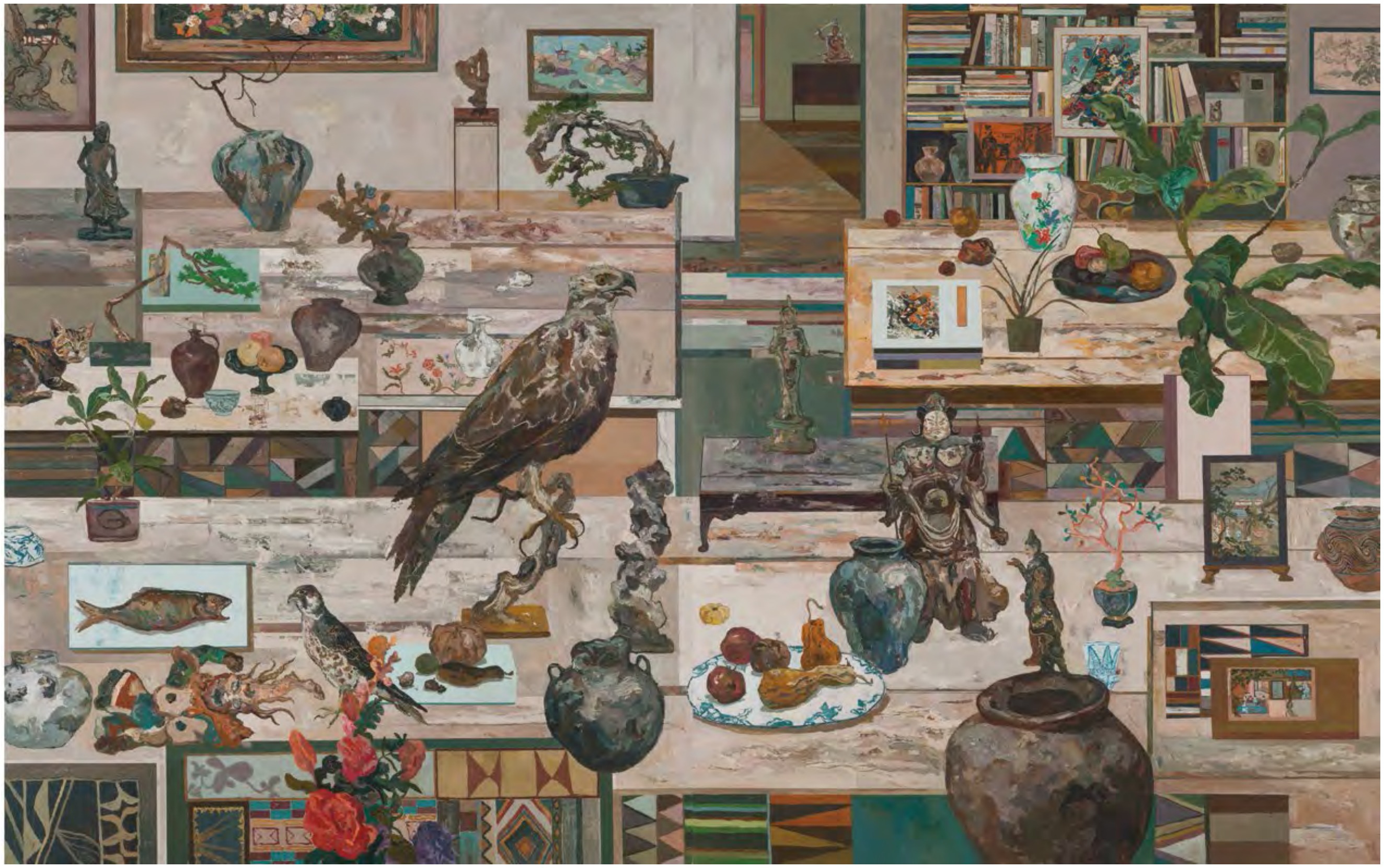
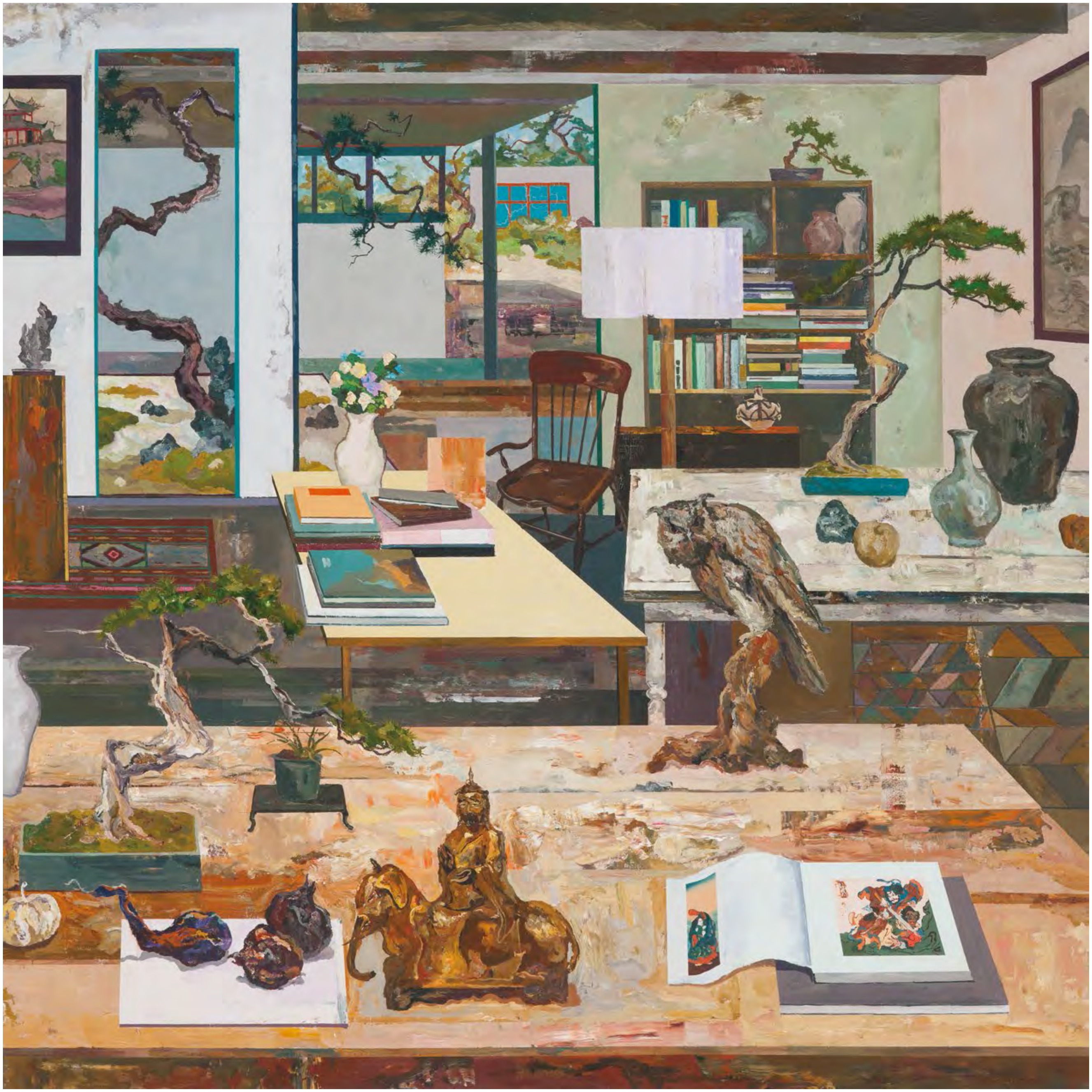
这次特别提到了父亲的书斋,能讲讲你对于它的印象吗?关于父亲的书斋,大约是在我小学四年级,一到周末,父亲就常去农村画画,有时也带上我,正好当时我有一点想走专业这条路。父亲每次写生完都会带一点东西回来,无论是捡的,还是从农民家买的,就算是一个碗,他觉得好看,就花钱买回来。有一次还买了一块巨大的石碑,要四个人来抬,上面有马在云上跑的元代造型纹样。后来一发不可收拾,什么门板、窗花、房梁上的雕花,都收了回来。父亲认识了一些做古玩生意的人,就开始去逛古董市场。后来到了杭州,收集的东西已经变成五花八门,就买了些小柜子和架柜,把东西都分类了放里面。久而久之他的书房就成为了一个展示他收藏的微型博物馆。父亲的书斋似乎也对你的创作产生了不小的影响。我父亲最大的乐趣就是把这些老物件从架柜里面拿出来,再把别的东西放进去,不停地回味。这些东西摆在一起就是一种排列组合的游戏。这种组合的富足感,就成了父亲的成就感。我读国美附中以后,就以这些瓶瓶罐罐为题材,画了一系列课外的作业,有水墨素描,也有油画写生。还连续几次获得了学校课外作品展的优秀奖。这些老物件也给了我审美上的一个启蒙。无论是它们本身的造型,还是遗存在上面的制作者的手工温度,都是对我审美的直接刺激。那么,这些是如何转换到你当下题材的创作呢?在大学之后,我尝试了很多不同题材的创作,比如大量人物的群像、魔幻的超现实主义以及更当代的一些内容,静物题材似乎与我渐行渐远。但突然之间,我发现无论什么类型,都有些审美疲劳。于是去年开始,我想我应该画一个跟自身相关的东西。倏然之间,印象中的父亲的书桌和我喜欢的一些画家,如仇英的作品,作成了个组合。我回到的不是一
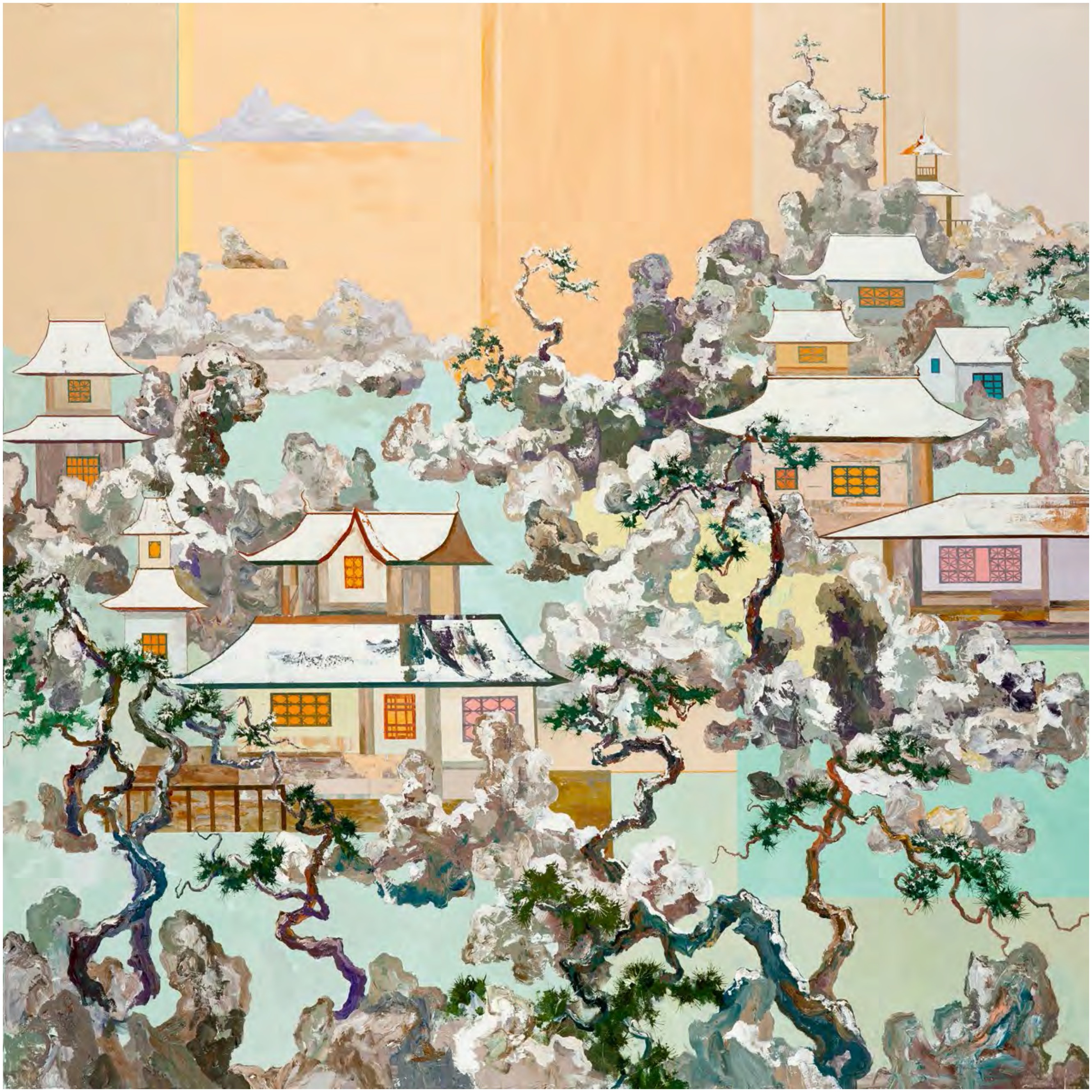
种学生时代的写生,而是一个记忆与想象的杂糅状态,一种将小时候耳濡目染的环境和我今天对书斋的想象结合在了一起的景观,形成了今天的这个创作系列。虽然此次展览以“仇英的房间”为题,但似乎实际的内容比仇英更丰富。在这个过程中,我一边营造一个环境,一边给这个环境注入内容。有点像在自己的画里造景。比如,我会在画面中的墙上挂上一件作品而形成画中之画,我偶然得到一本仇英的画册,而它的题材和形式,刚好能够契合到我自己作品中的需要。于是,我将仇英的很多作品经过一些处理后,大大小小安排在我的画面里面。有一次我读到一篇文章,讲述的就是司马光的独乐园:当时因为新旧党之争,他遭到罢黜,就回到了自己的书斋,取名叫“独乐园”,还写了一篇《独乐园记》。数百年之后,仇英看到了这篇文章,就按照文中所描述的十几个场景顺序,包括司马光在园中钓鱼、游玩、喝酒、宴乐的生活,画了一张《独乐园图》,仇英把司马光的生活按自己的方式给复原了。我画《仇英的房间》就是用我自己的理解去呼应仇英画司马光的生活,就像是一种轮回。当然,我的方法并不是通过文本,因为我也没有看过仇英写的关于自己生活的文章,但是,我通过一种想象,杂糅着我自己的一切记忆去画,也是对仇英生活的一种再创作。这种画中画的时空迭代,实际上是一种文人梦的追寻。仇英所感兴趣的是对一个前辈文人的生活,我对这个行为的再创作,是一种中国人对理想生活和乌托邦精神家园的想象和向往的契合。我的作品跟现实肯定有一种距离,这种距离就是你想要的慢悠悠的生活,但至少现在对我来说可遇不可求,远远没有达到这个阶段。我想通过创作,将一种现实中不可得的生活向往展现出来。
现实中不可得的生活向往,对你来说,绘画是否是通往它的方向?或者说,永远只能在精神层面实现,而非现实层面?我看到一篇文章谈到王维的辋川,文章最后写:斗转星移,时过境迁,那么多大文人的园林,最终什么都没有留下,无数古人营造栖息的理想家园,见证了世代兴衰、人间沉浮,最终皆化为尘土。但所幸我们还有诗歌和绘画,能够让我们去回望寄托那个遥远的梦。这个梦怎么说呢?有一点伤感,但也很浪漫。绘画把这种物质化的东西转换成了一种精神的记忆。当你看过一张画之后,即便是在真实的景——这种老宅也好,器物也罢,烟消云散之后,你在脑海里还保有这样一种想象和记忆,这就是文字和绘画可以穿越时空的力量。我创作这些作品,不只是画一个景和一个物,而是一种时间的穿越,去抵挡时间侵蚀的强大的精神力量。这次有一张比较特别的大尺幅作品《嵬山行》,某种程度上来说,对我的第一印象,它就像是一张大网,它似乎与你的迷蒙的时空感有着一些关联。这次有一张特别的作品是《嵬山行》,它是我研究生毕业作品所使用的绘画语言。颜色非常浓重且统一,基本上就是两个色块,描绘的是错综复杂的树林,在林中隐约可见几个登山的人。因为那时我画了一段时间的素描,以木炭为一个巨大的渲染,然后在里面的灰度中去微秒的勾勒一些形象,比如人物和许多树木的细节。树林一直是我比较喜欢的题材,可能是我小时候的老家多山丘的缘故,包括杭州周边也有许多这样的野山,爬山时,最吸引我的都不是远景,而是眼前一棵棵枯老的松树。我觉得在一个巨大的原始森林里行走,你会感受到大自然的一种神秘力量,甚至会想起小时候的传说,山里的各样妖怪,如果你被它们迷住的话,就会把你一辈子困在山中,我想在画面中去传达一种超越常识的东西。
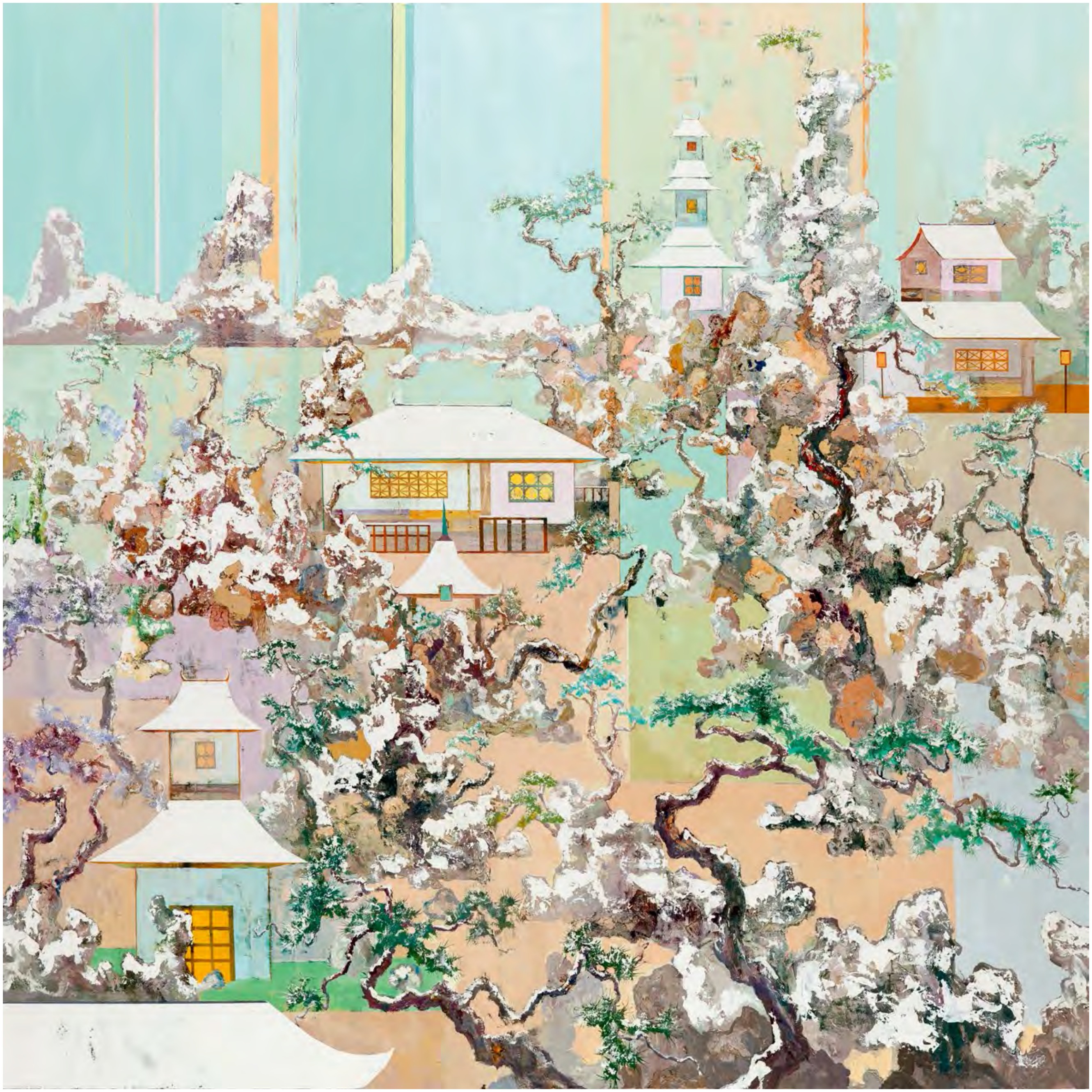
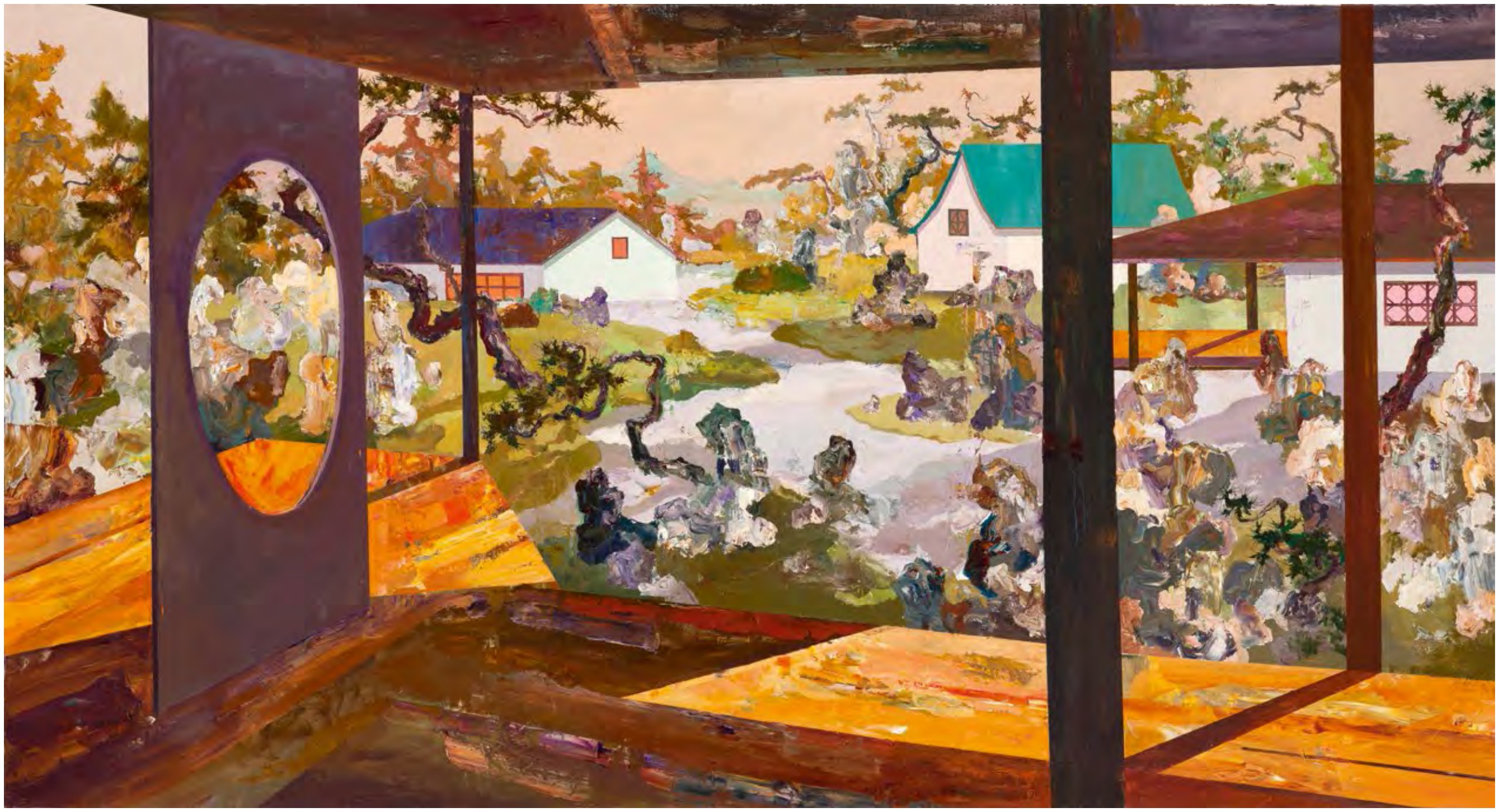
这种盘根错节的感觉就像一个黑洞,神秘莫测。除此之外,在建筑空间类作品中,似乎你的视角也与以前发生了许多变化,从以前的在外观看,逐渐进入空间之内。偏阳光一点的作品,比如这次的“独乐园”系列,我在里面使用了很多的圆,包括窗户的结构,这种圆洞就是中国古代的月亮门的形状。在一部香港的老电影中,讲到晚唐诗人鱼玄机的故事,她与情人隐居之地就类似我画的这种房子。它是通透的,墙与墙之间没有严密的包裹,墙上都开了圆形的窗户,可以望到外面湖光山色,这是一种飘逸的舞美的结构。是不是真的有这样的房子我不知道,但你每转过一个门廊和柱子,都可以看到一片景色,大自然成了房间里所挂的画。你认为你自己是怎样的一个艺术家?觉得自己有点偏意识流的感觉,有一点混淆,就像有一首诗,说看着这一片草原上的墓碑,难道不是前世的我躺在里边吗?我相信人有轮回。在技术层面,我一直觉得自己像海绵,是一个吸收型的艺术家,拾众家之长,作画时跨越历史的文本融入自己的想象。我至少现在还是比较享受这种丰富的感觉,创作一直穿插着一些不同系列,而不是一直画一个东西,题材虽然变化不大,但表现方式还会有一些穿插和转换。我认为所有的东西都可以运用调动起来为我服务,武侠小说、电子乐、邪典电影、广告插图、浮世绘、漫画等等一切我有兴趣接触的艺术门类都会成为我的养料。但有时也会有一个问题,就是不求甚解,不喜欢考据。我更关心的是一种直觉性的东西,行动力比较强一点。
Can you talk about the old mansion of your childhood in your memory?
The old mansion where my uncle,s family lives is inher-
ited from my maternal great-grandfather. The first floor used to be a Chinese medicine clinic of my maternal great-grandfather, a highly respected veteran doctor of Chinese traditional medicine. Unfortunately, I never had the opportunity to meet him. My great-grandmother was alive for as long as I can remember. She was born in the late Qing dynasty and died at the age of 94. I visited the old mansion and stayed there during winter and summer breaks each year when I was a child, which gave me a deep attachment to the place. It was a three-story struc-
ture. The first floor mainly comprised the kitchen, the living room, and two bedrooms. On the second floor, my grandparents, aunts, uncles, and two cousins had their bedrooms, where they enjoyed many classic Hong Kong movies together in the evenings. The third floor was barely renovated, preserving the original wooden Like in the mist full of twists and turns, we return to the literati's dreamland Black Box
structures with mortise and tenon joints in the pillars and beams. It also had a huge terrace for airing quilts in the sun. Since it was fully open without enclosures, the estate offered a spectacular view of winding streets and a diverse array of old roofs of varying heights. I remember that as a child, I went up there with my two brothers to play hide-and-seek, and we had snowball fights on one of the terraces where snow accumulated every time it snowed. Why is this old mansion associated with your paintings?
As I got older, I decided to study art when I entered jun-
ior high school. During the summer break, I went to the old house alone due to my mother,s job transfer. Al-
though I was a little reluctant, I went there and took my sketchbook with me. Lishui was dubbed as a furnace city, where the temperature was especially high in summer. So I often ran to the attic to draw. When the sunlight shone into the house through the windowpanes, it produced many sharp and obtuse angles of light and shadow, and I depicted all of them even though I was just sketching. This was the only time I drew the old mansion because it was later rented and my uncle also moved out. But I be-
came obsessed with this vintage building and every time I passed by on New Year,s Eve, I would stop and look at it from the outside. Later, my father,s collection and
Japanese temples also evoked a similar resonance in me, such as triggering my fascination with the vintage hues and the weathered texture of the wood panels. All these impressions might be imprinted on me from my child-
hood experience in the attic of the old mansion. You specif ically mentioned your fa-
ther,s study this time. Can you tell us about your impressions of it?
About my father,s study, around the time I was in the fourth grade, my father often went to the countryside to sketch on weekends. Sometimes, he took me with him, as I was thinking about taking fine arts professionally. Every time at the end of the trip, my father would bring back something he picked up or bought from a farmer,s house. Even if it was a bowl, if he thought it was beauti-
ful, he would pay for it and bring it back. Once he even acquired a huge stone tablet, which featured a Yuan dy-
nasty design pattern of a horse running on clouds. It took four people to carry. He became obsessed with collecting objects like door panels, paper-cut for window decora-
tion, and carvings on the ceiling beams. He also met peo-
ple in the antique business and started going to antique markets. Later, he traveled to Hangzhou to make his col-
lection more diverse. He categorized his treasures and stowed them in small cabinets and shelves. Over time his
study turned into a miniature museum to display his collection. Your father,s study seems to have had a considerable influence on your creation. My father,s greatest pleasure was to take these vintage items out of the shelf or cabinet and replace them with something else, which was his tireless amusement. These items were arranged like a game of permutation and combination. The richness of the combination gave my father a sense of accomplishment. After I entered the Middle School Attached to China Academy of Art, I used these bottles and jars as subject matters for a series of extracurricular assignments, in the form of ink sketches and oil sketches. My works were awarded the Excellent Prize consecutive times in the school,s extracurricular work exhibition. These vintage objects also gave me an aesthetic enlightenment. Both the shape of the handcraft and the temperature of the creator left on it were like a direct aesthetic stimulus for me. So how are these vintage items trans-
lated to your current subject matter?
After entering the art academy, I experimented with dif ferent subject matters, such as group portraits, magical surrealism, and more contemporary content. I seemed to
and new parties. Sima Guang returned to his study, and named it “Garden for Solitary Enjoyment”. He also wrote an article entitled “Records of the Garden for Sol-
itary Enjoyment”. After centuries, Qiu Ying read Sima Guang,s article and painted the Garden for Solitary En-
joyment according to a dozen scenes in the text, which depicted the life of Sima Guang in the garden—fishing, sightseeing, drinking, and feasting. In his way, Qiu Ying restored the life of Sima Guang. With my understanding, I painted Qiu Ying,s Study to echo Qiu Ying,s painting of Sima Guang,s life. It was like a kind of cycle. Of course, my way of creation was not text-based since I had not read Qiu Ying,s writings about his own life. Instead, I painted it through my imagination, mixed with all my memories, which was also a re-creation of Qiu Ying,s life. This temporal and spatial iteration of a painting within a painting is a pursuit of the literati dream. of his approach matches the Chinese imagination and aspi-
ration for an ideal life and a utopian spiritual home. There is a distance between my art and reality, and this distance is the slow and leisurely life we are longing for. But atleast I can,t ask for it now, considering I am still far from reaching this stage. Through my creation, I aim to present a kind of unattainable life aspiration.
Is painting your path to the unattainable life aspiration? Or can it always be real-
ized only on the spiritual level, not in reality?
I read an article about the Wang Chuan of Wang Wei
(699-759), with the epilogue: The stars change in posi-
tions, and things have changed with the passage of time. There have been so many gardens of the great literati, but nothing has been left behind in the end. Countless ideal homelands created by the ancients have witnessed the rise and fall of generations and ultimately turned into dust. But fortunately, we still have poetry and paint-
ings, which allow us to look back and hold on to the distant dream. How can we interpret this dream? It is a bit sad, but also very romantic. Painting transforms material objects into a kind of spiritual memory. After seeing a painting, and even after the real scene of the old mansion or the artifacts disappeared, you are still impressed with the imagination and memory it has evoked. This is the great power of texts and paintings, making us travel through time and space. When I cre-
ate these works, I am not just painting a scene or an object. It is a kind of time travel, and a strong spiritual power to resist the erosion of time. With this exhibition, the artist will pres-
ent a special large-scale work, Travelling
参展艺术家Artists
作品