俒/ 勭刦
Text / Xiyun Du
涰勻䎃涸傈劥寐字䪾 Aesthetic 缺霖䧭
繠㷖た鄄梡宪露屠欽荛⡎䠭錣㷖
刿痗ざ Aesthetic 涸劥䠑կ繠㷖涸㹊餘僽䠭錣㷖蒌助涸㹊餘僽䠭錣助蒌助㹻僽㔵絗满䠭錣勻⨞䊨涸կ蒌助⡲ㅷ銳䟝エ䒸ծ䩧⸓
銳⟄繠㷖馰/ 䠭䚍눂⸂㼋/ 霶㔔կ
蒌助剣䖎㢴⸆腊կ剒⡛⸆腊僽鄳껑繠足կ刿넞涸⸆腊
僽ⵌ傞ծ爢⠔涸霢露孧㔵邍鴪㼆䖎㢴Ⱘ
⡤곿涸溏岁կ㕂〢獦䧭侅足ծ⸔⠡
䔲露㞯獦Ⰶ爢⠔ծ俒足佟屛կ
鵮剣雽㢴蒌助⡲ㅷ〳腊鄄雩㖈碫ㄤ㸙㸿涸
⸉Ⱘ剣厤猫牟㣼涸⸂ꆀկ鵯猫牟㣼涸⸂ꆀ〳⟄
獦鸣暟ず㖈Be with Godծ鸑抳Ⰶ牟
㣔ざ˘˘鵯僽蒌助涸剒帿鼥⟟⧩䨾㖈韭㨤
A hundred years ago, the Japanese Nakae ChÒmin translated aesthetics(esthétique)
as meixue (theory of beauty), which is still used in modern Chinese. However, the term theory of perception and sensation aligns more with the original meaning of aesthetics. The essence of aesthetics deals with sensation. At the heart of art is the art of senses and feelings, and the artist is a person who works around emotions and expressions. A work of art must be preceded / induced by aesthetic interest/
sensory appeal to attract and impress its audience. Art has different levels of function. The lowest is to decorate and beautify. At a higher level, it is to participate in the discourse of its time and society and to express views on many specific issues. The ancient Chinese called it enlightening people and improving human relations; in the contemporary context, it engages in social and cultural politics. Many works of art might have magical power in human and cosmic affairs. This miraculous power might relate to being with God, the ability to communicate with the supernatural, unite the human world and the heavenly, etc. Such power lies in the deepest value of art, starting from the art of primitive man and continuing from ancient times to the present. The profession of an artist, so to speak, is gradually transformed from shamans and mediums in primitive societies. Jiang Miao's artworks showcase the artist's mastery in capturing visual allure, enveloped in an atmosphere brimmed with emotive energy that entices the viewer to linger. Her innate talent for visual forms is evident as she effortlessly creates rich and intricate imagery. This visual talent is endowed by nature and enhanced through repeated refinement over a long time. Jiang Miao is prolific, fueled by her visual talent and a yearning for self-expression. Her body of works encompasses several series, varying
Ⱏ羭Three Hares with Conjoined Ears / 䗄梠䖃㢕 欰暟Moving in Circles, Three Producing All Things / 侚摕 Dunhuang
蔄㖁嫢㣐侅㛔涸瑜곝 Dome of the Cattedrale di Santa Maria del Fiore
鵥
눂
鸑抳
㩍幓
涸馄
낉
歲
Returning to the Enchantment: Jiang Miao's Transcendental World
㩍幓 JIANG MIAO
05
04
涸蒌助䒓㨤〢荛騟䒁絯勻կ㹊蒌助㹻鵯翟㽠僽韭㨤爢⠔涸䊱䋗ծ抳㯮鷶幯鲮䰃罜勻涸կ
㩍幓涸⡲ㅷ㼆錠錣눂⸂涸䪾䳣腊⸂儑罜僒錛䕎蒀孧㔵峕形满껒忘涸䠭䚍腊ꆀエ䒸끸駈殆鵶կ
鵮剣끻鲽㽠擿涸鸣㘗腊⸂㺢籖勇涸ぐ猫䕎韌⡃
⥌䩛䬖勻鲽匠ⵌ⡙կ鵯猫錠錣䩞廾ㄤ㣔餻僈儑Ⱒ翫鵮剣傟傈䭯涸㢕Ꝭ捃կ
錠錣䩞廾ㄤ邍鴪妝劅涸끮⸓㩍幓䖎㢴կ㥟涸
⡲ㅷ荛䊺剣㢴禹ぐ禹ꢂ涸䕎䙖」足䖎㣐⡃䨔搬ず䕹姼湱䒗կ⡎㸐⟌Ⱖ㹊鿪㖈邍鴪蒌助㹻㖈抳鵯絶䏞涸⡤낉ㄤ곭䝎կ㖈牙
눂涸傞鵯⨊⨊僽㥟涸併䠭勹䖦䖑뇹暭唀絗䗱剣䨾䖤䎾䩛կ崨䎃⡃宐䂽㔐騟鲮
欰㖈Ⱖ駮㸶饰⠃ծ䠭䢸尢剣䠑偽䠑ꢂ
抳
䧭㥟⡲ㅷ」涸嫢곿騟Ꝃ꣥ㄤ䒁䒗荛կ
⟌欽抳Spirit鵯霒宨勻䭷嶍ꦼ⟄䙼雳涸㣼㦪腊ꆀꬋ暟餘禾鸣ㄤ끮⸓暟餘〳錛
禾腊鸑鵂〳錛暟僈涯ծ溏錛կ㣔暟欰剣
⡲Ⳝ⡦㹻涸䋷 God The Divine Geometer /
紨1220-1230 䎃 Circa 1220-1230 / 㤵㖑ⵄ㕂㹻㕃껧 Austrian National Library
⠃纡㥎㬜㕃 Painting of Fuxi and Nuwa / 緸絞䶰㕃 Quote from Internet greatly from one to another, seemingly distinct and different, deeply rooted in the artist's experience and profound comprehension of spirituality. In an era of disenchantment, Jiang Miao is captivated by the opposite
ˋ
an enchanted realm where her sensibilities thrive and flourish. For an extensive period, she has wandered, dreaming, contemplating, and translating her thoughts onto the canvas. The passing years have mirrored the ebb and flow of water , with the path meandering into a life brimming with emotional highs and lows. Whether consciously or unconsciously, Jiang Miao's creative focus remains steadfastly anchored in spirituality, an unchanging subject matter in her creations. The term "spirit" is often referred to the incredible energy that is intangible, yet it possess the ability to create and propel the physical world. Though invisible its presence is understood and can be perceived through visible manifestations. As mentioned in the Tao Te Ching, Chapter 40 "All things in the world are born from Being, and Being is born from Nonbeing." Similarly, in Romans 1,"Through everything God made, they can clearly see his invisible qualitiesˋhis eternal power and divine nature. So they have no excuse for not knowing God." While the spiritual realm may not be directly observable, it is crucial to return to our daily experiences. For instance, surgeons cannot physically see thoughts during the numerous open-heart surgeries they perform, every living person is aware of the presence of thoughts within their own minds. From 2003 to 2015, Jiang Miao created many woodcuts, lithograph works, oil and ink paintings. Her exceptional mastery of form, monochromatic visual tension, and surrealist language unleash a surge of ever-changing perceptions. These perceptions point reflect both her state of mind and the experiences of others. The world is the externalization of the human heart. By earnestly perceiving one's inner self and keenly observing the signs of the world, one can gradually recognize the attributes, state, and direction of one's mind. These visually charming and vibrant works are filled with exuberant desire, fermenting a viscous, spasmodic, and even filthy, wildly dark breath, twisting and winding, undulating and fluctuating, coalescing or diffusing, searching for every possibility. Dostoevsky, who saw the depths of the human psychic, wrote: "A true autobiography is, in fact, impossible because every man lies to himself."
(Notes from Underground). "If only it could come about (which, following the laws of human nature it never can, of course), if it could come about that each one of us were to describe his innermost secrets – secrets which one would hesitate and fear to tell not only to people at large, but even to one's closest friends, nay, fear to admit even to one's own self – the world would be filled with such a stench that each one of us would choke to death." (The Insulted and Humiliated)
But the moving power of art lies first in its sincerity and then in its truthfulness. As a form of expression, art has a strange power to lead artists to release their true state in the process of expression and even the secret state in their daily life. Jiang Miao's works, which took more than ten years to evolve, have such emotional power because they are not disguised or pretentious. In the mundane world, dark forces easily pervade man's mind, especially in this era of rapid change. When one questions oneself truthfully, no one is to deny the constant fluctuation and uncertainty of an inner world. The more sincere the artist's expression, the more she can provide a mirror that reveals the truth; the viewer, in the meantime, can relate to herself, resonate with the emotions and savor the nuances.
"We are all in the gutter, but some of us are looking at the stars." (Oscar Wilde) The
剣欰偽կշ麤䗞絑ո痦㔋宀畎 荈鸣㣔㖑⟄勻 鸣暟涸宕腊ㄤ牟䚍僽僈僈〳濼涸赡僽滚腊錛⡎诓满䨾鸣暟㽠〳⟄儯䖤〭偽〳䲀靄կ(շ縄끩ո痦畎) 麤鵴㔐ⵌ傈䌢絑낉㢪猰㣐㣗⨞㢴㼱⢾䒓곬䩛助鿪溏ⵌ䙼䟝⡎嫦崞满涸鿪䠑霋ⵌ荈䊹僽剣䙼䟝涸կ
2003-2015 䎃㩍幓⡲㣐ꆀ加ⵠ瀖晜屘歘ㄤ宐㟯⡲ㅷկⴀ蒀涸鸣㘗腊⸂ծ支蒀涸錠錣䓎⸂ծ
馄梡㹊涸露鎊倰䒭ꅺ佞满㥟嶑⸓崨」涸䠭䝎կ
鵯䠭䝎䭷ぢ㥟涸䗱抳朐䙖⟄⿺㥟䨾⡤낉ⵌ涸ⵆ
涸䗱抳朐䙖կ麤僽䗱涸㢪足溫霟涸䠭「荈䧮ⰻ䗱併Ꝙ涸錜㻋麤鶺韌〳⟄鷶幯雩幡涸䗱抳㾩䚍ㄤ朐䙖ծ倰ぢկ鵯錠錣눂⸂껒忘涸⡲ㅷ
傢渿涸妝劅㝱Ⱖ〄ꃋⴀ磨玸ծ汁䮜ծ荛寓崴ծ
期涸䎕冝孞䜂䪍⸓躊蹃ծ饰⠃岚⸓ⳕ翸䧴䓙侔
㼊䪪ぐ猫〳腊˘˘
峯㻋䗱帿㢅涸䙼㧆羴㣗倛㛇ⱗⵌ鿈溫㹊涸荈⠛㹊〳腊㔔嫦鿪㼆荈䊹霹靓կ
շ㖑㹔䩛雵ո〫銳䧮⟌嫦鿪腊䪾荈䊹涸ⴗꥧ猙䲽鶣殣⡎䙲』鶣㹲䙲霹涸
⟄⿺偽雿㥵⡦⠔㼆ⵆ霹涸⡎㹲䙲雷䙲㼆㥩剦⟌雷涸欨荛㹲䙲雷ⴀ
剣傞鿪侓㼆荈䊹䪬雩涸齡傞⦫歲㽠
⠔荎孞擞㣔䪾䧮⟌Ⰼ鿪絛擞娥կշ鄄妬ⲳ
鄄⣳鴉涸ո
⡎蒌助涸䠭㢅껷㽠㖈溫霟䚍搬た僽溫䭆Hug / 加ⵠWoodcut / 2020cm / 2003
宐㟯䩛珳Ink manuscript / 2003
㕂껎㽷Chinese Dinner / 䋒屘歘 Oil on canvas / 100200cm / 2011
㖁嫢巛㣔The Assumption of the Virgin / 䒼剽ⴗ倛猰 · 岚䲿㤎㽲 Francesco Botticini / 薉㕂㕂㹻繠助껧 The National Gallery, London
07
06
and Mindfulness. With their compelling style and radiant colors, these works reflect the artist's inner world. In the process of dialogue with herself, the images come into being. In traditional Chinese culture, where Confucianism, Buddhism, and Taoism converge, there is no unbridgeable boundary between human nature and the wondrous spirituality of the universe. Through practice, one can achieve the state of union between man and heaven; that is, one receives the call of the spiritual world through communion with one's deep mind and transcends the self in the world of experience. The purpose and method of this pursuit can be described as "self-salvation" or
"immanent transcendence." "All Prajna wisdom arises from the self, not from the outside, so do not be mistaken." (Huineng)
The assumption here is that human nature is complete and self-sufficient, that "nature is Buddha" (Hui Neng), and that the "infinite wisdom and mind" (Mou Zongsan) is latent in the deepest part of the heart but is often obscured and bound and confused by the surface experience. Thus, one seeks to realize one's nature through various methods to be liberated upon enlightenment. Those moments are the unity between man and his own nature, the union of heaven and man. At this point,
"although man is limited, he is infinite" (Mou Zongsan). Jiang Miao is also seeking answers to the cosmic and life from the depth of her heart-to-
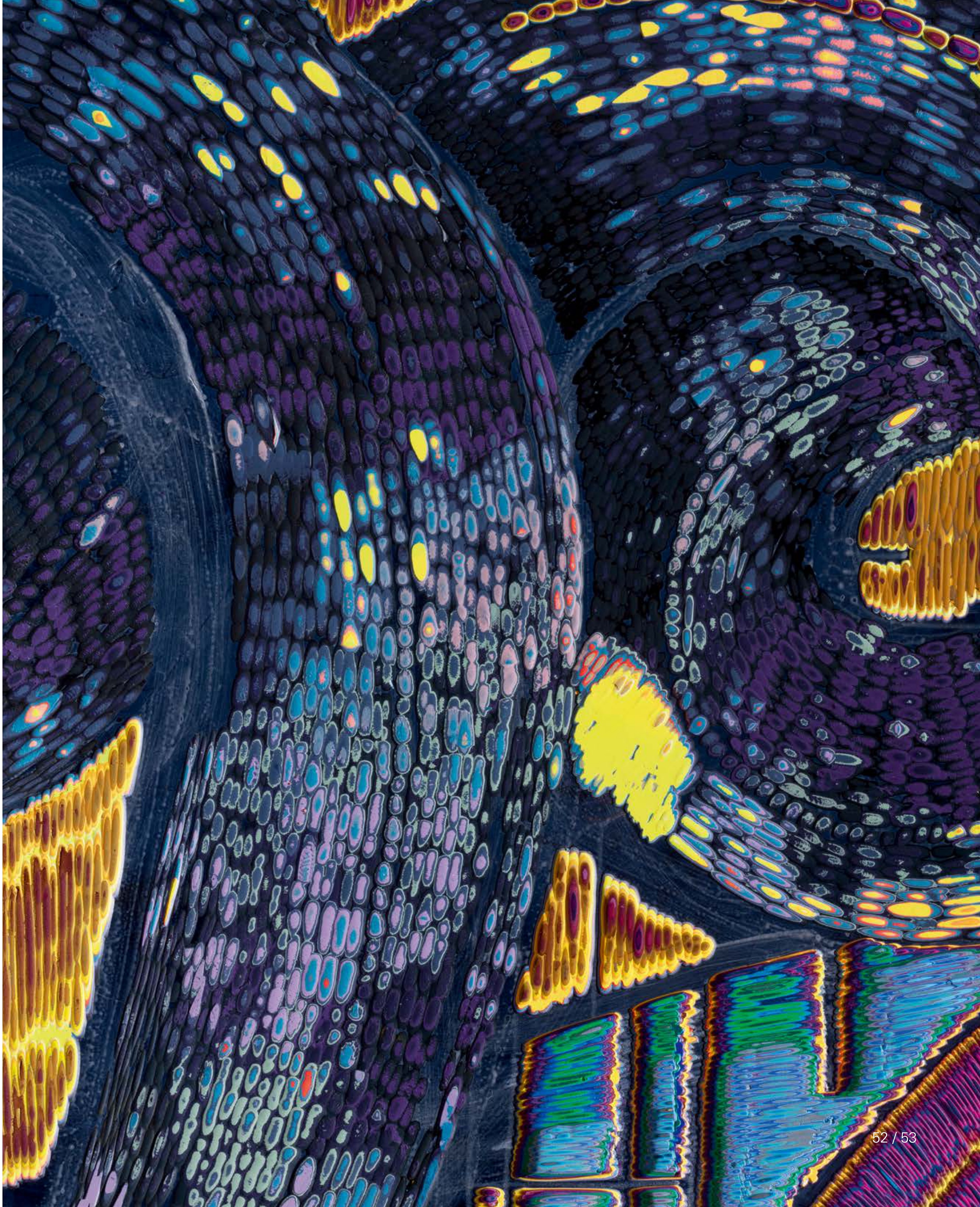
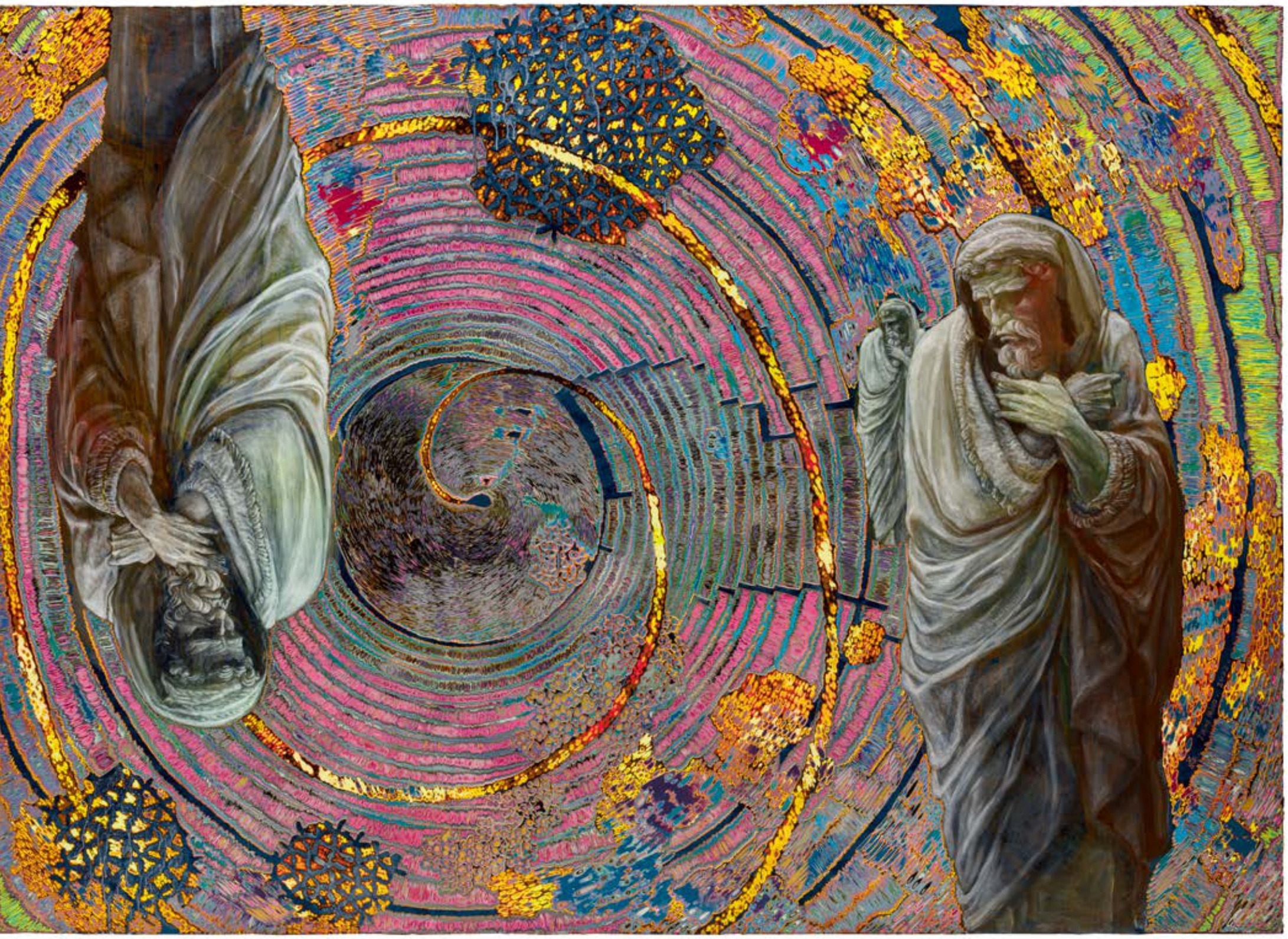
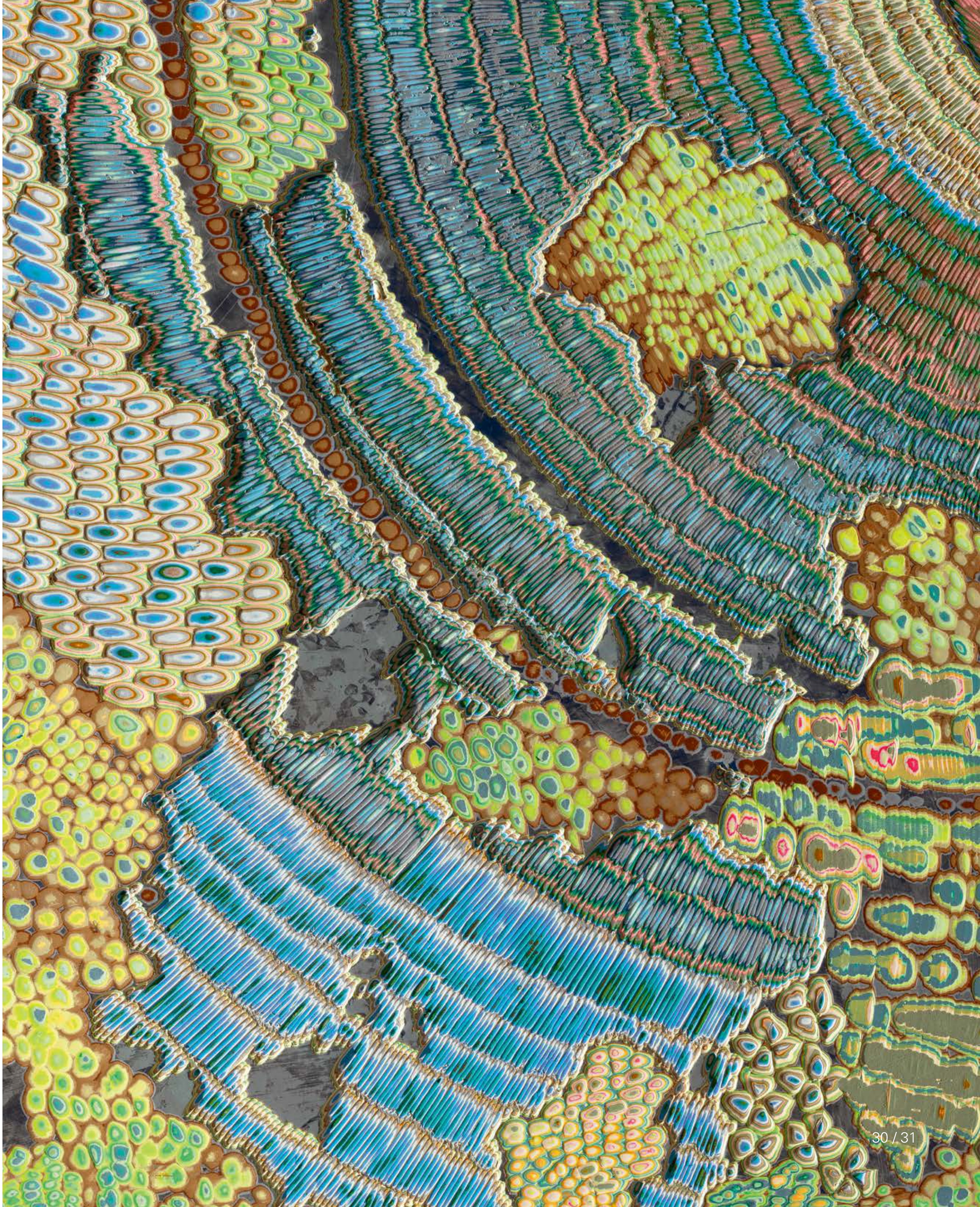
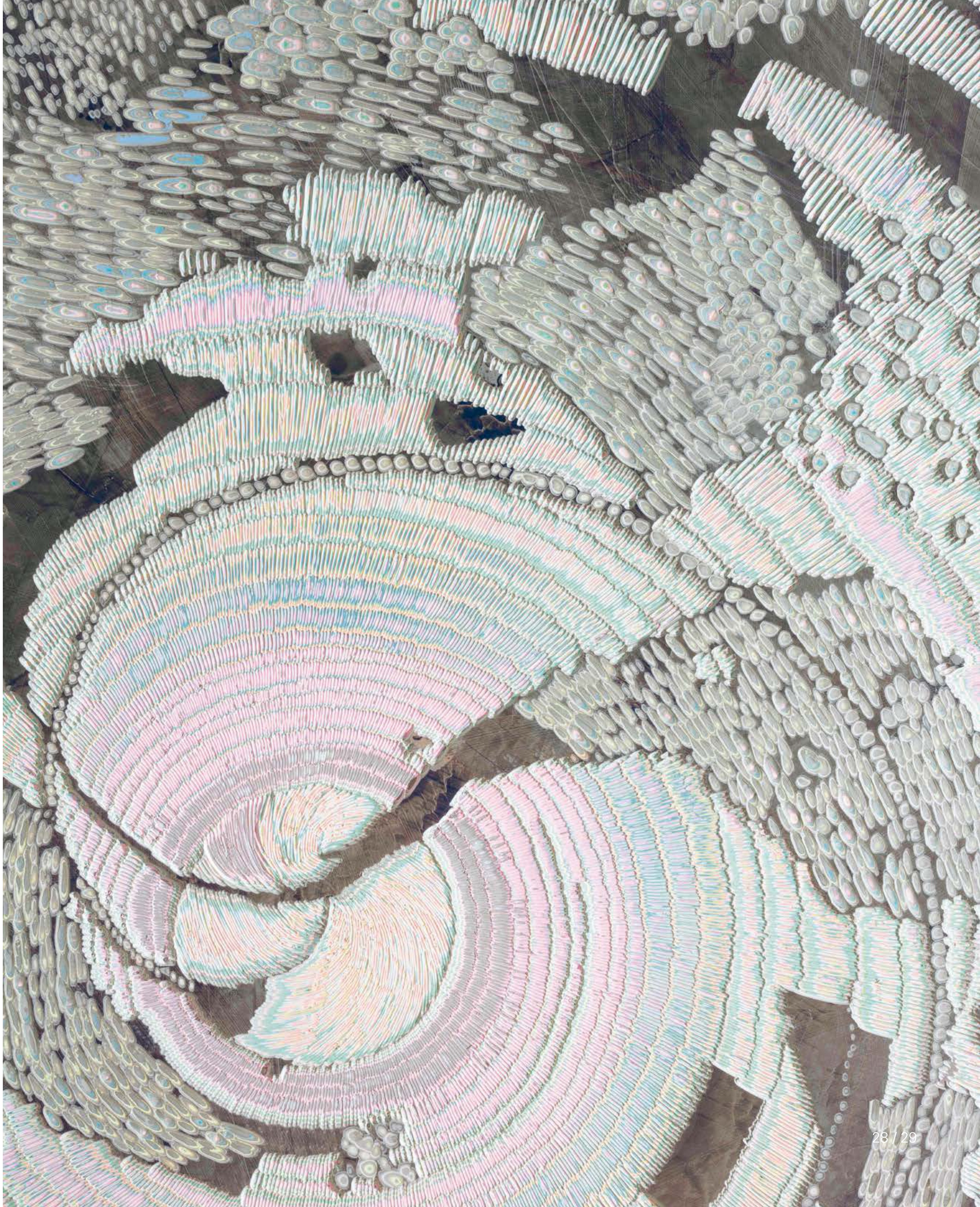
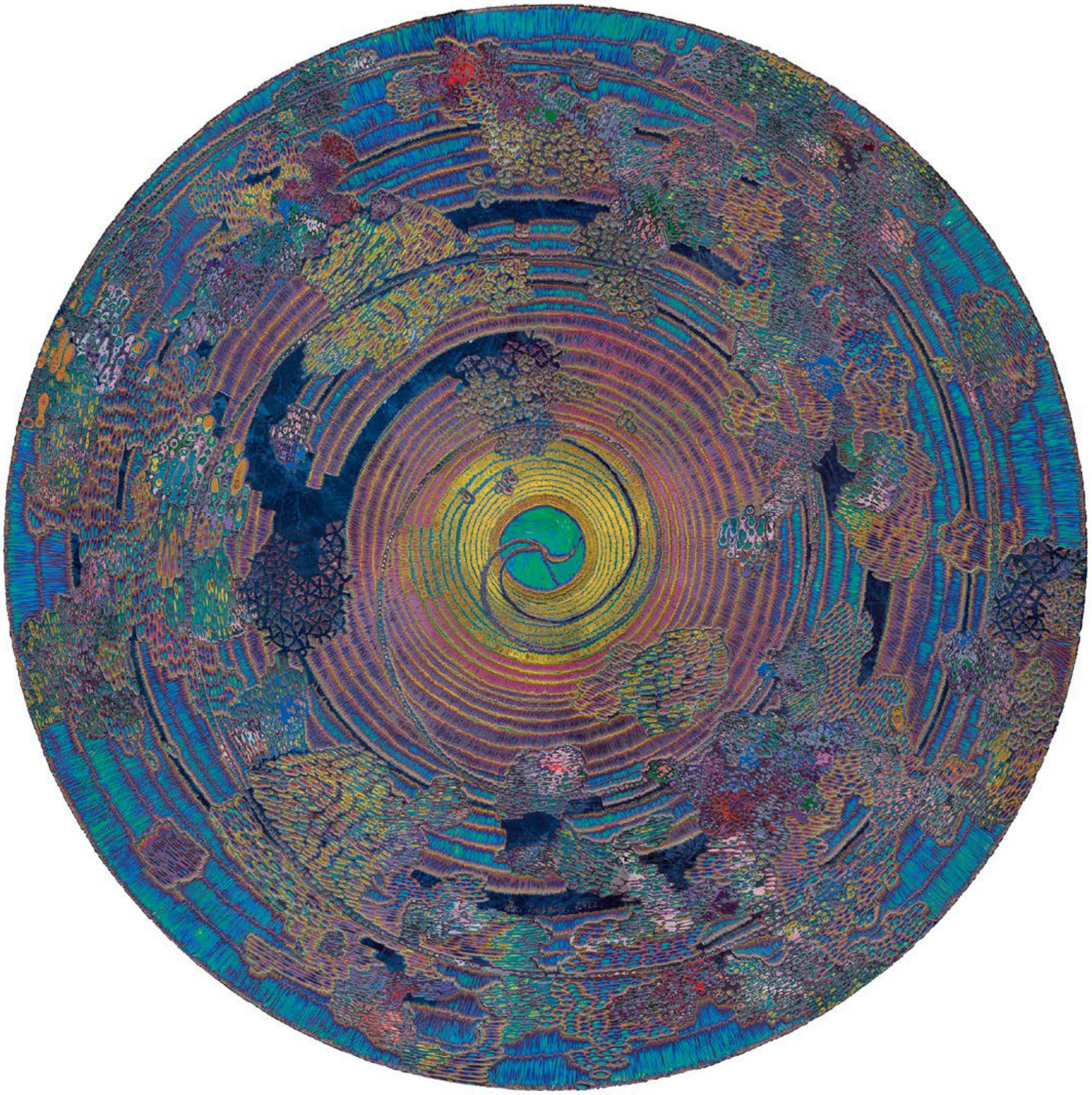
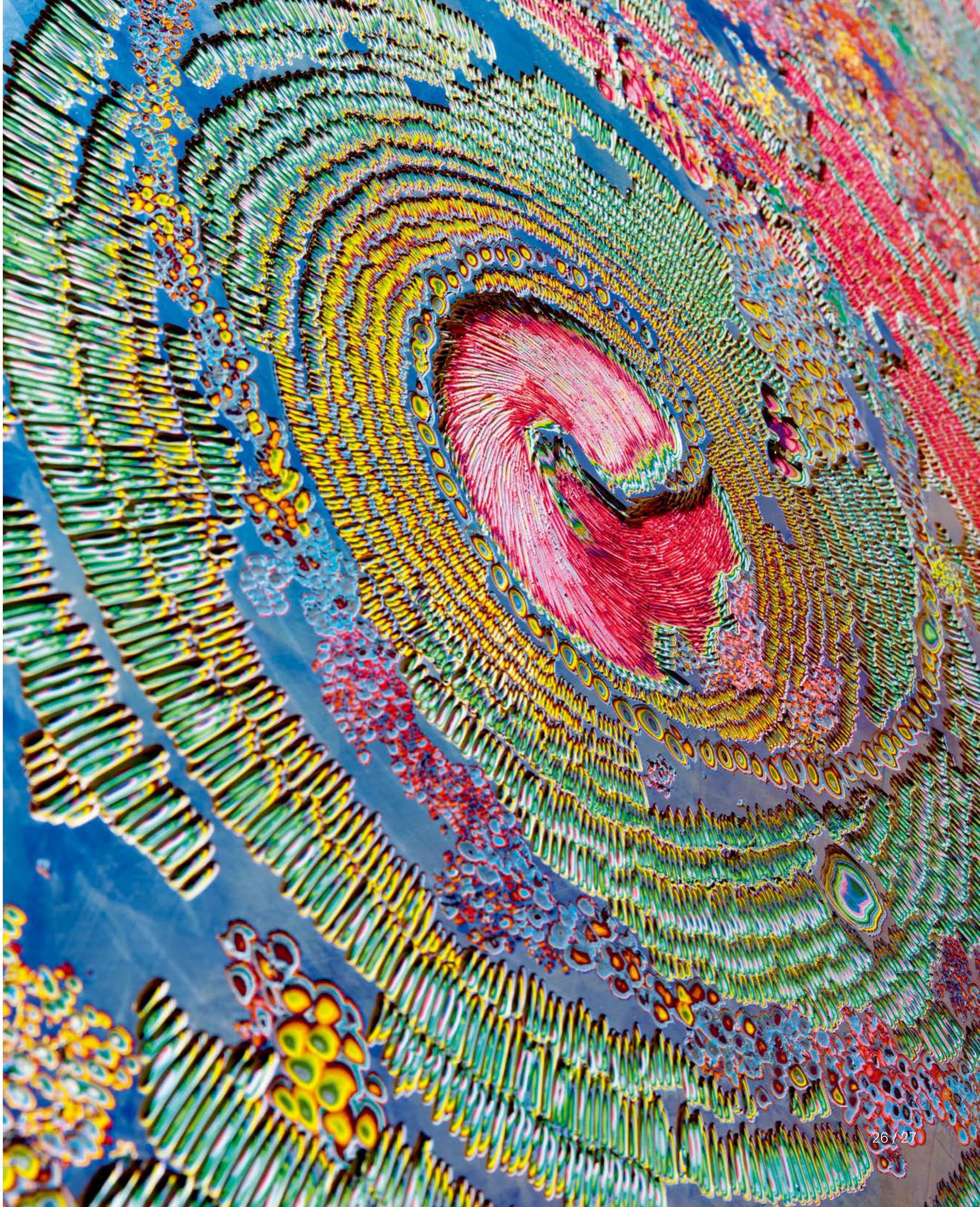
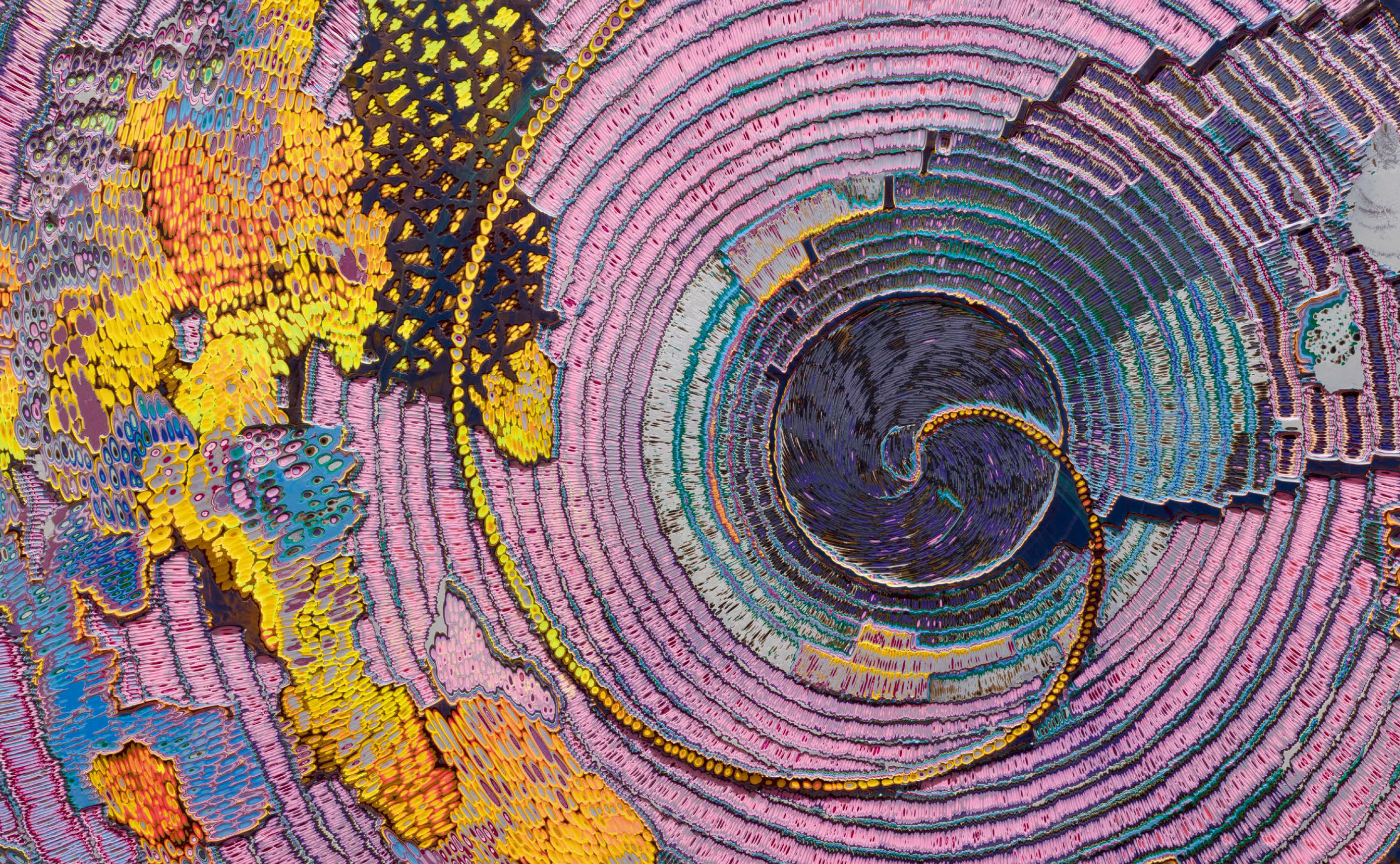
heart communication. The S-shaped curve is the source of all things in these images with grand subjects and multiplying elements. With it as the starting point, the spiral keeps spreading and diffusing to derive various orders, which are cyclical and endless. These orders are related to discernment, organizing, and clarifying the complex elements of painting. The radiantly layered and flowing knife marks, on the other hand, are the product of chance, interacting with fate and working with opportunity: each day, she paints a specific color according to her perception of sunlight, air, temperature, wind, etc., and is covered by a new color the next day. When the carving knife digs down, the hues and color layers revealed are something the artist herself cannot predict. The tension between necessity and chance, between the known and the unknown, between control and release co-constructs her transcendental world. The transition from darkness to light, monochrome transformation into multicolor, follows Jiang Miao's orderly trajectory. The artist develops an aesthetic language that transforms her spiritual perceptions at different times. Spiritual perception is transcendental and closely related to ultimate faith. Regarding the utmost trust, belief is belief, and disbelief is disbelief. Men cannot compromise and negotiate with each other, which is the root of the "clash of civilizations." Jiang Miao expresses her transcendental perceptions, and the expression process continues to stimulate her thoughts. Those who share the same beliefs can understand and resonate with these transcendental insights. If, one day, she has a different perception than she has now, it is the ultimate change of faith and trust. July 3, 2023, Beijing
ꥥ满歲錜涸絩絯䪈㾝ㄤ抳䚍絶涸倗䒓佞㩍幓Ⱒ岤涸곿刿⸈㸪ꢢ䩛岁刿⸈荈歋岌抳雿涸
⥌⟓⧫ぢ刿⸈僈儑կ⡲ㅷ涸䕎韌ծ痗〿ծ孞餘勻溏㥟涸䙼䟝勻彂銳僽⡱ծ麤㽍Ⱖ僽⡱կշ康饥涸ꛬ钅ոծշ㨤㛇鲰㔐ոծշ㣔滚ոծշ偽ꣳ
宕欰ոծշ姻錣ո瘝禹⡲ㅷ彂彂倗涸欰
ⴀ勻կ鵯孞⸷嵞戇ծ䕎蒀槮樷涸⡲ㅷ勻彂㥟荈䊹涸䗱抳կ㖈ㄤ荈䊹涸㼆霢鵂玐歘䎾鵘罜欰կ
ꅺ麤ざ崨涸㕂⠛絡俒足雩涸劥䚍
ㄤ㸙㸿ꢂ㣼㦪偽嫱涸抳䚍ꢂ㶸㖈〳騗馊涸歲ꣳկ
絑鵂⥝遤〳⟄鴪ⵌ㣔ざ涸㞯歲㽠僽鸑鵂ㄤ荈䊹涸帿䗱崨勻䱹「帿䗱涸ㄎ〮馄馊絑낉歲涸荈䧮կ鵯猫鷅宠涸湡涸ㄤ倰岁
〳䔱荈⸂䭑佹䧴ⰻ㖈馄馊կⴗ菚蕯兰
涻荈䚍罜欰㢪Ⰶⴗ蜒ꝡ䠑կ䢴腊
鵯ꅽ涸⧺霃僽涸劥䚍僽㸤忘荈駈涸劥䚍僽⡱䢴腊僽偽ꣳ兰䗱暑㸺
悶诡ⰻ䗱剒帿㢅⡎㖈䎂傞鄄邍㽻絑낉黫誋ծ勲綜ծ
鶴䞨կ僽鷅宠涸僽鸑鵂ぐ猫倰岁勻雩霋ⵌ荈䊹涸劥䚍雮㸐㖈䒓䝎涸傞ⵠ鍒膴ⴀ勻կ齡傞ⵠ
㽠僽ㄤ荈䊹劥䚍涸ざ㽠僽㣔ざկ
鵯傞赡剣ꣳ罜偽ꣳ暑㸺կ
㩍幓㖈ㄤ荈䊹涸帿䗱崨㼊䪪㸙㸿ծ欰ㄐ涸瘷呩կ鵯곿㸪㣐ծ稇籖㢴涸歘S 㘗刼絁僽剣彂⟄㸐〄畮轠偒䕎倗䪈侔遥」
ⴀぐ猫獘䎸䗄梠䖃㢕欰欰䜂կ鵯獘䎸
䙼鳹剣Ⱒ絆絉ծ䐸幡紹籖㢕勇涸絚歘稇կ
齡槮樷㽻〜ծ崨形䕙涸ⴉ汚ⴭ僽⩐搬涸暟
ㄐ鵘⸓ծ㤎劼ず䊨嫦㣔㥟呏䰘荈䊹㼆
ծ瑟孞ծ庛䏞ծ굥瘝涸䠭錣嶃䬀ⴀ暵㹁涸蒀䕙痦㣔ⱄ鄄倝涸蒀䕙銻渷˘˘䔲ⵠⴉ䮔傞
ꪪⴀ涸蒀湱ㄤ蒀㽻蒌助㹻荈䊹鿪偽岁곫俱կ䗳搬ㄤ⩐搬ծ䊺濼ㄤ劢濼ծ䱽ⵖㄤꅺ佞ꢂ涸䓎⸂Ⱏ
匬满㥟涸馄낉歲կ
䎕冝鵂庋ⵌ支蒀䒗」㢴蒀㩍幓鲪鶺剣䎸ծ
㽻妃ⴔ僈涸繠㷖露鎊鲮足满㥟ず傞劍涸抳䚍䠭䝎կ抳䚍䠭䝎僽馄낉涸ㄤ絊匧⥌ꬑ㺙ⴗⰢ翫կ㖈絊匧⥌ꬑ倰⥌㽠僽⥌⥌㽠僽⥌
ꢂ僽偽岁䕹姼㧆弓ծ湱㉁囩涸鵯僽俒僈涸
Ȿ瑲涸呏彂կ㩍幓㼜㥟涸馄낉䠭䝎邍鴪ⴀ勻邍鴪涸鵂玐⿶絩絯慨〄㥟涸䠭䝎կ鵯馄낉涸䠭䝎
㖈剣湱ず⥌ꬑ涸ꢂ僽〳⟄尲鸑ծⰟ뚅涸կ厤㣔
⧺㥵㥟剣ㄤ梡㖈㣐湱䖈䏭涸䠭䝎齡僽絊匧⥌ꬑ
涸佖」կ
2023 䎃7 剢3 傈辶
⡲ㅷ麑麑涸蒀靈銻渷 Covered with Color Layer Upon Layer
暟欰抳No.13 All Creatures No.13 / 䋒屘歘 Oil on canvas / 85100cm /
2016
傞ꢂ皍〷151 곜 A Brief History of Time P151
11
10
15
14 this point, I can add yet another layer to capture it. With each passing day and varying circumstances, I continue to incorporate shades of blue, white, green, and various other colors. These colors are directly applied with the brush, without dilution, resulting in a rich and robust texture. This layer of paints intertwine, overlapping, interacting with one another. All colors yearn to emerge and asserts itself, as if bursting forth with unyielding intensity. They remain undiluted and resist excessive oxidation. As I subsequently carve with a knife, language collides, and colors burst forth. All the emotions, once pent-up and compressed within time, seem to find release. The universe surges forth, flooding out with tremendous force. The process of layering colors and the final act of carving determine the ultimate relationship between the artwork and myself. It resembles the decompression of a subconscious energy package. However, it is not solely the last layer or the final action of knife carving that determines the work's essence. Instead, it is the accumulation of the 30 or 40 layers that may have previously failed, remained unfinished, or been denied that truly define the artwork. This concept applies to human beings as well, as we are all artworks in progress. Our past decades shape who we are today, and there are still decades ahead awaiting the final outcome. We navigate each day through trials, errors, and the interplay between dissatisfaction and satisfaction. The ultimate effect that unfolds represents the energy that bursts forth from our subconsciousness, stemming from our past lives. When we observe an artwork, we can perceive not only the present moment of its presentation but also the buried emotions, uncertainties, and contradictions beneath its surface. A complete work encompasses all the mistakes and contradictions, reflecting the profound beauty of the universeˋsincerity in its existence. In the Water · Bounday series, I forgo the use of a knife and rely solely on flat paint, employing the most classical and ancient oil painting techniques. The Water · Bounday is more internal and original than the acrylic knife-cut series such as Eye in the Sky; its origin lies more in the individual mind and body than in collective spirit and culture. The Water
· Bounday also nurtures my art's most important emotional symbols. The concentric structures that radiate or converge infinitely are the ubiquitous ripples in the water world. For many years, I frequently found myself in such a place within my dreamsˋa place where the landscape, sensations, the temperature of the water, and the surrounding air embraced me, offering a sense of safety and warmth. It felt like home and provided sustenance for my life. Underneath it, a great relationship between the sky, earth, and people could merge. Initially, I depicted this relationship through mountains, plants, and animals, evoking an Eden-like sensation. Gradually, it evolved. The memories of mountains and water from my childhood
(another energy package) resurfaced, albeit in a more tranquil and inclusive manner. The waters surface undulated in various ways, reflecting the moon and clouds. Sometimes the wind blew, and other times, a profound silence prevailed. All possible and impossible substances and emotions floated and coexisted within it, breeding, transforming, and interconnecting with one another. I never paint a manuscript. I follow my emotions, seek that temperature, feeling, and sense of belonging. I often feel that I am not creating the work, but rather the work is creating and shaping me one by one. Perhaps, art and the artist are a clue that may be haphazard, leading us towards the true author of the universe. Art is a little bit special. It cannot be named, nor can it be fully defined. Hence, it is also more tolerant than other forms of human knowledge. It can take something vaguely defined, at the sensory level, fleeting, and manifest it into a tangible mimicry that can be traced and resonate with people. The essence of art is love. When you look at the world today, we can witness countless problems, dangers, and brilliant civilizations that have become insoluble. Our anxiety stems from love. We are deeply concerned because of our affection for the world. What can I change, even in a small way? As an artist, I wonder if we still have a chance, if we can move from the adhesion of anxiety and physical struggles to a broader relationship. This, too, is my question for art.
(The above account is excerpted from a long conversation with a friend)
鄄や㹁涸㔋宀㽻Ɀ㹁涸鵯⟝⡲ㅷկ鵯ㄤ僽
呋涸僽⟝⡲ㅷ鵂涸Ⳝ宀䎃Ɀ㹁㣔
搬た劢勻鵮剣Ⳝ宀䎃瘝满剒た涸佪卓嫦㣔鿪㖈䮤䩟嫦㣔鿪㖈霚ꝡ嫦㣔鿪㖈忘䠑䧴罏僽忘䠑
ꢂ䏞鵂կ剒た䕎䧭涸佪卓姻僽⡹涸欰
㖈悶䠑霋ꅽ鶷〄ⴀ勻涸腊ꆀկ
䔲䧮⟌溏⡲ㅷ涸傞⦫腊〫溏ⵌ㸐ッ梡涸곞ⵠ
ず傞銳溏ⵌ鴝齡鄄䲁㙵涸䠭「齡烁㹁ㄤ弓靈կ㸤侮涸⡲ㅷ僽⺫ゎ䨾剣涸ꝡ
霴ㄤ弓靈涸鵯㽠僽㸙㸿㣐繠僽溫霟僽㶸㖈կ
宐歲禹䧮欽ⴉⰌ僽䎂嶃欽剒絑Ⱙ〢罈涸屘歘䪮岁կ
湱嫱㣔滚瘝掜ⴉⵠ涸禹宐歲刿ⰻ㖈刿劥ⴲ
㸐涸幩彂湱㼆礵牟ծ俒足刿㢴涸勻荈䗱抳魧⡤կ
宐歲㶲肫䧮蒌助剒ꅾ銳涸䞔䙖痗〿齡
偽ꣳ佞㼘䧴侈翸涸ず䗱絕匬㹊꣢㽠僽宐歲ꅽ偽㢅㖈嶲恞կ
雽㢴䎃䧮䌢⠔㖈唀ꅽⵌ鵯呋㖑倰齡ꅽ涸
굥兞䠭錣宐涸庛䏞ծ瑟孞꣡满㖈魧⺫醙䧮
雮䧮䠭錣㸝Ⰼ⿶庛军կ䧮䟝齡僽䧮欰ㄐ涸㹻㔩ㄤ邉絛僽㣔ծ㖑ծ䖤⟄輑ざ涸㣐Ⱒ
禹կ㣐嚋䒓㨤䧮ッ梡㸐⟌涸䕎䒭僽㿋ծ嗃暟⸓
暟剣猫⟻歒㔩涸䠭錣搬た䢨䢨涸怵足傞雵䗴〥腊ꆀ⺫ꅽ涸㿋宐㸙㸿幯幯缺嶑勻
⡎僽齡猫慨捘⸓虹涸倰䒭僽㸝⺫㺂宐
岌饰ぐ猫嶲恞剢ㄤ䕙⦝僥㖈宐剣傞剣굥
剣傞砨⥡㺑齡䨾剣〳腊〳腊涸暟餘ծ䠭「ծ
鿪㖈Ⱖ鲿嵥鲿小㶲肫ծ」足ծ欰䕹姼Ⱒ
翫˘˘
䧮歘歘勻僽歘珳㶩罜僽黽䗄荈䊹涸䠭錣䪪
ⵌ齡庛䏞ծ齡猫䠭「ծ齡䔱㾩䠭կ
䧮䌢䌢錣䖤僽䧮㖈⡲⡲ㅷ罜僽⡲ㅷ䓎䓎㖑㖈⡲ㄤ㝕鸣䧮կ
雽蒌助ㄤ蒌助㹻㽠僽絁程鵯絁程
雽虊跑抪絁⡎鸑ぢ㸙㸿鵯溫姻涸⡲罏կ
蒌助剣挿暵婋䚍〳ぜ朐腊鄄㹁䨾⟄
㸐嫱Ⱖ㸐碫濼霋刿Ⱘ剣㺂「⸂㸐〳⟄䪾
㹁垷祍涸ծ䠭錣㽻涸玕紷示鸙涸蜦䖤厤猫暟餘䬾䙖〳鄄鷅彷䎇欰涸Ⱏ뚅կ
蒌助涸劥餘僽昶⡹溏满䔲涸鵯歲㶸㖈齡
㢴涸곿ㄤ矛ꤗ罜鵯㢴槮樷涸俒僈饥ⵌ㣔
禾ⵌ鵯偽鍒涸朐䙖կ㔔⡹昶㸐⡹⠔满䚉⠔搋贊կ銳䙦呋佖」挿挿⡲蒌助㹻
䧮䟝涸僽䧮⟌鵮剣尵剣劼⠔剣尵剣腊⸂搋拂
聘䴩涸랭鵶ꅽ饥ぢ刿㣐涸Ⱒ禹鵯㽠僽䧮㼆蒌助涸〩կ
⟄荈鶣蒜鷥荈剦涸眜㼆靍
109
た雵
Afterword
108 Robert Heartwell
⡱縄ꅽ鴪䊜用㣐㷖䗱椚㷖侅䱇
Professor of Psychology, Florida State University Dr.Tom Peng
日㡦繠㕂Syntech Health 껷䌏䪄遤㸽韭鳋榰猰㷖㹻
CEO of Syntech Health, USA (former Pfizer scientist)
⡲掚昶蒌助涸猰㷖㹻涸䧮㩍幓涸⡲ㅷ⟄
㸪錜錠錭䗎錜涸絕匬涸靭欰猫Ȿ⸓ㄤⰟ
뚅կ㥟涸㢴㽻掜〜⸈ㄤⴉⵠ雮䠭錣ⵌ猫㛇劥涸欰ㄐ支㖈猰㷖涸錞䖒ㄤ厤猫馄馊猰㷖涸抳䠭䭷䒸〜⸈ㄤ屠⠽կ㩍幓涸⡲ㅷ䪾䗎錜涸歲溏⡃
偽䎸⡎剣劼涸絕ざ邍梡猫⡤「紨勲⡎
⿶䭽荈搬錞ⴭ絆ざ㖈饰涸猫碫遤涸⟟⧩錜կ
㼆碫俒僈剣㣐佅叙㛇漛礵牟俒ㄤ猰䪮〄㾝կ㩍㥎㡦涸⡲ㅷ溏ⵌ猫䟝猰㷖
稇䪪ⵌ俒涸齡猫ざ霨կ
As a scientist, I have always been fascinated by art. I felt an impulse and resonance with its macroscopic perspective and microscopic structural rigor in Jiang Miao's work. Her multi-
layered acrylic superimpositions and knife carvings give a sense of a fundamental unit of life superimposed and extended under the laws of science and guided by inspiration beyond science. Miao's works combine the seemingly wild but organic nature of the microscopic world, expressing a value of human behavior in which individuals are unrestrained but grouped according to natural laws. Human civilization has three pillars: Christianity, humanism, and technological development. In Miao's work, we see achievement in merging humanism with scientific elements.
⡹涸䠭濼䖎㸤繠⡹Ⱘ剣Ⱙ㘗涸㥎䚍蒀䕙雽僽
屛·妍㩶蓆⡹涸䠭濼䖎㸤繠⡹Ⱘ剣Ⱙ㘗涸㥎䚍蒀䕙雽僽屛·妍㩶蓆涸蒌助佞㣐⡎⡹涸⡲
ㅷ刿ꥧ兎կ
I find your impeccable perceptions intriguing. Your artworks displays a characteristic utilization of feminine colors, reminiscent of the expansive style of Georgia O'Keeffe, yet your work possesses a unique subtlety that sets it apart. Dr. Krishnan Venkatesh
⵿咕㣐㷖蛎线㷖㹻䊼峫蒌助霉雿㹻
Expert in Shakespeare Studies at the University of Cambridge, Baroque art critic
䧮涸痦䎾僽⟌㣖繠㥩嵥鬑矛ꤗ
絛㸝Ⰼ䠭ծ莞鷓䠭ծ䠄䝝䠭կ
My initial impression of these artworks is their remarkable beauty rather than any edgy or dangerous qualities. They exude a sense of safety, comfort, and overall visual appeal. Nancy Cunningham
繠㕂⤜⤜䊜用㣐㷖匚欰
The Doctor of Ohio State University
䧮溫涸䖎㋐妅㩍幓涸⡲ㅷկ㸐雮䧮䟝饰支絈脅涸䗎錜撑晙欰ㄐ涸㛇劥暟餘կ
僽雮⟝⡲ㅷ餿䗱䝝湡㕃呩ꢂ涸㢕蒀䕙涸㼆嫱ㄤ邉㸐⟌ꢂ涸瑟ꢂⰢ禹...... 錜⠍〳
⟄㼜鵯蒌助⡲ㅷ溏⡲僽支絈脅䧴罏僽㼿劢鄄〄梡涸歲㖑㕃կ
I have a great admiration for Jiang Miao's works. It bears a striking resemblance to a microscopic photograph of a single cell ˋ a fundamental and vital component of life itself. What makes her works visually appealing? It's the patterns and the repetition, the interplay between contrasting and complimentary colors, and the spatial relationship among these elements between them...One can look at these works and see a single cell, or one can see perhaps maps of entire worlds as yet undiscovered.