世界就这样持续了很久
展览信息
前言Introduction
我们高兴地宣布,吴思林在空白空间的第二次个展“世界就这样持续了很久”将于2024 年
9 月7 日开幕并持续至2024 年10 月19 日。本次展览将呈现吴思林最新的丙烯绘画创作。相较于过往的创作,吴思林新近的绘画并不直接以某个文本作为作品最初的来源和启发,而是将其思绪投注到“灾难”的主题中。近年来各式人为或自然灾难的频发让人无法忽视,画家则在其画布上对其加以描绘与回应——战争机器倾然而至,洪水奔涌来去,留下一地狼藉……
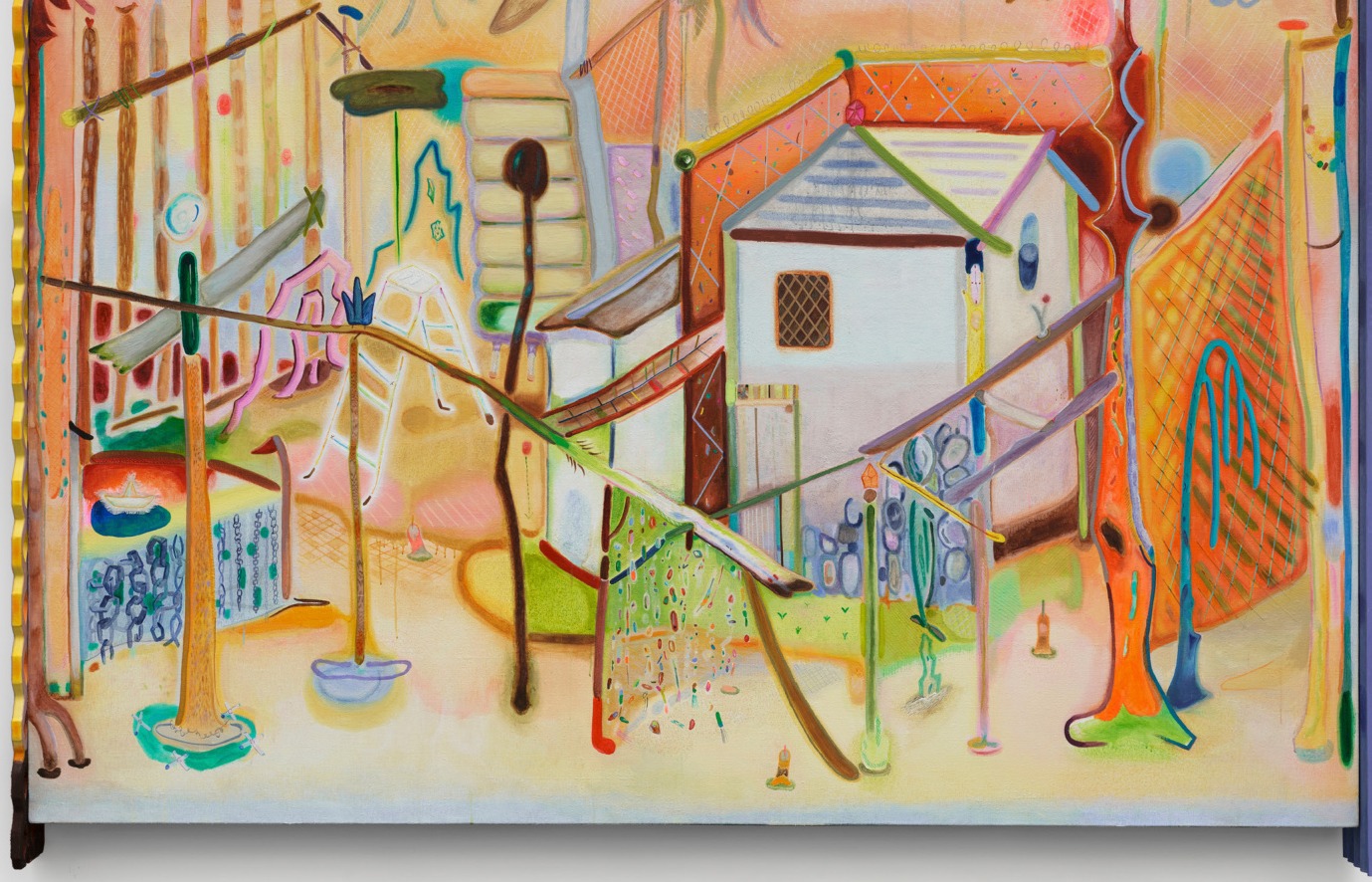
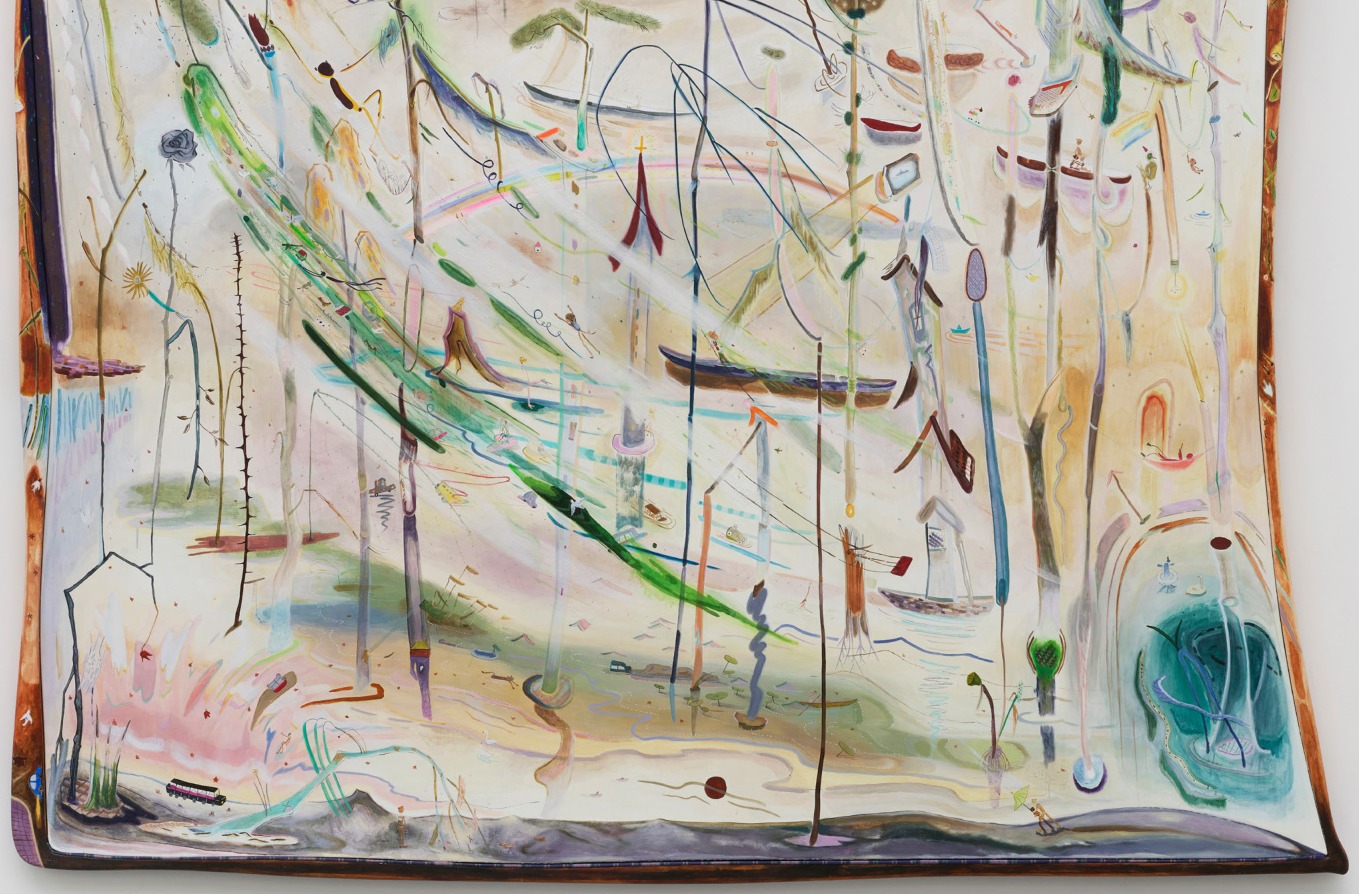
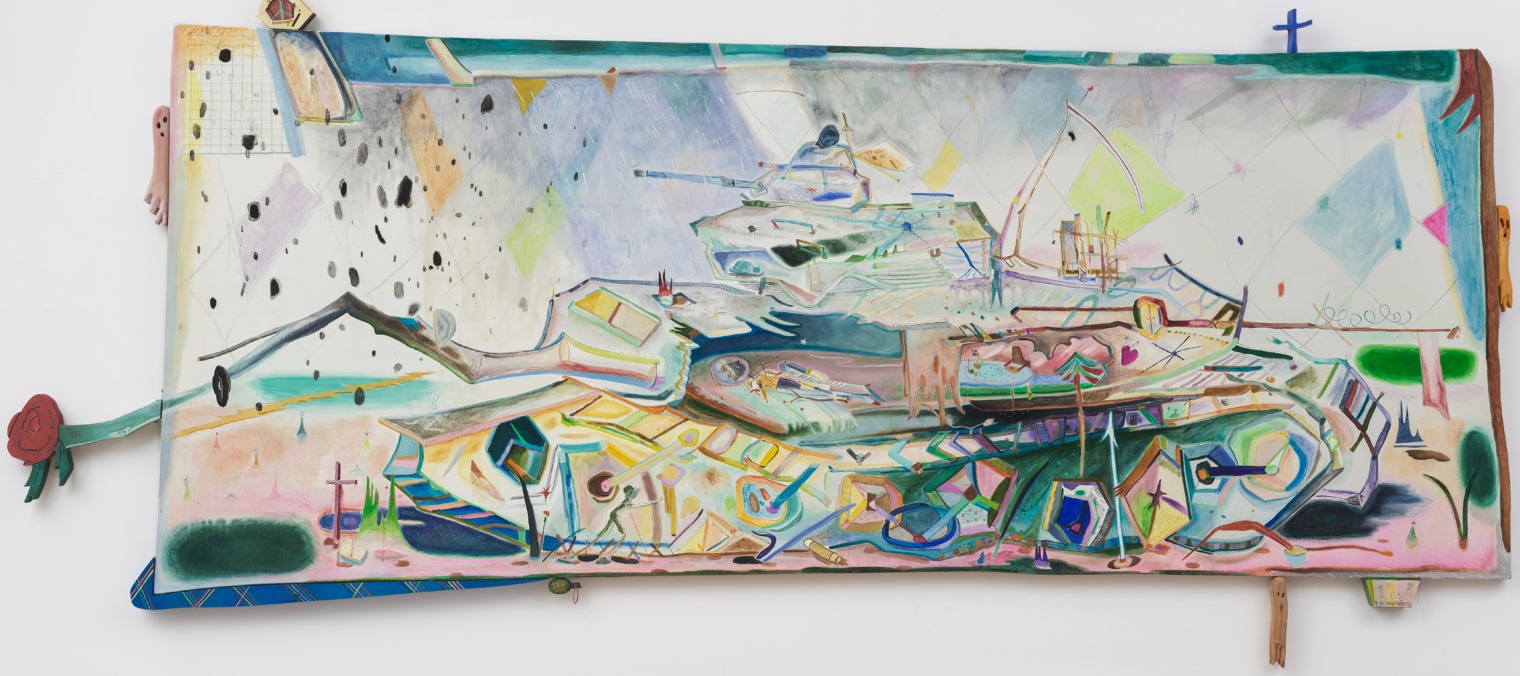
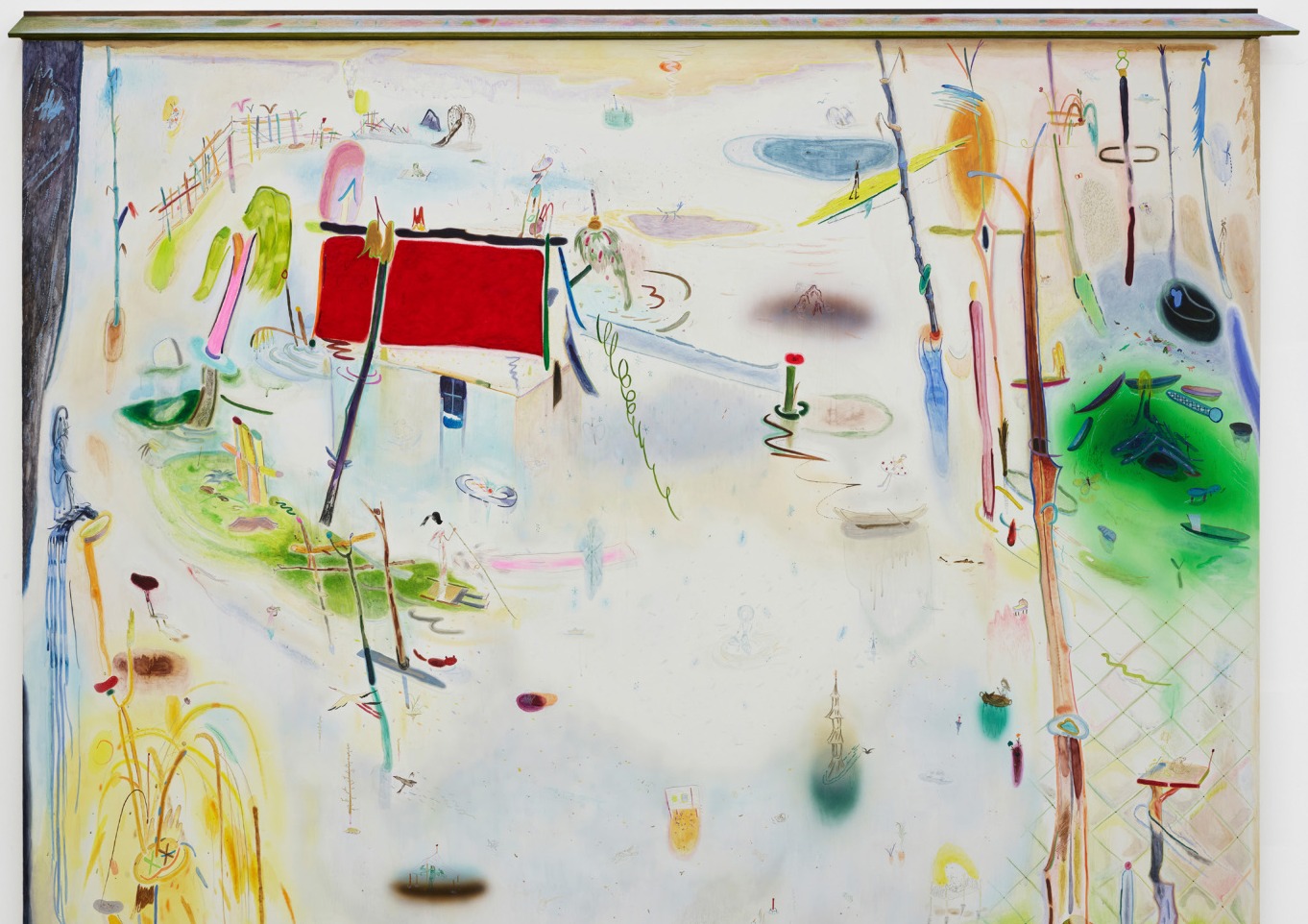
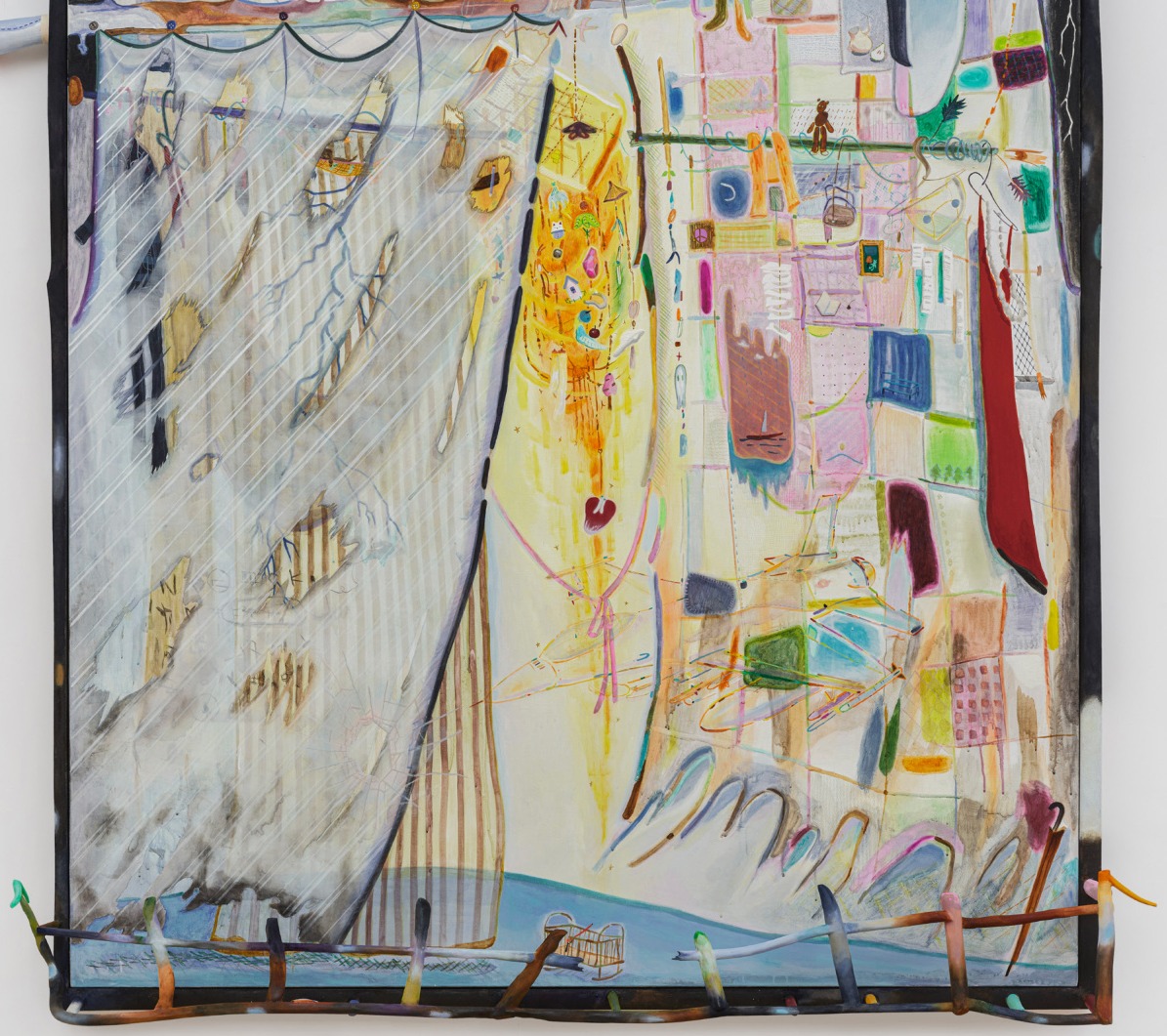
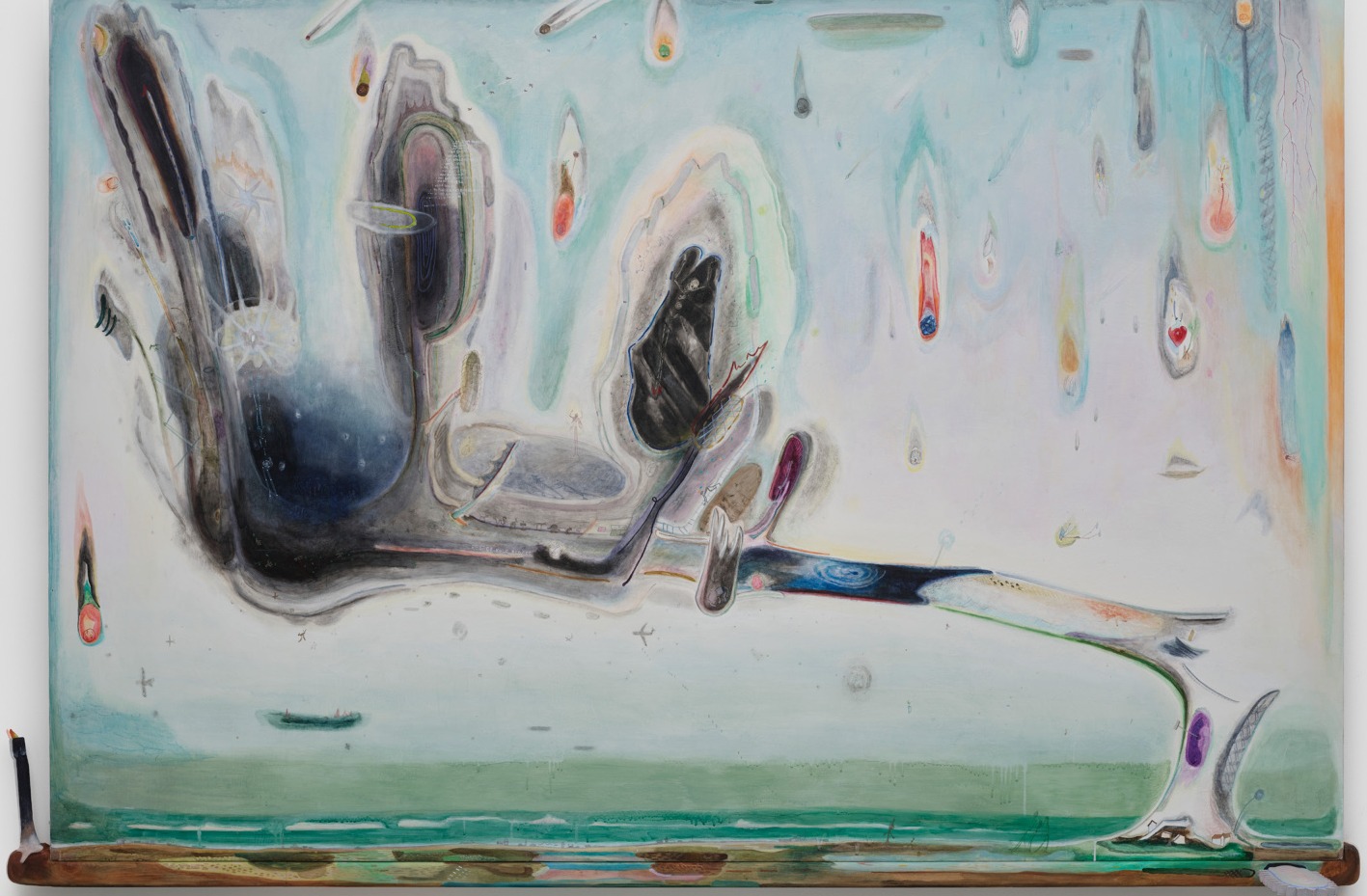
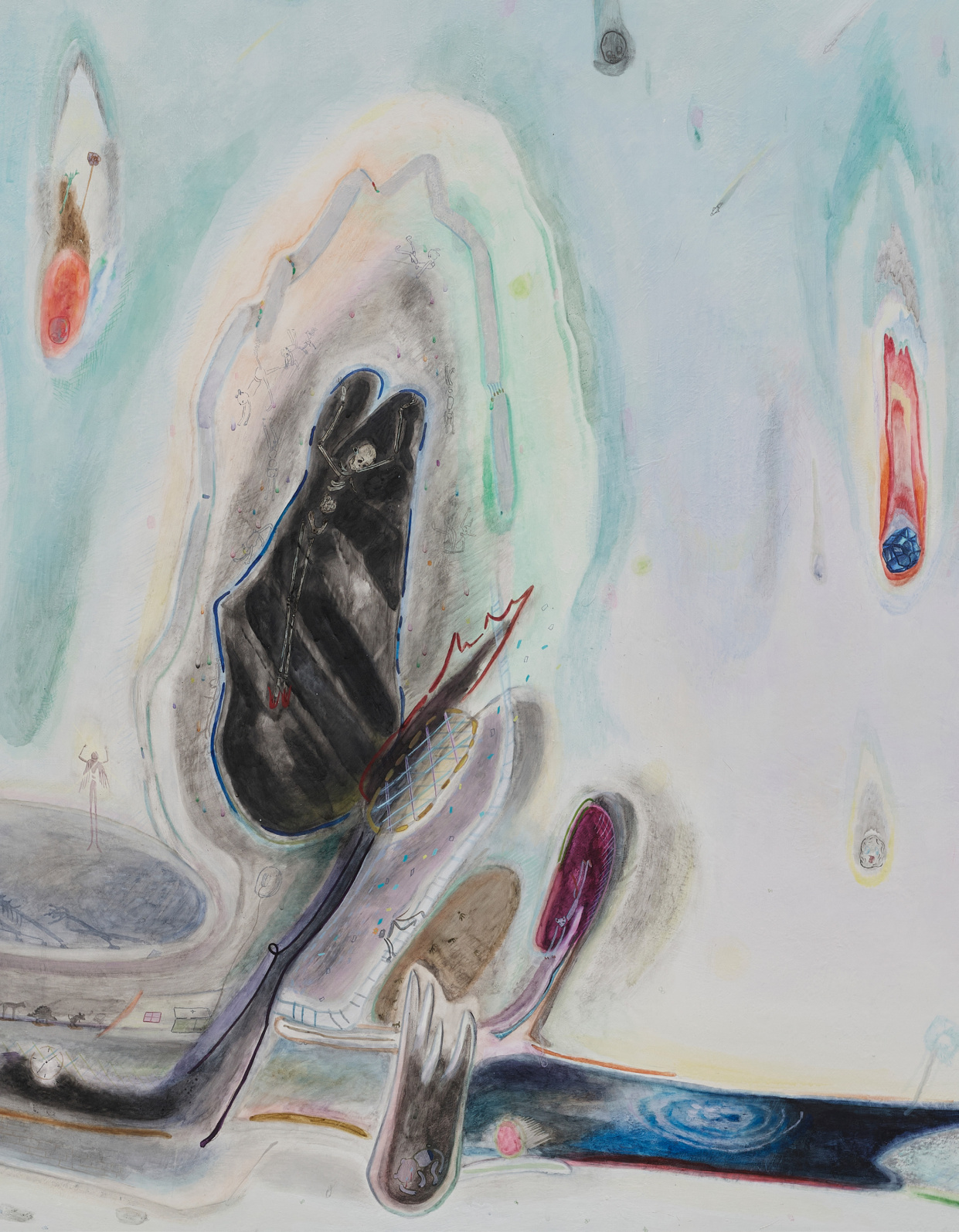
在这样的主题之下,画家那一贯的充盈着想象力的细节和融合了多重透视的方法描绘着她所忧虑的世界,提供给观者以诸多省思的瞬间。《空袭》里,线描轻轻勾勒的战斗机于画面中划过,残缺不全的窗帘映照着四分五裂的田野,而孩童的风铃飘摇其间,召唤着已然破碎的家园。在《残骸》中,事物间的形体差距被极限地放大,庞然的坦克以不容置疑的体量碾压着其下的世界;相形之下,土地之上的士兵、树木如螳臂当车般被碾轧殆尽。而《世界上的某个角落》则以更为细琐的内容与情节展现出战场之下的生灵百态。这些看似“黑暗”的内容在画家稚拙的画风中看似被加以消解,却让人更感残酷。另一方面,作为吴思林的创作中一大特征,画家在此次的创作中仍然有意识地将画框本身加以改造甚至雕塑化,这些处理不仅时常改造着我们面对画面时的观看体验,更与画面内容形成更为有机的整体。《人类搬走以后》左缘物件的加入形塑出炮弹轰击地面的质地,更将原本平行的视角扭转为俯视。《网》周边伸出的四条边框延展和强化了画面中本体与倒影形成的网状结构,而点缀其间的雕塑物则进一步使得画面呈现出难辨其向的错觉。而例如在《残骸》中顺延坦克炮管绽放出的玫瑰,则暗示出画家对其所绘画残酷局面仍留存的希冀。而诸多作品中反复出现的树木,或孑然而立,或簇拥成林,即便被灾难倾覆摧倒,其后仍然勉力地生长。在某种意义上,它们也应和着画家对这一动荡不安世界的体悟和反思:世界运行有常,在这失望与希望并行的时刻,偏离的轨道也终将在万物对生命的渴望中重新回归。关于艺术家吴思林的绘画创作既包含着东西方绘画的经验与传统,又混合着她的奇思妙想与对个体生存状态的共情与省思。在她的绘画中,丰富的色彩在出人意料的线条与笔触中流转、具象的人物身姿则在转瞬间幻化为抽象的图景。于她的笔下,透视随心绪恣意地变换、不受束缚,而情感则落实到每一处细微的起落笔尖。人物与周遭共构成出人意料的剧场,并在不断累积的创造过程中,形塑出一个属于艺术家自己丰富、完整而迷人的世界。吴思林,1992 年出生于中国重庆,现生活和工作在北京。2015 年在中央美术学院实验艺术学院获得学士学位,2021 年在中央美术学院版画系获得硕士学位。
Please scroll to the end for English
White Space is pleased to present “The World Goes on Like This for a Long Time,”
an exhibition of new acrylic paintings by Wu Silin. This exhibition marks Wu’s second solo presentation with the gallery and is open from September 7 to October 19, 2024. In contrast to her previous works, Wu’s recent body of paintings did not source its inspiration from any specific text. Instead, she has turned her focus to the subject of disasters. In recent years, the frequent occurrence of man-made or natural disasters has become impossible to ignore. On her canvas, the artist captures and responds to these catastrophic events: war machines storm the earth, floods swamping our land, leaving behind a trail of devastation …
Working under this theme, Wu depicts the world that deeply concerns her from multiple perspectives, filling it with her distinctive use of imaginative details. These vignettes offer viewers moments of reflection, such as in Air Strike, the gently outlined silhouette of a fighter aircraft glides across the composition; through the tattered curtain lies a war-torn landscape. A child’s wind chime swings among the wreckage, calling for an already broken home. Wreckage exaggerates the difference in sizes to an extreme: a gigantic tank bulldozes the earth with its sheer mass, rendering the soldiers and trees on the ground as diminutive as mantises, who, vainly resisting the absolute power, pulverize under its force. Somewhere in the World conjures a wartime panorama through intricate details and nuanced storytelling. Wu’s child-like brushstrokes seem to have lightened these “macabre” subjects, when, in reality, they intensify the cruelty. The incorporation of picture frames into paintings has been characteristic of Wu’s practice. In this exhibition, the artist has deliberately furthered this thread, as she continues to alter the shapes of the frames, even adding sculptural elements. These modifications often transform our experience of looking and, by integrating into the paintings, strengthen the images themselves. In After Human Moved Out, the addition of sculptural objects to the left side of the frame creates a vivid scene in which the ground is plowed up by shellfire, while switching the original parallel perspective into an overhead view. The four extending edges in Net are a continuation of the web-like composition, accentuating the mirroring of the subjects and their reflections in the painting. Scattering along the frame, the sculptural accents further disorient the viewer in the illusive world of the painting. Meanwhile, in Wreckage, a blossoming rose thrusts out from the tank’s barrel. It secretly embodies the artist’s persisting hope against the brutality painted. Trees are a recurring motif in many of the works on view. A solitary trunk or a dense forest, trees preserve, despite the ravages of calamity. In a sense, they are the echoes of Wu’s understanding, as well as her reflection, of this tumultuous world: the world operates on consistent principles, and even in this moment of simultaneous despair and hope, the diverted path will one day make its return through the common yearning for life.
参展艺术家Artists
作品